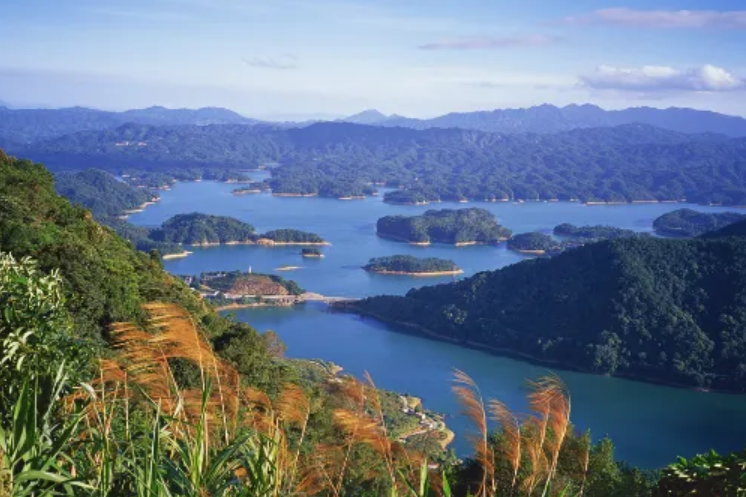
Liuxihe National Forest Park is located in Liangkou Town, Conghua District, Guangzhou City, Guangdong Province, in the northeast of Conghua, about 93 km from downtown Guangzhou. It is one of the first batch of ten national forest parks approved by the Ministry of Forestry. In 2025, it was selected as one of the New Eight Sights of Guangzhou under the name "Liuxi Misty Islets." The park covers a total area of 8,831 hectares, with a forest coverage rate of 80.3%, an average annual temperature of 20.3°C, and high negative oxygen ion content, making it a well?known natural oxygen bar and summer resort in Guangzhou. The core water area is Liuxi Lake, built in 1958, with a surface area of 1,466 hectares and 22 islands scattered across the lake, earning it the reputation of "Thousand?Island Lake of Guangdong." The park has a subtropical monsoon climate, rich vegetation, recording 1,295 species of wild vascular plants and 158 species of terrestrial vertebrates, with outstanding ecological value. It is also an important drinking water source protection area in Guangzhou, serving as an ecological forest park that integrates lake?and?mountain sightseeing, forest wellness, and nature education.
History and Culture
The water foundation of the Liuxi River originates from the construction of the Liuxi River Reservoir in 1958. After the reservoir was completed, the Liuxi River Forest Farm was established in 1959 to protect the forest ecology of the reservoir area, beginning a long history of ecological management. The forest park started planning in 1984, officially opened to the public in 1986, and was formally named Liuxihe National Forest Park in 1993, becoming one of the earlier subtropical forest parks open to visitors in South China.
In the 1950s and 1960s, it was already a well?known retreat and sightseeing destination in Lingnan. Leaders such as Zhou Enlai, Chen Yi, Tao Zhu, and Guo Moruo visited here. Chen Yi visited many times and wrote the verse, "Comparing Lingnan's scenery, this place has the most." Tao Zhu planned to turn it into the "Second Lushan." Hu Yaobang personally inscribed the park's name. Painter Guan Shanyue inscribed "Liuxi Fragrant Snow," adding cultural depth to the plum garden landscape. Many literati and artists have left poems, calligraphy, and paintings here, enriching the cultural heritage.
Over decades of development, the park has been recognized as a Guangdong Provincial Nature Education Base, a Guangdong Provincial Forest Wellness Base, and a National Forest and Grassland Science Popularization Base. The plum?appreciation culture of "Liuxi Fragrant Snow" has been passed down for many years, and winter plum viewing has become a classic folk leisure activity in the Pearl River Delta, forming a unique plum?culture tourism brand.
Major Attractions
Liuxi Lake
Liuxi Lake is the core landscape of the park. Completed in 1958, the reservoir features a vast expanse of blue water dotted with 22 islands, like emeralds scattered on the lake, also known as the Emerald Islands. Visitors can take a boat tour around the lake, enjoy panoramic views of the islands and surrounding mountains, and appreciate the magnificent scenery of the high gorge and flat lake. The area is encircled by peaks over 1,000 meters high, such as Wuzhi Mountain and Jizhen Mountain, creating a beautiful interplay of mountains and water.
Liuxi Fragrant Snow · Plum Garden
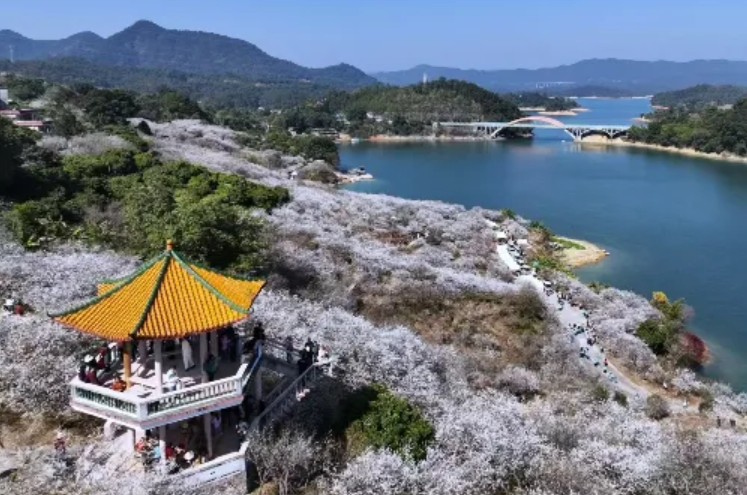
The Plum Garden is located by Liuxi Lake, with over 3,000 mu (about 200 hectares) of plum trees, totaling more than 100,000 trees. From December to January each year, the plum blossoms bloom, forming a white sea of flowers against the green water and blue mountains—this is the famous "Liuxi Fragrant Snow" scenery. It is hailed as "The first plum blossom in China, the first herald of spring in the south" and is one of the largest plum?viewing destinations in South China.
Sanya Tang Valley
Sanya Tang Valley is situated in the Wuzhi Mountain area in the southern part of the park. The valley is 2,500 meters long and is a stream?tracking sightseeing spot. The mountain streams flow all year round, with waterfalls, clear pools, strange rocks, and primary secondary forests. Along the valley, there are wooden hiking trails. The cool stream water and dense vegetation make it a popular summer destination for stream tracing, hiking, and oxygen intake. The valley area has extremely high forest coverage and a pristine, quiet ecological environment.
Lakeside Boardwalk
The Lakeside Boardwalk runs along the shore of Liuxi Lake, with a total length of 3,000 meters. Built close to the water, the walkway connects several viewing platforms along the lake. Strolling along the boardwalk offers close?up views of the lake and the surrounding greenery. The entire walk is flat and easy, suitable for visitors of all ages to relax and enjoy the scenery.
Monkey Island
Monkey Island is an independent island on Liuxi Lake, where a group of macaques are free?ranging. Visitors can stop by the island during the boat tour to observe the monkeys' natural life up close, making it a popular spot for family outings.
Wuzhi Mountain
Wuzhi Mountain is located in the southeast part of the park and is part of the mountain hiking section. The mountain consists of several peaks with steep slopes. From the summit, you can overlook the entire panorama of Liuxi Lake, offering a broad view. It is suitable for hiking enthusiasts with a certain level of fitness. Wuzhi Mountain has its own separate entrance management and opening hours.
Tour Routes:
One?Day Relaxed Route: Main Gate → Lakeside Boardwalk → Boat Pier → Monkey Island → Lake Cruise → Return to Pier → Rare Plant Garden → Exit
In?Depth Hiking & Stream?Tracing Route: Main Gate → Boat Tour of Liuxi Lake → Sanya Tang Valley Stream?Tracing Hike → Wuzhi Mountain Foothills Viewpoint → Plum Garden (during blooming season) → Return
Winter Plum?Viewing Special Route: Main Gate → Plum Garden for Liuxi Fragrant Snow → Lakeside Boardwalk → Boat Tour of the Lake → Exit
Travel Tips:
The park is divided into the main Liuxi Lake area and the Wuzhi Mountain / Sanya Tang Valley area, which are about 4 km apart. There is no shuttle bus between them, so plan your itinerary in advance.
The best time for plum viewing is from late December to early January. The blooming period is weather?dependent; check the official bloom forecast before your visit.
For stream tracing in Sanya Tang Valley during summer, wear non?slip water shoes and bring drinking water.
A one?day trip to the main Liuxi Lake area is sufficient. For a more in?depth visit, allow 5?6 hours, and if you have enough energy, add the Wuzhi Mountain hike.
The mountain area has a large temperature difference between day and night; it is recommended to bring a light jacket regardless of the season.
The boat tour is a separate fee and is not included in the entrance ticket; you can purchase it as needed.
Important Notes:
Liuxi Lake is a drinking water source protection area. Swimming is prohibited; only view the waterside scenery from safe areas on the boardwalk.
The Wuzhi Mountain area closes earlier than the main scenic area. In rainy or stormy weather, the mountain area may be temporarily closed. Check the park's official announcements before your trip.
There are many mosquitoes in the forest; bring insect repellent. For hiking, stay on the official trails and do not venture off?path.
Feeding the monkeys on Monkey Island can be dangerous; do not bring your own food to feed them, and follow the instructions of the island staff.
During the forest fire prevention period, open flames are prohibited; do not bring barbecues or lighters into the park.
Some recreational facilities may be closed for maintenance; call the park in advance to confirm their status.
Transportation:
Self?driving: From downtown Guangzhou, take the Beijing?Hong Kong?Macau Expressway, Airport Expressway, then transfer to the Dayu Expressway, and enter National Highway 105 to reach the park. The park has a parking lot.
Public transit: Take Guangzhou Metro Line 14 to Conghua Bus Terminal, exit A, then transfer to Bus No. 12 to the Liuxihe National Forest Park stop. The journey takes a long time, and the last bus departs at 18:00, so plan your return accordingly.
Long?distance bus: You can take a coach from Tianhe Bus Terminal to Liangkou Town, then take a taxi to the park.
Opening Hours:
Main Liuxi Lake area: 08:00?17:30, last admission at 17:00.
Wuzhi Mountain (Sanya Tang Valley) area: 08:00?16:00, last entry at 16:00.
In case of extreme weather or forest fire control measures, some areas may be temporarily closed. Opening hours are subject to on?site announcements.
Ticket Price:
40 RMB per person.