Huangyao Ancient Town is located in Huangyao Town, Zhaoping County, Hezhou City, Guangxi Zhuang Autonomous Region, China. It is a national 5A?level tourist attraction. Covering an area of 3.2 square kilometres, it is a thousand?year?old town that perfectly blends Lingnan culture with karst peak?cluster landscapes. The town itself is mostly situated on karst depressions, typical of karst landforms. Within the town, every hill is accompanied by water, every waterway has a bridge, every bridge has a pavilion, every pavilion has couplets, and every couplet has a plaque – these elements together create the unique Lingnan townscape of Huangyao. The ancient town is composed of three linear blocks – Longpan Street, Zhongxing Street, and Commercial Street – which form a self?contained defensive system. These blocks are ingeniously connected by bridges, stockade walls, and gate towers. The eight main streets are all paved with stone slabs, totalling more than 10 kilometres in length. The town preserves over 300 ancient buildings from the Ming and Qing dynasties, covering an area of 16,000 square metres.
History and Culture
Huangyao Ancient Town originated in the Song Dynasty, flourished during the Wanli period of the Ming Dynasty, and reached its peak in the Qianlong period of the Qing Dynasty. There are several theories about the origin of its name. One theory says it was named after the Huang and Yao families, who were the most numerous, but this does not match the town’s history and current demographics. A second theory holds that during the Song Dynasty, when General Di Qing pacified the south, General Yang Wenguang saw the Yao River surging like a yellow dragon and exclaimed, “The waters of Huangyao,” which later evolved into the place name. A third theory suggests that the area was first inhabited by the Yao ethnic group surnamed Huang, called “Huang Yao,” and the name was later changed to the homophonic “Yao.”
During the Ming and Qing dynasties, thanks to its advantageous geographical location and the developed water transport on the Yao River, Huangyao became an important transit point for goods. Trade and commerce thrived, and handicrafts prospered, forming a commercial circle centred on Huangyao, which ushered in its golden age. However, from the Xianfeng period onwards, the town gradually declined due to population growth, reduced water flow in the Yao River, and the insular mindset of its residents.
In modern times, from 1937 to 1945, Huangyao was a well?known base area behind enemy lines. After Guilin was occupied by Japanese troops in 1944, patriotic democrats such as He Xiangning, Liang Shuming, and Ouyang Yuqian moved to Huangyao and continued to promote the anti?Japanese national salvation movement. In 1945, the Working Committee of the Guangxi Provincial Communist Party moved to Baozhu Temple in Huangyao Town, making it a cradle for directing underground resistance against the Japanese.
Major Attractions
Sima Di (Sima Mansion):
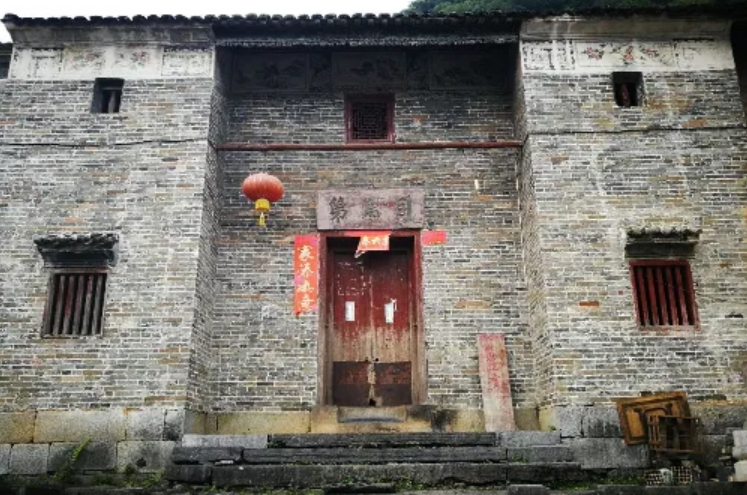
This is a representative example of the official residential architecture in Huangyao Ancient Town. The owner, Mo Airan, served as an assistant prefect of the Zhili Sub?prefecture in the Qing Dynasty, and was commonly known as “Sima Mo.” The building is a three?bay, three?hall structure, with its foundation raised nearly one metre above the ground and the main hall of the rear section about 70 centimetres higher than the front hall – symbolising “rising step by step.”
Guo Family Courtyard:
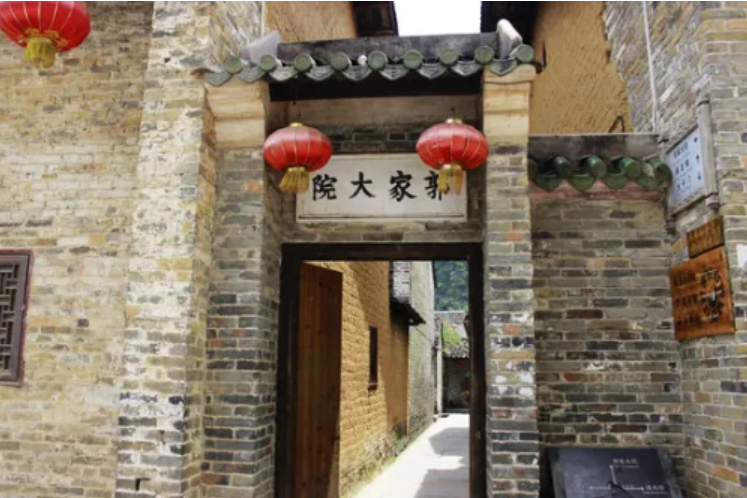
Built by Guo Jingzhang during the Daoguang period, this courtyard is nearly 200 years old and is still inhabited by descendants of the Guo family. It is a typical flat?land courtyard house, covering more than 500 square metres, consisting of a front hall, courtyard, main hall, and side rooms. It is equipped with anti?burglary devices, and inside the residence there is a plaque bestowed by the imperial court during the Daoguang period, inscribed with “Xiling Juran” (an honour for a virtuous wife).
Guo Family Ancestral Hall:
First built in the fourth year of the Qianlong reign of the Qing Dynasty (1739), this is a three?bay, two?hall structure built in the wok?ear gable style with a resting?hip roof. The gable walls have curved upward ends resembling official hats. The main hall features a large colour painting entitled The Dragon Enters the East Sea and the Guo family motto: “Only through study can one rise above.”
Dailong Bridge:
One of the iconic landmarks of Huangyao Ancient Town, this stone arch bridge was first built during the Wanli period of the Ming Dynasty. It is 22 metres long, 4 metres wide, and 3 metres high. The bridge is constructed of huge bluestones, with a semicircular arch and finely carved railings on both sides. Spanning the Yao River, it is the largest bridge in the ancient town and offers an excellent vantage point for viewing the town’s scenery.
Xingning Temple:
First built during the Jiajing period of the Ming Dynasty, this temple is dedicated to the Northern Emperor. Facing south, it comprises a gate tower, front hall, rear hall, and side rooms. The temple’s architecture is distinctive, incorporating traditional Lingnan building techniques, and it houses many exquisite wood carvings, stone carvings, and murals. It is an important physical resource for studying Lingnan architectural and religious culture.
Baozhu Temple (Baozhu Guan):
Originally built during the Wanli period of the Ming Dynasty, this is a Taoist temple covering about 1,000 square metres, consisting of a mountain gate, front hall, rear hall, side rooms, and courtyard. In 1945, the Working Committee of the Guangxi Provincial Communist Party moved here, making it a cradle for directing underground anti?Japanese resistance. Today, it is the former site of the Guangxi Provincial Working Committee, a key cultural relic protection unit of the Guangxi Zhuang Autonomous Region, and a patriotic education base.
Suggested Tour Route:
A classic tour route is as follows: Enter through the main gate and first explore Zhongxing Street to admire the old streets and architecture. Then head to Dailong Bridge to experience its ancient charm and take photos. Next, visit Xingning Temple to learn about local religious culture. Proceed to Sima Di and the Guo Family Courtyard to appreciate the allure of Ming and Qing architecture. Afterwards, stroll to Baozhu Temple to explore revolutionary historical relics. Finally, walk along Longpan Street, enjoy the shops and scenery along the way, rest under the ancient banyan trees, and soak in the tranquillity of the ancient town.
Travel Tips:
Recommended visit duration: 1–2 days, allowing ample time to fully experience the town’s charm and culture.
Consider staying overnight within the ancient town to enjoy the quiet nights and the vibrant morning atmosphere.
Wear comfortable shoes for walking on the bluestone paved streets.
When tasting local food, choose reputable restaurants to avoid overcharging.
Important Notes:
Most of the town consists of ancient buildings; please protect the cultural relics and do not touch or damage them.
Be careful near the rivers, especially if you are with children.
In summer, bring sun protection and insect repellent; in winter, dress warmly.
When buying local specialties, check the quality and price to avoid counterfeit or inferior products.
Transportation:
Public transport: You can first arrive at Hezhou City, then take a special shuttle bus from Hezhou West Bus Station to Huangyao Ancient Town. The journey takes about 1.5 hours.
Self?driving: From downtown Hezhou, drive along the G78 Shankun Expressway, take the Huangyao exit, and follow the signs to the ancient town. The drive takes about 1 hour.
Opening Hours:
The general opening hours are 08:00–18:00, though individual attractions within the town may have slightly different schedules. Please check with the staff at the scenic area for details.
Admission Fee:
The ticket price is 88 RMB per person.