Pingyao Ancient City is located in Pingyao County, Jinzhong City, Shanxi Province. It is one of the most complete surviving ancient cities of the Ming and Qing dynasties in China, a national 5A-level tourist attraction, and a World Cultural Heritage site. The ancient city is centered on well-preserved ancient architectural complexes such as city walls, streets and alleys, residences, shops, and temples, showcasing the architectural style and market life of northern Chinese cities during the Ming and Qing dynasties. It is praised as a "living fossil of ancient Chinese cities." The city wall of Pingyao Ancient City has a perimeter of 6,163 meters, a height of 10 meters, a top width of 3–6 meters, and a bottom width of 9–12 meters. It has 6 city gates, 4 corner towers, and 72 enemy towers. The area inside the city wall is about 2.25 square kilometers. The city preserves 3,797 traditional courtyard residences, of which more than 400 are completely preserved. The street layout is in the shape of the Chinese character "土" and consists of 4 main streets, 8 small streets, and 72 alleys, fully preserving the urban layout of the Ming and Qing dynasties.
Historical Culture
The history of Pingyao Ancient City can be traced back to the Western Zhou period. During the reign of King Xuan of Zhou (827 BC–782 BC), Pingyao was the ancient land of Tao and served as a military stronghold for defending against northern nomadic peoples. During the reign of Emperor Taiwu of Northern Wei (424–452), it was renamed Pingyao County, and the name has been used ever since.
During the Ming and Qing dynasties, Pingyao became an important commercial town in northern China thanks to its developed financial industry. Especially in the mid-Qing dynasty, with the rise of Pingyao draft banks, it became one of the birthplaces of modern Chinese finance. At that time, 22 draft banks, including Rishengchang and Weitaifou, were established in the city, accounting for more than half of the country's total draft banks. Their business spread across more than 30 cities nationwide and overseas, and it was known as "China's Wall Street." Its advanced management system and financial concepts had a profound impact on the development of modern Chinese finance.
The architecture of Pingyao Ancient City combines the functions of military defense and civilian life. The city walls, streets and alleys, temples, draft banks, and residences are diverse in form, reflecting the superb level of ancient Chinese urban planning and architectural art. In 1986, Pingyao Ancient City was listed as a National Historical and Cultural City. In 1997, because of its completely preserved Ming and Qing ancient city layout and rich cultural relics, it was inscribed on the World Cultural Heritage List, becoming one of only two ancient cities in China successfully nominated for World Cultural Heritage as an entire ancient city (the other being Lijiang Ancient City).
Main Attractions
Pingyao City Wall
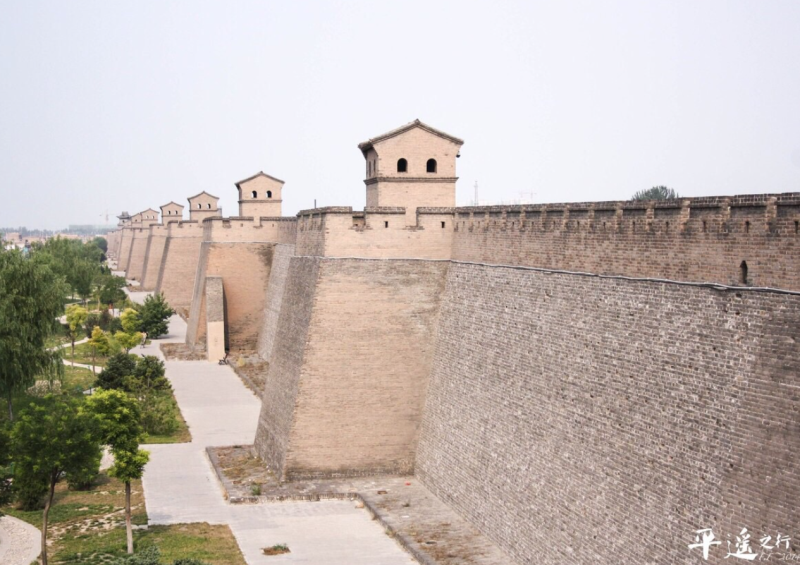
The Pingyao City Wall is the core symbol of Pingyao Ancient City. It was first built in the Western Zhou dynasty and underwent large-scale reconstruction in the third year of Hongwu in the Ming dynasty (1370). The existing wall is a relic of the Ming and Qing dynasties. The wall has a perimeter of 6,163 meters, a height of 10 meters, a top width of 3–6 meters, and a bottom width of 9–12 meters. The wall body is rammed with earth and covered with bricks and stones, making it extremely sturdy. On the wall there are 3,000 crenellations and 72 enemy towers, symbolizing Confucius's 3,000 disciples and 72 sages. The wall has 6 city gates in total, and each gate has an urn city. The urn cities are square or rectangular and have multiple gates, providing strong defensive functions. Visitors can ascend the wall from entrances such as Yingxun Gate (South Gate) and Gongji Gate (North Gate), stroll along the wall, and overlook the entire ancient city. The full walk takes about 2–3 hours. Visitors can also choose to ride the scenic area's electric carts (10 yuan per section) instead.
Rishengchang Draft Bank
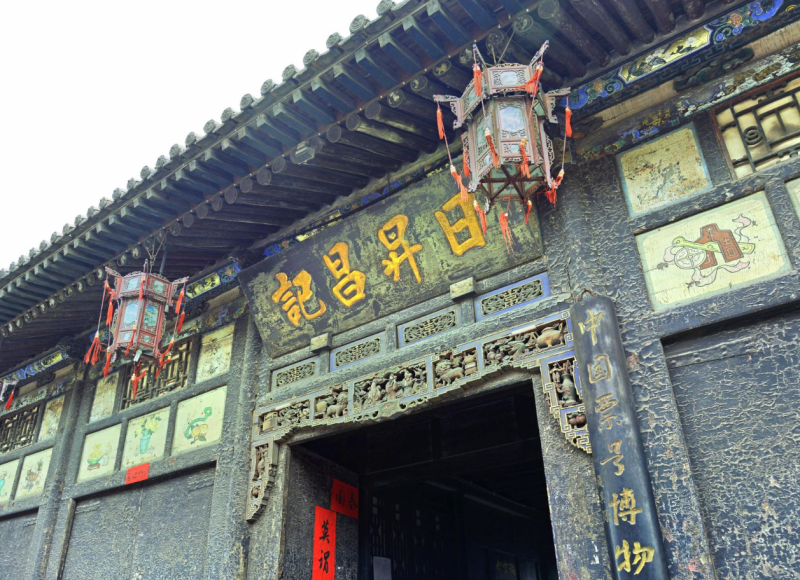
Rishengchang Draft Bank is located on West Street in the ancient city. It was founded in the third year of Daoguang in the Qing dynasty (1823) and was China's first private financial institution specializing in remittance, deposits, and loans. It is praised as the "ancestor of modern Chinese banks." The draft bank covers an area of more than 1,600 square meters. It faces north and is composed of three courtyards. The overall architecture is in the Ming and Qing style, with a rigorous layout. It is divided into functional areas such as the counter room, accounting room, guest room, manager's room, and vault, reflecting the professionalism and security of draft bank operations. The courtyard preserves precious cultural relics such as remittance bills, account books, and seals from that time, displaying the draft bank's operating procedures and management system. Among them, the anti-counterfeiting technology of the draft bank was especially exquisite. The handwriting, seals, and secret codes on the remittance bills were uniquely combined and were almost impossible to forge at the time. The success of Rishengchang Draft Bank spurred the rise of the draft bank industry in Pingyao. At its peak, the annual remittance amount reached tens of millions of taels of silver.
Pingyao County Government Office
The Pingyao County Government Office is located in the southwest part of the ancient city. It was first built in the Northern Wei dynasty, and the existing buildings were rebuilt during the Ming and Qing dynasties. It is one of the most completely preserved ancient county government offices in China, covering an area of more than 26,000 square meters, with a building area of more than 4,700 square meters. The office faces south and follows the layout of "court in front, residence behind." It consists of three parts: the central axis, the east axis, and the west axis. The central axis includes, in order, the main gate, ceremonial gate, grand hall, second hall, and third hall. The east axis includes the kitchen, study, and other rooms, while the west axis includes the prison, official offices, and other rooms. The grand hall is the core building of the county office. It is five bays wide, three bays deep, and 11 meters high. It was the place where the county magistrate tried major cases. In front of the hall stands the "Gongshengming" archway, symbolizing fairness and integrity. The county office also has a prison, divided into inner prison, outer prison, and women's prison. It preserves instruments of punishment and other physical objects from that time and is an important physical relic for studying the ancient Chinese judicial system. Every day at fixed times, there is a performance simulating the county magistrate holding court, attracting many tourists to watch.
Confucian Temple
The Pingyao Confucian Temple is located in the southeast corner of the ancient city. It was first built in the early Zhenguan period of the Tang dynasty, and the existing buildings are relics of the Ming and Qing dynasties. It is one of the earliest surviving Confucian temples in China and the most completely preserved Confucian temple architectural complex in Shanxi Province. The Confucian Temple covers an area of more than 40,000 square meters and faces south. It consists of buildings such as the Lingxing Gate, Pan Pond, Dacheng Hall, Minglun Hall, and Jingyi Pavilion. The layout is rigorous and the momentum is magnificent. Dacheng Hall is the main building of the Confucian Temple. It is five bays wide, three bays deep, and 15 meters high, with a single-eave hip-and-gable roof. Inside the hall are statues of Confucius, the Four Assessors, and the Twelve Philosophers. Outside the hall is a spacious platform, which is the place for sacrificing to Confucius. The Confucian Temple preserves a large number of stone inscriptions, among which the "Seventy-Two Sages" stele and the "Confucius Sacred Traces" stele are the most precious. In addition, the Confucian Temple also houses the China Imperial Examination Museum, displaying cultural relics of the imperial examination system from the Sui to the Qing dynasties, including examination papers and examination utensils. It is an important window for understanding the ancient Chinese imperial examination system.
Qingxu Temple
Qingxu Temple is located on East Street in the ancient city. It was first built in the second year of Xianqing in the Tang dynasty (657), originally named Taiping Temple, and renamed Qingxu Temple in the first year of Zhiping in the Song dynasty (1064). It is the largest Taoist temple in Pingyao Ancient City. The temple covers an area of more than 6,000 square meters and faces south. It consists of buildings such as the mountain gate, Longhu Hall, Sanqing Hall, and Chunyang Palace. Most of the existing buildings were rebuilt during the Ming and Qing dynasties. Longhu Hall enshrines statues of the Azure Dragon and White Tiger, which are tall and dignified. Sanqing Hall is the main hall of the temple. It is five bays wide and three bays deep, and enshrines statues of Yuanshi Tianzun, Lingbao Tianzun, and Daode Tianzun. The temple preserves a large number of Taoist sculptures and murals, among which the Yuan dynasty "Xuanwu Emperor" statue and Ming dynasty murals have high artistic value. Qingxu Temple is now the Pingyao County Museum, exhibiting cultural relics related to the ancient city's history and folk customs. It is an important place for understanding Pingyao culture.
City God Temple
The Pingyao City God Temple is located in the northeast corner of the ancient city. It was first built in the Northern Wei dynasty, and the existing buildings were rebuilt during the Ming and Qing dynasties. It is one of the most completely preserved City God temples in China, covering an area of more than 7,300 square meters. The City God Temple faces south and consists of buildings such as the mountain gate, theater tower, offering hall, main hall, and resting palace. Its architectural style integrates Taoist and folk belief elements. The theater tower is connected to the mountain gate, faces south, and stands opposite the main hall. It was the place where operas were performed when sacrificing to the City God in old times. The theater tower is exquisitely built, with superb wood carvings and brick carvings. The main hall enshrines a statue of the City God, with statues of judges, lesser ghosts, and other deities on both sides. The resting palace is the place where the City God rests. The wood carvings, stone carvings, and brick carvings in the City God Temple are known as the "Three Wonders," especially the wooden sparrow braces in the offering hall, which are beautifully shaped and imply good fortune. Every year on the 27th day of the fifth lunar month, the City God's birthday, a grand sacrificial activity and temple fair are held in the ancient city, creating a lively scene.
Food
Pingyao Beef
Pingyao beef is a traditional famous dish of Pingyao County. It has a long history, originating in the Han dynasty and becoming famous during the Ming and Qing dynasties. It is known nationwide for its tender meat, mellow fragrance, and reddish color, and is a National Geographical Indication Product of China. The production process of Pingyao beef is unique. It selects high-quality local yellow cattle and undergoes multiple processes such as slaughtering, cutting, curing, boiling, and air-drying. During curing, seasonings such as salt and Sichuan pepper are used, and after boiling, it is soaked in old broth, forming a unique flavor. Authentic Pingyao beef is dark red in color, firm in texture, and has clear lines when cut. It can be eaten directly in slices or used in stir-fries, cold dishes, and more. In Pingyao Ancient City, many time-honored shops sell Pingyao beef, such as "Guanyun" and "Yunqing." Prices vary according to quality, about 80–150 yuan per jin, making it a fine gift for tourists to give to relatives and friends.
Pingyao Wantuo
Pingyao Wantuo is a traditional snack of Pingyao County, also called "Wantuzi." It originated in the Qing dynasty and is made from buckwheat flour. During production, buckwheat flour is mixed with water into a paste, poured into bowls, and steamed. After cooling, it is removed from the mold to form round wantuo, which has a chewy and smooth texture. Wantuo can be eaten in many ways. It can be served cold with vinegar, soy sauce, mashed garlic, chili oil, and other seasonings, or stir-fried hot with bean sprouts, shredded meat, and the like, giving it a fresh and fragrant taste. Wantuo can be tasted at snack stalls and restaurants in the ancient city. It is affordable, about 5–8 yuan per serving, and is a daily snack loved by the people of Pingyao.
Kaolaolao
Kaolaolao is a traditional noodle dish in northern Shanxi and is also very common in Pingyao. It is named because its shape resembles a kaolao (a bamboo container). Kaolaolao is made from naked oat flour. The dough is rolled into thin strips and then rolled into cylinders, placed in a steamer, and steamed. It has a chewy and firm texture. When eaten, it can be dipped in a seasoning mixture of tomato sauce, meat sauce, and vinegar, or stewed together with meat and vegetables. In restaurants in Pingyao Ancient City, a serving of kaolaolao costs about 15–25 yuan. It is one of the daily staple foods of local people and reflects the characteristics of northern noodles.
Nearby Food — Taigu Cake
Taigu Cake is a traditional pastry of Taigu District, Jinzhong City, about 80 kilometers from Pingyao Ancient City. It is a nearby food worth tasting. Taigu Cake uses flour, sugar, and oil as its main ingredients and is made through processes such as dough preparation and baking. It is round, golden in color, crisp, soft, sweet, and melts in the mouth, with a rich wheat aroma. Taigu Cake has a long history. It was created in the Qing dynasty and was once presented to the imperial court as a tribute. It is now a national-level intangible cultural heritage. It can be purchased in specialty shops in Pingyao Ancient City or in shops in Taigu District. It costs about 2–3 yuan each, is easy to carry, and is a good choice for giving to relatives and friends.
Tickets:
Through ticket 125 yuan/person (including only attractions inside the city).
You can search for the official WeChat public account "Pingyao Ancient City Scenic Area" to get the latest updates or buy tickets online.
Opening Hours:
Open all day for tourists to enter and exit freely. The opening hours of paid attractions in the ancient city are: April 1–October 31, 8:00–18:00; November 1–March 31 of the following year, 8:30–17:30. Some attractions, such as the Pingyao County Government Office, hold performances at specific times. The specific performance times are subject to the scenic area's announcement on the day. Tourists are advised to arrange their time reasonably and try to visit during the opening hours of the attractions to avoid missing the opportunity to visit.
Suggested Tour Route:
Suggested tour route (2-day tour): On the first day, arrive at Pingyao Ancient City in the morning and enter from Yingxun Gate. First climb the Pingyao City Wall (about 2 hours) to overlook the entire ancient city; then go to Rishengchang Draft Bank (about 1 hour) to learn about the development of ancient Chinese finance. At noon, taste specialty foods such as Pingyao beef and wantuo in the ancient city. In the afternoon, visit the Pingyao County Government Office (about 1.5 hours) and watch the simulated court hearing performance; then go to the City God Temple (about 1 hour) to admire the exquisite wood carvings and brick carvings. Stay overnight in an inn in the ancient city that night and experience the night view of the ancient city.
On the second day, visit the Confucian Temple in the morning (about 1.5 hours) to experience the atmosphere of Confucian culture; then visit Qingxu Temple (about 1 hour) to learn about Taoist culture. Have lunch in the ancient city at noon. In the afternoon, stroll along West Street and South Street of the ancient city, admire the shop buildings in Ming and Qing style, and buy specialties such as Pingyao beef and Taigu Cake; you can also choose to visit minority attractions such as the Folk Museum in the ancient city. End the trip in the evening. If time permits, you can add one more day to visit the nearby Qiao Family Compound (about 40 kilometers from Pingyao) or Wang Family Compound (about 65 kilometers from Pingyao) to experience Shanxi merchant compound culture.
Transportation:
Long-distance bus: Taiyuan Jiannan Bus Station has direct long-distance buses to Pingyao Ancient City, departing every 30 minutes from 7:00 to 18:30, with a journey of about 2 hours and a fare of 35 yuan/person; Jinzhong Yuci Passenger Station has one bus per hour to Pingyao Ancient City, with a journey of about 1.5 hours and a fare of 25 yuan/person; Datong to Pingyao Ancient City has 3 buses per day, with a journey of about 4 hours and a fare of 80 yuan/person.
Train: Pingyao Railway Station is located about 1 kilometer northeast of the ancient city, about a 15-minute walk from the ancient city. Beijing, Taiyuan, Xi'an, and other places have direct trains to Pingyao Station. Taiyuan to Pingyao Station takes about 1.5 hours, with a hard-seat fare of 16.5 yuan; Beijing to Pingyao Station takes about 6 hours, with a hard-seat fare of 72 yuan. In addition, Pingyao Ancient City Station (high-speed railway station) is located about 10 kilometers west of the ancient city and has high-speed rail connections to Taiyuan, Xi'an, and other cities. Taiyuan South to Pingyao Ancient City Station takes about 40 minutes, with a second-class seat fare of 28 yuan. From Pingyao Ancient City Station, you can take bus No. 108 (3 yuan/person) or a taxi (about 20 yuan) to the ancient city.
Self-driving: From Taiyuan, drive south along the Beijing-Kunming Expressway (G5) and exit at Pingyao. The total distance is about 100 kilometers and the journey is about 1.5 hours. From Beijing, drive south along the Beijing-Kunming Expressway (G5) and exit at Pingyao. The total distance is about 550 kilometers and the journey is about 6 hours. Social vehicles are prohibited from entering the ancient city. Tourists need to park their cars in parking lots outside the ancient city. The charging standard is 5 yuan/hour, with a maximum charge of 30 yuan within 24 hours.
Must-Visit Attractions:
Pingyao City Wall: One of the most completely preserved Ming and Qing city walls in China, with a perimeter of 6,163 meters and a height of 10 meters. It offers a panoramic view of the ancient city. The full walk takes about 2–3 hours and it is the landmark attraction of the ancient city.
Rishengchang Draft Bank: China's first draft bank, covering an area of more than 1,600 square meters. It displays the operation mode of the ancient financial industry and is praised as the "ancestor of modern Chinese banks." The visit takes about 1 hour.
Pingyao County Government Office: One of the most completely preserved ancient county government offices in China, covering an area of more than 26,000 square meters. It is known as the "Little Forbidden City." There is a simulated court hearing performance every day, and the visit takes about 1.5 hours.
Confucian Temple: One of the earliest surviving Confucian temples in China, covering an area of more than 40,000 square meters. It preserves a large number of Ming and Qing buildings and stone inscriptions and is an important place for understanding Confucian culture. The visit takes about 1.5 hours.
Travel Suggestions:
The streets and alleys in the ancient city are intricate. It is recommended to download a map in advance or get a paper map at the visitor center to avoid getting lost; you can also hire a local guide (about 150 yuan for a full day) to gain an in-depth understanding of the ancient city's history and culture.
Accommodation in the ancient city is mainly in Ming and Qing style inns. Prices vary by room type and season. Economy inns cost about 150–300 yuan/night, while mid- to high-end inns cost about 400–800 yuan/night. During peak season (May–October, holidays), bookings should be made 3–5 days in advance.
To taste Pingyao beef, it is recommended to choose well-known brands such as "Guanyun" and buy from regular shops to avoid buying counterfeit products from mobile vendors; when purchasing, pay attention to the production date and shelf life.
If you plan to visit the nearby Qiao Family Compound or Wang Family Compound, it is recommended to make a same-day round trip. You can take buses from the Pingyao Ancient City Passenger Station to Qi County (where the Qiao Family Compound is located) or Lingshi County (where the Wang Family Compound is located), with fares of 15 yuan/person and 25 yuan/person respectively.
Some sections of the ancient city are stone-paved roads. It is recommended to wear comfortable flat shoes and avoid high heels to prevent inconvenience while walking.
Precautions:
Motor vehicles are prohibited in the ancient city (except scenic area work vehicles). Tourists need to walk or take human-powered tricycles in the scenic area (starting price 5 yuan, charged by distance). Be careful to choose tricycles with regular signs to avoid being overcharged.
Some ancient buildings in the ancient city are very old. When visiting, follow the rules, do not touch cultural relics or climb buildings at will, and do not take photos in areas where photography is prohibited.
There are many shops in the ancient city. When buying specialties, it is recommended to compare prices at several shops and bargain appropriately. Especially for antiques and handicrafts, be careful to distinguish authenticity.
In summer, the temperature in the ancient city is relatively high, so pay attention to sun protection and heat prevention, and carry items such as a sun hat and sunscreen; in winter, the temperature is relatively low, so pay attention to keeping warm.
Respect local customs and habits. There are still residents living in the ancient city. Avoid loud noises when touring and do not disturb residents' normal lives.
The ancient city has complete fire-fighting facilities, but most ancient buildings are brick-and-wood structures. Smoking and open flames are strictly prohibited. Violators will face fines or other penalties.