Huaguoshan Scenic Area is located in Haizhou District, Lianyungang City, Jiangsu Province. It is a national 5A-level tourist attraction, situated at the northern foot of the Yuntai Mountains. It is famous at home and abroad for the legend of "Sun Wukong's hometown" in the classic novel Journey to the West. The scenic area covers a total area of 75.39 square kilometers, and its main peak, Yunü Peak, has an elevation of 624.4 meters, making it the highest peak in Jiangsu Province. Huaguoshan is characterized by "the integration of mountains and sea, Great Sage culture, and ancient and famous trees." It blends natural landscapes with mythological legends and is a comprehensive scenic area integrating sightseeing, cultural experiences, and leisure vacations. The existing ancient architectural complex in the area covers about 12,000 square meters, including historical buildings such as Sanyuan Palace and Yuhuang Pavilion. The annual number of visitors has remained stable at more than 3 million, with summer (June-August) and the National Day holiday being peak periods, and the highest single-day reception capacity reaching 50,000 visitors.
Historical Culture
The historical culture of Huaguoshan can be traced back to the Shang and Zhou dynasties. Bronze vessels, jade articles, and other cultural relics unearthed in the scenic area indicate that ancestors were active here more than 3,000 years ago.
As the core birthplace of Journey to the West culture, the myths and legends of Huaguoshan have had a profound influence. Since the Tang dynasty, stories such as "the birth of the stone monkey" and "Havoc in Heaven" gradually spread. In the Ming dynasty, Wu Cheng'en depicted Huaguoshan in Journey to the West as the birthplace and base of Sun Wukong, making the scenic area an important symbol of Chinese mythological culture. Existing landscapes such as "Nüwa's Leftover Stone" (about 10 meters high and shaped like a monkey's head) and "Water Curtain Cave" are highly consistent with the descriptions in the novel, becoming must-visit places for tourists seeking traces of mythology.
Religious culture also has deep roots in Huaguoshan. Sanyuan Palace, first built in the Eastern Han dynasty, is one of the oldest Taoist holy sites in Jiangsu Province. After repeated renovations in the Tang, Song, Ming, and Qing dynasties, the existing buildings were rebuilt in the Qing dynasty, covering an area of about 8,000 square meters. They enshrine the Three Great Emperors, Sun Wukong, and other deities, combining Taoist and folk belief characteristics. Every year, the "Shangyuan Temple Fair" on the fifteenth day of the first lunar month and the "Peach Banquet" on the third day of the third lunar month attract tens of thousands of believers and tourists, forming a unique folk cultural landscape. In addition, the Ashoka Pagoda (first built in the Song dynasty, 40.58 meters high) in the scenic area is the oldest surviving Buddhist pagoda in northern Jiangsu, bearing witness to the spread and development of Buddhism in the region.
Main Attractions
Water Curtain Cave
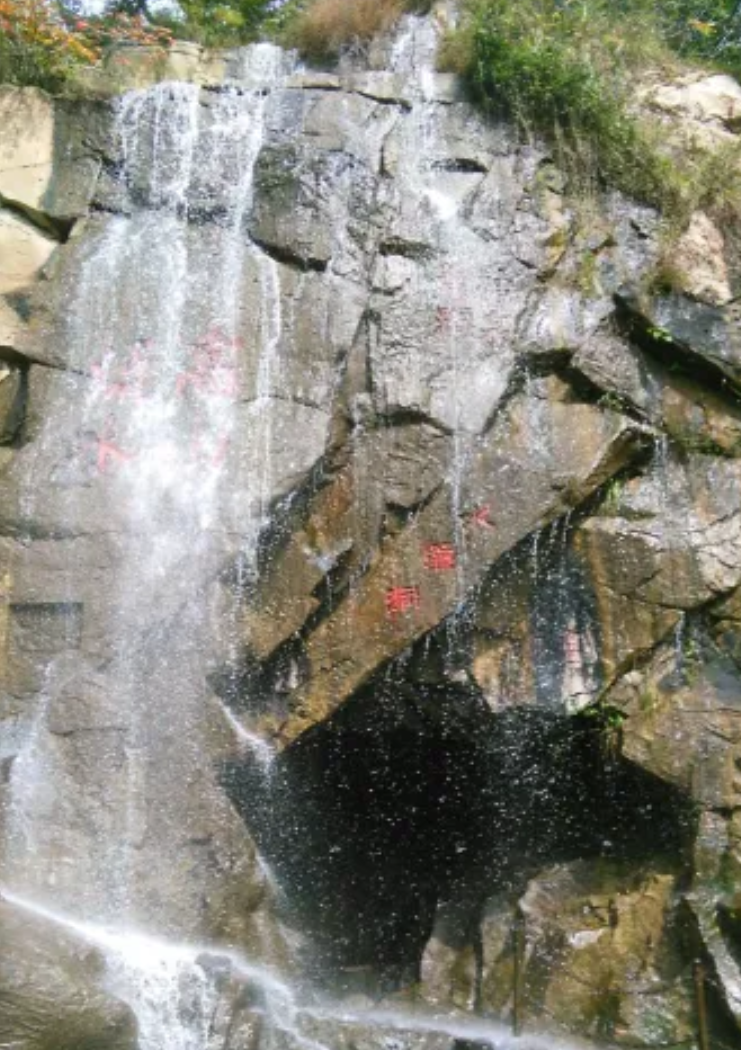
Water Curtain Cave is the most famous attraction in Huaguoshan. It is located in the central part of the scenic area. Above the cave entrance hangs a waterfall about 10 meters wide with a drop of 5 meters. The water flows like a curtain, matching the description in Journey to the West: "Huaguoshan, a blessed land; Water Curtain Cave, a cave heaven." The cave extends about 30 meters deep and covers about 150 square meters. It contains natural landscapes such as stone stools and stone tables. The inscription "Water Curtain Cave" on the cave wall dates from the Ming dynasty. Visitors can pass through the waterfall into the cave and experience the living environment of the "Handsome Monkey King." The platform at the cave entrance is an excellent place to view the waterfall and take photos. In summer, the waterfall has abundant water and the scenery is especially spectacular.
Yunü Peak
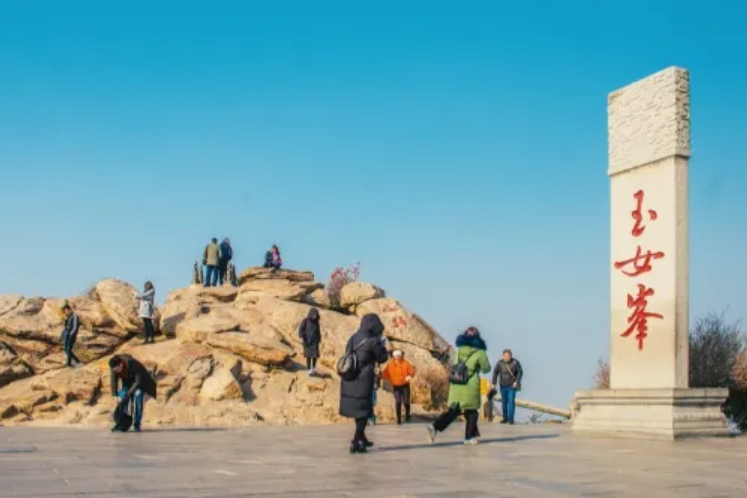
Yunü Peak is the main peak of Huaguoshan, with an elevation of 624.4 meters, the highest point in Jiangsu Province. At the summit are the Sunrise Viewing Platform and Yunü Pavilion. From the platform, visitors can look far out over the Yellow Sea, Lianyungang Port, and the surrounding mountains, enjoying a broad view. In the early morning, one can watch the sunrise over the sea, with rosy clouds reflecting on the water in magnificent scenery. On clear days, the rare "mirage" phenomenon can also be seen (mostly in spring and autumn). At the summit stands a stone tablet reading "Highest Altitude Point in Jiangsu Province." Around it grow thousand-year-old ancient pines (about 1,000 years old, 1.2 meters in diameter at breast height) and rare plants. It is a must-visit place for hiking enthusiasts. Walking from the scenic area gate to the summit takes about 2.5 hours, or visitors can take the scenic area sightseeing bus (fare 25 yuan/person) to the halfway point and then walk for 1 hour.
Sanyuan Palace
Sanyuan Palace is located in the hinterland of Huaguoshan and is the largest ancient architectural complex in the scenic area. It was first built in the Eastern Han dynasty. The existing buildings are in Qing dynasty style and cover an area of 8,000 square meters. They consist of the Sanyuan Main Hall, Yuhuang Pavilion, Sutra Library, and other structures. The Sanyuan Main Hall enshrines the three great emperors of Heaven, Earth, and Water. The side halls enshrine statues such as Sun Wukong (wearing imperial robes, reflecting folk reverence for him) and Guan Yu. Ancient cypresses tower in the palace, among which a "thousand-year ginkgo" is about 1,100 years old, 25 meters tall, and 3.5 meters in diameter at breast height. In autumn, its golden leaves contrast beautifully with the red walls. Every year on the fifteenth day of the first lunar month, the Shangyuan Festival, a blessing ceremony is held in the palace, and incense is abundant.
Nüwa's Leftover Stone
Nüwa's Leftover Stone is located west of Water Curtain Cave. It is a huge natural boulder about 10 meters high with a circumference of 30 meters. Its top is slightly round and its bottom somewhat pointed, shaped like a monkey's head, echoing the description of "the birth of the stone monkey" in Journey to the West. The three characters "Nüwa's Leftover Stone" are carved on the stone. According to legend, it was transformed from a five-colored stone left by Nüwa when she repaired the sky. Beside the boulder is a crack about 0.5 meters wide. Legend says Sun Wukong burst forth from this stone. Surrounding it are a viewing platform and reliefs of Journey to the West stories. It is one of the core attractions for interpreting the mythological culture of Huaguoshan.
Ashoka Pagoda
Ashoka Pagoda is located at the northern foot of Huaguoshan. It was first built in the first year of the Tiansheng era of the Northern Song dynasty (1023). It is a pavilion-style brick pagoda 40.58 meters high with 9 stories. The pagoda body is octagonal, and each story has arched doors, false windows, and reliefs. The patterns include Buddha images, flowers, and more, with exquisite carving. There was originally a wooden staircase inside the pagoda for climbing, but it is now closed to protect the cultural relic. Its exterior is well preserved. It is one of the oldest surviving Buddhist pagodas in Jiangsu Province and an important physical reference for studying Song dynasty architecture and Buddhist art. Beside the pagoda is a stele corridor displaying inscriptions and poems by literati of past dynasties.
Huaguoshan Gate
Huaguoshan Gate is the entrance landmark of the scenic area. It is an antique archway-style building 12 meters high and 27 meters wide, supported by 108 stone pillars (symbolizing the 108 tribulations in Journey to the West). The plaque above the gate reading "Huaguoshan" was inscribed by a contemporary calligrapher. The reliefs on both sides depict classic scenes from Journey to the West (such as the birth of the stone monkey and Havoc in Heaven). In the square in front of the gate stands a bronze statue of "Sun Wukong" (5 meters high, holding the golden cudgel), a landmark spot for tourists to take photos. Around the square are a visitor center, ticket office, and parking lot, with complete facilities.
Tour Route:
Recommended one-day tour route: Arrive at the scenic area gate at 7:30 a.m., take photos, and then take the sightseeing bus to the "Jiulong Bridge" stop (about 20 minutes); walk to Water Curtain Cave (15 minutes), pass through the waterfall into the cave for a visit (30 minutes); follow the mountain path to Nüwa's Leftover Stone (10 minutes) to learn about the legend of the stone monkey's birth; at 10:00 head to Sanyuan Palace (20 minutes), tour the ancient architectural complex and the thousand-year ginkgo (1 hour), and have lunch here (vegetarian noodles 15 yuan/bowl).
At 13:00 p.m., depart from Sanyuan Palace and walk to Ashoka Pagoda (40 minutes), admire the ancient Buddhist pagoda and steles (40 minutes); at 14:30 take the cableway to Yunü Peak (10 minutes), reach the summit and look far over the sea and mountains from the Sunrise Viewing Platform (1 hour); at 16:00 walk down the mountain to the "Great Sage Buddha" statue (30 minutes), visit and take photos; at 16:40 take the sightseeing bus back to the gate, and on the way you may buy specialties such as golden cudgel toys and cloud-mist tea at the souvenir shop; at 17:30 leave the scenic area.
If time permits, you can add a visit to the "Seventy-Two Caves" (located between Water Curtain Cave and Sanyuan Palace, requiring an extra 1 hour) to explore various natural stone caves and experience the artistic conception of a "cave heaven and blessed land."
Travel Tips:
The best seasons for visiting are April-May (mountain flowers in bloom) and September-October (clear autumn weather and cloud-mist tea picking season). Summer is hot and rainy, so bring rain gear and sun protection; winter is cold and some mountain roads may freeze, so anti-slip shoes are recommended.
The scenic area is large, and walking the entire route takes about 6-7 hours. Those with limited stamina can reasonably combine the sightseeing bus and cableway to save energy and visit the core attractions.
Visitors with children can rent a child stroller at the gate (50 yuan/day, deposit 300 yuan). Some sections are steep, so pay attention to safety.
For souvenirs, it is recommended to choose shops at the scenic area exit, where prices are relatively transparent. Golden cudgel toys (plastic) cost 10-30 yuan each and are suitable as gifts for children.
If you want to watch the sunrise, you need to enter the scenic area before 5:30 a.m. (opens at 5:30 in peak season). You can stay at the "Huaguoshan Hotel" at the foot of the mountain, only a 10-minute walk from the gate. Standard room rates are about 300 yuan/night.
Precautions:
Mountain roads in the scenic area are steep, and some sections have no guardrails. Pay attention to your footing and do not approach cliff edges. Roads are slippery on rainy days, so anti-slip sports shoes are recommended.
Respect the rules of religious sites. When entering Sanyuan Palace, dress neatly, do not make noise, do not take photos (photography is prohibited inside the halls), and do not touch statues or offerings.
There are many mosquitoes in summer, so bring mosquito repellent. The temperature on the mountain is 5-8°C lower than at the foot, and the temperature difference between morning and evening is large, so it is advisable to bring a light jacket.
Smoking and littering are prohibited in the scenic area. Environmentally friendly trash bins are provided, and violators will face fines of 50-200 yuan.
During peak season (especially holidays), there are many visitors. It is recommended to arrive before 7:30 to avoid the peak period from 10:00 to 15:00 and reduce queuing time.
Transportation:
Bus: Within Lianyungang city, take Bus B11 or Tourist Line 1 to reach Huaguoshan Scenic Area directly. The fare is 2 yuan. Bus B11 departs from Lianyungang Railway Station every 15 minutes, with a travel time of about 40 minutes; Tourist Line 1 departs from Lianyungang East Station every 30 minutes, with a travel time of 1 hour.
Self-driving: From downtown Lianyungang, drive southeast along Huaguoshan Avenue for about 10 kilometers to reach the scenic area, about 20 minutes. The scenic area parking lot charges 15 yuan/day for small vehicles and 30 yuan/day for large vehicles. Parking spaces are tight on holidays, so it is advisable to arrive early.
Taxi: Taking a taxi from Lianyungang Railway Station to the scenic area is about 15 kilometers and costs 30 yuan; from Lianyungang East Station it is about 30 kilometers and costs 60 yuan.
Train: Take the high-speed rail to Lianyungang Station or Lianyungang East Station, then transfer to a bus or taxi (as above). Lianyungang Station is closer to the scenic area and is recommended as the first choice.
Opening Hours:
Open all year round. Opening hours adjust with the seasons:
March 1-November 30 (peak season): 7:00-18:00 (last entry at 17:00)
December 1-February 28 of the following year (off season): 8:00-17:00 (last entry at 16:00)
Among them, the opening hours of attractions such as Sanyuan Palace and Ashoka Pagoda are consistent with the scenic area; Water Curtain Cave may be temporarily closed in January each year due to waterfall maintenance (subject to scenic area announcements); the sightseeing bus and cableway will suspend operation in severe weather (such as heavy rain, strong winds, and freezing).
Tickets:
Ticket 90 yuan/person.