Three Kingdoms and Water Margin City is located in Binhu District, Wuxi City, Jiangsu Province. It is a large-scale film and television shooting base built by China Central Television for the production of "Romance of the Three Kingdoms" and "Water Margin," and is now a national 5A-level tourist attraction. The scenic area is famous for its grand scale, realistic ancient architectural complexes, and profound historical and cultural connotations. It skillfully integrates the majestic momentum of the Three Kingdoms period with the marketplace customs of the Song Dynasty, becoming an important window for displaying scenes from China's classical masterpieces. The Three Kingdoms City covers an area of about 35 hectares, and the Water Margin City covers an area of about 58 hectares. The two cities are adjacent to each other, and their internal buildings are carefully built according to descriptions in the original works and historical records. They not only meet the needs of film and television shooting but also provide tourists with an immersive historical and cultural experience. Strolling through them feels like traveling through time, allowing one to directly feel the golden spears and iron horses of the Three Kingdoms and the heroic spirit of the Water Margin heroes.
Historical Culture
The historical and cultural background of Three Kingdoms City relies on the historical turmoil from the late Eastern Han Dynasty to the Three Kingdoms period and the classical masterpiece "Romance of the Three Kingdoms." The buildings and scenes in the scenic area reproduce that era of contending warlords and heroes emerging in large numbers. For example, the naval camp of Wu and Cao Cao's reviewing stand are closely related to the military and political culture of the Three Kingdoms period. As one of China's Four Great Classical Novels, "Romance of the Three Kingdoms" has had a profound influence. Through real-scene architecture and performance activities, Three Kingdoms City materializes classic stories from the book such as "Burning of Red Cliffs" and "Borrowing Arrows with Thatched Boats," allowing tourists to more intuitively understand that magnificent history and the cultural spirit of strategy, loyalty, and righteousness contained within it.
Water Margin City takes the social style of the Northern Song Dynasty and "Water Margin" as its cultural core. The Northern Song Dynasty was a period in Chinese history when the commodity economy was relatively developed and marketplace culture flourished. Scenes such as Qingming Shanghe Street and Zishi Street in Water Margin City vividly restore the urban layout, commercial activities, and folk customs of that time. The locations where classic episodes in "Water Margin" such as "Wu Song Fights the Tiger" and "Lu Zhishen Uproots the Willow Tree" took place are all presented in the scenic area. These scenes are not only reproductions of the novel's content but also reflect the social contradictions and folk spirit of chivalry in the Northern Song Dynasty, allowing tourists to feel the historical and cultural atmosphere of the Song Dynasty while touring.
Main Attractions
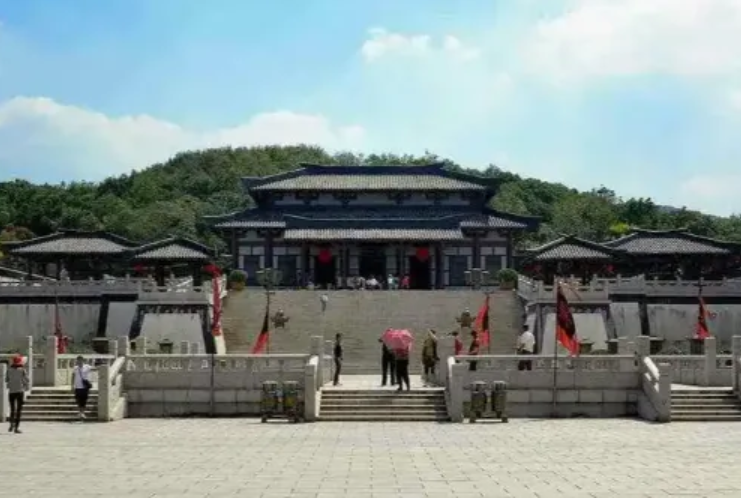
Three Kingdoms City · Palace of the King of Wu
The Palace of the King of Wu is one of the core buildings of Three Kingdoms City. It is magnificent and covers an area of about 11,000 square meters. It mainly consists of the palace gate, main hall, side halls, and so on. The palace gate is tall and majestic, with vermilion gates paired with golden door nails, highlighting royal grandeur. The main hall features carved beams and painted rafters and antique furnishings, reproducing the luxurious scene of the Wu court during the Three Kingdoms period. This was once the filming location for plots such as "Liu Bei Takes a Wife" in "Romance of the Three Kingdoms." The square in front of the hall is spacious and open, and large-scale ancient costume performances are often held there, allowing tourists to experience Three Kingdoms court culture up close.
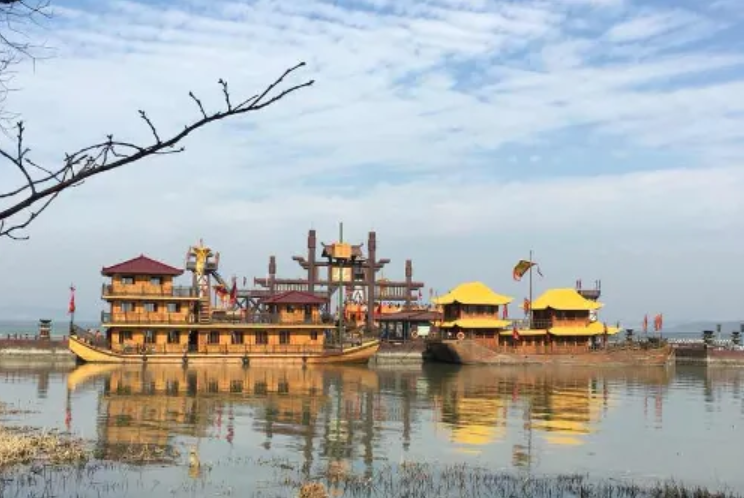
Three Kingdoms City · Red Cliffs Ancient Battlefield
The Red Cliffs Ancient Battlefield is located in the lakeside area of Three Kingdoms City and is an attraction built based on the scene of the "Battle of Red Cliffs." There are imitation ancient warships, camps, and other facilities. The lake area is about 65,000 square meters. Tourists can take boat rides and feel as if they are in that earth-shaking battle amid soaring flames. The scenic area also regularly stages the live-action performance "Burning of Red Cliffs," using modern sound, light, and electric technology to reproduce the fierce scenes of the battle, allowing tourists to deeply feel the cruelty and grandeur of war during the Three Kingdoms period.
Water Margin City · Qingming Shanghe Street
Qingming Shanghe Street was built based on the Northern Song painter Zhang Zeduan's "Along the River During the Qingming Festival." It is about 300 meters long. Shops line both sides of the street, including taverns, teahouses, pawnshops, and cloth stores. The architectural style is antique, reproducing the marketplace prosperity of Bianjing, the capital of the Northern Song Dynasty. Staff on the street wear Song Dynasty clothing and engage in imitation ancient activities such as blacksmithing, weaving, and selling snacks. Tourists can taste Song Dynasty specialty snacks here, buy imitation ancient handicrafts, and immersively experience Song Dynasty marketplace life.
Water Margin City · Zishi Street
Zishi Street is an important street in Water Margin City that displays marketplace customs, and it is also the setting of many classic stories in "Water Margin." It is about 200 meters long. On the street are buildings such as the Yanggu County government office after "Wu Song Fights the Tiger," the home of Wu Dalang and Pan Jinlian, and Granny Wang's Teahouse. These buildings are compactly arranged and full of the flavor of daily life. Strolling among them, tourists can seem to see scenes such as Wu Song angrily killing Ximen Qing and Wu Dalang selling sesame cakes, deeply experiencing the charm of the Water Margin stories.
Water Margin City · Liangshan Hall of Gathering of Heroes
The Liangshan Hall of Gathering of Heroes is one of the landmark buildings of Water Margin City and is the place where the Liangshan heroes discuss affairs and gather. Inside the hall are seats for 108 heroes including Chao Gai and Song Jiang, along with weapons and other items. It is solemn and reproduces the heroic spirit of the Liangshan heroes in "acting on behalf of Heaven." The architectural style of the Hall of Gathering of Heroes is rough and grand, reflecting the informal and unconstrained character of the Liangshan heroes. This is also the filming location for many scenes in film and television dramas where the Liangshan heroes gather, allowing tourists to feel the unity and heroic spirit of the Liangshan heroes.
Tour Route:
Tourists can first visit Three Kingdoms City. Entering through the main gate of Three Kingdoms City, first visit the Palace of the King of Wu to experience royal grandeur, then go to the Red Cliffs Ancient Battlefield to watch the live-action performance "Burning of Red Cliffs," and then go to attractions such as the naval camp and the reviewing stand to experience Three Kingdoms military culture. The tour takes about 3-4 hours. After that, go to the adjacent Water Margin City. First stroll along Qingming Shanghe Street to experience Song Dynasty marketplace customs, then go to Zishi Street to experience scenes from Water Margin stories, and finally visit the Liangshan Hall of Gathering of Heroes to feel heroic spirit. The tour of Water Margin City takes about 3-4 hours. For the entire itinerary, one day is basically enough to visit the main attractions of the two major scenic areas. If you want a more detailed visit and to watch all performance activities, you can arrange two days.
Tour Suggestions:
It is recommended to visit in spring and autumn, when the weather is suitable and the temperature is relatively mild, making it suitable for long periods of outdoor activity. In summer, pay attention to sun protection and heat prevention; in winter, pay attention to keeping warm.
The scenic area has rich performance activities, such as "Burning of Red Cliffs" and "Three Heroes Fight Lu Bu." It is recommended to check the performance schedule in advance and arrange the itinerary reasonably to avoid missing wonderful performances.
The scenic area is large, and walking tours take a long time. It is recommended to wear comfortable sports shoes. You can also take sightseeing buses in the scenic area. The sightseeing bus ticket price is 20 yuan per person, and it can travel between major attractions.
For dining, there are restaurants and snack stalls in the scenic area, but prices are relatively high. You can bring some drinking water and snacks, or go to restaurants around the scenic area to taste local specialty food.
During peak seasons (holidays and weekends), there are many tourists. It is recommended to arrive at the scenic area in advance to avoid crowds. You can choose to enter the scenic area from 8:00-9:00 in the morning to tour more leisurely.
Precautions:
Some buildings and facilities in the scenic area are imitation ancient structures. Tourists need to protect cultural relics and public facilities and must not climb, carve on, or damage them.
When watching live-action performances, observe on-site order, sit and act according to staff guidance, and do not move around or make loud noises at will, so as not to affect others' viewing.
There are many water areas in the scenic area. When touring by lakes and rivers, pay attention to safety and do not play near the water. Tourists with children in particular should take good care of them.
In summer, there are many mosquitoes and insects in the scenic area. It is recommended to carry mosquito repellent, floral water, and other mosquito prevention supplies to avoid being bitten.
The signal in the scenic area is good, but for convenience, you can download the scenic area map in advance to understand the distribution of attractions and routes and reasonably plan the tour order.
Respect the guidance and arrangements of staff in the scenic area, abide by the various regulations of the scenic area, tour in a civilized manner, and jointly maintain a good environment in the scenic area.
Transportation:
Bus: You can take Wuxi bus routes 82, 87, 91, and others directly to the entrance of the Three Kingdoms and Water Margin City scenic area. The fare is 2 yuan per person, with frequent departures, making it convenient and quick.
Subway: Take Wuxi Metro Line 1 to "Changguangxi Station," then transfer to bus 82 to reach the scenic area. The subway fare depends on the distance traveled, generally between 2-5 yuan.
Tourist special line: There are special tourist line buses in Wuxi city going to Three Kingdoms and Water Margin City, such as "Leyou Line 1," covering major attractions. The fare is 5 yuan per person, comfortable and convenient.
Self-driving: The scenic area has a large parking lot. The charging standard is 10 yuan per time (small car). Self-driving tourists can navigate directly to the scenic area. The parking lot is conveniently located near the scenic area entrance.
Taxi/ride-hailing: Taking a taxi or ride-hailing car from downtown Wuxi to the scenic area takes about 30-40 minutes. The cost varies depending on the departure point, generally between 50-100 yuan.
Opening Hours:
The opening hours of Three Kingdoms and Water Margin City are adjusted according to the season. Every year from March 1 to October 31, the opening hours are 7:30-17:30; from November 1 to February 28 (or 29) of the following year, the opening hours are 8:00-17:00. The times of some performance activities in the scenic area are arranged accordingly according to the opening hours. Tourists are advised to check the activity schedule for the day in advance so as to better plan their tour itinerary.
Tickets:
Ticket 150 yuan per person.