Located in Tianhe District, Guangzhou City, Guangdong Province, the South China National Botanical Garden, Chinese Academy of Sciences (CAS) is a key component of China’s national botanical garden system, upgraded from the South China Botanical Garden, CAS. Covering a total area of 333 hectares, it is a comprehensive botanical garden integrating plant scientific research, ex situ species conservation, science education, and ecological leisure tourism, and is also a national 4A-level scenic spot. Benefiting from the southern subtropical monsoon climate, the garden focuses on the collection and conservation of tropical and subtropical plant resources. It currently conserves over 17,000 plant species and features multiple specialized collections and research facilities. Combining scientific functions with recreational appeal, the garden includes a exhibition greenhouse, herbarium, science information center, and other supporting buildings. It serves as both a core base for plant diversity conservation in South China and a well-known ecotourism destination.
History and Culture
The South China National Botanical Garden traces its origins to the Agricultural and Forestry Plant Research Institute of Sun Yat-sen University, founded in 1929 by Academician Chen Huan-yong. It was one of the earliest modern botanical research institutions in China. Since its establishment, the institute has continuously conducted botanical surveys, specimen collection, and taxonomic research in South China and Southeast Asia, amassing a vast collection of plant specimens and laying the foundation for botanical research in the region.
In 1954, the institute was placed under the administration of the Chinese Academy of Sciences and renamed the South China Institute of Botany, CAS. Subsequently, ex situ conservation gardens and various specialized planting areas were gradually built. In 2003, it was officially renamed the South China Botanical Garden, CAS. In July 2022, the South China National Botanical Garden was established based on the South China Botanical Garden, becoming part of the national botanical garden system.
Over nearly a century of development, the garden has nurtured numerous botanical researchers, produced many new plant species descriptions, carried out conservation work for rare and endangered plants, and explored useful plant resources. At the same time, it has continuously offered public science education, forming a tradition that integrates research, conservation, science popularization, and cultural tourism. It carries the historical mission of protecting South China’s plant resources and studying its biodiversity.
Main Attractions
Exhibition Greenhouse (Plant World)
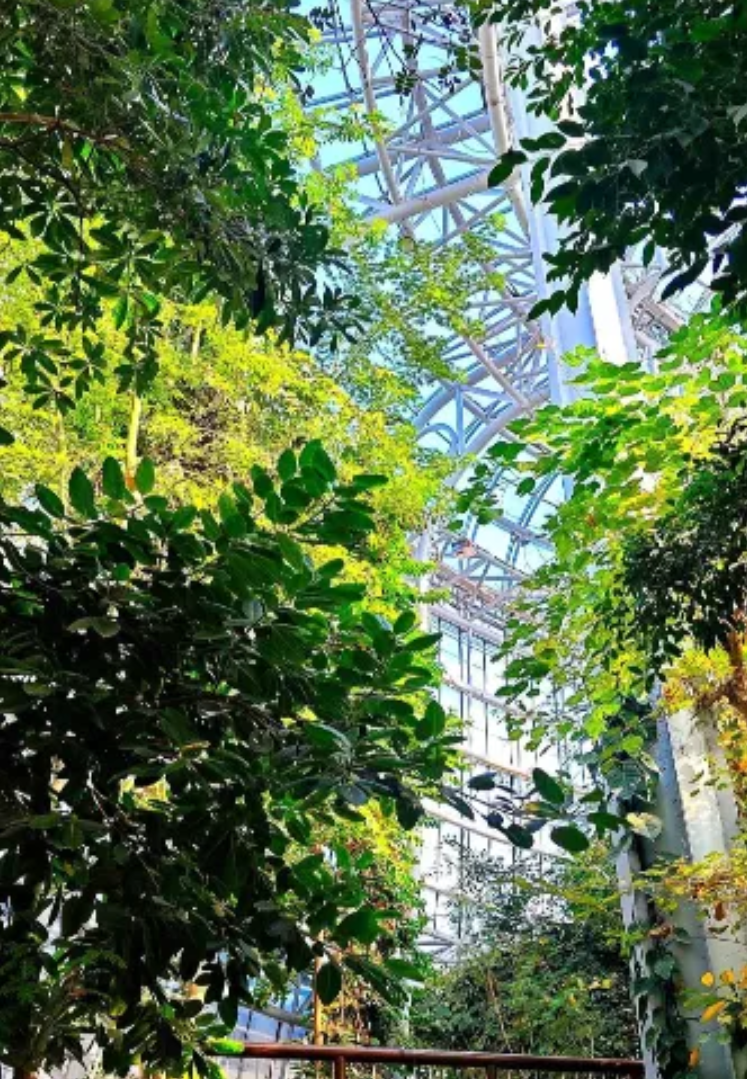
The exhibition greenhouse is the garden’s landmark building, comprising several halls such as the Tropical Plant Hall, Polar Plant Hall, Desert Plant Hall, and Rainforest Plant Hall. Each hall regulates different temperature and humidity conditions to conserve tropical, subtropical, arid?zone, and high?elevation plants. It houses many rare and ornamental species and is a core area for visitors, ideal for learning about typical plants from various climate zones.
Longdong Qilin
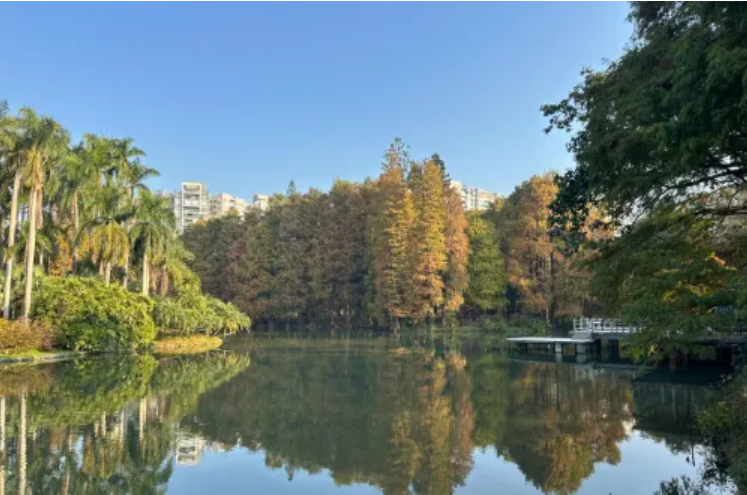
Longdong Qilin is a classic landscape feature of the garden, composed of the Palm Garden and the Relic Plant Garden. Water bodies interspersed with palm trees, metasequoia, and bald cypress create beautiful reflections along the shore. It has been selected as one of the “Eight Sights of Guangzhou” and is a popular spot for photography and leisure, showcasing palm family plants and ancient relict plant groups.
Medicinal Plant Garden
This garden concentrates on collecting native medicinal plants from South China, arranged according to their medicinal functions. Informational signs introduce the morphology and medicinal values of various species. It serves both educational and conservation functions and is a good place to learn about Lingnan’s traditional medicinal plant resources.
Magnolia Garden
The Magnolia Garden is one of the largest ex situ conservation sites for Magnoliaceae in China, housing many rare species of the family. Every spring, during the peak flowering season, the garden is filled with fragrance. It undertakes germplasm preservation and breeding research for Magnoliaceae.
Bromeliad Garden
Focused on bromeliads, this garden collects numerous ornamental bromeliads and edible pineapple relatives, showcasing the diversity of the family. It is suitable for viewing tropical herbaceous plants.
Fern and Shade Plant Garden
This garden simulates a shady, humid understory environment, concentrating on ferns, aroids, and other shade?loving plants. It creates a miniature rainforest landscape, displaying the evolution and survival characteristics of shade plants.
Suggested Tour Route:
Main Gate Plaza → Exhibition Greenhouse → Longdong Qilin → Magnolia Garden → Medicinal Plant Garden → Fern and Shade Plant Garden → Bromeliad Garden → West Gate Exit
Visit Tips:
Recommended visiting time: 4 to 6 hours. The garden is large, so plan rest breaks reasonably.
Mosquitoes and insects are more active in spring and summer; bring repellent and take sun protection measures.
For water scenery photos, visit Longdong Qilin in the morning when the light is softer.
Carry drinking water, as supply points within the garden are scattered.
If interested, book a guided science interpretation service in advance to learn more about plants.
Before visiting during flowering seasons, check the garden’s official announcements for bloom forecasts.
Important Notes:
Picking flowers, fruits, leaves, or digging up plants is strictly prohibited; violators will be dealt with according to regulations.
Do not feed or disturb wild animals, and do not release alien species.
Open flames, fire sources, and smoking are prohibited throughout the garden.
Do not enter closed experimental conservation areas or climb over fences.
On rainy days, some forest trails may be slippery; walk carefully.
Drone flights are not allowed without official permission.
Respect public facilities, do not litter, and abide by the garden’s visiting regulations.
Transportation:
Public transit: Take Metro Line 6 to Botanical Garden Station; exit and walk to the main gate. Multiple bus routes stop at the Botanical Garden Main Gate bus stop.
Driving: Search “South China National Botanical Garden (Main Gate)” on navigation apps. The garden has a parking lot with limited spaces; on holidays, public transport is recommended.
Taxis and ride?hailing vehicles can drop off/pick up at the designated area at the main gate.
Opening Hours:
Garden gates: 7:30 – 17:30 daily.
Exhibition Greenhouse: 9:00 – 17:00, with last entry at 17:00.
During statutory holidays, opening arrangements are subject to official announcements. In extreme weather conditions, the garden or exhibition halls may adjust opening hours temporarily.
Ticket Price:
Admission: 20 RMB per person.