Guangzhou Zoo is located at No. 120, Xianlie Middle Road, Yuexiu District, Guangzhou, Guangdong Province. It is a national AAAA-level tourist attraction and ranks among the three major urban zoos in China, together with Beijing Zoo and Shanghai Zoo. The zoo covers an area of approximately 42 hectares and has two entrances, the South Gate and the North Gate. The grounds are planted with over 200 species and more than 10,000 individual plants, presenting a distinctive Lingnan garden style. The zoo houses and exhibits about 400 species of wildlife, totaling over 5,000 animals, including dozens of nationally protected first-class animals such as giant pandas and golden snub-nosed monkeys, as well as second-class protected species like red pandas and white-naped cranes. Integrating wildlife exhibition, science education, scientific research, and leisure tourism, Guangzhou Zoo has been honored as one of the National Top Ten Zoos, a National Popular Science Education Base for Wildlife Conservation, and a Guangdong Provincial Youth Science and Technology Education Base. It receives an average of about 5 million visitors annually and serves as a major urban zoo and wildlife popular science platform in South China.
History and Culture
The history of Guangzhou Zoo can be traced back to Yonghan Park, established in 1928 on what is now Zhongshan Fourth Road, where more than 60 animal species were exhibited at the time—making it Guangzhou’s first public park with zoo functions. In 1950, Yonghan Park was renamed People’s Park, and in May 1955, it was officially designated Guangzhou Zoo. As the original site was too small for expansion, the municipal government selected Mayinggang as the new location in 1956.
On January 1, 1958, the new Guangzhou Zoo officially opened to the public. Since then, the zoo has continuously improved its animal exhibits and garden facilities, enriched its animal collection, and conducted long?term wildlife breeding research, successfully breeding over a hundred species. In 2008, Guangzhou Zoo was rated a national AAAA-level tourist attraction. Over decades of development, it has continuously upgraded its venues, enhanced animal welfare, and expanded its science education system, becoming an urban landmark that carries the memories of generations of Guangzhou residents.
Major Attractions
Giant Panda House
Located in the central part of the zoo, south of Monkey Hill, the Giant Panda House incorporates Lingnan kapok flower elements into its design. It features two indoor exhibition halls and two outdoor activity areas. The enclosures simulate the giant pandas’ native alpine bamboo forest habitat and are equipped with climbing frames, greenery, and pools. It is home to giant pandas Xing?Yi and Ya?Yi and is the most popular exhibit in the zoo, with supporting wildlife science panels that systematically introduce giant panda conservation knowledge.
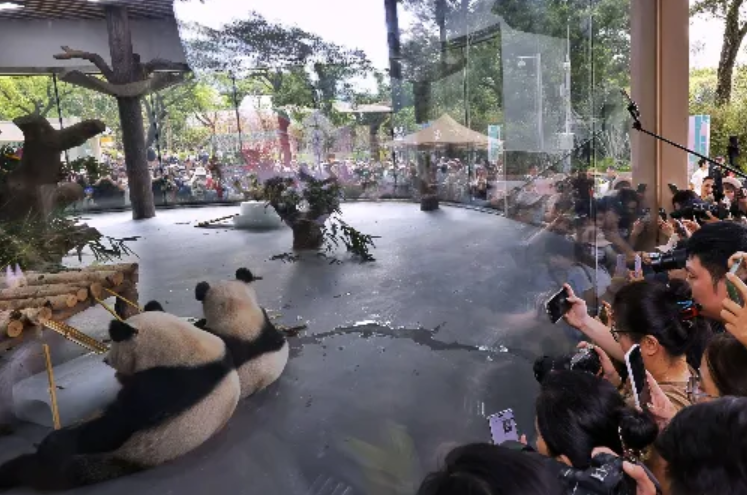
Orangutan/Chimpanzee House
Near the North Gate, the Chimpanzee House was renovated and opened in 2006, covering a total area of about 3,000 square metres, with outdoor exercise yards of 2,000 square metres. The exhibit includes an indoor temperature?controlled resting house, glass viewing halls, and outdoor ecological exercise areas, landscaped with rockeries, waterfalls, and native vegetation to create a mountain forest environment. It houses chimpanzees, and visitors can observe their daily behaviours from multiple angles at a second?floor viewing platform.
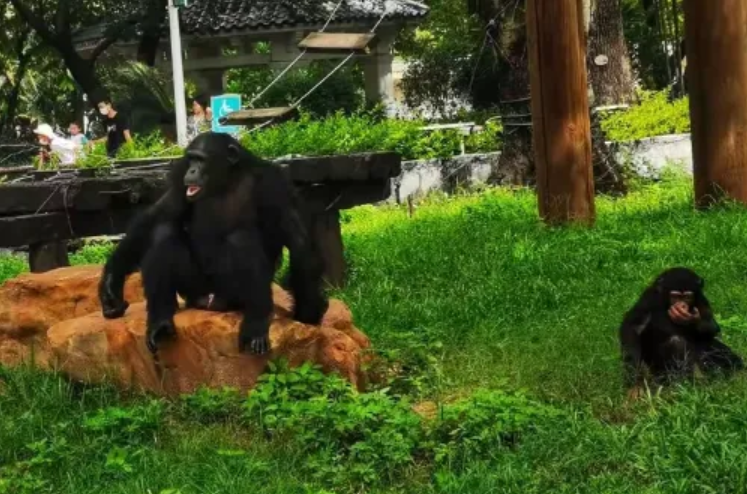
Aviary (Fei Qin Da Guan)
Located in the southern part of the zoo, this is a large comprehensive bird exhibit comprising multiple independent aviaries and open bird?watching areas. It houses over a hundred bird species, including flamingos, peafowl, ostriches, various parrots, and white pelicans. Some areas are designed with large open net?cages, allowing visitors to watch birds up close. The pink flamingo area is a popular photo spot.
Herbivore Area
Situated in the southeastern section, this area includes giraffe, zebra, Asian elephant, and kangaroo exhibits. The giraffe exhibit has an official feeding platform, and nearby are exhibits for rhinos, sika deer, Eld’s deer, antelopes, and other herbivores. The kangaroo house, rebuilt in 2006, features wooden boardwalks and glass railings for easy viewing of kangaroo activity.
Monkey Hill
Located in the centre of the zoo, next to the Fun Garden and Animal Square, Monkey Hill is a classic primate exhibit, mainly housing rhesus macaques and Assam macaques. Built on a hillside, the open space provides a natural climbing and activity environment, making it an important spot for observing social primates.
Jinlin Yuan (Koi & Aquarium Area)
This aquatic animal exhibit features several ponds of various sizes stocked with koi and other ornamental fish. Surrounded by lush greenery, the area offers a tranquil environment ideal for leisurely viewing and photography.
Guanlu Lake
A natural lake landscape within the zoo, Guanlu Lake is home to black swans, mute swans, mandarin ducks, and other waterfowl. A lakeside walking trail allows visitors to watch the birds at rest, while the lake and greenery blend harmoniously—making it a relaxing leisure area.
Suggested Route:
South Gate → Aviary → Jinlin Yuan → Herbivore Area (giraffes, zebras, elephants) → Giant Panda House → Monkey Hill → Fun Garden → Guanlu Lake → Chimpanzee House → Carnivore Area → North Gate
Visitor Tips:
It is recommended to enter between 8:00 and 11:00 a.m., as most animals are more active in the morning, offering better viewing experiences, especially for giant pandas and primates.
The walking distance is long; wear comfortable sports shoes. Strollers are available for rent, so plan ahead if visiting with young children.
Many areas are outdoors—protect yourself from the sun in summer and bring insect repellent as there are many mosquitoes in the wooded areas.
The Giant Panda House is very crowded on holidays; to avoid long queues, head there first.
Food and drinks inside the zoo are relatively expensive; you may bring your own water and snacks—outside food is allowed.
Allow 3–4 hours for a complete visit to avoid rushing and missing exhibits.
Important Notices:
Do not bring outside food to feed the animals—improper feeding harms their health. Only use officially provided feed for interactive activities.
Do not tap on viewing glass, use flash photography, or make loud noises, as these may disturb the animals.
Do not climb over railings or isolation moats, and do not approach exhibit boundaries, for your own safety and the animals’ safety.
Pets, scooters, bicycles, and flammable/explosive items are prohibited.
Please respect the park’s greenery and public facilities, do not litter, and follow all park regulations.
Entry stops at 16:30; do not arrive at the last minute—allow ample time for your visit.
The Oceanarium is a separately ticketed attraction and is not included in the main entrance ticket; you may choose to visit it as an optional extra.
Transportation:
Metro: South Gate – take Line 5 to Zoo Station, Exit C, directly at the gate. North Gate – take Line 6 to Huanghuagang Station, Exit A, then walk about 10 minutes.
Bus (South Gate): Routes 16, 65, 78, 192, 199, etc., to Zoo South Gate Station.
Bus (North Gate): Routes 72, 74, 84, 127, 220, etc., to Zoo North Gate Terminal.
Driving: Parking is available at both the South and North Gates, but spaces are limited on holidays—public transport is strongly recommended.
Opening Hours:
Guangzhou Zoo is open daily from 08:00 to 18:00, with last entry at 16:30. It is open year?round with no regular closure days. For any special temporary closures or updates, please follow the official WeChat account.
Admission:
Ticket price: 20 RMB/person.