Zhaji Ancient Village Scenic Area is located in Zhaji Village, Taohuatan Town, Jing County, Xuancheng City, Anhui Province, China. It is a national 4A-level tourist attraction and one of the largest surviving ancient Ming and Qing dynasty villages in China. The scenic area features a well-preserved cluster of Ming and Qing dynasty architecture, blending the essence of Huizhou-style architecture with the charm of a Jiangnan water town. It currently preserves over 140 ancient buildings from the Ming and Qing dynasties, including more than 40 from the Ming and over 100 from the Qing, with a total ancient building area exceeding 20,000 square meters. Covering approximately 12 square kilometers, the village is laid out along three rivers—Cenxi, Xuxi, and Shixi—with ancient bridges, pagodas, ancestral halls, and residential houses intertwined. The street networks remain largely intact, offering a rich combination of architectural aesthetics, historical culture, and pastoral scenery, making it an important tangible heritage site of Hui culture.
History and Culture
Zhaji Ancient Village was first established in the early Sui Dynasty, flourished during the Tang and Song, and reached its zenith in the Ming and Qing, with a history of over 1,380 years. It has been a generations?long settlement of the Zha clan. The clan’s founding ancestor, Zha Wenxi, settled here in the late Sui and early Tang, and the family grew over a thousand years into a large clan?based village. During the Ming and Qing, the village prospered through Huizhou merchants’ trade and success in the imperial examinations, producing more than 70 jinshi and juren (high?ranking scholars), leaving a deep cultural legacy.
Zhaji is a quintessential example of Huizhou architectural culture. The village is built along water and nestled against hills, following the feng shui principle of “backed by mountains, surrounded by water, and facing a screen?like peak.” The buildings are mainly timber?and?brick structures with exquisite carved beams, painted rafters, green bricks, and black tiles. The wood, stone, and brick carvings are exceptionally fine, combining practicality and artistry, and are considered living fossils of Jiangnan residential architecture from the Ming and Qing. Moreover, Zhaji retains intangible cultural heritage such as traditional folk customs, clan culture, and agrarian traditions. The ancient village’s appearance and folkways have been passed down intact, making it an important physical carrier for the study of rural society, clan systems, and Huizhou merchant culture during the Ming and Qing.
Major Attractions
Degong Hall (Degong Tingwu)
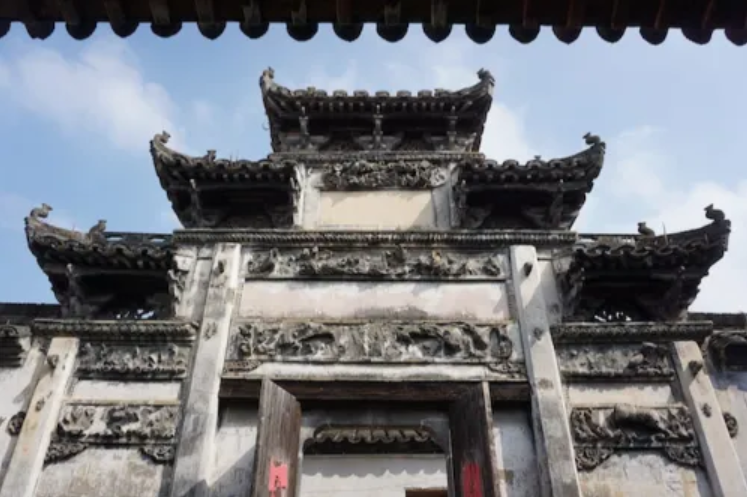
Degong Hall is one of the oldest surviving Ming?dynasty buildings in Zhaji, first constructed during the Yongle reign of the Ming. It served as an important venue for the Zha clan to offer sacrifices to ancestors and hold clan ceremonies. The building is of timber?and?brick construction with a three?hall and two?courtyard layout. The gate tower features hollow?carved stonework with dragons, phoenixes, flowers, and birds, displaying superb craftsmanship. The hall has thick columns and beams, preserving the simple and solid style of Ming architecture, and stands as a landmark of Ming?era buildings in Zhaji.
Erjia Ancestral Hall (Erjia Ci / Guangyutang)
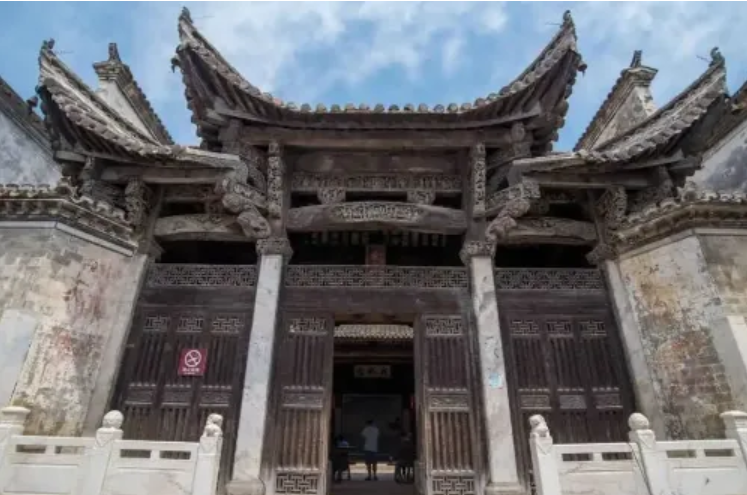
Also known as Guangyutang, Erjia Ancestral Hall is the best?preserved Qing?dynasty ancestral hall in Zhaji. It was built during the Kangxi reign of the Qing and named after a Zha clansman who earned the title of erjia jinshi (second?rank metropolitan graduate). The hall faces south, with a three?hall and three?courtyard layout, covering about 600 square meters. Its wooden carvings are exceptionally exquisite—beams, pillars, window lattices, and screens are all carved with operatic figures and auspicious motifs, and remain well preserved. The overall structure is grand and imposing, making it a model of Huizhou?style ancestral hall architecture in Zhaji.
Rusong Pagoda
Rusong Pagoda stands on the peak of the green hills west of Zhaji Village. It was originally built during the Wanli reign of the Ming and is a six?cornered, five?story brick pagoda with a total height of about 25 meters. Each story has arched windows, and inside there are stone steps leading to the top. From the summit, visitors can enjoy a panoramic view of the entire ancient village, with the three rivers winding through and rows of old residences—a signature landmark of Zhaji.
Honglou Bridge
Honglou Bridge spans the Xuxi River and was first built in the Ming dynasty. It is one of the most representative ancient bridges in Zhaji. The bridge is a stone arch structure, about 15 meters long and 4 meters wide. A red pavilion (Honglou) originally stood on the bridge, where ancient scholars and artists gathered to view the scenery and compose poetry. The bridge itself is solid and quaint, complementing the river and old houses, and is a prime spot for photography and sightseeing.
Tianshen Bridge
Tianshen Bridge is the largest stone?arch bridge in Zhaji, built during the Qianlong reign of the Qing. It crosses the Cenxi River, with a length of about 20 meters and a height of about 6 meters. Its single?arch stone structure is simple and majestic, serving as an important north?south connection within the village and offering an excellent vantage point for viewing the waterscape and ancient architectural complex.
Zhaji Art Museum
Located in the core area of the ancient village, the Zhaji Art Museum was converted from a Ming?and?Qing period residence. It houses over 300 cultural relics, including excavated artifacts, antique furniture, calligraphy and paintings, and clan genealogies, systematically displaying Zhaji’s thousand?year history, architectural culture, clan heritage, and folk customs. It is an important window for understanding the historical context of Zhaji.
Suggested Tour Route:
The classic walking route through Zhaji Ancient Village is about 3.5 kilometers long and takes approximately 2.5 hours on foot. The route is: Scenic Entrance → Ancient Village Archway → Xuxi Riverside → Honglou Bridge → Degong Hall → Erjia Ancestral Hall → Zhaji Art Museum → Tianshen Bridge → Rusong Pagoda → Shixi Riverside Trail → Scenic Exit. This route connects the core ancient buildings, waterscapes, and landmarks without overlapping, allowing a comprehensive view of Zhaji’s Ming?Qing architecture, water town scenery, and cultural sites. For a more in?depth visit, you can explore lesser?known old residences and alleyways, which takes about 4 hours in total and covers all key attractions.
Travel Tips:
The best seasons to visit are spring and autumn. In spring (March–May), temperatures range from 15–25°C, with flowers in full bloom and clear streams; in autumn (September–November), the weather is cool and the village is surrounded by colorful foliage—these are the most picturesque times.
It is recommended to enter the scenic area before 9:00 a.m. or after 3:00 p.m. to avoid peak crowds; the softer light at these times is also ideal for photographing ancient buildings and waterscapes.
The tour is mainly on foot, so wear comfortable flat?soled shoes. The village lanes are paved with bluestone slabs, and some sections have gentle slopes.
Allow 2–3 hours for an in?depth exploration of the core ancient buildings, focusing on the wood and stone carvings at Erjia Ancestral Hall and Degong Hall.
Try local specialties such as fermented bean curd (maodoufu), stinky mandarin fish (chouguiyu), Zhaji rice wine, and farmhouse dishes to experience the local food culture.
If you enjoy sketching or photography, bring your equipment to spots like Xuxi River, Honglou Bridge, and Rusong Pagoda—they are the best creative venues in the village.
Important Notes:
All ancient buildings within Zhaji are protected cultural relics. Touching, carving, climbing, or defacing the structures and carvings is prohibited. Flammable or explosive items are not allowed inside the buildings.
There are many streams in the village with varying water depths. Wading, playing, or swimming in the water is forbidden. Please be cautious when walking near the water and supervise elderly visitors and children.
Littering is not permitted; please keep the village clean and follow all civilized touring regulations.
The village has many winding lanes, and some areas have poor mobile signal. It is advisable to download a map of the scenic area in advance and follow the signposts to avoid getting lost.
Loud noise, street vending, chasing, or disruptive behavior is not allowed. Please respect the local residents’ daily life and customs.
Some old buildings have dim interiors; watch your step on stairs and be careful to avoid tripping or bumping.
The ticket is valid for a single entry. Re?entry after leaving the scenic area requires a new ticket, so please do not leave the area without planning.
Transportation:
Self?driving: Search for “Xuancheng Zhaji Ancient Village Scenic Area” on your navigation. From Hefei, the drive takes about 2.5 hours; from Wuhu, about 1.5 hours; from Huangshan, about 1 hour. The scenic area has a dedicated parking lot with ample spaces.
Public transport: Take a high?speed train to Jingxian Railway Station, then transfer to the Jingxian–Zhaji tourist shuttle bus. The bus ride takes about 1 hour, with 6 daily departures.
Long?distance bus: Take a long?distance bus to Jingxian Bus Station, then transfer to the scenic area’s direct shuttle to Zhaji. The journey takes about 50 minutes, with frequent departures.
Within the scenic area: Motor vehicles are prohibited in the core ancient village area; the entire tour is on foot, with no sightseeing carts or similar transport.
Opening Hours:
Regular hours: 08:00–17:30, with last entry at 17:00.
On statutory holidays (Spring Festival, Qingming, Labor Day, National Day, etc.): 07:30–18:00, with last entry at 17:30.
Indoor attractions such as museums and ancestral halls follow the same hours as the main scenic area; there are no separate closing arrangements.
Ticket Price:
65 RMB per person.