Taohuatan Scenic Area is located in Taohuatan Town, Jing County, Xuancheng City, Anhui Province, in the upper reaches of the Qingyi River. It is a national 4A-level tourist attraction. The scenic area is known for its harmonious blend of natural landscapes and cultural heritage, and is famed worldwide for the celebrated Tang-dynasty poet Li Bai’s verse in To Wang Lun: “The water in Peach Blossom Pool is a thousand feet deep, but not as deep as Wang Lun’s love for me when we part.” It embodies the charm of a Jiangnan water town and a rich culture of poetry and wine. The core visiting area covers about 3.5 square kilometres, with a water area of about 1.5 square kilometres. The main landscape belt extends about 3 kilometres along the pool. Within the area, over a hundred ancient buildings from the Ming and Qing dynasties are preserved, including old residences, ancestral halls, ferry piers, and bridges—forming a complete historical architectural cluster. It is a representative scenic spot in southern Anhui that combines ancient villages with mountain-and-water scenery.
History and Culture
The human history of Taohuatan can be traced back to the Sui and Tang dynasties. It began as an important ferry on the Qingyi River shipping route and was named for the peach blossoms on both banks and the clear pool water. During the Kaiyuan period of the Tang dynasty, settled villages already formed around the pool, with lively trade, making it a transport hub connecting the Huizhou region with the Yangtze River basin in southern Anhui.
The most significant cultural landmark comes from the Tianbao period of the Tang dynasty (around 755 AD), when the great poet Li Bai visited Taohuatan at the invitation of Wang Lun, a local notable. Wang Lun entertained him with fine wine and delicacies. When Li Bai departed, Wang Lun sang and saw him off from the shore, and Li Bai was so moved that he wrote To Wang Lun, making Taohuatan a symbolic site of eternal friendship in Chinese culture. This remains the area’s most iconic cultural calling card.
During the Song, Yuan, Ming, and Qing dynasties, Taohuatan became an important area for Huizhou merchants. The Zhai and Wan clans flourished here, building ancestral halls, residences, academies, and ferry piers, forming a well-preserved ancient village layout. The remaining Ming and Qing architecture combines characteristics of southern Anhui dwellings with exquisite Huizhou-style craftsmanship, making it a valuable physical resource for studying clan culture and architectural history in the region.
In modern times, Taohuatan has maintained its original character. In the 1980s, it was officially developed as a tourist attraction and has since been listed as a key provincial cultural relic protection unit and as a traditional Chinese village. Today, it is a cultural tourism destination that integrates the culture of friendship, ancient village life, water transport, and clan traditions.
Major Attractions
Taohuatan Pool
The pool is the core landscape, formed by a section of the Qingyi River. It is about 3 kilometres long, up to 300 metres wide, and up to 10 metres deep. The water remains clear and green throughout the year, meeting national Class II water quality standards. Peach blossom groves, ancient villages, and green hills are reflected on its surface, offering varied scenery in all four seasons. Visitors can take boat rides on the pool to experience the poetic mood of “a thousand feet deep” water.

Tage Ancient Bank
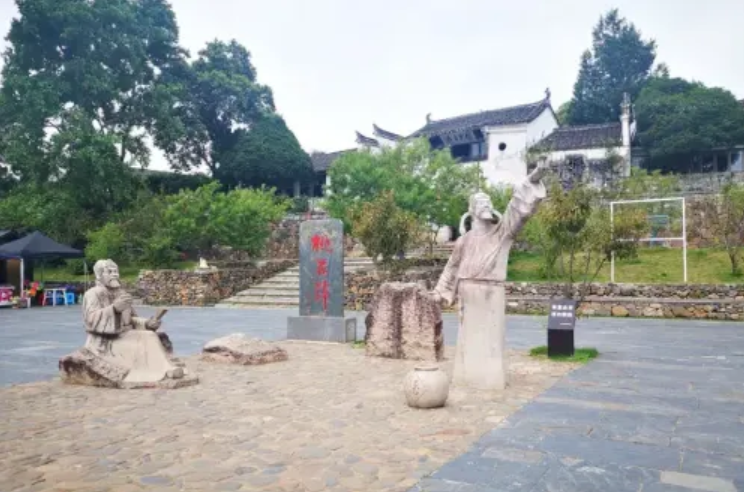
Located on the east bank of Taohuatan, this is the spot where Wang Lun sang farewell to Li Bai. It is a landmark cultural attraction. The existing structures date from a Qing-dynasty reconstruction, covering about 200 square metres, including the farewell platform, a stele, and a viewing corridor. A stone inscription of To Wang Lun stands by the shore, making it a key site for commemorating the timeless friendship.
Wenchang Pavilion
Situated in the centre of Taohuatan Town, the pavilion was first built in the 35th year of the Qianlong reign (1770) of the Qing dynasty. It is a three-storey, octagonal brick-and-wood structure, about 25 metres high, and is one of the best-preserved Qing-dynasty Wenchang pavilions in southern Anhui. With ornate carvings, upturned eaves, and a statue of the Wenchang God inside, the surrounding area also features cultural exhibits that reflect the local tradition of valuing education and literature.
Zhai Clan Ancestral Hall
One of the largest ancient ancestral halls in southern Anhui, it was first built during the Jiajing period of the Ming dynasty and renovated during the Guangxu period of the Qing. It covers about 1,000 square metres with a floor area of about 680 square metres, laid out in a three-hall, five-bay plan. The building uses fine materials and features exquisite wood, brick, and stone carvings—an exemplary piece of Hui-style ancestral architecture and a core carrier of Zhai clan culture.
Nanyang Ancient Town
Located on the west bank of Taohuatan, this is a well-preserved ancient village from the Ming and Qing dynasties. There are 86 surviving Ming-Qing residences, with ancient lanes totalling about 1.2 kilometres paved in bluestone, along with old shops, wells, and gate towers. The village is nestled against the hills and beside the water, typical of southern Anhui ancient settlements.
Rainbow Bridge
A stone-arch bridge spanning a tributary of Taohuatan, built in the Qing dynasty. It is about 35 metres long and 4 metres wide, constructed of bluestone blocks. Its graceful form often reveals a rainbow-like effect when morning mist rises over the pool and sunlight falls, hence its name. It is a popular photography spot in the scenic area.
Recommended Tour Route:
The standard classic route covers about 3.5 kilometres and takes about 3 to 4 hours:
Visitor Centre → Tage Ancient Bank → To Wang Lun Stele → Taohuatan Boat Pier (take a boat tour) → Nanyang Ancient Town Entrance → Ancient Lanes → Rainbow Bridge → Zhai Clan Ancestral Hall → Wenchang Pavilion → Exit.
The route connects the core cultural and natural sites without backtracking, combining walking and boating for a complete experience of the scenery and culture.
Travel Tips:
Allow 3–4 hours for the visit. Entering at 9:00 am helps avoid crowds and allows you to enjoy the morning mist over the pool.
The boat ride is a must-do; the cruise takes about 20 minutes and offers panoramic views of both banks.
The best seasons are spring (March–April) when peach blossoms bloom, and autumn (October–November) with pleasant weather.
Ancient lanes are paved with bluestone, so comfortable flat shoes are recommended.
You can combine the trip with nearby Zhaji Ancient Village and Shuimo Tingxi Scenic Area for a full-day itinerary.
Rest pavilions and viewing platforms are available; take a brief rest every hour for a relaxed visit.
Important Notes:
The pool water is deep. While on the boat, do not stand, lean out, or play in the water; comply with all safety rules.
Ming-Qing ancient buildings are protected cultural relics; do not carve, climb, or damage any structures or inscriptions.
Flammable and explosive items are prohibited; smoking is not allowed in the ancient village area.
Fishing, picking flowers/plants, and damaging vegetation are forbidden. Help protect the natural environment.
During holidays, visitor numbers are high; book tickets in advance and follow crowd control and queuing rules.
Rain makes bluestone pavements slippery; walk carefully to avoid falls.
Some areas have no mobile signal; it is advisable to download a map in advance and plan your route.
Transportation:
Self-driving: Navigate to “Jing County Taohuatan Scenic Area”. There is a large parking lot with about 500 spaces.
High-speed rail: Take the train to Jingxian Station, then transfer to the scenic area direct shuttle bus (about 40 minutes).
Bus: Take the Taohuatan Town bus from Jingxian Bus Terminal; services run from 7:00 am to 5:00 pm, hourly.
Chartered car: Hire a car from Jingxian county to the scenic area, about 35 minutes, suitable for groups.
Opening Hours:
Peak season (March 1 – November 30): 7:30 am – 6:00 pm
Low season (December 1 – February 28): 8:00 am – 5:30 pm
Boat operations follow the same hours. Ticket check-in stops 1 hour before closing. Please plan your entry time accordingly.
Admission:
Ticket price: 65 RMB per person.