Ashatu Stone Forest is located in the northern part of Hexigten Banner, Chifeng City, Inner Mongolia Autonomous Region. It is a national 5A-level tourist attraction and one of the core scenic areas of the Hexigten UNESCO Global Geopark. The scenic area covers a total area of about 50,000 hectares, with an average elevation of about 1,700 meters and the highest point reaching 1,900 meters. In Mongolian, "Ashatu" means "precipitous rocks." The scenic area is mainly characterized by its unique granite stone forest landform and is a rare glacial stone forest landscape in the world. These stone forests were formed about 180 million years ago in the Late Jurassic period. Through geological processes such as glacial movement and weathering erosion, stone pillars, stone bamboo shoots, stone walls, and other landscapes of various shapes were formed. It is known as the "Museum of Glacial Stone Forests." The ecological environment in the scenic area is well preserved, with grasslands, forests, and stone forests blending together. It is also home to wildlife such as red deer and roe deer. It is a tourist destination integrating geological research, ecotourism, and folk experience.
History and Culture
Hexigten Banner, where Ashatu Stone Forest is located, has a long history and is one of the birthplaces of Hongshan Culture and Khitan Culture. As early as the Neolithic Age, there was human activity here. A large number of jade articles, pottery, and other cultural relics from the Hongshan Culture period have been unearthed, witnessing the development of early human civilization.
Historically, this area was an important inheritance place of Mongolian nomadic culture. The Hexigten tribe was one of the important tribes of the Mongolian ethnic group and has a profound ethnic cultural heritage. Mongolian herders around the scenic area still retain the traditional nomadic way of life, and their cultural customs such as diet, clothing, and festivals have distinctive ethnic characteristics.
In addition, the geological formation process of Ashatu Stone Forest itself is a "natural history." Magmatic activity about 180 million years ago formed the granite body, and then through the erosion and cutting of Quaternary glacial movement, as well as weathering over a long period of time, today's stone forest landscape was created. These geological relics provide important scientific basis for studying Earth's evolution, glacial movement, and more, and have extremely high geological and historical value.
The Mongolian oboos, sacrificial sites, and other sites in the scenic area are important carriers of local ethnic culture. The Hexigten Banner Grassland Culture Tourism Festival held every year displays traditional Mongolian activities such as Nadam, horse racing, and wrestling, combining natural landscapes with ethnic culture and attracting many tourists.
Main Attractions
Scenic Area No. 1 (Moon Castle Scenic Area)
Scenic Area No. 1 is the earliest developed and most concentrated area of attractions in Ashatu Stone Forest, covering an area of about 5 square kilometers. The stone forest here is mainly composed of landscapes shaped like castles and palaces. The most famous is the "Moon Castle," which consists of a group of tall stone pillars. The top of the stone pillars resembles a crescent moon, hence the name. The scenic area also includes landscapes such as "General's Bed" and "Arhat Array." "General's Bed" is a flat giant rock that looks like a large bed; "Arhat Array" consists of dozens of neatly arranged stone pillars, like a group of arhats standing in formation. Tourists can tour along the wooden boardwalk, with a total length of about 2.5 kilometers and a visiting time of about 1.5 hours.
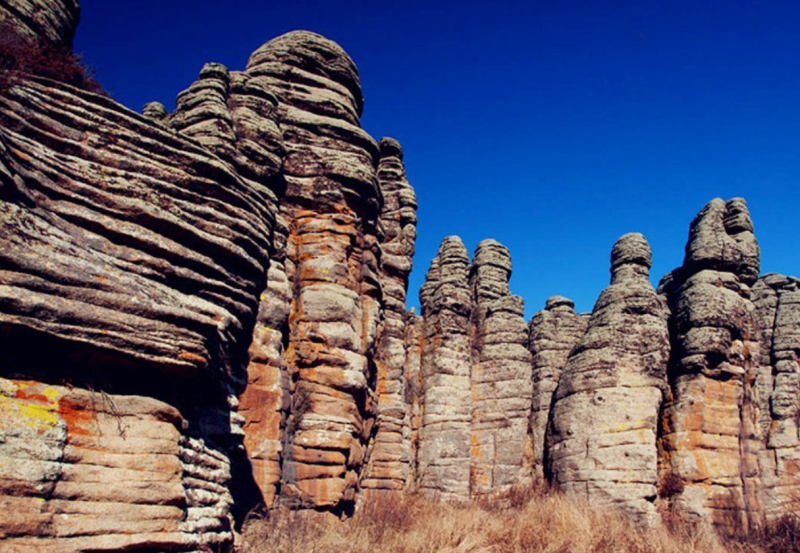
Scenic Area No. 2 (Eagle Spreading Wings Scenic Area)
Scenic Area No. 2 is located about 2 kilometers northeast of Scenic Area No. 1, covering an area of about 3 square kilometers. It is famous for its vivid pictographic stones. The core landscape "Eagle Spreading Wings" is a huge rock that, viewed from the side, looks like an eagle spreading its wings to fly, with a realistic shape and majestic momentum. In addition, the scenic area also includes landscapes such as the "Leaning Tower" and "Maiden Gazing at the Moon." The "Leaning Tower" is a tilted stone pillar, quite similar to the Leaning Tower of Pisa in Italy; "Maiden Gazing at the Moon" resembles a woman looking up at the sky, with a touching expression. The wooden boardwalk in this area is about 1.8 kilometers long, and the visiting time is about 1 hour.
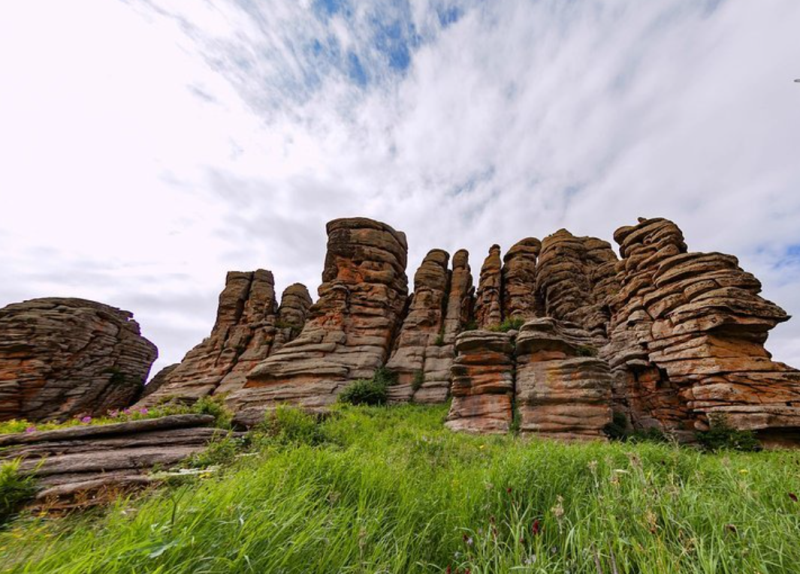
Scenic Area No. 3 (Walled City Scenic Area)
Scenic Area No. 3 is also called "Walled City Scenic Area," covering an area of about 4 square kilometers. It is named because the stone forest surrounds and forms a landscape similar to city walls. The stone forest walls here are tall and thick, with the highest point reaching 20 meters. The walls are covered with vertical fissures, as if they were artificially built city walls. The "Thousand-Layer Cake" landscape in the scenic area is particularly unique, with distinct rock bedding, like stacked thousand-layer cakes, showing the layered structure of granite. In addition, landscapes such as "Camel Peak" and "Hitching Post" also have their own characteristics. The wooden boardwalk in this scenic area is about 2 kilometers long, and the visiting time is about 1.5 hours.
Scenic Area No. 4 (Goddess Scenic Area)
Scenic Area No. 4 is the most mysterious area in Ashatu Stone Forest, covering an area of about 3.5 square kilometers. It is mainly characterized by pictographic stones in the image of women. The core landscape "Goddess Peak" is about 15 meters high, and its overall shape is like a graceful young woman, with clear outlines of the head and body, which is breathtaking. The scenic area also includes landscapes such as "Sister Peaks" and "Deep Mother-Child Love." "Sister Peaks" consists of two interdependent stone pillars, as if they were a pair of close sisters; "Deep Mother-Child Love" resembles a mother holding a child, full of warmth. The wooden boardwalk in this area is about 2.2 kilometers long, and the visiting time is about 1.5 hours.
Food
Hand-Grabbed Mutton
Hand-grabbed mutton is a traditional food of the Mongolians around Ashatu Stone Forest. It uses locally grazed goats or sheep, cut into large pieces with bones, boiled in clear water, and eaten dipped in salt or chive flower sauce. The meat is tender, not gamey or greasy, and retains the most authentic flavor of mutton. In the yurt restaurants around the scenic area, tourists can taste hand-grabbed mutton while experiencing Mongolian hospitality. It is a must-choice dish for experiencing grassland food culture.
Milk Tofu
Milk tofu is a traditional Mongolian dairy product that can be tasted in the homes of herders and restaurants around Ashatu Stone Forest. It is made from cow's milk or sheep's milk through fermentation, boiling, and coagulation. It has a firm texture and a slightly sour taste, and is rich in protein and calcium. Milk tofu can be eaten directly, soaked in milk tea, or eaten after being pan-fried. It is an important food for local herders to supplement nutrition.
Roast Whole Sheep
Roast whole sheep is the highest form of hospitality among Mongolians and can be reserved at large dining establishments around the scenic area. A lamb of about 30 jin is selected, cleaned, coated with a secret seasoning, and slowly roasted over charcoal for several hours until the outer skin is golden and crispy and the meat is tender and juicy. When served, roast whole sheep is usually accompanied by shredded scallions, thin pancakes, and more. When eating, the meat is cut with a knife and rolled in thin pancakes, giving it a unique flavor. This dish is suitable for sharing among many people and is a special delicacy for festivals or gatherings.
Milk Tea
Milk tea is an indispensable drink in the daily life of Mongolians and can be seen everywhere in restaurants around Ashatu Stone Forest. It is made from brick tea and milk, with an appropriate amount of salt added and boiled. It is brownish-red in color and has a salty, fragrant taste. Milk tea is usually eaten with milk tofu, roasted rice, butter, and more. It can quench thirst and satisfy hunger, and is the "energy drink" on the grassland. Tourists can experience the process of making milk tea in a yurt and feel the traditional food culture.
Tickets:
Tickets are 160 yuan per person.
You can search for the official WeChat public account "Hexigten Rongchuang - Ashatu Stone Forest Scenic Area" to get the latest updates or buy tickets online.
Opening Hours:
The opening hours of Ashatu Stone Forest Scenic Area are slightly adjusted according to the season: from April 1 to October 31, the opening hours are 7:30-18:00; from November 1 to March 31 of the following year is winter, when some areas of the scenic spot are open, with opening hours of 9:00-16:00. In winter, due to cold weather, some wooden boardwalks may be closed. Tourists are advised to check the official notice of the scenic area before traveling.
Tour Route:
On the first morning, arrive at the tourist center of Ashatu Stone Forest Scenic Area. After completing entry procedures, first go to Scenic Area No. 1 (Moon Castle Scenic Area) and tour landscapes such as "Moon Castle" and "General's Bed" along the wooden boardwalk, taking about 1.5 hours; then go to Scenic Area No. 2 (Eagle Spreading Wings Scenic Area) to view pictographic stones such as "Eagle Spreading Wings" and "Leaning Tower," taking about 1 hour; at noon, dine in the dining area in the scenic area or return near the tourist center to eat, tasting foods such as hand-grabbed mutton and milk tea, taking about 1 hour.
In the afternoon, go to Scenic Area No. 3 (Walled City Scenic Area) and tour landscapes such as "Thousand-Layer Cake" and "Camel Peak," taking about 1.5 hours; then go to Scenic Area No. 4 (Goddess Scenic Area) and enjoy special attractions such as "Goddess Peak" and "Sister Peaks," taking about 1.5 hours. In the evening, return to the yurt resort around the scenic area for accommodation and experience a Mongolian bonfire party, taking about 2 hours. The total tour duration is about 1 day. If you want in-depth touring or to photograph sunrise and sunset, you can arrange two days.
Transportation:
Self-driving: Starting from Chifeng City, take the Danxi Expressway (G16), transfer to the Daguang Expressway (G45), then transfer to S105 Provincial Road to Jingpeng Town, Hexigten Banner, then take G303 National Road and transfer to X502 County Road to Ashatu Stone Forest Scenic Area. The whole journey is about 420 kilometers, and the drive takes about 6 hours; from Jingpeng Town to the scenic area is about 135 kilometers, and the drive takes about 2.5 hours. The parking fee at the scenic area parking lot is 10 yuan per time.
Tourist shuttle: The passenger station in Jingpeng Town, Hexigten Banner, has daily tourist shuttle buses to and from Ashatu Stone Forest Scenic Area. The departure time is 7:30, and the return time is 16:00. The journey takes about 2.5 hours, and the ticket price is 50 yuan per person.
Chartered car: Chartered cars from Jingpeng Town to the scenic area are more convenient. The round-trip cost for a 5-seat sedan is about 300-400 yuan. You can return the same day or arrange multi-day charter service according to your itinerary.
Train: The nearest railway station to the scenic area is Jingpeng Station, with trains to and from Chifeng, Tongliao, and other places. From Jingpeng Station to the scenic area, you can transfer to a tourist shuttle or chartered car, and the journey takes about 2.5 hours.
Must-Visit Attractions:
Scenic Area No. 1 "Moon Castle": Composed of tall stone pillars, with the top shaped like a crescent moon, it is one of the landmark landscapes of Ashatu Stone Forest. The area where it is located is densely packed with attractions, and the tour duration is about 1.5 hours.
Scenic Area No. 2 "Eagle Spreading Wings": The giant rock shape resembles an eagle spreading its wings, with a realistic form. It is the most famous pictographic stone landscape in the scenic area, and the tour duration is about 1 hour.
Scenic Area No. 4 "Goddess Peak": The 15-meter-high stone pillar resembles a young woman, with a graceful shape and a sense of mystery. It is a popular spot for tourists to take photos, and the tour duration is about 1.5 hours.
Travel Tips:
The recommended tour duration is 1-2 days. One day can cover the main attractions, and two days allow for in-depth experience and viewing sunrise and sunset.
The best seasons to visit are June-August (green grasslands, cool climate) and September-October (colorful autumn forests and mountains, with the stone forest landscape even more magnificent). In winter, you can experience the ice and snow stone forest, but you need to pay attention to keeping warm.
The total length of the wooden boardwalks in the scenic area is about 8 kilometers. It is recommended to wear comfortable hiking shoes and carry sufficient drinking water and a small amount of snacks.
In summer, the ultraviolet rays in the scenic area are strong, so sun protection measures are needed, including a sun hat, sunglasses, and sunscreen. In autumn, the temperature difference between morning and evening is large, so bring a jacket.
Dining prices in the scenic area are relatively high. You can bring some dry food and fruit. If dining at the yurt resort, you can book in advance to experience the specialty food.
Precautions:
The stone forest landform in the scenic area is complex, and some areas are steep. During the tour, you must walk along the designated wooden boardwalks and are prohibited from entering undeveloped areas without authorization to prevent danger.
The ecological environment in the scenic area is fragile. Littering, picking flowers and trees, and carving on rocks are prohibited. Please protect the natural landscape.
In winter, the temperature in the scenic area can drop below -20°C, and the roads are prone to freezing. During the tour, wear anti-slip shoes and warm clothing and walk carefully.
Mobile phone signal in the scenic area is weak, and some areas may have no signal. It is recommended to travel with companions, avoid acting alone, and agree on a meeting place with your companions in advance.
Respect the local Mongolian customs and habits. Before entering a yurt, ask the owner for permission. Do not casually touch the stones and prayer flags on the oboo.