Daan Nenjiang Bay Tourist Area is located in the north of Daan City, Baicheng City, Jilin Province, adjacent to the Nenjiang River. It is a national 5A-level tourist attraction and a national wetland park, known as "the First Bay of the Thousand-Mile Nenjiang". The scenic area covers a total area of 3.5 square kilometers, with a wetland coverage rate of 64.4%. It features typical river-bend wetland landforms and is commonly known as Laokanzi. Relying on the Nenjiang River's natural river-bend wetland resources, the scenic area integrates the history and culture of the Liao and Jin dynasties' spring Nabo, Nenjiang fishing and hunting folk customs, and wetland ecological scenery. The area is dotted with lakes and ponds and overgrown with reeds, and is an important stopover for migratory birds. The park has built antique-style cultural buildings, waterfront boardwalks, cruise ship docks, exhibition halls, leisure beaches, bird-watching parks, and other supporting facilities. It integrates ecological sightseeing, historical study, water tours, parent-child leisure, and bird-watching photography, and is a landmark wetland tourism destination in western Jilin.
Historical Culture
Nenjiang Bay was a core area for the Liao Dynasty's spring Nabo activities. Four Liao emperors—Emperor Shengzong, Emperor Xingzong, Emperor Daozong, and Emperor Tianzuo—visited here multiple times to carry out spring Nabo activities. Every spring, the Liao emperor led civil and military officials here to break the ice and fish, hunt waterfowl, hold the Head Fish Banquet, and receive envoys from various parties. The superior water environment and natural cliff terrain of Nenjiang Bay made it an ideal place for imperial hunting and temporary residence, leaving behind a large number of historical records related to Nabo.
This place has been called Laokanzi since ancient times. With its riverside cliff, it formed a natural excellent harbor and has been an important water transport dock on the Nenjiang waterway since ancient times. During the modern period of flourishing shipping, merchant ships came and went at the dock and merchants gathered, supporting Daan's commercial circulation and continuing a thousand-year shipping culture.
Residents living along the Nenjiang River for generations have depended on the river for survival and reproduction, forming a complete Nenjiang fishing and hunting folk culture and passing down river fish culture such as the "Three Flowers, Five Luos, and Eighteen Zi". Fishing tools, winter fishing customs, and river life traditions have been passed down from generation to generation. The scenic area deeply explores Nabo culture and fishing and hunting folk customs and displays and spreads them through exhibition halls, antique-style building complexes, and landscape sculptures.
Main Attractions
Liao Emperor Fish Viewing Platform
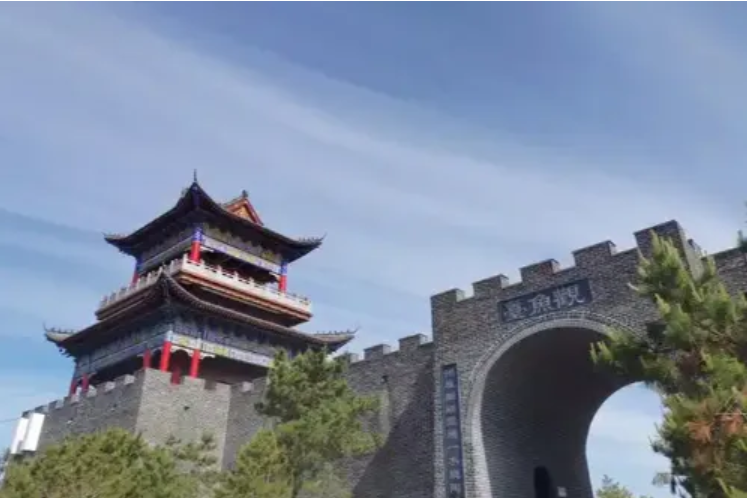
The Liao Emperor Fish Viewing Platform is located in the southeast of the scenic area and is the highest point in the park. The structure consists of two parts: a city wall and a bell tower, with a stone plaque inscribed with "Fish Viewing Platform" embedded above the doorway. This landscape was reconstructed based on the history of the Liao Dynasty's spring Nabo. In ancient times, the Liao emperor ascended here to overlook the river, watch ice-breaking fishing, and hold the Head Fish Banquet. After climbing the platform, Yulong Lake, contiguous wetlands, and the Nenjiang River channel can be seen at a glance. The view is wide and open, making it a core spot for enjoying the panoramic wetland view and photographing sunrise and sunset.
Huayi Tongfeng Courtyard
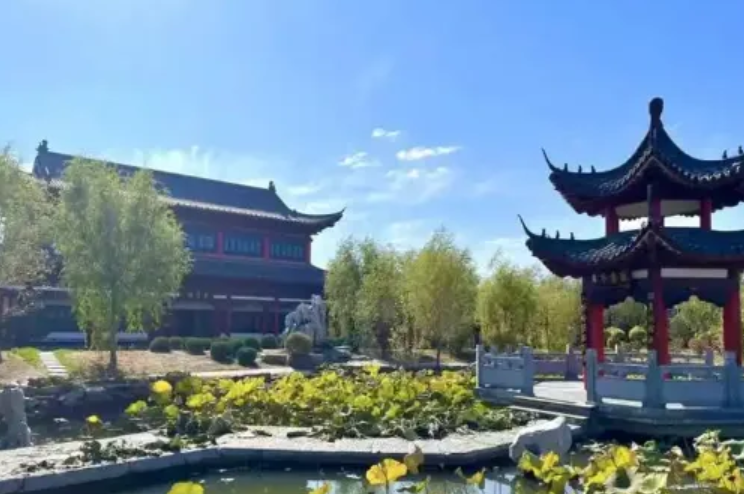
Huayi Tongfeng Courtyard is named after Emperor Daozong of Liao's verse "Ruler and ministers share the same aspiration; Hua and Yi share the same customs." It is a rare Liao Dynasty royal-style Jiangnan garden in the north. With the theme of the integration of Liao and Han cultures, the courtyard contains pavilions, winding corridors, lotus ponds, and stone bridges. It also houses exhibition halls such as Xiaoyue Tower, which uses multimedia displays to present Liao Dynasty court history and historical materials related to Xiao Guanyin. With weeping willows reflected in lotus ponds and quiet pool water, the garden has a strong ancient-style atmosphere and is suitable for sightseeing check-ins and cultural study. The Liao-Jin Culture Experience Hall is also located in this courtyard.
Laokanzi Dock
Laokanzi Dock gets its name from the ancient name of Nenjiang Bay. It is a natural ancient ferry crossing that has lasted for a thousand years and is also the core dock for water tours in the scenic area. The dock has a landmark stone archway and landscape stone tablet, and is equipped with large cruise ship docking facilities. Tourists can take sightseeing cruise ships here into the reed wetlands and cruise through the river bay, enjoying the Nenjiang riverside mudflats, reed marshes, and wild waterfowl up close. Taking a boat in the evening to enjoy the sunset on the river is a popular touring experience.
Fishing and Hunting Museum
The Fishing and Hunting Museum has multiple exhibition halls that systematically display the fishing and hunting civilization of the Nenjiang River basin. The museum displays specimens of various freshwater fish, wild bird specimens, and traditional fishing tools, and provides detailed introductions to the knowledge of famous Nenjiang river fish such as the "Three Flowers, Five Luos, and Eighteen Zi." It also uses text and images to show fishing and hunting customs and winter fishing traditions during the Liao and Jin periods. The museum is normally closed on Mondays (except statutory holidays) and is suitable for parent-child science education and folk culture study.
Yulong Lake
Yulong Lake, formerly known as Gongshe Lake, has a water area of 300 hectares and an average water depth of 5 meters. It is the core inland lake of the scenic area, and its water system is connected to the Nenjiang River. The lake is rich in wild fish resources and was already a main activity water area for spring Nabo during the Liao Dynasty. The lake surface is open, with walking paths laid out around the lake. Tongxin Bridge spans the lake surface, and the lakeside vegetation is lush, with waterbirds often inhabiting the area. Visitors can stroll around the lake and enjoy the lake and wetland scenery.
Tongxin Bridge
Tongxin Bridge spans the water surface of Yulong Lake and is a landmark landscape bridge on the lake, connecting the touring boardwalks on both sides of the lake with the Tongxin Bridge Cruise Dock. The bridge has an elegant shape and good views from the deck. Walking on the bridge, visitors can enjoy the scenery of Yulong Lake in all directions. This is also an important boarding point for taking cruise ships to Nabo Island, and many tourists stop here to take photos.
Romantic Beach
Romantic Beach is a parent-child leisure area in the scenic area, featuring an artificial waterfront beach near the wetland lake bay. The area is spacious and equipped with leisure facilities, allowing tourists to enjoy water activities and rest, and engage in outdoor activities. It is a popular place for family outings and children's play. Surrounded by greenery, it balances leisure with wetland landscape viewing.
Crane Garden
Crane Garden is a rare bird viewing park. The suitable ecological environment of the park breeds and raises protected birds such as red-crowned cranes, black swans, and white swans. The Nenjiang Bay wetland is an important migration corridor for white cranes. Built around the regional bird culture, Crane Garden allows tourists to observe crane flocks up close and learn about rare wetland bird knowledge. It is an important spot for bird-watching science education.
Tour Route:
Main Entrance of the Scenic Area → Liao Emperor Fish Viewing Platform → Huayi Tongfeng Courtyard → Yulong Lake → Tongxin Bridge → Crane Garden → Romantic Beach → Laokanzi Dock → Fishing and Hunting Museum → Scenic Area Exit
Tour Suggestions:
During the spring and autumn migratory bird seasons, go to Crane Garden and along the wetland to watch birds. It is recommended to bring binoculars, and use telephoto equipment for bird photography as much as possible.
In summer, there are many mosquitoes in the wetland. Prepare mosquito repellent when traveling and also take sun protection measures.
For water tours, take cruise ships at Laokanzi Dock or Tongxin Bridge Dock. Cruise operations are affected by water levels and weather, so check real-time operating conditions before traveling.
The Fishing and Hunting Museum is normally closed on Mondays, so avoid that time when planning your itinerary.
The Liao Emperor Fish Viewing Platform is suitable for visiting in the morning and evening, when the light is appropriate for photographing the panoramic wetland view, sunrise, and sunset.
Huayi Tongfeng Courtyard has beautiful garden scenery. Those who like ancient-style photography can arrange sufficient time to visit.
Walking routes in the park are relatively long. It is recommended to wear comfortable, slip-resistant flat shoes. Elderly people and children can choose the scenic area sightseeing vehicle instead.
Precautions:
Do not step into undeveloped reed mudflats to prevent sinking into mud, and do not approach unattended waterside areas without permission.
Wild birds and captive poultry in the park are protected. Do not chase them, feed them improper food, or capture birds.
When taking cruise ships, follow staff instructions, do not lean on the ship's side, and do not throw garbage into the water.
Open fires and barbecue with open flames are prohibited throughout the scenic area to strictly prevent wetland fire hazards.
On rainy days, waterfront boardwalks and beach roads can easily become slippery. Walk slowly and pay attention to travel safety.
Do not pick wild aquatic plants at will, and consciously protect the original ecological environment of the wetland.
When visiting exhibition halls, do not touch exhibits and follow the visiting rules of the venues.
Transportation:
Self-driving: Search for Daan Nenjiang Bay Tourist Area in navigation. Drive north from Daan city center to arrive. The scenic area has a dedicated parking lot.
Local public transportation: In Daan urban area, you can take local bus routes to nearby stops of the scenic area, then walk into the park after getting off.
Out-of-town tourists: After arriving at Daan Railway Station or Daan Long-Distance Bus Station, you can take a taxi or transfer to a local bus to go to the scenic area.
Opening Hours:
Daan Nenjiang Bay Tourist Area is open year-round. Daily park opening hours are 8:00 to 17:00. The operating hours of cruise ships, the Fishing and Hunting Museum, exhibition halls, and other commercial venues within the scenic area are adjusted according to the season. In winter under low-temperature weather, some water projects and outdoor boardwalks may adjust their opening scope according to weather. In extreme weather such as rain, snow, and strong winds, cruise projects will be temporarily suspended. Before traveling, pay attention to real-time notices from the scenic area.
Tickets:
Free admission. Sightseeing vehicles require tickets.