Langya Mountain Scenic Area is located in Langya District, Chuzhou City, Anhui Province, about 5 km southwest of the city center. It serves as an important ecological barrier in eastern Anhui. As a national key scenic spot and a national 5A-level tourist attraction, it is renowned for its "beautiful mountains and waters, serene forests and springs, and elegant historical sites," integrating natural landscapes, cultural heritage, and religious culture. The scenic area covers approximately 115 square kilometers and features a northern subtropical humid monsoon climate with four distinct seasons. The forest coverage rate exceeds 90%, and the negative oxygen ion content is extremely high, earning it the reputation of a "natural oxygen bar." The area contains over 10 ancient architectural complexes and nearly 300 cliff-side inscriptions, including iconic structures such as Langya Temple, Zuiweng Pavilion, and Fengle Pavilion. It serves as an important window for showcasing eastern Anhui culture and Ouyang Xiu's cultural legacy.
History and Culture
Langya Mountain has a long history, named after Sima You, Prince of Langya of the Western Jin Dynasty, who once stationed troops here. Since the Tang Dynasty, it gradually became a popular destination for literati and scholars, with famous figures such as Wei Yingwu, Ouyang Xiu, and Su Shi leaving their footprints and masterpieces here. In the sixth year of the Qingli reign of the Northern Song Dynasty (1046), Ouyang Xiu was demoted to the position of prefect of Chuzhou and frequently visited this mountain, where he wrote the timeless masterpiece The Story of the Drunkard's Pavilion (Zuiweng Ting Ji), making Langya Mountain famous throughout the land.
Langya Mountain is also a Buddhist sacred site. Langya Temple was first built in the sixth year of the Dali reign of the Tang Dynasty (771) by Li Youqing, the prefect of Chuzhou, together with the monk Fachén. It was initially named "Baoying Temple" and underwent several name changes before being renamed "Langya Temple" in the Northern Song Dynasty. It is one of the well-known Buddhist monasteries in the Jianghuai region. The temple preserves precious cultural relics such as the cliff inscription by Li Youqing from the Tang Dynasty and the stele inscription of The Story of the Drunkard's Pavilion in Su Shi's calligraphy from the Song Dynasty, which hold significant historical and artistic value.
Additionally, Langya Mountain has an indissoluble bond with Bao Zheng, a renowned official of the Song Dynasty. While serving as prefect of Chuzhou, Bao Zheng built the "Xingxin Pavilion" (Heart-Awakening Pavilion) on the mountain and wrote The Story of Xingxin Pavilion. During the Ming and Qing dynasties, the development and construction of Langya Mountain reached its peak, forming the core landscape pattern of "one temple, one pavilion, and one spring," making it a cultural landmark of eastern Anhui.
Major Attractions
Zuiweng Pavilion (Drunkard's Pavilion)
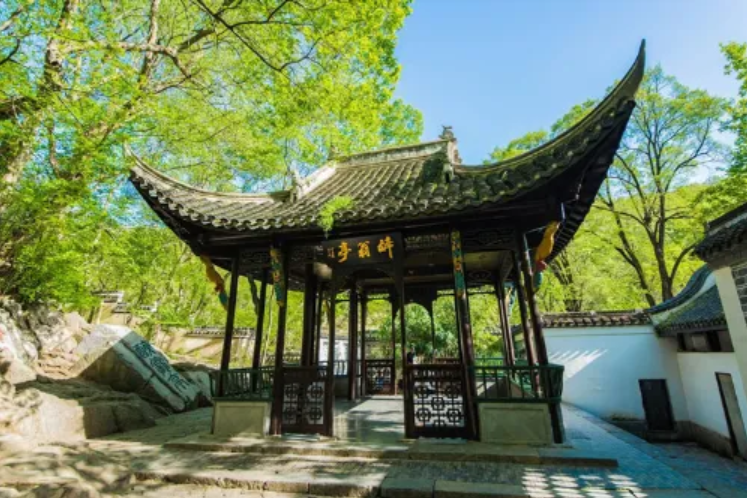
The core attraction of the scenic area. Located halfway up Langya Mountain, Zuiweng Pavilion was first built in the seventh year of the Qingli reign of the Northern Song Dynasty (1047). It was named by Ouyang Xiu himself, who also wrote The Story of the Drunkard's Pavilion. The current pavilion was rebuilt in the seventh year of the Guangxu reign of the Qing Dynasty (1881) and covers an area of about 500 square meters. It ranks first among the four famous pavilions in China. Inside, there is a stele inscribed with The Story of the Drunkard's Pavilion in Su Shi's calligraphy. Surrounding the pavilion are structures such as the "Erxian Hall," "Baosong Studio," and "Yizai Pavilion," forming a classical garden complex with exquisite layout and antique charm.
Langya Temple
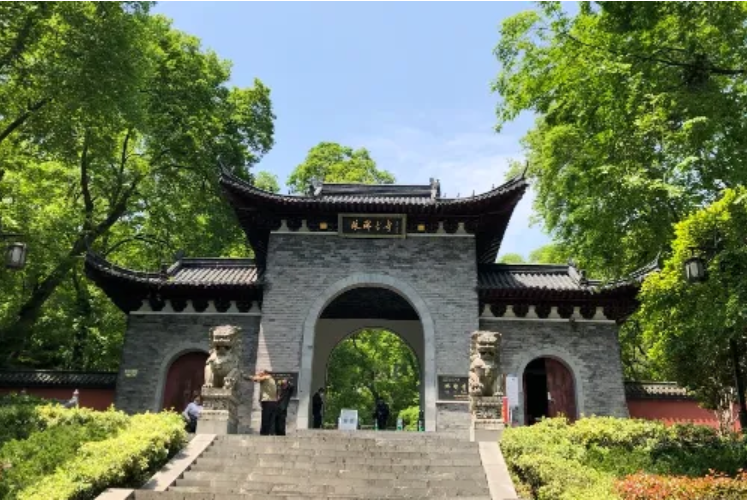
The core attraction of the scenic area. Langya Temple is the main Buddhist monastery on Langya Mountain, first built in the Tang Dynasty, with the existing structures rebuilt during the Tongzhi reign of the Qing Dynasty. The temple covers about 30,000 square meters, with main buildings including the Mountain Gate, Heavenly King Hall, Mahavira Hall, and Sutra Depository, built along the mountain slope in a staggered arrangement. The "Langya Ancient Temple" archway inside is a relic from the Ming Dynasty, and the Mahavira Hall houses Ming-dynasty bronze Buddhas and Qing-dynasty wooden carved Buddha statues, which are of high cultural value. Behind the temple is the "Southern Heavenly Gate," from which visitors can overlook the Chuzhou urban area.
Yingxiang Pavilion (Shadow-Fragrance Pavilion)
Built in the first year of the Hongxi reign of the Ming Dynasty (1425), originally named "Jianmei Pavilion" (Plum-Seeing Pavilion). In the 24th year of the Kangxi reign of the Qing Dynasty (1685), Wang Kuikui, the prefect of Chuzhou, renamed it "Yingxiang Pavilion," meaning that while sitting in the pavilion, one can both appreciate the ancient plum tree to its north and enjoy the fragrance of plum blossoms. On the walls of the opposite side are inscribed "Hanliu Shuying" (Cold Stream, Sparse Shadows) by Yin Mengbi of the late Ming Dynasty and "Cuiji Qingxiang" (Emerald Accumulation, Pure Fragrance) by Wang Kuikui.
Shenxiu Lake (Deep & Beautiful Lake)
The core attraction of the scenic area. Located in the middle of Langya Mountain, Shenxiu Lake is named after the phrase "looking at it, it appears lush and deeply beautiful" from The Story of the Drunkard's Pavilion. The lake covers about 15,000 square meters, with clear water surrounded by dense forests, creating beautiful reflections. There is a small island in the lake with a "Lake Heart Pavilion" reachable via a zigzag bridge. By the lake are pavilions such as "Xixin Pavilion" (Heart-Washing Pavilion) and "Lansheng Pavilion" (Scenery-Viewing Pavilion), offering pleasant spots for rest and sightseeing.
Yefang Garden (Wild Fragrance Garden)
The core attraction of the scenic area. Built in August 1985, its name derives from the line "wild fragrances burst forth in hidden beauty" in Ouyang Xiu's The Story of the Drunkard's Pavilion. Featuring a Suzhou-style classical garden design, the garden includes pavilions, halls, terraces, verandas, arched bridges, rockeries, winding paths, and lawns set against green hills, presenting a delightful scenery. Inside are the Shangxin Studio, Chenxi Hall, and a stele corridor.
Nantianmen (Southern Heavenly Gate)
The core attraction of the scenic area. Located at the highest point in the southeast of Langya Mountain, it features ancient architectural complexes such as the "Langya Pavilion" and "Huifeng Pavilion." The Langya Pavilion is 24 meters tall, with seven floors—two underground and five above ground.
Tongle Garden (Joy-Sharing Garden)
The core attraction of the scenic area. Its name comes from the line "drunk, I can share the joy with them" in Ouyang Xiu's The Story of the Drunkard's Pavilion, and it is divided into eastern and western courtyards. The "Ouyang Gongguan" (Ouyang Memorial Hall) is the main building in the Ouyang Xiu Memorial, with a plaque inscribed "Literary Master of an Era" by Ouyang Zhongshi, a contemporary calligraphy educator and descendant of Ouyang Xiu. In the center stands a nearly 3-meter-tall statue of Ouyang Xiu, and the surrounding walls are adorned with murals comprehensively depicting his life.
Erxian Hall (Two Sages Hall)
Built in the second year of the Shaosheng reign of the Northern Song Dynasty (1095), it was erected by the people of Chuzhou in memory of two former prefects, Wang Yucheng and Ouyang Xiu. The hall now contains statues of the two sages, and glass cabinets display photographs of Ouyang Xiu's handwritten works and his writings. On both gable walls hang wooden inscribed plaques of The Story of the Drunkard's Pavilion and On Factionalism.
Baosong New Studio (New Studio of Song Treasures)
A place preserving precious relics from the Song Dynasty, built in the second year of the Tianqi reign of the Ming Dynasty (1622) by Feng Ruoyu, a deputy minister of the Nanjing Court of the Imperial Stud. Inside, two large stone steles are embedded in the walls, inscribed with the complete text of Ouyang Xiu's The Story of the Drunkard's Pavilion in Su Shi's regular script. Each stele is 2.36 meters high and 90 centimeters wide. Because Ouyang Xiu's prose and Su Shi's calligraphy appear together on the same steles, they are considered treasures among historical inscriptions and are praised as the "Twin Masterpieces of Ouyang's Prose and Su's Calligraphy." Adjacent to the studio are three tile-roofed rooms called "Fenggong Ci" (Feng's Shrine), built by the people of Chuzhou in gratitude to Feng Ruoyu and his son Feng Yuanbiao for preserving these precious steles.
Suggested Tour Route:
Recommended one-day itinerary: Scenic Area Entrance → Langya Temple → Shenxiu Lake → Zuiweng Pavilion → Erxian Hall → Baosong New Studio → Nantianmen → Langya Pavilion. This route covers the main attractions, allowing visitors to enjoy both natural scenery and cultural history. The entire tour takes about 5–6 hours. Visitors may adjust the route according to their interests and time; for example, take the cable car uphill to save energy, or enjoy a boat ride on Shenxiu Lake.
Travel Tips:
It is recommended to enter as early as possible after the park opens at 7:30 AM to avoid peak crowds and enjoy the tranquil mountain forest.
Wear comfortable sports shoes, as there are many steps and mountain paths within the scenic area.
In summer, pay attention to sun protection and heatstroke prevention; bring a sun hat, sunscreen, and sufficient drinking water. In winter, keep warm, especially when hiking.
It is advisable to familiarize yourself with Ouyang Xiu's The Story of the Drunkard's Pavilion and related literary works to better appreciate the cultural connotations of the scenic area.
Allocate enough time to visit Langya Temple to experience Buddhist culture and the charm of ancient architecture.
You may take a boat ride on Shenxiu Lake to enjoy the lake and mountain views and relax.
Important Notices:
Comply with scenic area regulations; do not climb ancient trees, rocks, or other hazardous areas.
Protect the environment; do not spit or litter, and take care of cultural relics, ancient trees, and flowers.
Pay attention to safety while hiking, especially on slippery rainy days; wear non-slip shoes.
Some sections of the trails are steep; it is recommended that the elderly and children be accompanied by family members.
If you wish to photograph cultural relics or exhibits, check whether photography is permitted and follow the relevant rules.
In case of severe weather or special circumstances, some attractions may be temporarily closed or opening hours adjusted; please follow official notices.
Transportation:
Bus: Take Chuzhou Bus No. 4, 11, 15, or K1 to the "Langya Mountain Scenic Area" stop.
Taxi: A taxi from downtown Chuzhou to the scenic area takes about 15 minutes and costs approximately 15–20 RMB.
Self-driving: The scenic area has a large parking lot. Drive from downtown Chuzhou along Langya Ancient Road for about 5 km. Parking fees: 10 RMB per entry for small cars, 20 RMB for large vehicles.
Tourist Shuttle: Several tourist shuttle lines run directly to Langya Mountain Scenic Area from within Chuzhou; consult local travel agencies or check the official website for details.
Opening Hours:
Open year-round, daily from 7:30 AM to 6:00 PM (last entry at 5:30 PM). During statutory holidays and peak tourist seasons (e.g., Spring Festival, May Day, National Day), opening hours may be adjusted; please refer to official notifications. Visitors should pay attention to the opening hours and plan their itinerary accordingly.
Ticket Price:
Admission is 60 RMB per person.