Caishiji Scenic Area is located in Yushan District, Ma'anshan City, Anhui Province, on the south bank of the Yangtze River, about 5 kilometers from the city center of Ma'anshan. Covering a total area of 3.92 square kilometers, it has a subtropical humid monsoon climate with distinct seasons and concurrent rain and heat. It is a national key scenic spot and a national 5A-level tourist attraction. Characterized by the landscape of "the great river winding around sheer cliffs, the Sage of Cursive Script alongside the Poet Immortal," and infused with the poetic spirit of the Tang Dynasty poet Li Bai, the scenic area features the river-facing cliff landscape of "Green Snail Emerges from the Great River" and the Suoxi River and riverside wetland scenery as its main carriers. It integrates natural scenery, war culture, religious culture, and human history. The area contains over 100 buildings of various types, including iconic structures such as Taibai Tower, Santai Pavilion, and Guangji Temple, making it an important window for showcasing Yangtze River culture and poetry culture.
History and Culture
Caishiji has a long history, and there are several theories about the origin of its name. According to legend, there is a stone cave beneath Caishiji that is unfathomably deep and connects to Dongting Lake. Someone once saw a golden ox in the cave—this is the story of "Golden Ox Emerges from the Shoal." Later, during the Chi-Wu era of the Eastern Wu Kingdom in the Three Kingdoms period, a monk dug a well here and unexpectedly obtained a five-colored gemstone. To commemorate this event, the place was renamed "Caishiji" (which literally means "Colorful Stone Cliff").
Due to its advantageous geographical position at the throat of the Yangtze River, Caishiji has long been a strategic military location. More than 20 famous battles took place here, such as Sun Ce crossing the river to attack Niuzhu, Sima Yan destroying Wu and capturing Sun Hao, and Emperor Houzhu of Chen dispatching troops to fight at Caishi. Starting from the late Eastern Han Dynasty, generals stationed troops here. In the Eastern Jin Dynasty, Niuzhu City was built. In the Tang Dynasty, during the Zhenguan period, the "Caishi Garrison" was established. In the Song Dynasty, the ancient Niuzhu City was rebuilt, and in the Ming and Qing dynasties, a patrol and inspection office was set up here, leaving behind a wealth of military cultural relics.
Caishiji has also been a gathering place for literati and poets. Li Bai, Su Shi, Lu You, Wen Tianxiang, and other poets of successive dynasties stopped here to compose poems, leaving behind thousands of verses. Among them, Li Bai climbed Caishiji many times and wrote immortal poems such as "Niuzhu Rock" and "Gazing at Tianmen Mountain." Legend has it that Li Bai, drunk here, tried to catch the moon's reflection in the river and drowned. Later generations built Taibai Tower, Zhuoyue Terrace, and other structures in his memory, creating a unique poetic and cultural atmosphere.
Major Attractions
Taibai Tower
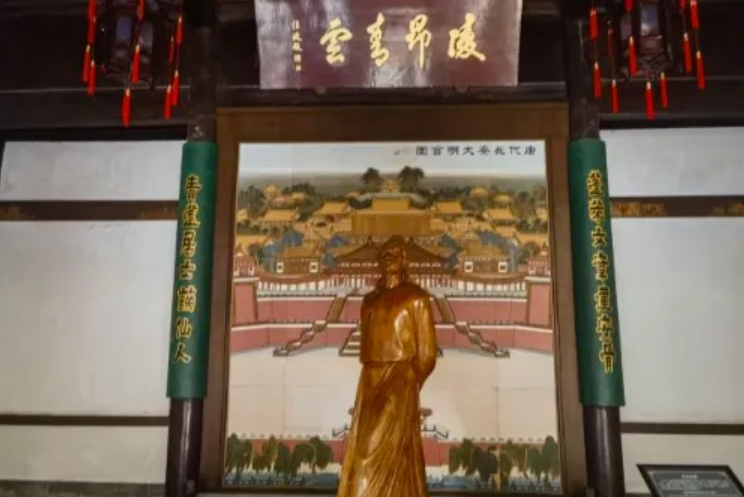
Originally named the Immortal Recalling Pavilion, Taibai Tower was first built during the Tang Dynasty's Yuanhe period. The existing structure was rebuilt in the third year of the Guangxu reign of the Qing Dynasty (1877) and is one of the oldest existing buildings in China dedicated to Li Bai. The tower is a three-story pavilion, 18 meters high, with a floor area of over 400 square meters. It features the traditional Huizhou architectural style with upturned eaves and carved beams and rafters. Inside, it houses a statue of Li Bai, stele inscriptions, paintings, and calligraphy, showcasing Li Bai's life and poetic achievements, making it an important place for visitors to pay homage to the Poet Immortal.
Santai Pavilion
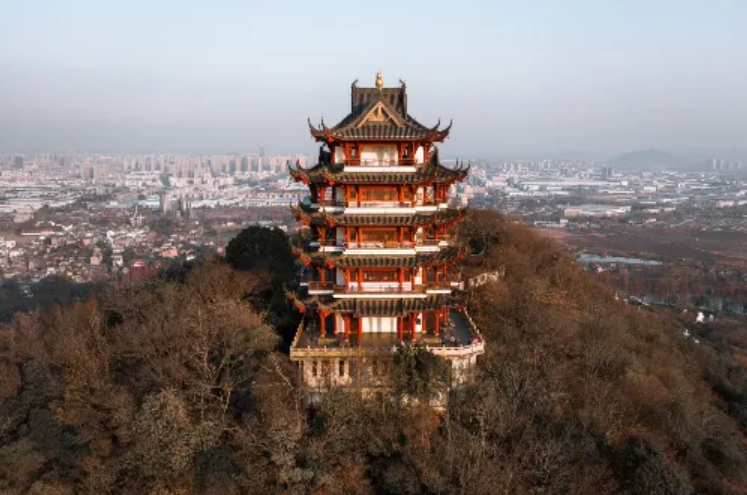
Santai Pavilion is the highest point of Caishiji. It was first built during the Wanli period of the Ming Dynasty, and the current structure was rebuilt in 1999. It is 31.9 meters high and has five stories, in a style imitating Ming-Qing architecture. Climbing to the top offers a 360-degree panoramic view of the Yangtze River, with distant views of Ma'anshan city and the hills south of the Yangtze. The vista is expansive and spectacular. Inside, the pavilion displays pictures of Caishiji's history, culture, and natural scenery, making it an excellent spot for sightseeing and photography.
Lin Sanzhi Art Museum
Covering an area of 3,800 square meters, the museum boasts an architectural style that is both simple, elegant, and uniquely modern. It consists of four parts: the main hall, the auxiliary hall, the academic hall, and the tomb garden. The main hall has a thatched roof and is also known as "Jiangshang Cottage." It mainly displays more than 100 fine calligraphic and painting works by Mr. Lin Sanzhi from different periods of his life. The auxiliary hall exhibits his commonly used seals, personal belongings, and works by his teachers and friends.
Yan Garden
Covering an area of 2,000 square meters with a floor area of 1,225 square meters, the garden is mainly one story with a partial second story. It features a courtyard layout, gently sloping roofs, and a style that is spacious, elegant, and simple—reminiscent of Tang Dynasty architecture. The main exhibition hall covers 290 square meters, with two auxiliary halls of 60 square meters each, and a multifunctional conference room of 180 square meters. Displayed here are 72 antique Chinese inkstones donated by the famous collector Ji Hanzhang, as well as fine calligraphic and painting works by contemporary masters.
Sanyuan Cave
Also known as Sanguan Cave or Sanguan Hall. The "Three Officials" in legend are deities worshipped in Taoism: the Heavenly Official, the Earthly Official, and the Water Official. The Heavenly Official bestows blessings, the Earthly Official pardons sins, and the Water Official relieves distress. Taoism associates the Three Officials with the Three Primes (Sanyuan), namely the Prime of Heaven (Upper Prime), the Prime of Earth (Middle Prime), and the Prime of Water (Lower Prime). Sanyuan and Sanguan are essentially the same concept, referring to deities venerated in Taoism.
Riverside Wetland Park
The Riverside Wetland Park borders Caishiji to the north and the Yangtze River to the west. Along the 5,670-meter park road through the poplar forest, ten viewing platforms have been set up, forming an ecological landscape featuring "one poplar forest, two waterway connections, two ring boardwalks, and three entrances."
Baoji Mountain
The name "Baoji Mountain" (meaning "Precious Accumulation Mountain") was first seen in the seal-script inscription carved at the foot of the mountain during the Zhengde period of the Ming Dynasty. It is named for the numerous strange rocks on the mountain that resemble piles of pearls and gems. Located north of Caishi Town, Ma'anshan City, Anhui Province, it has an elevation of 208 meters, a relative height of 58 meters, a length of 350 meters, and a width of 120 meters. The mountain covers an area of 7.75 hectares and is shaped like a coiling dragon.
Cuiluo Bay
Located in the southwest of Caishiji Scenic Area, Cuiluo Bay covers an area of 200,000 square meters, of which 50,000 square meters is water. It features two stone-arched bridges, three wooden flat bridges, and one stone flat bridge, with a total construction investment of 20 million yuan.
Zhi Xian Garden
Built in the style of a Jiangnan classical garden, the garden features stories about Li Bai in Anhui, Dangtu, and Caishi, with an emphasis on Li Bai's sincere and unpretentious personality. It employs various expressive techniques, including sculptures such as "Grinding an Iron Pestle into a Needle" and "Farewell at Taohua Lake."
Suggested Tour Routes:
Hiking route: East Gate → Li Bai Memorial Hall → Sanyuan Cave → Santai Pavilion → Riverside Park.
Sightseeing bus route: North Gate → Cuiluo Bay → East Gate → Taibai Tower and Li Bai Memorial Hall (get off and walk) → Emei Pavilion → Sanyuan Cave → Santai Pavilion → Woniuwei → North Gate.
Travel Tips:
It is recommended to enter the park around 8:00 AM to avoid peak tourist hours and enjoy a peaceful environment.
Wear comfortable sports shoes, as there are many steps and walking sections within the scenic area.
Bring drinking water and a small amount of snacks, as there are few shops in the area and prices are relatively high.
In summer, pay attention to sun protection and heat prevention; in winter, keep warm, and adjust clothing according to weather conditions.
It is advisable to hire a guide or learn about the historical background of the attractions in advance to better appreciate the cultural connotation.
Allow sufficient time to explore the Riverside Wetland and enjoy the beautiful sunset over the Yangtze River.
Important Notes:
Comply with scenic area regulations; do not climb cliffs, ancient trees, or other dangerous areas.
Protect the environment; do not spit or litter, and take care of cultural relics, monuments, and plants.
At cliff-side spots like Zhuoyue Terrace, pay attention to safety, watch over the elderly and children, and avoid approaching the edge.
Some sections of the trails are steep; it is recommended that the elderly and children be accompanied by family members.
If you wish to photograph cultural relics or exhibits, check whether photography is permitted and follow relevant regulations.
In case of severe weather or special circumstances, the scenic area may temporarily close some attractions or adjust opening hours; please follow official notices.
Transportation:
Bus: Take Ma'anshan city bus routes 4, 4 (night), 101, 109, or 117 and get off at the "Caishiji" stop.
Taxi: A taxi from Ma'anshan city center to Caishiji Scenic Area takes about 15 minutes and costs about 15–20 yuan.
Self-driving: The scenic area has a parking lot. From the city center, drive along Caishihe Road and Tangxian Street for about 5 kilometers. Parking fees: 10 yuan per small car, 20 yuan per large vehicle.
Cruise: Visitors can take Yangtze River cruises from Nanjing, Wuhu, and other cities to arrive at Caishiji Pier, enjoying the experience of water transportation.
Opening Hours:
Open daily from 8:00 AM to 5:30 PM (last entry at 5:00 PM). During statutory holidays and peak tourist seasons (such as Spring Festival, May Day, National Day, etc.), opening hours may be adjusted; please refer to the official notice. Visitors should pay attention to the opening hours and plan their itinerary accordingly.
Admission:
Ticket price: 68 yuan per person.