The Shunan Bamboo Sea Scenic Area is located at the junction of Changning and Jiang'an counties in Yibin City, Sichuan Province, China. It is a national 4A-level tourist attraction and also a national-level tourist resort. The scenic area combines bamboo landscapes, mountains and rivers, lakes, waterfalls, and ancient temples, and is the world's largest natural bamboo forest scenic area by concentrated area, with a vegetation coverage rate of 92.4%. The scenic area as a whole forms a "之" shape, about 13 kilometers long from east to west and about 6 kilometers wide from north to south, with a total area of 120 square kilometers. More than 70,000 mu of verdant bamboo cover 27 steep ridges and more than 500 peaks, and 58 species of bamboo in 15 genera grow there.
Historical Culture
The Shunan Bamboo Sea has a long history of bamboo cultivation, and its bamboo culture has continued for more than 2,000 years from the Eastern Han Dynasty to the present. The relief "Phoenix-Snake-Bamboo Composite Totem" on an Eastern Han pictorial stone coffin in the suburbs of Nanxi, Yibin, proves that the local ancestors practiced bamboo totem worship. During the Northern Song Dynasty, the Shunan Bamboo Sea was called Wanlingqing. The famous poet Huang Tingjian visited here and, seeing the sea of verdant bamboo, immediately used a broom as a brush and wrote the three characters "Wanlingqing" on Huangshan Stone, hence the name. The Shunan Bamboo Sea is the birthplace of Chinese bamboo craftsmanship and one of the three major bamboo carving centers in China. "Bamboo Sea Bamboo Huang" has been rated as a national-level intangible cultural heritage.
Main Attractions
Huaxi Thirteen Bridges
Huaxi is about 5 kilometers long. The stream flows down along the valley. In March of spring, peaches are red and plums are white, fallen flowers fill the stream, and bees chase butterflies, hence the name Huaxi. Beside this stream are thirteen bridges built during the Ming and Qing dynasties, namely Nü'er Bridge, Gulong Bridge, Changshou Bridge, Wanshun Bridge, Zhuangyuan Bridge, Jielong Bridge, Zhongyi Bridge, Tongxin Bridge, Jixian Bridge, Huixian Bridge, Guxi Bridge, Yuwang Bridge, and Gaosheng Bridge. Each bridge has its own story.
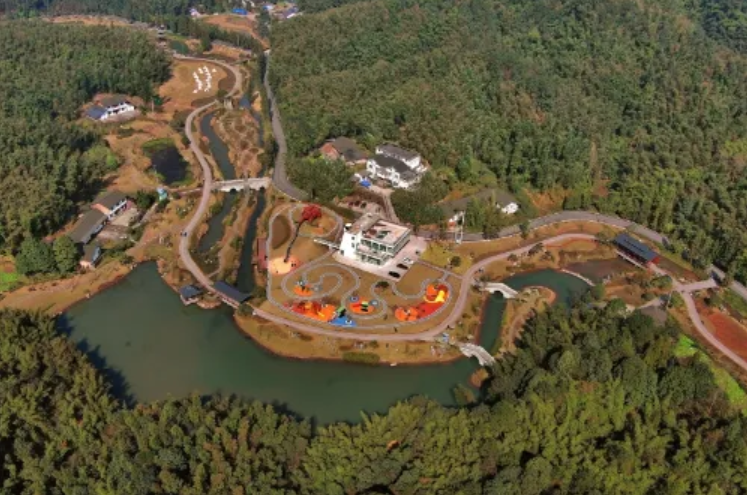
Haizhonghai
It is a lower-elevation trough valley on the bamboo sea mountain. Later, a dam was built to form a lake. The lake surface area is about 60 mu. The lake surface is open and broad, just like a "sea" in the vast bamboo sea, hence the name Haizhonghai. Haizhonghai is a filming location for the movie Crouching Tiger, Hidden Dragon.
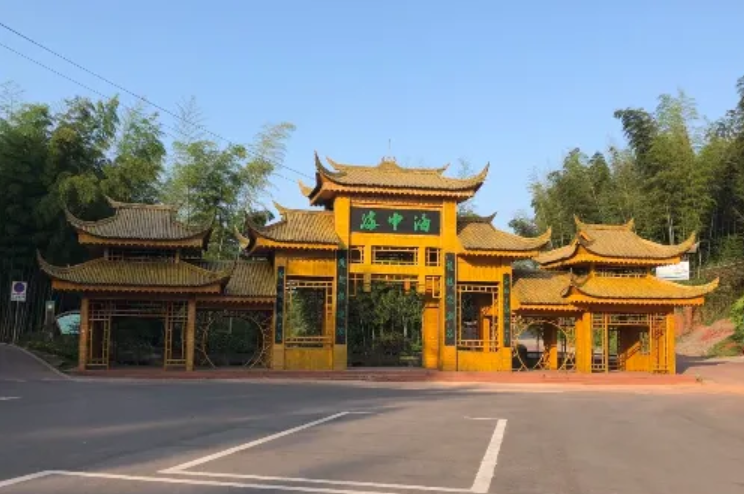
Shunan Bamboo Sea Museum
It is the largest specialized bamboo museum in the country, covering an area of 6,668 meters and with a building area of more than 3,800 square meters. The museum integrates the collection and protection of bamboo cultural relics, exhibitions, academic research, and social education, with the purpose of "tracing the ancient national culture and displaying the essence of tens of thousands of years of bamboo."
Xianyu Cave
A natural karst cave wonder. Inside the cave are thousand-year-old Buddha statues, and the stalactites have various forms. It is known as the "cave heaven and blessed land in the bamboo sea fairyland."
Qinglong Lake
The "Jiuzhaigou" in the bamboo sea. Riding a bamboo raft on the lake allows visitors to enjoy the lake and mountain scenery and experience the quiet beauty of the bamboo forest secret realm.
Emerald Corridor
A winding bamboo forest path several kilometers long, shaded by verdant bamboo on both sides, with bamboo leaves interwoven into shade. It is suitable for hiking and photography.
Seven-Color Flying Waterfall
A natural waterfall deep in the bamboo forest. The water pours down from a height, and when sunlight shines on it, the water mist refracts seven-colored light.
Tianbao Village
Located in the southeastern part of the Shunan Bamboo Sea, adjacent to Xianyu Cave. It contains landscapes such as "Yinxiu Gully," "Chengyiao Rock," "Banbianlou Ruins," "Huangshan Stone," and "Splendid Pastoral." Tianbao Village was originally a natural rock cavity, about 1,500 meters long, about 20 meters high, and about 10 meters wide.
Longyin Temple
Longyin Temple is a Buddhist temple, also called Longwei Temple. It is located on Jiulong Mountain at an altitude of 980 meters, the second highest peak in the Shunan Bamboo Sea. Climbing to the top gives one the feeling that "all other mountains look small."
Baishou Terrace
It is the filming point of the Chinese landscape scroll painting "A Hundred Turtles Paying Birthday Respects" at the opening ceremony of the 2008 Beijing Olympic Games, one of the "100 Most Beautiful Landscape Photography Spots in Sichuan," and one of the iconic landscapes of the Shunan Bamboo Sea. The low hills at the foot of the mountain look like countless longevity divine turtles paying birthday respects, hence the name Baishou Terrace.
Bamboo Tip Stroll
The main plank road is about 1.7 kilometers long in total. The entire route winds through the bamboo forest, like a roaming dragon spiraling and dancing among the bamboo, stirring clouds and mist. Visitors here can observe moso bamboo up close and experience a "stroll on the bamboo tips." Looking into the distance from here, one can not only view the wave-like bamboo sea, but also see the distant landscape and pastoral scroll in the distance.
Guanhai Tower
Originally named Diaohuang Tower, it is related to the famous Northern Song Dynasty writer and calligrapher Huang Tingjian. During the Northern Song Dynasty, Huang Tingjian traveled leisurely in the Shunan Bamboo Sea. At the place where he climbed, facing the bamboo everywhere, he repeatedly sighed: "Magnificent, magnificent, bamboo waves for ten thousand li!" Later, a viewing tower was built here. Today's Guanhai Tower is a restored reconstruction on the original site.
Tour Routes:
The following are several recommended tour routes:
Essential Route: D1 Chengdu - Yibin - Shunan Bamboo Sea - Tianbao Village - Xianyu Cave - Fairy Lake - Haizhonghai - overnight in the Bamboo Sea; D2 Guanyun Pavilion - Wangyou Valley - Bamboo Sea Cableway - Emerald Corridor - Guanhai Tower - Chengdu.
Visiting Route: Depart from Chengdu on the first day, arrive at the Shunan Bamboo Sea after lunch, visit Wangyou Valley Scenic Area, and go to the Shunan Bamboo Sea Museum; after breakfast on the second day, go to Xianyu Cave, climb Guanhai Tower after lunch to enjoy the panoramic view of the bamboo sea and the Emerald Corridor, and return to Chengdu in the afternoon.
Two-Day Family Tour: Museum - Wangyou Valley - Haizhonghai - Xianyu Cave/Tianbao Village - Huaxi Thirteen Bridges - Yongjiang Village.
Three-Day Summer Family Tour: Guanyun Terrace - Haizhonghai - Xianyu Cave/Tianbao Village - Longyin Temple - Huaxi Thirteen Bridges - Wangyou Valley - Museum - Shangri-La - Yongjiang Village - Qidong Gully.
Travel Suggestions:
In spring and summer (March-June), the bamboo forest is lush and green, and the climate is cool, making it a summer resort; in autumn and winter (September-December), the bamboo forest is golden and interlaced in autumn, and in winter one can enjoy the morning mist of the bamboo sea. You can choose the time to visit according to your preferences.
The scenic area is large. You can choose to take the scenic area shuttle bus or cableway to save energy and time.
You can stay in a characteristic bamboo house within the scenic area and experience an original ecological lifestyle.
Notes:
There are many mosquitoes deep in the bamboo forest. It is recommended to bring mosquito repellent spray.
Some hiking routes are slippery. It is recommended to wear non-slip shoes.
Respect nature, do not damage the bamboo forest, do not litter, and protect the scenic area's environment.
Transportation:
Self-driving: From Chengdu, Chongqing, and Yibin, it takes about 4-5 hours to arrive.
High-speed rail carpooling: Chengdu, Chongqing, and Yibin all have direct buses to the Shunan Bamboo Sea.
Long-distance bus: Chengdu, Chongqing, and Yibin all have direct buses to the Shunan Bamboo Sea.
Opening Hours:
Open all day.
Tickets:
Ticket 100 yuan/person.