The Chengdu Research Base of Giant Panda Breeding is located at No. 1375 Panda Avenue, Chenghua District, Chengdu, Sichuan Province. It is a national 4A-level tourist attraction, a world-renowned giant panda ex situ conservation base, scientific research and breeding base, public education base, and educational tourism base, and is also a "Giant Panda Ex Situ Conservation Ecological Demonstration Project." It is famous for its commitment to protecting and breeding giant pandas, red pandas, and other endangered wild animals endemic to China. The base covers a total area of 3,570 mu, of which the expansion area is 2,535 mu. Its internal giant panda birthing rooms, breeding areas, scientific research center, and panda hospital are rationally laid out, and there are also many panda "villas" scattered among the mountain forests. The entire base follows and preserves the original terrain and landforms, using mountain gullies and streams to form a multi-level landscape belt of mountain valleys, and according to the characteristics of the panda theme, it is generally divided into the Panda Stream Valley Area, Panda Dense Forest Area, Panda Reception Hall, and Panda Villa Area.
Historical Culture
In the 1980s, arrow bamboo in the Qionglai Mountain system bloomed and died, and some giant pandas were rescued and gathered at the Chengdu Zoo due to starvation from lack of food. In 1987, the Chengdu Municipal People's Government decided to establish the Chengdu Research Base of Giant Panda Breeding, adopting a management model of one team with two signboards together with the Chengdu Zoo. In March of the same year, the base broke ground, and it was completed in 1988. After three phases of construction, giant panda enclosures, exercise yards, feed rooms, laboratories, veterinary hospitals, as well as water supply, power supply, communications, and other facilities were successively built, making it an ex situ conservation demonstration base specializing in the feeding, breeding, disease prevention and control of captive giant pandas, related scientific research, and science popularization education. After 1990, the Chengdu base and the Chengdu Zoo became two independent entities.
In October 1991, the second phase of the expansion project of the panda base began, and it was completed in 1995, building a giant panda habitat simulating the wild ecological environment. In 1992, construction began on the Chengdu Giant Panda Museum within the base. In 2000, the base took the lead in carrying out public conservation education in the national wildlife protection system and established the Science Popularization Education Department. On October 1, 2014, the "Panda Valley," the Dujiangyan Wild Release Breeding Research Center of the Chengdu Research Base of Giant Panda Breeding, opened for trial operation to the public, and officially opened to the public on April 20, 2015.
In 2019, Chengdu's first planning committee meeting reviewed and approved the overall planning and conceptual planning scheme for "Panda Capital." In August of the same year, the new Chengdu Giant Panda Museum within the base began exhibition construction and officially opened to the public on March 3, 2021. In September 2019, the expansion project of the Chengdu Research Base of Giant Panda Breeding began. After the expansion project was completed in 2021, the total area of the base was further expanded. In March 2021, the LOGO of the Chengdu Research Base of Giant Panda Breeding was officially released. On January 1, 2022, the expansion area of the Chengdu Research Base of Giant Panda Breeding opened for trial operation.
Main Attractions
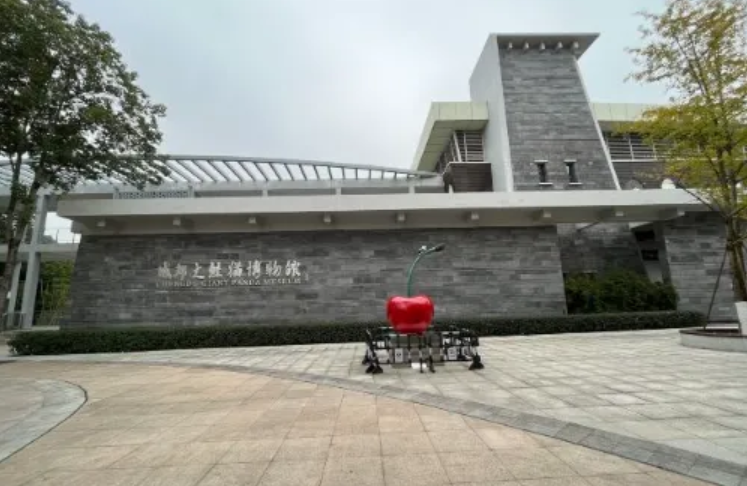
Giant Panda Museum
The world's first giant panda-themed interactive exhibition, it systematically introduces the evolutionary history of giant pandas, their distribution in ancient and modern times, and their wild ecological habits, and also allows visitors to experience a "Panda Doctor" VR surgery simulation, enabling people to fully understand giant pandas and their living environment.
Panda Stream Valley Area
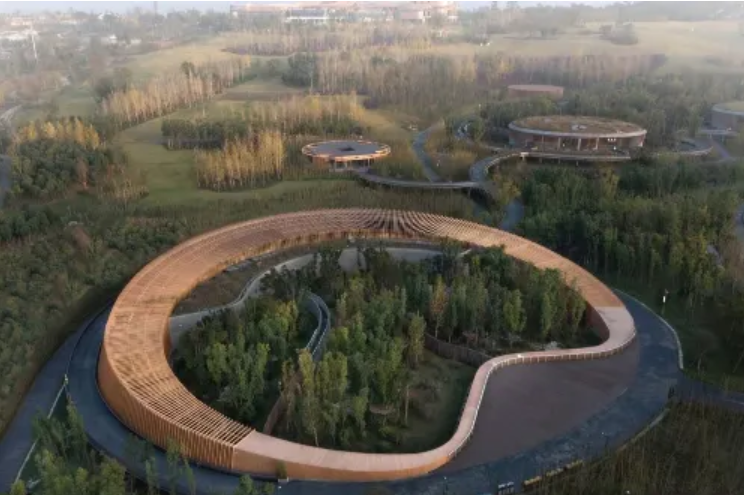
It contains 7 giant panda pavilions, including 4 circular enclosures and 3 pebble enclosures. The pavilions are named "Shanyue Pavilion," "Yunyue Pavilion," "Qiuyue Pavilion," "Wangyue Pavilion," "Mingyue Pavilion," "Jiangyue Pavilion," and "Lanyue Pavilion." Among them, the 4 circular enclosures are relatively concentrated, and many giant pandas often gather here.
Panda Tower
A landmark building, 69.8 meters high and with 9 floors. The tower is shaped like a bamboo shoot after rain, and the floor space uses the hibiscus flower as a guide. Climbing the tower allows a panoramic view of the entire panda base.
Giant Panda Sunshine Nursery
This is the living area for young pandas. Arriving before 9:00 a.m. allows visitors to photograph the adorable posture of panda cubs climbing wooden frames, and at 9:30 there is also a free volunteer explanation of the nursery's story.
Giant Panda Moon Nursery
It is the core area for breeding giant panda cubs and can be called the "cradle of panda cubs' birth" and "paradise of growth." It provides a constant-temperature, safe, and comfortable environment for giant panda mothers and cubs, and is equipped with a professional medical and animal care team.
Giant Panda Star Nursery
It is the living area for giant panda mothers and cubs and young pandas. Inside the pavilion is a huge circular exhibition hall, where visitors can observe the daily lives of giant panda mothers and cubs in all directions at 360 degrees, and there are also stepped seats nearby.
Red Panda No. 2 Activity Area
It is the free-range area for red pandas, where visitors can observe red pandas up close. This activity area has a supplementary feeding time every day from 14:00 to 15:00, when visitors can photograph the cute posture of red pandas standing upright to eat apples.
Giant Panda Villa No. 1
It is a classic area for observing the natural life of adult giant pandas up close. It simulates a wild habitat, with an outdoor activity area, wooden climbing frames, and a pond shaded by bamboo forests.
Swan Lake
A distinctive artificial lake, home to birds such as white swans, black swans, mandarin ducks, and ruddy shelducks. It was designed and planned from the perspective of respecting nature and protecting the environment, and has the reputation of being Chengdu's best birdwatching base.
Suggested Tour Routes:
If entering from the South Gate, the recommended route is: Panda Bronze Statue — Giant Panda Villa No. 7 — Giant Panda Villa No. 5 — Giant Panda Villa No. 6 (closed on Mondays) — Giant Panda Sunshine Nursery — Red Panda No. 2 Activity Area — Giant Panda Museum (closed on Mondays).
If entering from the West Gate, the route can be: Lanyue Pavilion — Jiangyue Pavilion — Mingyue Pavilion — Wangyue Pavilion — Yunyue Pavilion — Qiuyue Pavilion — Shanyue Pavilion.
Because the base is large and has many attractions, visitors are advised to arrange a full day for the visit, so they can more leisurely observe the adorable giant pandas and other animals and fully appreciate the charm of the base.
Visiting Suggestions:
Try to choose weekdays or non-holidays to avoid peak crowds, so you can better observe the giant pandas and reduce queuing time.
Bring sun protection items and rain gear. Chengdu's weather is changeable, so pay attention to sun protection when the sun is strong, and be prepared for rain.
Wear comfortable sports shoes, because you need to walk long distances within the base, and comfortable shoes can make the visit easier.
You can learn in advance about the living habits of giant pandas and their feeding times, and go to watch at appropriate times to see the giant pandas in a more active state.
When watching giant pandas, keep quiet and do not make loud noises, so as not to disturb them.
Precautions:
Feeding giant pandas and other animals is strictly prohibited. The base has professional keepers to feed them, and feeding by visitors may affect animal health.
The use of flash when taking photos is prohibited. Giant pandas' eyes are sensitive to light, and flash may cause harm to them.
Follow the scenic area's tour route instructions and do not leave the designated route at will, so as not to damage the scenic area's ecological environment or cause danger.
Pay attention to the safety of personal belongings. In crowded places, take good care of mobile phones, cameras, and other valuables.
Take care of the scenic area's environment, do not litter, and keep the scenic area clean and hygienic.
Transportation:
Metro: Take Line 3 and get off at Junqu General Hospital Exit B or Panda Avenue Exit A. There are shuttle buses to the panda base gate from both exits (the shuttle bus in the direction of Junqu General Hospital goes to the West Gate, and the shuttle bus in the direction of Panda Avenue goes to the South Gate).
Bus: After arriving at Yulei Road Cuwei Intersection Station, you can enter the scenic area from the West Gate.
Opening Hours:
Open all year round. Morning ticket entry time is 8:00 - 12:00; afternoon ticket entry time is 12:00 - 16:30. Please refer to the scenic area's actual opening conditions on the day.
Tickets:
Tickets are 55 yuan per person.