The Dujiangyan Scenic Area is located in the west of Dujiangyan City, Chengdu, Sichuan Province. It is a World Cultural Heritage site, a World Natural Heritage site, a Major Historical and Cultural Site Protected at the National Level, and a National 5A Tourist Attraction. The scenic area covers about 22,000 mu. It is the most successful damless water diversion project in the world, with a history of more than 2,000 years, and it still plays a role in flood control and irrigation today, creating the Land of Abundance. It perfectly integrates natural landscapes with cultural landscapes, showcasing the great achievements of ancient Chinese water conservancy projects and its unique water culture.
The Dujiangyan water conservancy project mainly consists of the Yuzui (Fish Mouth), Feishayan (Flying Sand Weir), and Baopingkou (Bottle-Neck Channel). The Fish Mouth divides the Minjiang River into the Inner River and the Outer River. The Outer River is used for flood diversion, while the Inner River diverts water for irrigation. The Flying Sand Weir has the function of discharging floods and sand, and the Bottle-Neck Channel controls the amount of water entering the Inner River.
Historical Culture
In the land of Western Shu, the terrain varies greatly. In ancient times, the Chengdu Plain frequently suffered from floods, droughts, waterlogging, and other disasters. After water disasters were tackled by the three kings and two emperors of ancient Shu, Yu the Great, and Bieling, it was only after Li Bing led the people to build Dujiangyan that the Chengdu Plain was able to enjoy peace and prosperity with a prosperous population and abundant goods.
Dujiangyan created the Land of Abundance, promoted the Qin state's unification of the world, and indirectly influenced the course of Chinese national history. It is praised as the ancestor of world water culture.
Dujiangyan adopts damless water diversion, "not opposing water," and uses natural momentum to divert water, divide water, discharge floods, discharge sand, and take in water. This reflects the concept of following the laws of nature. This concept is not only a philosophical thought but also a practical guideline, exerting a profound influence on later generations.
In terms of management, over more than two thousand years of practice, Dujiangyan gradually formed a three-level management organization system consisting of provincial government, prefectural and county governments, and the public. The management institutions have been continuously improved, the legal system has been continuously strengthened, and the irrigation area and benefits have also gradually expanded.
Main Attractions
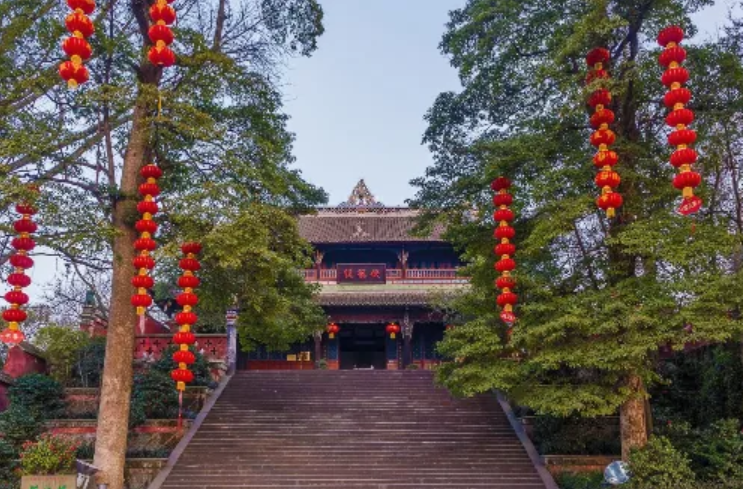
Fulong Temple
Fulong Temple is located in Lidui Park and is a temple commemorating Li Bing and his son. It displays many cultural relics related to the Dujiangyan water conservancy project, such as the Eastern Han Dynasty stone statue of Li Bing. The buildings in the temple are simple and elegant, with high historical and artistic value.
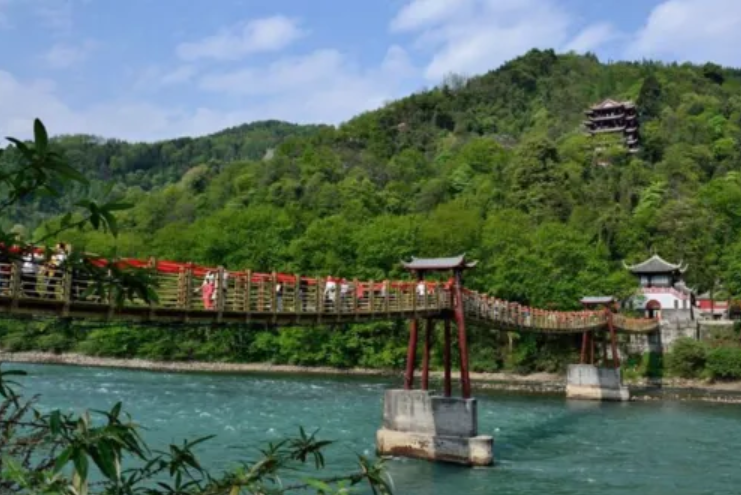
Anlan Suspension Bridge
Anlan Suspension Bridge, also known as the "Couple Bridge," spans the Inner and Outer Rivers and was an important commercial route between western Sichuan and Aba in ancient times. The bridge body is stretched across both banks by thick bamboo cables, covered with wooden planks, and bordered by bamboo ropes on both sides. Walking on it is shaky and quite interesting.
Qinyan Tower
Standing against the mountain and towering over the riverbank, it has an exquisite structure and is one of the best places to overlook the panoramic view of Dujiangyan. Looking into the distance, the Fish Mouth, Anlan Suspension Bridge, Two Kings Temple, Yulei Pass, and the peaks of Qingcheng are all in view.
Two Kings Temple
The Two Kings Temple is a temple built to commemorate Li Bing and his son. It is built against the mountain and is magnificent. The temple contains many inscriptions and plaques by famous people from past dynasties, as well as murals depicting the water-control achievements of Li Bing and his son, displaying rich water conservancy culture and historical connotations.
Fish Mouth
The Fish Mouth is an important part of the Dujiangyan water conservancy project. It divides the Minjiang River into the Inner River and the Outer River, shaped like a fish mouth. During flood periods, the Outer River can divert floodwater to ensure that the Chengdu Plain is not harmed by floods; during dry periods, the Inner River can divert water for irrigation to meet farmland water needs.
Flying Sand Weir
The Flying Sand Weir is located between the Fish Mouth and the Bottle-Neck Channel. Its main function is flood discharge and sand drainage. When the water volume of the Inner River exceeds the intake capacity of the Bottle-Neck Channel, the excess water will overflow from the Flying Sand Weir into the Outer River. At the same time, the Flying Sand Weir can also use the principle of curved-channel circulation to discharge sediment from the river water into the Outer River, ensuring the smooth flow of the Inner River.
Bottle-Neck Channel
The Bottle-Neck Channel is a narrow opening artificially excavated. It controls the amount of water entering the Inner River, just like the neck of a bottle. Only through the Bottle-Neck Channel can the water of the Inner River flow into the Chengdu Plain to irrigate farmland. The cliffs on both sides of the Bottle-Neck Channel are steep, and the engineering difficulty was extremely great, reflecting the wisdom and creativity of the ancient working people.
Qingxi Garden
It is a fine garden of Sichuan-style bonsai within the Lidui Ancient Garden in the Dujiangyan Scenic Area, covering more than 8,000 square meters. The garden architecture is in the style of western Sichuan folk houses and uses Chinese classical garden techniques such as framing, screening, and borrowed scenery. The garden contains rare thousand-year-old stump bonsai and landscape bonsai that reproduce the secluded, perilous, majestic, and beautiful natural features of the mountains and rivers of Sichuan. It is an excellent check-in spot for viewing crape myrtle.
Yulei Pavilion
Located on the top of Yulei Mountain in the Dujiangyan Scenic Area, it has six floors above ground and is the highest point in the Dujiangyan Scenic Area. From the top, one can look down at the panoramic view of the Dujiangyan water conservancy project and the urban area. To the east, one can view the thousand-year-old ancient city; to the west, one can overlook the Chengdu Plain; to the north, one can gaze at the source of the Minjiang River; and to the south, one can see the eight-hundred-li Qingcheng.
City God Temple
Located on Yulei Mountain, it is a temple where the City God was worshipped in ancient times. The temple's design style is unique, built according to the mountain and following the slope and terrain, with an extremely rigorous and ingenious structure. Its architectural complex has been included in the architecture textbooks of Tsinghua University and has high historical significance and archaeological value.
Recommended Tour Route:
Recommended tour route: Yantong Dao - Fulong Temple - Bottle-Neck Channel - Flying Sand Weir - Fish Mouth - Anlan Suspension Bridge - Two Kings Temple. This route allows tourists to fully understand the principles and history of the Dujiangyan water conservancy project and enjoy the main attractions of the scenic area.
Travel Suggestions:
It is recommended to set off early to avoid peak tourist periods, so you can better enjoy the attractions.
Wear comfortable shoes, because you need to walk a long distance within the scenic area.
You can hire a guide to gain a deeper understanding of Dujiangyan's historical culture and the principles of the water conservancy project.
In summer, take good sun protection and heatstroke prevention measures; in winter, keep warm.
Precautions:
Observe the regulations of the scenic area and do not damage cultural relics or scenic facilities at will.
When walking on the Anlan Suspension Bridge, pay attention to safety and do not play or shake on the bridge.
Take good care of personal belongings, especially in crowded places.
If you encounter severe weather, follow the arrangements of the scenic area staff and promptly take shelter in a safe area.
Transportation:
High-speed rail: Take the high-speed rail from Chengdu Xipu Station to Dujiangyan Station or Lidui Park Station. Lidui Park Station is closer to the scenic area, and after leaving the station, you can reach the scenic area on foot in about 10 minutes.
Bus: Within Dujiangyan City, you can take buses such as No. 4, No. 6, No. 7, No. 9, and No. 10 to reach the Dujiangyan Scenic Area.
Self-driving: Departing from Chengdu, you can reach the Dujiangyan Scenic Area via the Chengdu-Dujiangyan Expressway. The scenic area has a parking lot.
Opening Hours:
Summer opening hours are 8:00 - 18:00, and winter opening hours are 8:00 - 17:30 (ticket sales for the day stop at 17:00).
Tickets:
The ticket price is 80 yuan per person.