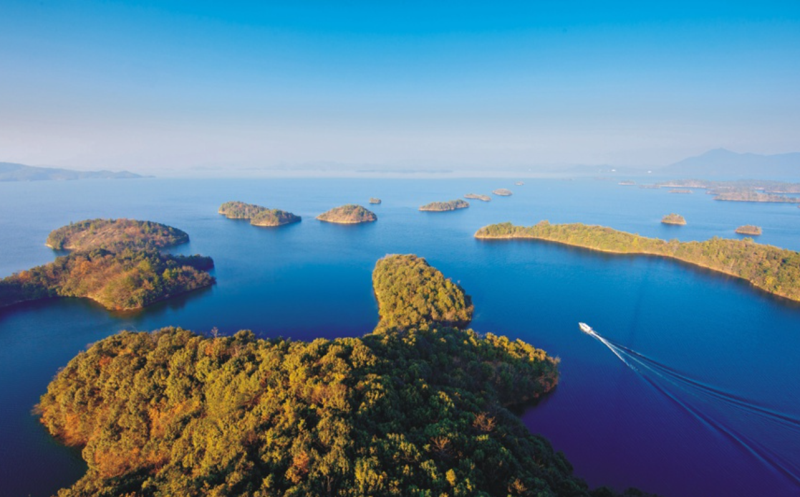
The Lushan West Sea Scenic Area is located in the southwest of Jiujiang City, Jiangxi Province, spanning Yongxiu and Wuning counties. It is a national 5A-level tourist attraction, a national water conservancy scenic area, and a national-level scenic area. The scenic area covers a total area of 495 square kilometers, of which the water area is 308 square kilometers. It consists of two parts: a large reservoir (Zhelin Lake) and a holy site of Buddhist Zen culture (Yunju Mountain), with the core features of "thousands of islands embraced in verdure and serene Zen charm." Within the water area are 1,667 islands, with an average water depth of 45 meters and visibility of 11 meters. It is the largest earth-dam reservoir in Asia, and the water quality reaches the national Class I standard. The scenic area integrates diverse landscapes such as lakes, islands, forests, karst caves, hot springs, and Buddhist culture, combining sightseeing and vacationing, leisure and wellness, religious pilgrimage, and water sports. It is known as "Jiangxi's Thousand Island Lake" and "China's most beautiful lake and mountain scenery."
Historical Culture
The historical and cultural heritage of Lushan West Sea is profound and can be traced back to the Neolithic Age. Multiple Neolithic sites have been discovered around the lake area, and a large number of pottery, stone tools, and other cultural relics have been unearthed, proving that ancestors lived and multiplied here thousands of years ago.
As the cultural core of the scenic area, Yunju Mountain is one of the birthplaces of the Caodong School of Zen Buddhism, and its Buddhist cultural history can be traced back to the Eastern Jin Dynasty. During the Yuanhe period of the Tang Dynasty, Daorong, a disciple of the eminent monk Mazu Daoyi, built a hut here to spread the Dharma and founded the Yunju Mountain monastery. During the Dazhong Xiangfu period of the Northern Song Dynasty, Zhenru Temple was built and became an important Buddhist center in Jiangnan. Many eminent monks emerged over the generations, such as Zen Master Foyin in the Song Dynasty and Monk Zhuanyu in the Ming Dynasty. Zhenru Temple, together with Tiantong Temple in Zhejiang and Lingyan Temple in Jiangsu, is known as one of the "three model monasteries under heaven." Its tradition of "emphasizing both farming and Zen" continues to this day and has had a profound influence on Chinese Buddhist culture.
The Zhelin Reservoir in the lake area was built in 1958 and completed and impounded in 1972. It was an important water conservancy project after the founding of New China, embodying the wisdom and sweat of several generations of builders and forming a unique water conservancy culture. The submerged area of the reservoir was once the seat of ancient Ai County, preserving a large number of historical relics and folk legends. Today, the story of the underwater ancient city adds a mysterious color to the scenic area.
Main Attractions
Zhelin Lake (Core Water Area)
Zhelin Lake is the main landscape of Lushan West Sea. In its 308-square-kilometer water area, 1,667 islands are scattered like emeralds in the lake. Major islands include Peach Blossom Island, Peacock Island, Monkey Island, Crocodile Island, and Goddess Island, each with its own characteristics: Peach Blossom Island is full of blooming peach blossoms in spring and offers picking experiences; Peacock Island is home to more than a hundred peacocks, where visitors can watch the spectacle of their tail feathers spreading; Goddess Island is themed around love culture and features attractions such as love locks and wishing pavilions. Visitors can take cruise boats or speedboats between the islands and enjoy the beautiful scenery of "a lake of clear water and thousands of islands in verdure." They can also participate in water sports such as jet skiing, sailing, and kayaking, or fish and camp by the lake to enjoy the pleasures of being close to the water.
Yunju Mountain Zhenru Temple
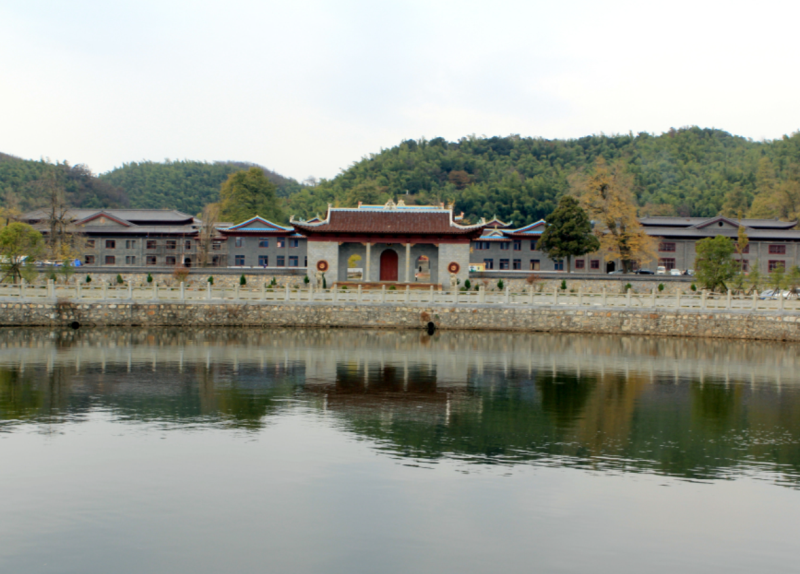
Zhenru Temple is located at the summit of Yunju Mountain. It was first built in the Tang Dynasty and has a history of more than 1,200 years. It is a national key open temple and the ancestral court of the Caodong School of Zen Buddhism. The temple sits at the foot of Wulao Peak, surrounded by mountains, with ancient trees reaching the sky and a quiet environment. The temple preserves precious cultural relics such as Tang Dynasty bronze Buddhas, a Ming Dynasty Thousand Buddha Pagoda, and Qing Dynasty inscriptions. Among them, the Thousand Buddha Pagoda is 36 meters high, and its body is carved with 1,003 Buddha images with exquisite craftsmanship. Zhenru Temple is famous for having "no merit box" and "emphasizing both farming and Zen." The monks are self-sufficient and maintain a simple tradition of practice. With morning bells and evening drums and flourishing incense, the temple is an important place for believers to make pilgrimages and for tourists to experience Zen culture. Nearby there are also Zen-themed landscapes such as Mingyue Lake, Tanxin Stone, and Luohan Cave.
West Sea Hot Spring
West Sea Hot Spring is located in the eastern part of the scenic area, in Yijiahe Village, Yongxiu County. It is a national-level hot spring resort. The hot spring water emerges at about 70°C, with a daily flow of 5,000 tons. It is rich in minerals such as fluorine, metasilicic acid, and hydrogen sulfide, and has auxiliary therapeutic effects on rheumatism and skin diseases. The hot spring area has nearly a hundred specialty soaking pools, such as Chinese herbal pools, flower petal pools, family pools, and dynamic hydrotherapy pools, distributed among the mountain forests and integrating natural scenery with wellness concepts. It is equipped with resort hotels, dining centers, fitness facilities, and more. Visitors can soak in the hot springs and enjoy SPA treatments here for a leisure and wellness journey.
Jinkou Scenic Area
Jinkou Scenic Area is the eastern entrance of Lushan West Sea. It features leisure vacations and water sports and covers an area of about 10 square kilometers. The scenic area includes the Jinkou Visitor Center, the West Sea Star Glass Sightseeing Tower, and the Water World Theme Park. The West Sea Star Sightseeing Tower is 99 meters high and is the highest viewing platform in the lake area. From the top, visitors can enjoy a 360° panoramic view of the Thousand Island Lake scenery. Water World includes projects such as a tsunami pool, rainbow slides, and a lazy river, suitable for family trips with children. In addition, Jinkou Scenic Area also has an RV campground and camping base, providing visitors with diverse accommodation experiences.
West Sea Water World
West Sea Water World is located near Sima Pier and is a comprehensive water project area integrating water entertainment and leisure sightseeing. It has the largest water sports base in Jiangxi Province, offering exciting projects such as motorboats, water flyboarding, banana boats, and parasailing. It also has a lakeside bicycle path and lakeside boardwalk to meet the needs of different tourists. The surroundings of Water World are well equipped with specialty restaurants, souvenir shops, and more, making it a popular choice for young people and family tourists.
Food
West Sea Fish Head
West Sea Fish Head is the signature dish of Lushan West Sea. It uses the locally specialty bighead carp (silver carp), which has tender meat and no muddy taste. It is mainly prepared by steaming or boiling in a white broth. Steamed fish head preserves the original flavor and is garnished with shredded ginger and chopped scallions for freshness; white broth fish head is slowly stewed with spring water, producing a milky white soup that is fresh, mellow, and rich. In restaurants around the lake area, this dish is a must-order, with the price depending on the size of the fish head, about 60-120 yuan per portion. Cooking it together with local tofu and radish better highlights the freshness of the lake delicacy.
Wuning Stick Fish
Wuning Stick Fish is a specialty freshwater fish from the Lushan West Sea basin. It is named for its slender, stick-like body, and its meat is firm and delicious. Common preparations include dry-frying, braising, and pan-frying. Dry-fried stick fish is crispy outside and tender inside, making it an excellent accompaniment to alcohol; braised stick fish has a rich sauce flavor and is very savory. This dish can be tasted in Wuning County and farm restaurants around the scenic area, at about 40-60 yuan per portion, and is one of the representatives of local food culture.
Yongxiu Aicheng Fried Rice Noodles
Yongxiu Aicheng Fried Rice Noodles is a traditional snack in the Jiujiang area, commonly found in breakfast shops and restaurants around Lushan West Sea. It uses locally produced indica rice noodles, which are softened with boiling water and then stir-fried over high heat with ingredients such as eggs, bean sprouts, green vegetables, shredded pork, and chili. The texture is smooth and chewy, salty, fragrant, and slightly spicy. Aicheng Fried Rice Noodles emphasizes "wok hei," and only with the right heat can it be fragrant and appetizing. The price is about 8-15 yuan per portion, making it a convenient filling choice for tourists.
Dining in and around the Scenic Area
The pier service areas, island restaurants, and hot spring resort areas within Lushan West Sea Scenic Area provide diverse dining services, mainly featuring lake delicacies and farm dishes, such as steamed egg with whitebait, stewed chicken with stone fungus, and reservoir shrimp, with an average per capita consumption of about 50-80 yuan. Vegetarian halls around Yunju Mountain allow visitors to experience vegetarian meals. The vegetarian meals at Zhenru Temple use tofu, vegetables, and mushrooms as ingredients and are light and healthy, at about 30 yuan per person. Restaurants in Yongxiu and Wuning county towns offer more local specialty dishes, such as stewed bamboo shoots with cured meat and glutinous rice chicken, at affordable prices, suitable for an in-depth experience of local flavors.
Tickets:
Tickets are 85 yuan per person, and boat tickets are 65 yuan per person.
You can search for the official WeChat public account "Lushan West Sea" to get the latest updates or buy tickets online.
Opening Hours:
The opening hours of Zhelin Lake Scenic Area are 8:00-17:00 (April 1-October 31) and 8:30-16:30 (November 1-next March 31). The last return trip time of the cruise is 16:30 (peak season) and 16:00 (off season). The opening hours of Yunju Mountain Scenic Area are 8:00-17:30 (all year). The opening hours of West Sea Hot Spring are 10:00-23:00 (all year), and may be extended on holidays.
Travel Routes:
One-Day Route (Lake Views Core Islands)
Depart from Sima Pier and take a cruise to visit Peach Blossom Island in turn (experience picking and folk performances, about 1 hour), Peacock Island (watch peacocks and participate in interactive projects, about 40 minutes), and Goddess Island (climb high to enjoy the view and check in at love-themed landscapes, about 1 hour); have lunch at an island restaurant at noon (about 1 hour); in the afternoon, go to West Sea Water World and experience jet skiing or lakeside cycling (about 2 hours), then return to the pier. The whole journey takes about 6-7 hours, suitable for first-time visitors with limited time.
Two-Day Route (Lake Views Zen Culture Hot Spring)
Day 1: Visit the core islands of Zhelin Lake (same route as above, about 6 hours), go to West Sea Hot Spring Resort in the evening, soak in the hot spring and enjoy dinner (about 3 hours), and stay in a hot spring hotel; Day 2: In the morning, go to Yunju Mountain and visit Zhenru Temple (experience Zen culture and taste vegetarian meals, about 3 hours), visit landscapes such as Mingyue Lake and Wulao Peak (about 2 hours), and return in the afternoon. The whole journey allows for an in-depth experience of the scenic area's diverse features and is suitable for leisure vacation tourists.
Transportation:
Self-driving: From Nanchang, take the Changjiu Expressway to Junshan Hub, then transfer to the Yongwu Expressway, and get off at Meitang, Zhelin, or Wuning exits. The drive takes about 1.5 hours. From Jiujiang, take the Changjiu Expressway and transfer to the Yongwu Expressway. The drive takes about 1.5 hours. From Wuhan, take the Wuhuang Expressway, transfer to the Daguang Expressway, and then to the Yongwu Expressway. The drive takes about 3 hours. There are parking lots at each pier and service area of the scenic area. The charging standard is 5 yuan per hour for small vehicles, with a daily cap of 30 yuan.
High-speed rail/train: Take the high-speed rail to Yongxiu Station. After leaving the station, transfer to the scenic area shuttle bus to Zhelin Lake Sima Pier. The ride takes about 40 minutes, and the ticket price is 20 yuan per person. Departure times are 9:00, 11:00, and 14:00. Or take the train to Jiujiang Station and transfer to the Jiujiang-Wuning bus, getting off at Zhelin Lake Scenic Area. The ride takes about 1.5 hours, and the ticket price is 30 yuan per person.
Tourist special lines: Nanchang Changbei International Airport and Jiujiang Bus Station both have direct tourist special lines to Lushan West Sea Scenic Area, with 3-4 departures per day. The ride takes about 2 hours, and the ticket price is 50-60 yuan per person. Specific schedules can be checked on the scenic area's official website.
Must-Visit Attractions:
Zhelin Lake Thousand Island Scenery: 1,667 islands are distributed across a 308-square-kilometer water area. Taking a boat among them allows visitors to enjoy the beautiful lake scenery of "the boat travels in the water, and people sit in a painting." It is the iconic landscape of the scenic area.
Yunju Mountain Zhenru Temple: A thousand-year-old ancient temple and the ancestral court of the Caodong School. It is a place to experience the Buddhist culture of "emphasizing both farming and Zen." The surrounding mountains and waters are quiet and suitable for quiet prayer and blessings.
West Sea Hot Spring: A 70°C natural hot spring with nearly a hundred specialty soaking pools, combining lake views and wellness concepts. It is an excellent choice for leisure and relaxation.
Travel Suggestions:
The best seasons for visiting are April-May (blooming spring flowers) and September-October (clear autumn weather). At these times, the weather is pleasant and the lake scenery is most beautiful. In summer, pay attention to sun protection and participate more in water activities. In winter, soaking in hot springs is a popular choice.
When taking a cruise, it is recommended to choose a window seat to facilitate viewing the lake scenery and taking photos. Tourists prone to seasickness may take seasickness medicine in advance. The scenic area's cruise boats all have ventilation facilities.
When going to Yunju Mountain, it is recommended to wear comfortable sports shoes. Some mountain sections require walking, and the temperature difference between morning and evening is large, so a light jacket can be carried. When visiting Zhenru Temple, observe temple etiquette: do not make noise or touch Buddha statues at will.
Tourists planning to experience water activities may prepare a change of clothes and a waterproof bag in advance (to protect mobile phones and other items). Related items are also sold in the scenic area, but at higher prices.
Precautions:
The waters of Zhelin Lake are relatively deep. Observe safety regulations while visiting, do not swim without permission, follow coach guidance when participating in water activities, and wear life jackets properly.
Protect the ecological environment, do not throw garbage into the lake, and do not pick plants on the islands. The scenic area implements "leave-no-trace tourism" management, and violators may face fines.
Transportation between islands in the scenic area depends on cruise boats. Strictly observe cruise departure times. Missing the last boat may lead to being stranded. It is recommended to confirm times in advance with guides or pier staff.
Mobile phone signal is weak in some areas of Yunju Mountain. It is recommended to stay close to companions to avoid getting separated. There are emergency help points in the scenic area, and staff can be contacted promptly in case of emergency.
Restaurants around the lake area mainly serve lake delicacies. Before consumption, it is recommended to confirm prices and ingredient freshness, choose formal dining places, and avoid consumption disputes.