Huangling Scenic Area is located in the northeast of Wuyuan County, Shangrao City, Jiangxi Province. It is a national 5A-level tourist attraction and a typical mountain village, with a total area of about 15 square kilometers. The scenic area features "shaiqiu" (sun-drying autumn crops) culture, ancient village architecture, and terraced flower seas as its core characteristics. It is at an altitude of about 600 meters, surrounded by mountains, with steep terrain. The village is built along the mountain, and the houses are scattered in an orderly manner on slopes with a drop of nearly 100 meters. Huangling has preserved a large number of Huizhou-style buildings from the Ming and Qing dynasties. There are more than 120 ancient buildings, including 36 key protected buildings, mostly brick-and-wood structures, with white walls, black tiles, and horse-head walls as distinctive features. The ancient village streets are paved with bluestone slabs, with a total length of about 3 kilometers. The scenic area combines natural landscapes and cultural heritage. In spring, tens of thousands of acres of terraced rapeseed flowers bloom, and in autumn, villagers dry crops, forming the unique "shaiqiu" landscape. It is known as "the symbol of China's most beautiful countryside" and is a rural tourism destination integrating sightseeing and photography, folk experience, and leisure vacation.
Historical Culture
Huangling Ancient Village was first built in the mid-Ming Dynasty and has a history of more than 500 years. It was named because "the land has many bamboo groves." Historically, Huangling was an important commercial road node from ancient Huizhou to Raozhou. The villagers mostly made a living by doing business and farming, forming a life pattern of "seven parts business and three parts farming." Prosperous commercial activities left many exquisite residences and shop buildings, such as Ligeng Hall and Shende Hall in the "Tianjie Nine Lanes," all reflecting the imprint of Huizhou merchant culture.
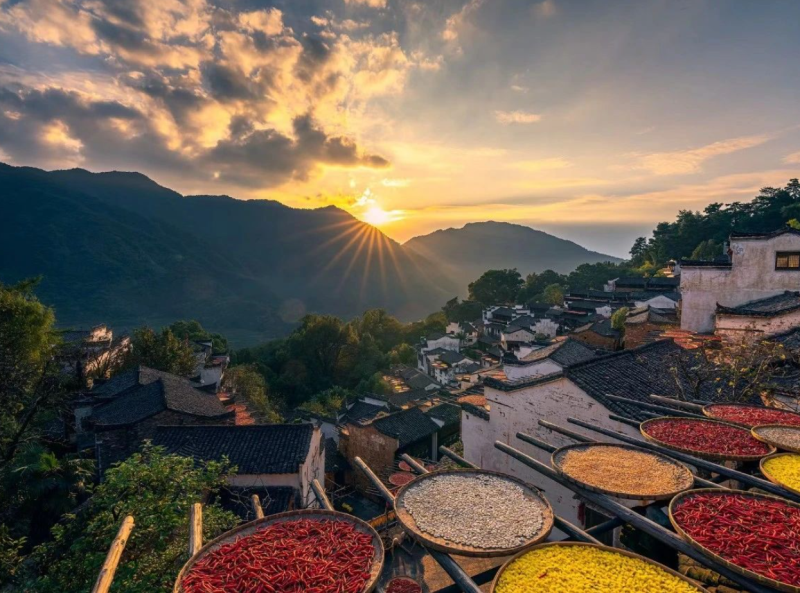
"Shaiqiu" is the most representative folk culture of Huangling, originating from the villagers' wisdom in coping with the limitations of mountainous terrain. Because the village has little flat land, villagers use windowsills, drying racks, and rooftops in front of and behind their houses to dry autumn harvests such as corn, chili peppers, and rice, forming a colorful three-dimensional drying landscape. This custom continues to this day and has become an expanded project of a national-level intangible cultural heritage representative project. Every year, it attracts millions of tourists to come and watch and photograph it.
Huangling also retains rich traditional Huizhou folk customs, such as dragon lantern dances during the Spring Festival, moon-viewing gatherings during the Mid-Autumn Festival, and Shaiqiu Festivals during the Double Ninth Festival. Among them, the "Shaiqiu Culture Festival" is held from September to October each year, during which there are activities such as shaiqiu skill demonstrations, folk performances, and farming experiences. In addition, traditional arts such as Huizhou opera and Nuo dance in the scenic area are also regularly performed, showing the profound heritage of Huizhou culture.
Main Attractions
Tianjie Ancient Lanes
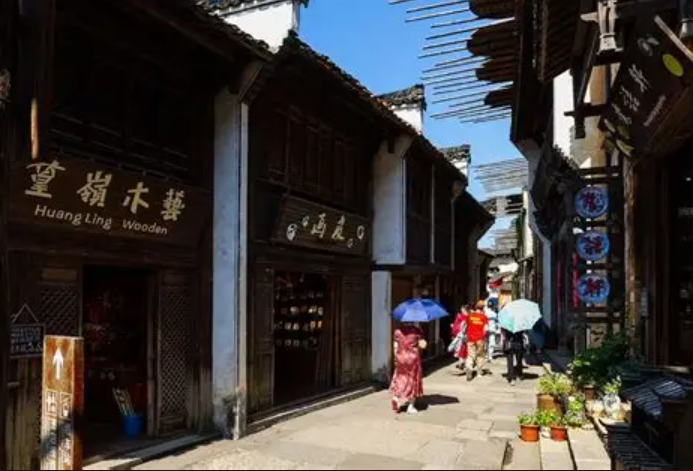
Tianjie is the core street of Huangling Ancient Village, with a total length of about 700 meters and a width of 3-5 meters. It is named because it runs through the village like a heavenly market street. Both sides of Tianjie are distributed with more than 30 Ming and Qing buildings, including shops, teahouses, homestays, as well as ancestral halls and residences. For example, Ligeng Hall, with a history of 300 years, has a "three-entrance, three-bay" architectural layout and exquisite wood carvings and brick carvings that can be called a model of Huizhou architecture. Tianjie Nine Lanes connect households like a spider web. Traditional living facilities such as "public wells" and "fire-fighting vats" are preserved in the lanes. Visitors strolling through them can feel the life atmosphere of the ancient village. In spring, pear blossoms bloom on both sides of Tianjie, and in autumn, crops dried by every household contrast beautifully with the ancient buildings.
Shaiqiu Viewing Platform
The Shaiqiu Viewing Platform is located on the east side of Tianjie and is the best place to view the "shaiqiu" landscape. It is at an altitude of about 630 meters and covers an area of about 500 square meters. The viewing platform has a broad field of vision and overlooks the whole village's drying scene: hundreds of round drying trays are scattered on rooftops and drying racks, holding red chili peppers, yellow corn, orange pumpkins, and other crops, forming a strong color contrast with black tiles and white walls. Next to the viewing platform is the "Shaiqiu Workshop," where tourists can experience making specimens of shaiqiu crops and participate in drying activities to gain an in-depth understanding of the connotation of this folk custom.
Terraced Flower Sea
The total area of Huangling terraces is about 2,000 acres. They were reclaimed in the Ming Dynasty, with up to more than 300 levels, and the highest point is at an altitude of about 680 meters. The terraces rise and fall with the mountain terrain. In spring (March to April), when the planted rapeseed flowers bloom, they form continuous rolling golden flower seas, composing a beautiful picture with the ancient village buildings; in autumn (October to November), rice is planted, presenting a pastoral landscape of alternating yellow and green. The scenic area has built a total of about 5 kilometers of sightseeing trails and 3 viewing platforms. Among them, "Viewing Platform No. 1" can overlook the panorama of the terraces and is a popular spot for photographing sunrise and flower seas.
Leixin Bridge
Leixin Bridge is a suspension bridge connecting Huangling Ancient Village and the terraced scenic area. It has a total length of 186 meters, a width of 3 meters, and a maximum height difference from the ground of about 108 meters. The bridge body adopts a steel cable structure, and the middle section is paved with a glass bridge deck about 40 meters long. Walking on it, visitors can feel the thrill of viewing from the air. On both sides of the bridge are dense bamboo forests and steep cliffs. In spring, terraced flower seas can be seen below the bridge, and in autumn, visitors can enjoy the forest landscape dyed in layered colors. It is one of the landmark check-in points in the scenic area.
Wugui Hall
Wugui Hall is one of the best-preserved Ming Dynasty residences in Huangling. It was built during the Jiajing period of the Ming Dynasty (1522-1566) and is named because five osmanthus trees are planted in the courtyard. It covers an area of about 600 square meters. The residence has a "four waters returning to the hall" layout and consists of a main hall, side hall, garden, and patio. The doors and windows have exquisite wood carvings, with themes including flowers and birds, figures, and allusions, reflecting the characteristic of Huizhou architecture that "no wood is left uncarved." The hall displays cultural relics such as ancient Huizhou wedding customs and daily utensils. Visitors can learn about the clan culture of the ancient village through objects and pictures.
Food
Wuyuan Steam Cake
Wuyuan Steam Cake is a traditional breakfast snack in Huangling and surrounding areas. It is made from indica rice ground into slurry, added with ingredients such as dried shrimp, shredded radish, chili, and sesame, and steamed in a round bamboo steamer. It has a diameter of about 20 centimeters and a thickness of about 2 centimeters. The finished product is light yellow in color, soft in texture, salty and slightly spicy, with a compound flavor of rice fragrance and ingredients. It can be tasted at breakfast shops on Tianjie in Huangling, priced at about 5 yuan per piece. It is a home-style food loved by local villagers.
Steamed Dishes with Rice Powder
Steamed dishes with rice powder are a traditional Huizhou dish. Huangling's steamed dishes with rice powder are made with locally produced indica rice powder and fresh ingredients. Common ones include steamed pork with rice powder, steamed fish with rice powder, and steamed pumpkin with rice powder. Among them, steamed pork with rice powder uses pork belly with skin, mixed with rice powder, soy sauce, and spices and then steamed. The meat is fatty but not greasy, and the rice powder absorbs the meat fragrance, giving it a soft and glutinous texture. It can be tasted in restaurants such as Tianjie Restaurant in the scenic area. A portion of steamed pork with rice powder costs about 45 yuan and is a representative dish reflecting Huizhou farmhouse flavor.
Hu Dofu
Hu Dofu is a specialty dish of Wuyuan and a common dish at banquets in Huangling. It uses tender tofu as the main ingredient. After being cut into small pieces, it is cooked together with bean sprouts, mushrooms, bamboo shoot cubes, and dried shrimp. Starch is added to thicken it into a paste, and then chopped green onions and pepper are sprinkled for seasoning. The finished product has a delicate and smooth texture, a fresh and light taste, and is rich in nutrition. In farmhouses around the scenic area, this dish costs about 30 yuan per portion and is suitable with rice.
Dining in and around the Scenic Area
Along Tianjie in Huangling, there are nearly 20 restaurants and snack shops, offering various Huizhou-style foods such as glutinous rice cakes, wine-soaked fish, and oil-fried deng, with an average per-person consumption of about 60-80 yuan. Tianjie homestays mostly provide "farmhouse banquets," where visitors can taste freshly picked vegetables and free-range local chicken, with an average per-person cost of about 80-120 yuan. Jiangwan Town at the foot of the mountain has more choices, such as Jiangwan snow pear stewed with rock sugar and sweet-and-sour goose neck, with an average per-person consumption of about 50-70 yuan. Tourists can choose according to their needs.
Tickets:
Package ticket 255 yuan/person (including admission and round-trip cableway).
You can search for the official WeChat public account "Wuyuan Huangling Scenic Area" to get the latest updates or buy tickets online.
Opening Hours:
Opening hours are 7:30-18:00 (March 1-November 30); 8:00-17:30 (December 1-February 28 of the following year). The cableway operating time is consistent with the scenic area opening hours. The last uphill cableway time is 17:00 (peak season) and 16:30 (off-season). The last downhill cableway time is 18:30 (peak season) and 18:00 (off-season).
Tour Routes:
One-Day Tour Route (Core Landscapes)
Take the cableway up the mountain from the visitor center (about 10 minutes). After arriving at the Tianjie entrance, first visit Tianjie Ancient Lanes (visit buildings such as Ligeng Hall and Wugui Hall, about 1 hour); then go to the Shaiqiu Viewing Platform to view and photograph the shaiqiu landscape (experience activities at the Shaiqiu Workshop, about 1 hour); have lunch at Tianjie Restaurant (about 1 hour); in the afternoon, follow the trail to the Terraced Flower Sea scenic area (view rapeseed flowers in spring and rice fields in autumn, about 1.5 hours), then walk to Leixin Bridge to experience the glass walkway (about 40 minutes); finally return to Tianjie, buy local specialties (about 30 minutes), and take the cableway down the mountain. The whole journey takes about 6-7 hours and is suitable for first-time visitors.
Two-Day Tour Route (In-Depth Experience)
Day 1: In the morning, visit Tianjie Ancient Lanes and Shaiqiu Viewing Platform (route as above, about 3 hours). At noon, dine and check in at a Tianjie homestay; in the afternoon, hike in the Terraced Flower Sea (about 2 hours); in the evening, watch the sunset at Leixin Bridge (about 1 hour); at night, participate in folk performances on Tianjie (such as Huizhou opera and bonfire parties, about 1.5 hours). Day 2: In the early morning, go to the terrace viewing platform to photograph the sunrise (about 1 hour). After breakfast, visit the water mouth forest and ancient tree group around the ancient village (about 1.5 hours), experience farm activities such as tea picking and grinding tofu (about 1.5 hours), have lunch, then go down the mountain and return. The whole journey allows for an in-depth experience of ancient village culture and natural landscapes and is suitable for photography enthusiasts and leisure tourists.
Transportation:
Self-driving: From Nanchang, take the Dechang Expressway, transfer to the Jiguang Expressway, exit from Wuyuan North, and drive northeast along S201 Provincial Road for about 39 kilometers. The drive takes about 3.5 hours. From Huangshan, drive southwest along the Hangrui Expressway, exit from Wuyuan, then transfer to S201 Provincial Road. The drive takes about 1.5 hours. From Jingdezhen, take the Hangrui Expressway to the Wuyuan exit, transfer to S201 Provincial Road, and the drive takes about 1 hour. The scenic area parking lot charges 20 yuan/day for small vehicles and 30 yuan/day for large vehicles.
High-speed rail/train: Take the high-speed rail to Wuyuan Station. After leaving the station, you can take the scenic area direct shuttle to Huangling. The ride takes about 50 minutes, and the ticket price is 20 yuan/person. Departure time is 8:00-17:00, one bus per hour. You can also take a taxi, costing about 80-100 yuan/vehicle.
Tourist special line: There is a tourist special line from the North Bus Station in Wuyuan County to Huangling, with 6 buses daily. Departure times are 7:30, 8:30, 9:30, 13:30, 14:30, and 15:30. The ride takes about 1 hour, and the ticket price is 18 yuan/person.
Must-Visit Attractions:
Tianjie Ancient Lanes: The 700-meter-long ancient street connects more than 120 Ming and Qing buildings. Visitors can observe the details of Huizhou architecture and feel the life atmosphere of the ancient village. Pear blossoms in spring and shaiqiu landscapes in autumn are especially charming.
Shaiqiu Viewing Platform: Overlook Huangling's iconic shaiqiu landscape. The colorful patterns formed by hundreds of drying trays and the ancient village buildings contrast beautifully. It is the best place to take popular photos.
Terraced Flower Sea: In spring, 2,000 acres of terraces bloom into golden rapeseed flower seas, forming a layered picture with the ancient village and distant mountains. It is the core landscape of Huangling in spring.
Leixin Bridge: The 186-meter-long suspension bridge includes a 40-meter glass bridge deck. Visitors can experience the thrill of high-altitude sightseeing and enjoy the terraces and mountain forests below the bridge.
Travel Suggestions:
The best visiting seasons are mid-March to early April (rapeseed flowers in full bloom) and September to October (best shaiqiu landscape). Summer is rainy, so rain gear is needed. Winter is colder, but there are fewer tourists, and visitors can experience the quiet atmosphere of the ancient village.
The best times to photograph the shaiqiu landscape are 9:00-11:00 in the morning (soft light) and 3:00-5:00 in the afternoon (slanting sunset light, rich colors). For photographing terraced sunrise, 6:30-7:30 in the morning (spring) is recommended.
There are many steps in the scenic area. It is recommended to wear comfortable sports shoes. Carry a light backpack for convenient storage of cameras, water, and other items. Prices in Tianjie shops are relatively high, so snacks can be prepared in advance.
Tourists planning to stay overnight are advised to choose Tianjie homestays, priced at about 400-800 yuan/night. They can experience the tranquility of the ancient village at night. Some homestays provide viewing balconies, convenient for photographing morning scenery.
Notes:
The cableway is the main way to go up and down the mountain to enter the core scenic area. It is necessary to confirm the last cableway time in advance to avoid missing the downhill trip and being stranded.
During the spring rapeseed flower season, there are many tourists. It is recommended to travel during off-peak times (such as before 8:00 a.m. or after 4:00 p.m.). When photographing, pay attention to avoiding crowds and respect other tourists' shooting space.
When participating in farming experiences and folk activities, follow the instructions of staff. When touching ancient building components and exhibits, be careful. Graffiti and damage to cultural relics are prohibited.
Mountain weather is changeable. Even on sunny days, it is recommended to bring a light jacket to avoid large temperature differences between morning and evening. In summer, pay attention to sun protection and wear hats, sunglasses, and sunscreen.
When buying local specialties (such as Wuyuan green tea and wine-soaked fish), it is recommended to choose shops with clearly marked prices and confirm the shelf life and storage method before purchasing.