The Nanjing Fuzimiao-Qinhuai Scenic Belt is located in Qinhuai District, Nanjing City, Jiangsu Province. It is a national 5A-level tourist attraction centered on the ancient architectural complex of Fuzimiao and axis on the ten-li Qinhuai River, with a total area of about 4.69 square kilometers. The scenic area integrates natural scenery, historical sites, and folk culture. In its core area, there are more than 50 historical buildings of various types, including the Ming City Wall, ancient dwellings, temples, and shrines, among which 3 are major historical and cultural sites protected at the national level and 10 are protected at the provincial level. As the mother river of Nanjing, the Qinhuai River runs through the scenic area. Teahouses and taverns line both banks, presenting the unique appearance of "the ten-li Qinhuai flowing for thousands of years, the ancient capital of the Six Dynasties even more glorious today." It is not only a microcosm of Nanjing's history and culture but also an important window for displaying the folk customs of Jiangnan, attracting a large number of tourists for sightseeing and experience every year.
History and Culture
The history of the Fuzimiao-Qinhuai Scenic Belt can be traced back to the Spring and Autumn and Warring States periods. As a natural waterway, the Qinhuai River witnessed the rise and fall of Nanjing. During the Three Kingdoms period, Sun Quan established his capital here, and settlements began to form on both banks of the Qinhuai River. From the Eastern Jin to the Southern and Northern Dynasties, this area became a residential place for prominent families, and its cultural atmosphere grew increasingly rich.
After the Sui and Tang dynasties, the banks of the Qinhuai River gradually became a gathering place for literati. The Tang poem line "Mist veils the cold water, moonlight veils the sand; mooring on the Qinhuai near a tavern at night" depicts the prosperous scene of that time. During the Ming and Qing dynasties, the Qinhuai scenery reached its peak. Fuzimiao became the cultural and educational center of the Jiangnan region. During the imperial examinations, countless candidates gathered here, and the surrounding commercial streets and entertainment venues rose accordingly, forming the unique "Qinhuai culture."
The folk culture in the scenic area is rich and colorful. The Fuzimiao Lantern Festival during the Spring Festival began in the Southern Dynasties and has a history of more than 1,700 years. Every year from the first day to the eighteenth day of the first lunar month, various colored lanterns light up the banks of the Qinhuai River, attracting millions of tourists. In addition, traditional activities such as dragon boat races during the Dragon Boat Festival and moon viewing during the Mid-Autumn Festival have also been passed down from generation to generation, becoming cultural ties connecting ancient and modern times.
Main Attractions
Nanjing Fuzimiao
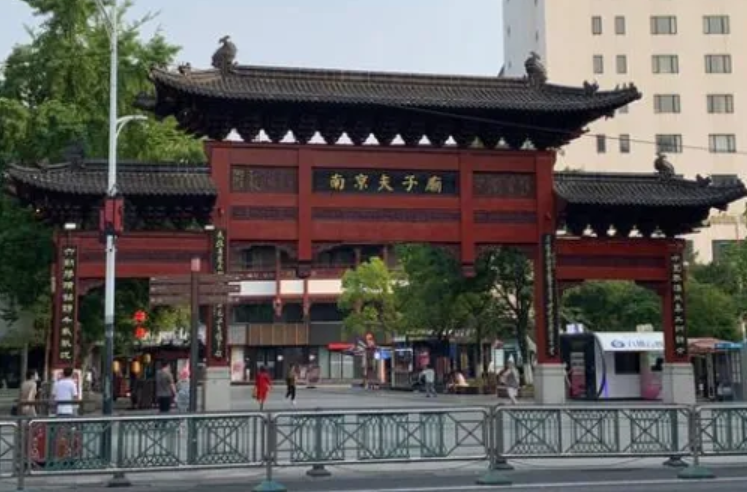
Nanjing Fuzimiao was first built in the third year of Xiankang in the Eastern Jin Dynasty (337). After repeated destruction and reconstruction, the existing buildings were rebuilt in 1984 in the Qing Dynasty style, covering an area of about 26,300 square meters. Its core buildings include the Lingxing Gate, Dacheng Gate, Dacheng Hall, and Mingde Hall. Dacheng Hall enshrines statues of Confucius and his disciples, and the walls inside the hall are inlaid with stone carvings of "The Sacred Traces of Confucius," showing the details of Confucius's life. Fuzimiao, together with the Beijing Confucius Temple and the Qufu Confucius Temple, is known as one of China's three great Confucius temples. It was the highest institution of learning in ancient Nanjing and an important carrier of imperial examination culture. It is now a thematic museum displaying Confucian culture and the history of the imperial examinations.
Qinhuai River Painted Boats
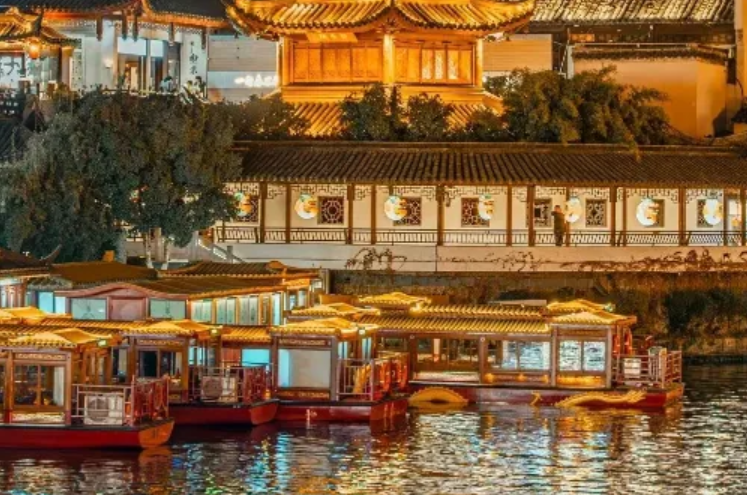
The Qinhuai River painted boats are a special project for touring the Qinhuai scenery. The route covers the core section of the "ten-li Qinhuai" from Dongshuiguan to Xishuiguan, with a total length of about 5 kilometers. The painted boats are divided into two types: antique painted boats and modern tour boats. The antique painted boats are elegantly decorated with carved beams and painted rafters and can accommodate 30-50 people. Tourists take the boats westward along the river and can enjoy attractions such as Fuzimiao, Jiangnan Examination Hall, and Li Xiangjun's Former Residence along the way, while listening to the boatman explain historical stories of the Qinhuai River. Night cruising on the Qinhuai River is the best experience. Lanterns hang high on both banks, and ancient buildings shine brilliantly under the lights, recreating the artistic conception of "the Qinhuai River in the sound of oars and the shadow of lanterns." A one-way tour takes about 50 minutes.
Jiangnan Examination Hall
Jiangnan Examination Hall was first built in the fourth year of Qiandao in the Southern Song Dynasty (1168). It was the largest imperial examination venue in ancient China. At its peak, it covered an area of about 300,000 square meters and had 20,644 examination cells, capable of accommodating more than 20,000 candidates at the same time. The existing buildings are relics from the Ming and Qing dynasties, including Mingyuan Tower, Zhigong Hall, and examination cells. Mingyuan Tower is the central building of the examination hall, 17.8 meters high, with a three-story, four-cornered pyramidal roof structure. It was the place used to monitor candidates during the imperial examinations. Today, Jiangnan Examination Hall has been converted into the China Imperial Examination Museum. Through cultural relic exhibitions, scene restoration, and other methods, it displays the development process of the imperial examination system. The museum also retains some original examination cells, where visitors can experience a simulated imperial examination.
Zhonghua Gate Barbican
Zhonghua Gate Barbican was first built during the Hongwu period of the Ming Dynasty. It was originally named "Jubao Gate" and is one of the thirteen gates of the Nanjing Ming City Wall. It covers an area of about 15,000 square meters and consists of three barbicans and four arched gates. The city wall is 21.45 meters high and has 27 hidden soldier caves, which could accommodate thousands of soldiers. It is the largest and best-preserved fortress-style barbican existing in China. The structure of the barbican is ingenious, combining defense and passage functions, reflecting the superb city-building technology of the Ming Dynasty. Ascending the Zhonghua Gate tower, one can overlook the Qinhuai River scenery and the panoramic view of Fuzimiao. The city wall also retains brick inscriptions from the Ming Dynasty, recording information about the craftsmen who built the wall at that time.
Li Xiangjun's Former Residence
Li Xiangjun's Former Residence, also known as "Meixiang Tower," is located on Chaoku Street. It was the residence of Li Xiangjun, one of the Eight Beauties of Qinhuai in the late Ming and early Qing dynasties. The existing building is in the Qing Dynasty style and covers an area of about 200 square meters. The residence is a two-story brick-and-wood structure. There is a statue of Li Xiangjun in the courtyard. Upstairs, historical materials and calligraphy and painting works related to Li Xiangjun are displayed, restoring her love story with Hou Fangyu and the life scenes of Qinhuai singing girls in the late Ming Dynasty. The architectural layout is exquisite. The carved wooden windows and small courtyard with a skylight reflect the characteristics of Jiangnan dwellings. It is an important attraction for understanding Qinhuai romance culture and late Ming history.
Tour Routes:
One-Day Essential Tour
Arrive at the Fuzimiao Scenic Area at 9:00 a.m. First visit Nanjing Fuzimiao (Dacheng Hall) to learn about Confucian culture. The visit takes about 1 hour. At 10:30, go to Jiangnan Examination Hall to explore the history of the imperial examinations and experience a simulated exam. It takes about 1.5 hours. At noon, taste snacks such as duck blood vermicelli soup and beef potstickers in the Fuzimiao Food Street. At 1:30 p.m., climb Zhonghua Gate Barbican to overlook the Qinhuai scenery and visit the remains of the Ming City Wall. It takes about 1 hour. At 3:00 p.m., visit Li Xiangjun's Former Residence to experience the romantic story of Qinhuai. It takes about 40 minutes. At 5:30 p.m., take a Qinhuai River painted boat night cruise to enjoy the night scenery on both banks. The itinerary ends at 6:30 p.m.
Two-Day In-Depth Tour
On the first day, visit Fuzimiao and Jiangnan Examination Hall in the morning. At noon, taste the Eight Delicacies of Qinhuai. In the afternoon, visit Zhonghua Gate Barbican and Laomendong Historical and Cultural Block (about 1 kilometer from Fuzimiao) to experience the style of Ming and Qing dwellings. In the evening, take a painted boat night cruise on the Qinhuai River, and then enjoy the colored lanterns during the Fuzimiao Lantern Festival (around the Spring Festival). Stay overnight at a hotel near Fuzimiao. On the second day, go to Zhanyuan Garden in the morning (about 800 meters from Fuzimiao, ticket 30 yuan per person) and tour Nanjing's oldest existing garden for about 1.5 hours. At 10:30, visit the Wang Dao and Xie An Memorial Hall to learn about Eastern Jin history. At noon, taste salted duck and osmanthus sugar taro seedlings in Laomendong. In the afternoon, shop freely and buy Nanjing specialties such as Jinling folding fans and Yunjin brocade. Return at around 4:00 p.m.
Travel Suggestions:
Best season to visit: spring and autumn (March-May, September-November), when the climate is pleasant and you can avoid the summer heat and winter cold. The Lantern Festival during the Spring Festival (from the first to the eighteenth day of the first lunar month) is a special event worth a special trip.
Dining suggestions: Choose time-honored shops for snacks, such as Yongheyuan, Qifangge, and Jiangyouji. Avoid buying from mobile vendors on the main streets of the scenic area, as prices are higher and the taste is generally average.
Time arrangement: The Qinhuai River night cruise is an essential project. It is recommended to reserve evening time. If you want to avoid crowds, choose a weekday morning or evening.
Shopping suggestions: Yunjin brocade, Jinling folding fans, and Yuhua stones in the scenic area are Nanjing specialty souvenirs. They can be purchased in legitimate stores, and attention should be paid to distinguishing authenticity.
Photography suggestions: The ancient bridges along the Qinhuai River (such as Wende Bridge), the Fuzimiao archway, and Zhonghua Gate Barbican are the best shooting spots. The shooting effect is even better after the lights are turned on at night.
Notes:
Crowd control: During holidays, the scenic area has an extremely large flow of people, and temporary traffic control and crowd limits may be implemented. It is recommended to check real-time passenger flow information through official channels in advance.
Property safety: The scenic area is crowded, so keep mobile phones, wallets, and other valuables safe. When taking painted boats, be careful not to extend items out of the window to avoid dropping them into the water.
Civilized touring: Protect ancient buildings and public facilities. Do not climb the city wall or damage cultural relics. Keep quiet in places such as Fuzimiao and temples, and respect cultural customs.
Consumption tips: When purchasing goods or taking painted boats, confirm prices and service contents to avoid being misled by "illegal tour guides" or unlicensed vendors.
Safety tips: Some sections along the Qinhuai River have no guardrails. Pay attention to safety when walking, especially when looking after children. At night, the lighting is dim, so watch your step on stairs.
Transportation:
Subway: Take Nanjing Metro Line 1 to "Fuzimiao Station" (Exit 3) and walk about 5 minutes to the core area of the scenic spot; or take Metro Line 3 to "Wudingmen Station" (Exit 2) and walk about 10 minutes to arrive. Metro Line 1 operates from 5:42 to 23:27, and Line 3 operates from 6:00 to 23:00, with departure intervals of about 3-5 minutes.
Bus: Take buses such as No. 1, No. 4, No. 7, No. 40, No. 44, No. 49, No. 62, and No. 304 to "Fuzimiao Terminal" or "Changle Road Station" and walk 5-10 minutes to arrive. Bus operating hours are mostly from 5:30 to 22:00, with departure intervals of about 5-10 minutes.
Self-driving: There are several parking lots around the scenic area, such as the Fuzimiao Underground Parking Lot and Bailuzhou Park Parking Lot. The parking fee is 10 yuan per hour, and may increase to 15-20 yuan per hour during holidays. Because the scenic area has a large flow of people, it is recommended to choose public transportation as much as possible.
Taxi: Taking a taxi from Nanjing Station to Fuzimiao is about 15 kilometers, costing about 30-40 yuan, and taking about 30 minutes. Taking a taxi from Nanjing South Station is about 10 kilometers, costing about 20-30 yuan, and taking about 20 minutes.
Opening Hours:
Open all day, but the opening hours of each attraction are different:
Nanjing Fuzimiao (Dacheng Hall): 8:30-21:00 (April 1-October 31); 8:30-20:30 (November 1-next March 31).
Jiangnan Examination Hall (China Imperial Examination Museum): 9:00-22:00 (April 1-October 31); 9:00-21:00 (November 1-next March 31).
Zhonghua Gate Barbican: 8:30-20:00 (April 1-October 31); 8:30-17:30 (November 1-next March 31).
Li Xiangjun's Former Residence: 9:00-21:00 (all year).
Qinhuai River Painted Boats: daytime 9:00-17:00, evening 17:30-22:00 (in winter, the evening closing time is advanced to 21:00).
Tickets:
Admission is free, but some attractions charge separately, starting from 30 yuan.