The Haohe Scenic Area is located in Chongchuan District, Nantong City, Jiangsu Province. It is a national 5A-level tourist attraction centered on an ancient moat with a history of over a thousand years, forming a unique landscape of "water embracing the city, the city embracing the water, and the city and water depending on each other." It is known as the "Jade Necklace of the River City." The scenic area covers a total area of about 3.23 square kilometers, of which the Haohe River is 10 kilometers long, with a water surface area of about 1,040 mu (about 693,000 square meters). Its widest point reaches 215 meters, and its narrowest point is only 10 meters. The Haohe River surrounds the old urban area of Nantong. Along both banks, a large number of historical buildings, garden relics, and modern landscapes have been preserved, integrating natural ecology, historical culture, and urban life. It is an important carrier of Nantong's urban culture. Within the scenic area are cultural relics and historic sites such as Guangxiao Pagoda, Tianning Temple, and Wenfeng Pagoda, as well as modern facilities such as the Nantong Museum and the Huanxi Cultural Square, creating a touring experience of "a scene at every step, with scenery moving along with the water."
Historical Culture
The history of the Haohe River can be traced back to 958 AD (during the Five Dynasties and Ten Kingdoms period), when it was excavated to defend against external enemies. After repairs and renovations through the Song, Yuan, Ming, and Qing dynasties, it gradually formed today's river course pattern. It is one of the most completely preserved ancient moats in China. As the "Mother River" of Nantong's urban development, the Haohe River has witnessed Nantong's evolution from a fishing village to a port city and carries profound historical and cultural heritage.
Historically, both banks of the Haohe River were the political, economic, and cultural center of Nantong, leaving behind many historic sites. For example, the Guangxiao Pagoda, first built in the Tang Dynasty, is one of the oldest buildings in Nantong and witnessed the spread of Buddhist culture locally; Tianning Temple from the Northern Song Dynasty is the largest existing ancient architectural complex in Nantong and reflects the rigor and solemnity of Song Dynasty architectural style. During the Ming and Qing dynasties, commerce flourished around the Haohe River. Salt merchant culture and textile culture merged here, leaving historical districts such as Dama Tou and Sijie, which reflect the city life and commercial vitality of Nantong at that time. In addition, Zhang Jian, a famous modern industrialist, founded institutions such as the Nantong Museum by the Haohe River, promoting Nantong's modernization process and making the Haohe River a microcosm of modern Chinese urban construction and cultural development.
Main Attractions
Nantong Museum
The Nantong Museum is located on the southeast bank of the Haohe River. It was founded by Zhang Jian in 1905 and is the first modern public museum in China, hailed as the "Father of Chinese Museums." The museum covers an area of about 7.1 hectares and includes exhibition halls such as the Natural History Hall, History Hall, and Art Hall, with more than 50,000 collected items of various kinds, including animal and plant specimens, historical relics, and artworks. The museum combines gardens with exhibition halls, possessing both the elegance of Chinese-style courtyards and the simplicity of Western-style architecture. Zhang Jian's former residence, "Haonan Bieye," in the garden is a representative work of modern architecture. Visitors can learn about Nantong's natural features, historical changes, and modern development here.
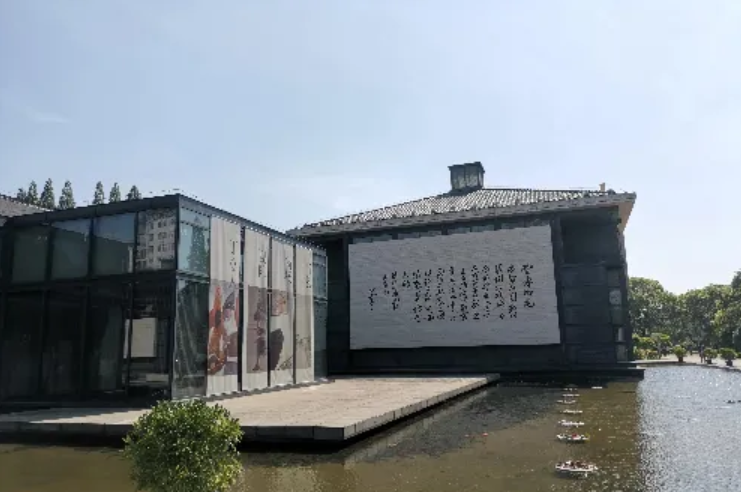
Wenfeng Pagoda
Wenfeng Pagoda is located in Wenfeng Park on the southeast bank of the Haohe River. It was first built in the 46th year of the Wanli reign of the Ming Dynasty (1618). It is a brick-and-wood pavilion-style pagoda, 39.5 meters high, with 5 stories, and its body is hexagonal. The eaves of the pagoda turn upward, wind chimes hang from them, and each story has observation windows. Climbing the pagoda offers a panoramic view of the Haohe River scenery and Nantong city. Wenfeng Pagoda was originally built to "supplement the form of the landscape and enhance the prosperity of literature," and it is a symbol of Nantong's flourishing literary culture. It is now a provincial-level cultural relic protection unit. The surrounding Wenfeng Park mainly features plant landscaping, which complements the pagoda scenery, making it a good place for citizens to relax and tourists to enjoy the view.
Guangxiao Pagoda
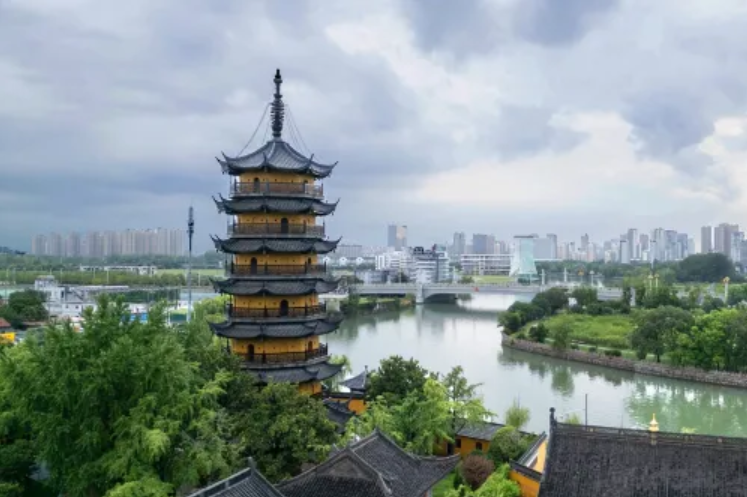
Guangxiao Pagoda is located on the north bank of the Haohe River. It was first built during the Xiantong period of the Tang Dynasty (860-874). The existing pagoda body was rebuilt in the Song Dynasty. It is a brick-and-stone structure, 30.7 meters high, with 5 stories, and is the oldest existing building in Nantong. The pagoda body is pavilion-style, with a simple and solemn shape. The spire is made of iron, highlighting the simplicity and grandeur of Tang Dynasty architectural style. Guangxiao Pagoda was originally named "Bao'en Guangxiao Temple Pagoda." Together with the adjacent Tianning Temple, it formed the core area of early Buddhist culture in Nantong. Although it has undergone many repairs, it still retains the form and charm of ancient architecture and is an important physical example for studying the history of Buddhism and architectural art in Nantong.
Tianning Temple
Tianning Temple is located on the north bank of the Haohe River, adjacent to Guangxiao Pagoda. It was first built during the Zhenghe period of the Northern Song Dynasty (1111-1118) and is the largest and most completely preserved ancient architectural complex in Nantong. It is a nationally key cultural relic protection unit. The temple covers an area of about 6,000 square meters. Its main buildings include the mountain gate, Vajra Hall, and Mahavira Hall. Among them, the Mahavira Hall is a surviving structure from the Song Dynasty, with a width of three bays and a depth of three bays. It adopts a post-and-lintel frame structure, and some of the colored paintings on the beams inside the hall still retain Song Dynasty style. Tianning Temple has been rebuilt many times in history and integrates the architectural features of the Song, Ming, and Qing dynasties. It is a concentrated expression of ancient religious culture and architectural art in Nantong.
Huanxi Cultural Square
Huanxi Cultural Square is located on the west bank of the Haohe River. It is a modern landscape area integrating culture, leisure, and entertainment, covering an area of about 25,000 square meters. The square is centered on a musical fountain and is equipped with an open-air stage, green landscapes, and a waterside platform. At night, the lights are brilliant and reflect on the water surface of the Haohe River, becoming a highlight of Nantong's night scenery. The square often hosts concerts, artistic performances, and other activities. It is a place for citizens and tourists to experience Nantong's modern cultural vitality, and it is also one of the best locations for viewing the night scenery of the Haohe River.
Suggested Tour Route:
A recommended classic one-day tour route for the Haohe Scenic Area: start at 9:00 a.m. from the Nantong Museum, visit China's first modern museum, and learn about Nantong's history and culture. The visit takes about 1.5 hours; at 10:30, go to the nearby Wenfeng Park, climb Wenfeng Pagoda to overlook the panoramic view of the Haohe River, and stroll through the park to enjoy the garden landscape, staying for about 1 hour; at 12:00, taste specialty lunch such as yellow croaker noodle soup near Wenfeng Park; at 1:30 p.m., walk along the north bank of the Haohe River to Tianning Temple and Guangxiao Pagoda, visit the two historic sites, and experience Buddhist culture and the charm of ancient architecture. The visit takes about 1.5 hours; at 15:00, take a Haohe River cruise, choose the lake-ring route, and enjoy the scenery on both banks. The boat trip takes about 1.5 hours; at 17:00, arrive at Huanxi Cultural Square, watch the sunset over the Haohe River in the evening, and then taste snacks such as clam cakes and caolu shaobing; at night, enjoy the lights and musical fountain at Huanxi Cultural Square, ending the day's itinerary. The whole journey combines walking and boating, with a total distance of about 8-10 kilometers and a tour time of about 10 hours.
Tour Suggestions:
It is recommended to spend 1-2 days visiting. One day can cover the core attractions, while two days allow for an in-depth experience of the historical districts and folk culture along the banks.
Spring (March-May) and autumn (September-November) have pleasant climates, suitable for strolling and boating; in summer, you can enjoy the night scenery and fountains at night; in winter, you can experience the quiet atmosphere of the ancient city.
For cruises, it is recommended to choose the afternoon or evening period, as you can enjoy both the daytime scenery and the transition from sunset to night scenery.
To taste food, you can go to old streets around the Haohe River such as Sijie and Nandajie, where many time-honored snack shops are gathered.
You can rent a shared bicycle to ride along the Haohe River greenway. The greenway is fully connected, making it easier to enjoy the scenery along the way while cycling. The rental fee is about 2 yuan/30 minutes.
Precautions:
Some sections along the Haohe River are waterside platforms. Pay attention to safety when visiting, especially tourists with children should keep an eye on them and avoid getting close to the water.
Cruise tickets should be purchased through regular piers. Do not trust private boats easily, to ensure navigation safety.
Protect the scenic area environment. Do not litter or throw debris into the Haohe River.
When visiting museums, temples, and other attractions, comply with relevant regulations, do not touch cultural relics, and keep quiet.
In summer, there are many mosquitoes around the Haohe River, so it is recommended to carry mosquito repellent; in winter, temperatures are low, so pay attention to keeping warm when boating.
During peak periods (such as holidays), cruises may require queuing. It is recommended to buy tickets 1-2 hours in advance or choose non-peak periods.
Transportation:
Bus: Multiple bus routes in Nantong can reach the surroundings of the Haohe River, such as routes 5, 12, 45, and 53, getting off at the "Nantong Museum" stop; routes 8, 12, and 28, getting off at the "Wenfeng Park" stop; routes 1, 3, and 101, getting off at the "Zhonglou Square" stop (near Huanxi Cultural Square).
Subway: After getting off at "Youyi Bridge" Station or "Heping Bridge" Station on Nantong Metro Line 1, walk about 10-15 minutes to reach the banks of the Haohe River.
Taxi: The starting fare for taxis in Nantong is 10 yuan (within 3 kilometers), and 2.4 yuan per kilometer beyond 3 kilometers. From Nantong Railway Station to the core area of the Haohe River is about 8 kilometers, and the taxi fare is about 25 yuan; from Nantong Xingdong International Airport to the core area of the Haohe River is about 15 kilometers, and the taxi fare is about 40 yuan.
Self-driving: There are multiple parking lots around the Haohe River, such as the Nantong Museum parking lot, Wenfeng Park parking lot, and the underground parking lot of Huanxi Cultural Square. Parking fees are about 5-10 yuan/hour. Some road sections have roadside parking spaces (fees must be paid according to regulations).
Opening Hours:
Public areas are open all day (roads and parks along the banks, etc.). Opening hours of various attractions are as follows: Nantong Museum 9:00-17:00 (last admission at 16:30, closed on Mondays, except statutory holidays); Wenfeng Park 6:00-18:00 (Wenfeng Pagoda climbing time 8:30-17:30); Tianning Temple 8:00-17:00. Haohe River cruise operating hours: daytime 9:00-17:00, nighttime 18:30-21:00 (may be extended to 21:30 in summer, subject to the announcement of the day).
Tickets:
Open to the public free of charge, but some attractions require separate tickets starting from 10 yuan, and boat tickets are charged separately.