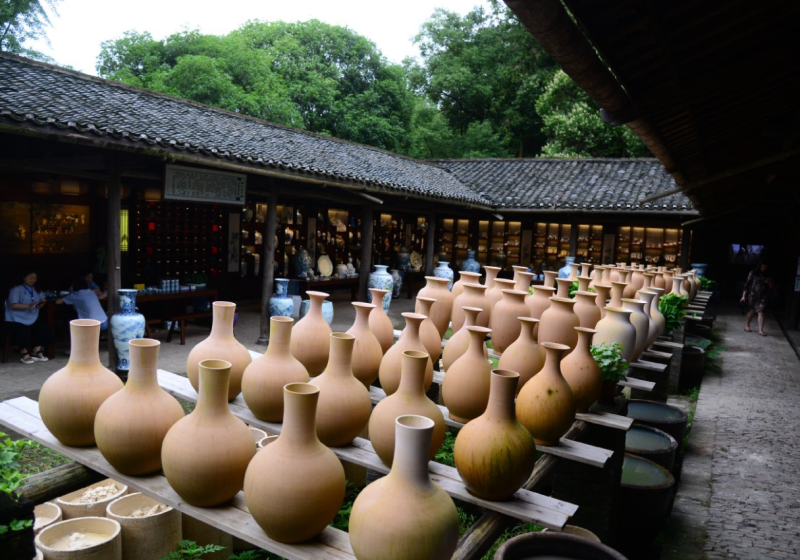
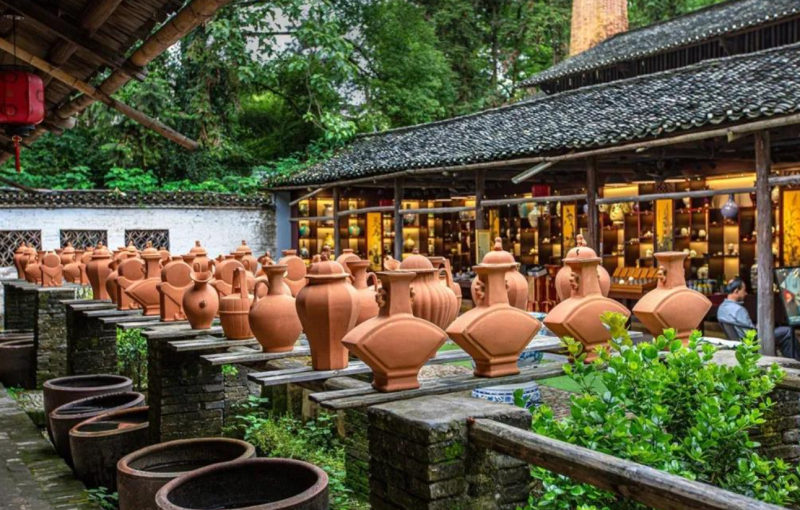
The Jingdezhen Ancient Kiln and Folk Customs Expo Area is located on Cidu Avenue, Changjiang District, Jingdezhen City, Jiangxi Province. It is a national 5A-level tourist attraction, a national-level cultural industry demonstration base, and the only national-level tourist attraction in China themed on ceramic culture. The scenic area centers on displaying Jingdezhen's thousand-year porcelain-making history, traditional porcelain-making crafts, and folk culture, and is known as a "living ceramic museum." The scenic area covers about 83 hectares. Its core areas include the ancient kiln area, folk customs area, and ceramic museum. It preserves more than 10 ancient kiln sites from the Ming and Qing dynasties, and has restored traditional kilns such as the Song dynasty dragon kiln, Ming dynasty gourd kiln, and Qing dynasty town kiln, as well as more than 20 porcelain-making workshops for throwing, trimming, and painting. The area also contains ancient residences, ancient shops, and a porcelain stele corridor, fully presenting Jingdezhen's ceramic industry chain from raw material mining to finished product sales. It is an important window for understanding Chinese ceramic culture.
Historical CultureJingdezhen's porcelain-making history can be traced back to the Han dynasty. By the Tang dynasty, it was already able to fire celadon. It entered a period of prosperity in the Song dynasty. In the first year of the Jingde reign of Emperor Zhenzong of Song (1004), because of the excellent quality of imperial porcelain, it was formally named "Jingdezhen" and became the national center of porcelain-making. During the Ming and Qing dynasties, Jingdezhen's ceramic craftsmanship reached its peak. The establishment of the official kiln system promoted the refinement of porcelain-making techniques. Blue-and-white porcelain, famille rose porcelain, linglong porcelain, and color-glazed porcelain are known as the "Four Famous Porcelains." Its products were exported at home and abroad and were praised as "white as jade, bright as a mirror, thin as paper, and resonant as a chime."
The ancient kiln sites in the scenic area witnessed the rise and fall of Jingdezhen's porcelain industry. Among them, the Qing dynasty town kiln was built in the early Qianlong reign of the Qing dynasty. It is the largest wood-fired kiln by volume among traditional Chinese kilns, with a total length of 18 meters and a height of nearly 6 meters. It could fire more than ten thousand pieces of porcelain at one time. Its unique firebox design could precisely control kiln temperature, reflecting the wisdom of ancient craftsmen. In addition, Jingdezhen's ceramic folk culture is rich. Customs such as "worshipping the kiln god at the start of work" and "painter guilds" have been passed down to this day. The ceremonial worship of the kiln god, ceramic lantern riddles fairs, and other activities regularly held in the scenic area allow visitors to experience the charm of traditional ceramic culture up close.
Main Attractions
Qing Dynasty Town Kiln
The Qing dynasty town kiln is the core attraction of the scenic area. It was first built in 1728 (the sixth year of the Yongzheng reign of the Qing dynasty) and was restored according to its original appearance in 2009. It has an egg-shaped structure and is fired entirely with pine wood. The kiln temperature can reach above 1300°C. The kiln is divided into three parts: the kiln head, kiln bed, and kiln tail. The kiln bed is sloped to facilitate the flow of flames and can simultaneously fire porcelain with different temperature requirements. The scenic area arranges traditional wood-firing and kiln-opening performances every day. Visitors can personally witness the moment porcelain comes out of the kiln and can also observe the whole process of craftsmen loading and firing the kiln, learning about the artistic mystery of "fire and earth."
Ming Dynasty Gourd Kiln
The Ming dynasty gourd kiln is named for its gourd-like shape. It is a typical kiln style in Jingdezhen during the Ming dynasty and was restored and completed in 2010. It is about 5 meters high and consists of two spherical sections, smaller on top and larger at the bottom, which helps retain heat. This type of kiln has a short firing cycle and heats up quickly. It is suitable for firing small, finely made porcelain, especially blue-and-white porcelain. Beside the gourd kiln in the scenic area is a restored porcelain-making workshop that displays Ming dynasty throwing and painting crafts. Visitors can watch craftsmen use traditional tools to make porcelain and experience the characteristics of Ming dynasty porcelain-making techniques.
Song Dynasty Dragon Kiln
The Song dynasty dragon kiln was built against the mountain and is about 30 meters long. It is named because it resembles a lying dragon. It was the main kiln type used in Jingdezhen during the Song dynasty for firing celadon and white porcelain. The dragon kiln uses the slope of the hillside to naturally create draft, with flames burning from the kiln head to the kiln tail, heating evenly and allowing batch production of daily-use porcelain. Next to the dragon kiln site, the scenic area has set up a porcelain clay mineral specimen display area, introducing the selection and processing methods of Song dynasty porcelain-making raw materials and helping visitors understand the geographical advantage that "water and soil are suitable for pottery."
Ceramic Folk Customs Museum
The Ceramic Folk Customs Museum has a building area of about 3,000 square meters. It is divided into three exhibition halls: "Origin of Pottery," "Soul of Porcelain," and "Passing the Flame." It displays more than 5,000 ceramic artifacts from the Han dynasty to modern times, including treasures such as a Song dynasty shadow-blue-glazed bowl, a Ming dynasty Yongle blue-and-white lotus-scroll vase, and a Qing dynasty Qianlong famille rose deer vase. Through scene restoration, multimedia presentations, and other methods, the museum shows the historical changes and folk customs of Jingdezhen's porcelain industry. Among them, the "Imperial Kiln Supervisor" scene restores the office environment of Tang Ying, the Qing dynasty imperial kiln supervisor, vividly reproducing the official kiln management system.
Porcelain Stele Corridor
The Porcelain Stele Corridor is 130 meters long and consists of 132 blue-and-white porcelain panels. Each panel is 1.2 meters high and 0.8 meters wide. Inscribed on them are poems, lyrics, and prose praising Jingdezhen ceramics by literati of past dynasties, such as works by Du Fu of the Tang dynasty, Su Shi of the Song dynasty, and Tang Yin of the Ming dynasty. The panels are painted using traditional blue-and-white techniques. The calligraphy is vigorous and powerful, and the patterns blend with the poetic imagery. It is both a display of ceramic art and a model of the combination of Chinese literature and ceramic culture.
Ming Lü
Ming Lü is a restored group of Ming dynasty Jingdezhen residential buildings. It covers an area of about 5,000 square meters and consists of six brick-and-wood houses in Ming dynasty style, including a main hall, side rooms, courtyards, and gardens. The brick carvings and wood carvings in the architectural decoration mostly use ceramic motifs, such as "blue-and-white interlocking branch patterns" and "porcelain vase with flowers." Ming Lü has a ceramic tea set display area and tea art performances. Visitors can taste Jingdezhen's specialty Fuliang tea and experience the refined pleasure of Ming dynasty literati in "tasting tea and appreciating porcelain."
Food
Jingdezhen Specialty Dishes
Porcelain Clay Roasted Chicken
Porcelain clay roasted chicken is a traditional famous dish in Jingdezhen. It uses local free-range chicken. After deboning, the chicken is stuffed with mushrooms, ham, and other fillings, wrapped in lotus leaves, and then covered with Jingdezhen's special kaolin (porcelain clay). It is roasted in the residual embers of a wood kiln for 3-4 hours. The porcelain clay heats evenly and can lock in the chicken's moisture. The finished product is tender, with the fresh fragrance of lotus leaves and the aroma of earth. It is a dish invented by ancient kiln workers and is now a signature dish in the scenic area's restaurant.
Steamed Pork with Rice Flour
Jingdezhen's steamed pork with rice flour is different from that of other regions. It uses locally produced early rice ground into flour, adds spices such as star anise and cinnamon and stir-fries them until fragrant, then mixes them with pork belly and steams them in a ceramic zeng (a traditional steamer). The ceramic zeng conducts heat slowly and evenly, allowing the meat fragrance and rice flour to fully blend. The meat is fatty but not greasy, and the rice flour is soft, glutinous, and fragrant. It is a home-style dish eaten by Jingdezhen people during festivals.
Nearby Foods
Cold Rice Noodles
Cold rice noodles are the most popular snack on the streets of Jingdezhen. The rice noodles are boiled and then cooled in cold water, mixed with pickled radish, peanuts, chili, sesame paste, and other seasonings. They have a smooth, chewy texture and are sour, spicy, and appetizing. There are many old shops near the scenic area selling cold rice noodles. Among them, "Fan Jiajing Cold Rice Noodles" has a history of more than 30 years. Paired with a fried dough stick, it is a classic local breakfast combination.
Fuliang Tea
Fuliang County (under Jingdezhen City) has a long history of tea production. In the Tang dynasty, Bai Juyi's "Song of the Pipa" mentioned this place in the line "The merchant values profit and lightly values parting; last month he went to Fuliang to buy tea." Fuliang tea is mainly green tea. Its appearance is tightly rolled, straight, and upright; the liquor is clear and bright; and the taste is mellow and sweet with a lingering aftertaste. In Ming Lü in the scenic area, there is a Fuliang tea experience hall where visitors can watch tea art performances and buy premium Fuliang tea as a souvenir.
Tickets:
Tickets are 95 yuan per person.
You can search for the official public account "Jingdezhen Ancient Kiln and Folk Customs Expo Area" on WeChat to get the latest updates or buy tickets online.
Opening Hours:
The scenic area is open all year round. Daily opening hours are 8:00-17:30 (last entry at 17:00). Traditional kiln-opening performances are at 10:00 and 14:00 daily (may be adjusted on rainy days). The kiln god worship ceremony is held every Saturday at 9:30 a.m., subject to the scenic area's announcements on the day.
Tour Route:
Recommended One-Day Tour Route
Arrive at the scenic area entrance at 8:30 a.m. First visit the Qing dynasty town kiln (about 1 hour) and watch the 10:00 kiln-opening performance; at 10:30 go to the Ming dynasty gourd kiln and Song dynasty dragon kiln (about 1.5 hours) to learn about the characteristics of kilns in different dynasties; at 12:00 dine at Cicha Xuan inside the scenic area and taste specialty dishes such as porcelain clay roasted chicken.
In the afternoon, at 13:30 visit the Ceramic Folk Customs Museum (about 1.5 hours) to admire ceramic treasures from past dynasties; at 15:00 tour the Porcelain Stele Corridor and Ming Lü (about 1 hour) to experience the combination of ceramics with literature and architecture; at 16:00 experience handmade porcelain-making (advance reservation required, about 1 hour), such as throwing or painting; at 17:00 shop for souvenirs at the ceramic shop at the scenic area exit and end the trip. This route covers the core attractions of the scenic area and balances sightseeing and experience.
Transportation:
Public transportation: In Jingdezhen city, take buses No. 1, 5, or 9 to the "Ancient Kiln and Folk Customs Expo Area" stop and walk about 5 minutes to arrive. The bus fare is 1 yuan per person. From Jingdezhen North Station (high-speed railway station), take bus K106 directly to the scenic area. The ride takes about 40 minutes and the fare is 5 yuan per person.
Self-driving: From downtown Jingdezhen, drive west along Cidu Avenue for about 3 kilometers to reach the scenic area, about 10 minutes in total. From Nanchang, take the Shanghai-Kunming Expressway to the Jingdezhen exit, then turn onto Cidu Avenue. The total distance is about 210 kilometers and takes 2.5 hours. The scenic area parking lot charges 15 yuan per vehicle per day.
Transportation within the scenic area: The scenic area is relatively large and has sightseeing electric carts. The all-route ticket is 20 yuan per person, allowing unlimited rides between attractions. Walking the entire route takes about 3-4 hours. There are rest pavilions and signs along the way.
Must-Visit Attractions:
Qing Dynasty Town Kiln: The restored largest wood-fired kiln of the Qing dynasty. There are daily kiln-opening performances where you can watch the whole process of porcelain coming out of the kiln and learn about traditional wood-firing techniques.
Ceramic Folk Customs Museum: More than 5,000 ceramic artifacts systematically display Jingdezhen's porcelain-making history. The restored scene of the Ming dynasty imperial kiln supervisor is vivid and interesting.
Handmade Porcelain-Making Experience Area: You can personally participate in processes such as throwing and painting (50-100 yuan per item) and make your own ceramic souvenir.
Porcelain Stele Corridor: 132 blue-and-white porcelain panels inscribed with poems praising porcelain from past dynasties. It is an artistic masterpiece combining ceramics and literature.
Travel Tips:
It is recommended to join the scenic area's free guided tour. The guide will introduce kiln structures, porcelain-making techniques, and historical background in detail. The tour lasts about 2 hours and is more rewarding than visiting on your own.
Handmade porcelain-making experiences require advance reservation through the scenic area's public account. Throwing is suitable for beginners. For painting, you can choose blue-and-white pigment to draw simple patterns. Finished works can be mailed home (postage required separately).
Kiln-opening performances and kiln god worship ceremonies are special activities in the scenic area. It is recommended to arrive 10 minutes early to get a good spot for viewing and photos.
For dining, Cicha Xuan inside the scenic area is recommended. In addition to specialty dishes, you can order a "ceramic tableware set" and eat food served on Jingdezhen porcelain, experiencing the pleasure of "appreciating porcelain while eating."
If you want to deepen your understanding of ceramic culture, you can stay in the "Taoxichuan Cultural and Creative District" near the scenic area. At night, the old factory building light show and the ancient kiln form a "dialogue between ancient and modern."
Notes:
There are many ancient kiln sites and ceramic artifacts in the scenic area. Touching and climbing are prohibited. Flash photography is prohibited to avoid damaging cultural relics.
The traditional kiln performance area has high temperatures. When watching, keep at least 5 meters away from the kiln and follow staff instructions.
During handmade porcelain-making experiences, follow the master's guidance to avoid wasting porcelain clay or damaging tools. Completed works need 3 working days to be fired. You can choose mailing or on-site pickup.
Smoking is prohibited in the scenic area, especially near the wood-fired kiln. Flammable materials are strictly prohibited to prevent fires.
When buying ceramic souvenirs, it is recommended to choose official shops or time-honored stores in the scenic area. Check whether there is a "Made in Jingdezhen" mark to avoid buying imitations.