Huangshui Forest Park is a national-level forest park located on the Qiyao Mountain plateau in the northeastern part of Shizhu Tujia Autonomous County, Chongqing. It is a national 4A-rated scenic area, with a total planned area of 42 km2, consisting of two independent zones: the Youcao River Scenic Area (22.48 km2) and the Dafengbao Scenic Area (19.52 km2). Its highest altitude is 1,934 meters, the lowest 800 meters, and the average elevation is about 1,600 meters. The climate shows marked vertical variation, with cool summers, making it an ideal summer resort and health retreat. The park features layered cliffs and spectacular landscapes, with 36 scenic spots. It is not only a natural oxygen bar and "natural air conditioner," but also a botanical kingdom, a treasure trove of mountain delicacies, and a paradise for wildlife, home to over 3,000 common tree species and an important distribution area for the rare metasequoia (dawn redwood).
History and Culture
Huangshui Town is one of the earliest settlements of the indigenous Tujia people in Shizhu, nurturing a long-standing and pristine Tujia culture. Nearby Xituo Ancient Town, located on the south bank of the Yangtze River in Shizhu Tujia Autonomous County, faces Zhongxian County's Shibao across the river. It is a key cultural protection town in the Three Gorges Reservoir area, listed among the "First Batch of National Protected Ancient Towns," designated as a provincial-level historical and cultural town in Sichuan in 1992, a protected traditional style town for relocation in the Three Gorges Reservoir area in 2002, and one of the first "China's Historical and Cultural Towns" in 2003. The town was a famous "salt town" during the Song Dynasty and the starting point of the thousand-mile salt route between Sichuan and Hubei. In the Yuan Dynasty, it became a distribution center for goods along the Yangtze River. Its salt culture and the "bitter culture" of Coptis chinensis have been passed down to this day. The park also contains the ancient battlefield site of Qin Liangyu, offering significant scientific research value, as well as the mysterious Long River hanging coffins, unique Tujia stilted houses, and Tujia villages with their distinctive dialect, all showcasing rich cultural charm.
Major Attractions
Dafengbao Virgin Forest Scenic Area
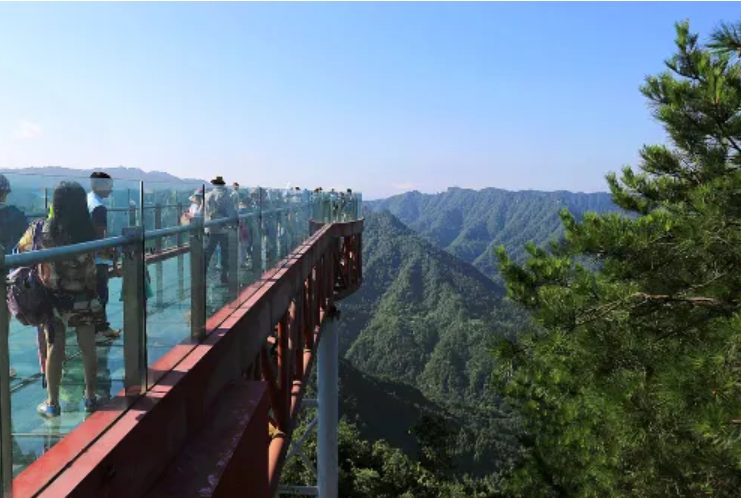
As the core attraction of Huangshui National Forest Park, Dafengbao is located in the southeastern part of the park, covering about 19,700 hectares, with its highest peak at 1,934 meters—the highest point in Shizhu County. It is named for the strong winds that blow year-round. This area preserves one of the few remaining subtropical evergreen broad-leaved virgin forests in Chongqing. It hosts the national first-class protected plants Taxus chinensis (yew) and Davidia involucrata (dove tree), as well as second-class protected species such as Tetracentron sinense and Cercidiphyllum japonicum. The dove tree forest covers about 200 hectares; when in bloom from April to May, its white bracts resemble doves spreading wings, offering high ornamental value. An ecological sightseeing trail about 5 km long has been built within the area, with viewing platforms and rest pavilons along the way. From the summit, visitors can overlook surrounding mountains and seas of clouds, and on clear days, even glimpse the Yangtze River in the distance. Along the trail are attractions such as the "Twelve Sisters Peaks" and the ruins of Yuquan Temple, which was first built in the Ming Dynasty—now only its foundation and some stone inscriptions remain, bearing witness to the region's historical changes.
Sun Lake Scenic Area
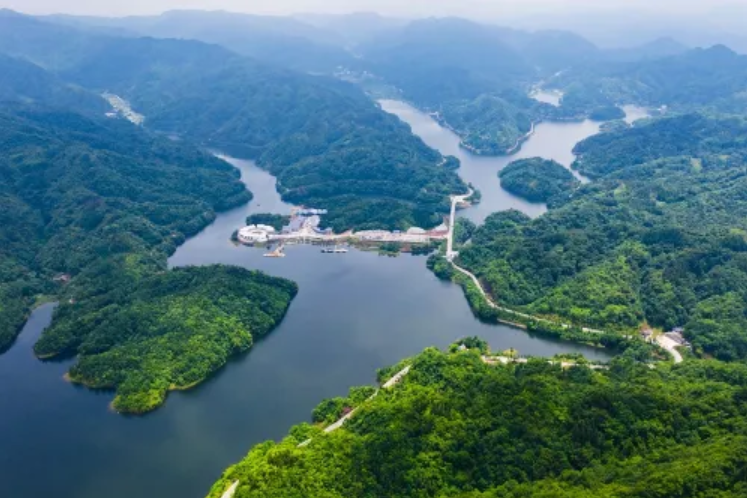
Located in the northwestern part of Huangshui Town, about 3 km from the town government, Sun Lake is a man-made alpine lake completed in 2003. It covers an area of approximately 3,390 mu (about 226 hectares), with a storage capacity of 17 million m3 and a shoreline of about 38 km. Situated at an elevation of 1,450 meters, the lake is fed by surrounding mountain streams, with water quality reaching China's Class II drinking water standards. The scenic area offers lake-circuit sightseeing, water recreation, and leisure fishing. The ring-road is about 20 km long, suitable for cycling or driving, with multiple viewing platforms along the route offering picturesque views of the lake and surrounding forests. The lake is stocked with silver carp, bighead carp, crucian carp, and common carp, with a designated fishing area of about 500 mu (33 hectares), popular among anglers. Additionally, there is a camping base of about 100 mu (6.7 hectares) offering tent rentals and basic facilities, ideal for family and group camping.
Moon Lake Scenic Area
Located in the eastern part of Huangshui Town, complementing Sun Lake, Moon Lake is named for its crescent-moon shape. Completed in 1982, it covers about 1,500 mu (100 hectares), with a storage capacity of 4.8 million m3 and an elevation of about 1,500 meters. Compared to Sun Lake, Moon Lake has denser surrounding vegetation, with a forest coverage rate of over 95%. Its winding shoreline forms multiple peninsulas and coves, creating a more secluded and serene landscape. Main activities include a lakeside walking trail (about 8 km), boat tours (a 3-km route, with a one-way trip of about 40 minutes), and the "Lake Heart Island" of about 20 mu (1.3 hectares), planted mainly with Cryptomeria fortunei and metasequoia, serving as an important bird habitat—common sightings include egrets and grey cranes. Numerous farmstead restaurants around the lake offer Tujia specialty dishes such as cured Tujia bacon, highland potatoes, and wild mushroom soups, allowing visitors to enjoy local cuisine after sightseeing.
China No. 1 Metasequoia Mother Tree
This tree is the "crown jewel" of Huangshui National Forest Park. It stands 45 meters tall, with a diameter at breast height of 170 cm, a crown spread of 20 meters, a canopy coverage of over 200 m2, and an estimated age of about 300 years. In April 1972, Premier Zhou Enlai sent personnel to collect about 1 kg of seeds from this tree, some of which were given as a gift to North Korean Chairman Kim Il-sung, bringing it great fame. In 1973, it was placed under national protection, and in 1992, the Ministry of Posts and Telecommunications issued a set of metasequoia stamps using this tree as the model. With a straight trunk and spreading branches, it is a rare living fossil of the plant world.
Youcao River
The Youcao River has a total length of about 42.9 km and a drainage area of 316 km2. The section flowing through Huangshui National Forest Park is about 20 km long and is a highly representative natural water landscape. This stretch lies at an elevation of 1,100–1,500 meters, with winding channels that connect deep pools, shallows, waterfalls, and gorges. Forest cover on both banks exceeds 95%, with rare trees such as Cryptomeria, metasequoia, and dove trees growing along the river, creating the unique scene of "trees growing in water, water flowing through forest."
Suggested Tour Route:
Upon entering the park, visitors may first go to Bizika Green Palace to experience Tujia culture; then visit China No. 1 Metasequoia Mother Tree to appreciate its ancient charm; next, head to Huangshui Lake for lakeside views and optional leisure fishing; then proceed to Dafengbao Virgin Forest to stroll through the primeval woods and listen to birdsong; have lunch in or near the park, tasting local specialties; in the afternoon, walk along the Youcao River to enjoy the scenery on both banks; then visit the Brasenia (water shield) plantation to see the extensive fields; finally, go to the Tujia Folk Song performance venue to enjoy a vibrant Tujia cultural show. If time permits, additional attractions such as Huanglong Cave and Huanglong Gully can also be explored.
Travel Tips:
Bring sun protection (sunscreen, sun hat, sunglasses) even in summer, as UV rays can be strong despite the cool climate.
Wear comfortable sports shoes, as some attractions require walking over considerable distances.
Carry insect repellent, as mosquitoes are common in the forest.
When trying local food, specify your preferred spice level, as some dishes may be quite spicy.
For thrilling activities like zip-lining, read safety instructions beforehand and choose based on your physical condition.
Interact with performers during Tujia folk shows to better appreciate the culture.
Photography enthusiasts should bring professional gear; sunrise and sunset hours offer the best lighting for landscapes.
Important Notices:
Open flames are strictly prohibited to prevent forest fires.
In virgin forest areas, stay on designated trails to avoid getting lost.
Respect local customs, especially at Tujia performance venues.
Protect the environment—do not litter.
Follow safety rules when using transportation and keep personal belongings secure.
For water activities, obey staff instructions and wear life jackets.
Some areas have steep terrain—stay away from dangerous edges and exercise caution.
Transportation:
From downtown Chongqing: Take a long-distance bus from Chongqing Chaotianmen Bus Station or Sigongli Transport Hub to Shizhu County, then transfer at Shizhu Bus Station to a bus to Huangshui Town (ticket approx. ¥25).
From Shizhu County: Take the bus from Shizhu Bus Station to Huangshui Town; the journey takes about 1.5 hours and costs about ¥25.
Self-driving: From downtown Chongqing, take the G50S (Huyu South Line) Expressway, exit at Shizhu Interchange, then follow the Shiyu Expressway to Huangshui Town. The total distance is about 240 km, with a driving time of about 3.5 hours.
Opening Hours:
The park is open from 08:00 to 17:00. However, hours may be adjusted seasonally or under special circumstances; visitors are advised to check official announcements before travelling.
Tickets:
The entrance ticket is ¥20 per person. Some attractions or activities (e.g., amusement facilities, special experience programs) may incur additional charges. Prices are subject to the actual rates at the scenic area.