The Maijishan Scenic Area is located in Maiji District, Tianshui City, Gansu Province, China. It is a national 5A-level tourist attraction, a key national cultural heritage protection unit, a national forest park, a national geopark, and a China National Natural and Cultural Heritage site. The scenic area covers a planned area of 215 square kilometers and consists of five independent sub?scenic areas: Maijishan, Xianren Cliff, Shimen, Quxi, and Jieting Hot Spring, containing more than 180 scenic spots.
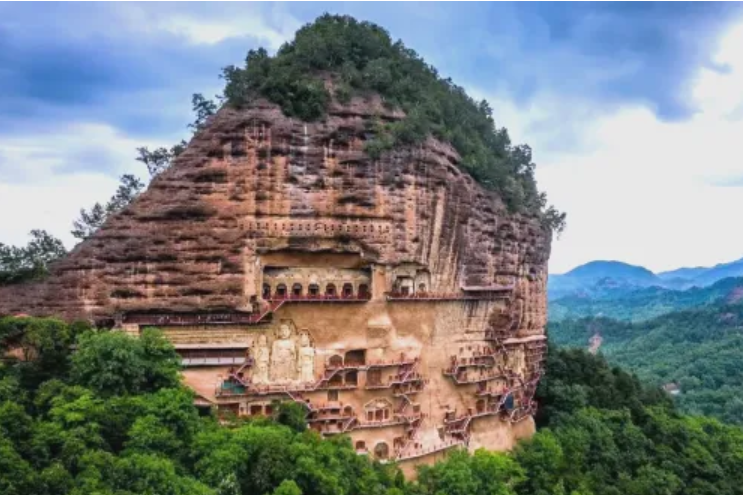
The area lies at the junction of three major mountain ranges—the Qinling, Helan, and Min Mountains—and straddles the Yangtze and Yellow River basins. It features typical Danxia landforms, with an average elevation of about 1,600 meters and the highest peak exceeding 2,800 meters. The core attraction, the Maijishan Grottoes, is one of the Four Great Grottoes of China. It preserves 221 caves, 10,632 clay and stone sculptures, and is renowned as the "Oriental Sculpture Art Gallery."
History and Culture
The Maijishan Grottoes were first built during the Later Qin period of the Sixteen Kingdoms (early 5th century) and underwent continuous expansion and restoration through more than ten dynasties, including the Northern Wei, Western Wei, and Northern Zhou. The earliest dated inscription is from the first year of the Datong era of the Western Wei (535 AD). Historically, the site was a place where the Chan monks Xuangao and Tanhong preached, "gathering three hundred monks." From the Northern Wei to the Northern Zhou, large?scale cliff?side cave construction created the spectacular sight of the entire cliff face covered in grottoes.
The scenic area integrates Buddhist, Taoist, and Confucian cultures. It preserves 27 Ming? and Qing?dynasty halls, 54 rooms, and 197 statues (including five bronze Buddha statues from the Yongle period of the Ming dynasty). The grotto art is centered on clay sculpture, authentically reflecting the evolution of Chinese sculptural art from the Northern Dynasties to the Ming and Qing dynasties, and serves as an important physical testament to cultural exchange along the Silk Road.
Major Attractions
Maijishan Grottoes
One of China’s four great grottoes, carved into a sheer cliff. It contains 221 caves, 3,938 pieces (10,632 figures) of statuary, and 979.54 square meters of murals. Famous for its exquisite clay sculptures, the largest statue is 15 meters tall and the smallest only 20 centimeters. The grottoes systematically display sculptural styles from the Later Qin to the Ming and Qing dynasties, earning the title "Oriental Sculpture Museum."
Xianren Cliff (Fairy Cliff)
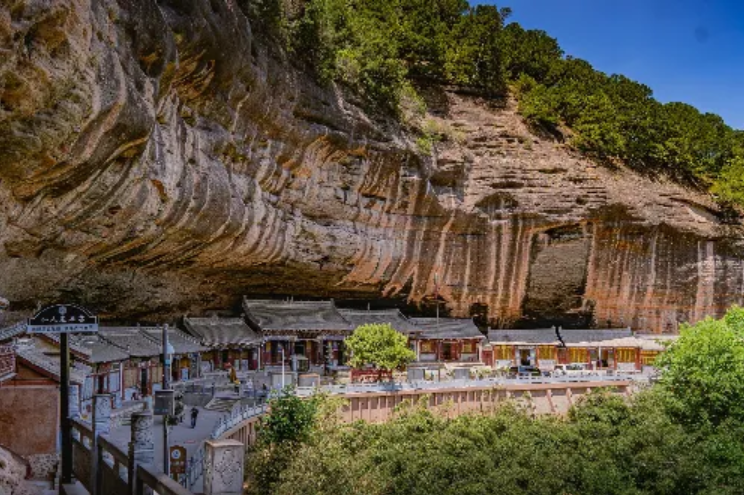
Located 17 km northeast of Maijishan, it consists of three cliffs (East Cliff, West Cliff, South Cliff), five peaks (including Yuhuang Peak), six temples (including Mulian Temple), and Xianren Lake. It preserves 27 Ming? and Qing?dynasty buildings, 197 statues (including five Yongle bronze Buddhas), and 83 square meters of murals. The harmonious blend of natural scenery and religious heritage has earned it the nickname "Little Penglai."
Xianren Lake
Situated in the valley between Randeng Peak and Yinghu Cliff, the lake covers over 20,000 square meters with an average depth of 13 meters. Its clear waters, surrounded by peaks and temples, form a picturesque landscape, and boat tours are available.
Maijishan Botanical Garden
Located 1 km from the grottoes, established in 1982, covering 3.6 square kilometers. It houses more than 1,800 species of seed plants from 146 families, making it one of the largest botanical gardens in northwest China and known as the "Northwest Plant Gene Bank." It features mixed forests of deciduous, broad?leaved, and coniferous trees.
Suggested Tour Routes:
Half?Day Tour
Visitor Center → Maijishan Grottoes → Return (focuses on grotto art; suitable for travelers with limited time).
One?Day Tour
Visitor Center → Maijishan Grottoes → Maijishan Botanical Garden → Xianren Cliff (including Xianren Lake) → Return (combines grotto art, botanical scenery, and cultural landscape).
Two?Day Tour
Day 1: Visitor Center → Maijishan Grottoes → Botanical Garden → Overnight stay near the scenic area (experience local culture).
Day 2: Xianren Cliff → Shimen → Quxi → Jieting Hot Spring (relaxation; ideal for in?depth exploration).
Travel Tips:
Book tickets in advance; during peak season, it is recommended to enter before 8:00 AM to avoid crowds.
Visiting the grottoes requires climbing plank walkways; wear non?slip shoes. Those with heart disease or high blood pressure should be cautious in high?risk areas.
Rent an audio guide (about 20 RMB) or join a guided tour to gain deeper insights into the historical and cultural background.
In summer, bring sun protection and insect repellent; in winter, watch for slippery surfaces—some mountain trails may be closed.
Combine your visit with the botanical garden (azaleas bloom in April–May) or the hot springs (Jieting Hot Spring) for a richer experience.
Important Notices:
Do not take photos, touch the artifacts, or use flash inside the grottoes.
Follow the "one?way" routing; do not stop on the walkways to take pictures, and keep traffic orderly.
Smoking and open flames are strictly prohibited in the scenic area. Protect vegetation and dispose of trash properly.
In case of thunderstorms, high winds, or other severe weather, follow staff instructions and evacuate hazardous areas promptly.
For local specialties, purchase from official shops in the scenic area; avoid unregulated roadside vendors.
Transportation:
By Air
Arrive at Tianshui Maijishan Airport, then take the airport shuttle or a taxi to the scenic area (about 30 km, 40?minute drive).
By Train
Tianshui Station: About 15 km from the scenic area. Take Bus No. 34 or the tourist shuttle directly from the station.
Tianshui South Station (High?speed rail): About 25 km from the scenic area. Take Bus No. 58 and transfer to Bus No. 34, or take a taxi.
By Car
Take the Lian?Huo Expressway to the Tianshui East exit, then follow the Maijishan Avenue to the scenic area. There are clear road signs along the way. Parking fees at the scenic area are about 10?20 RMB per day.
Opening Hours:
Peak Season (April – November): 08:00 – 18:00
Low Season (December – March): 08:30 – 17:30
Special circumstances (e.g., winter maintenance, extreme weather) may cause adjustments. It is advisable to confirm the latest schedule via official channels in advance.
Admission:
Ticket (including grotto area sightseeing bus): 110 RMB/person
Ticket (excluding grotto area sightseeing bus): 55 RMB/person