The Sanxianshan Scenic Area is located in Penglai District, Yantai City, Shandong Province, and is a national 5A-level tourist attraction. The scenic area is meticulously built based on the three immortal mountains of "Penglai, Fangzhang, and Yingzhou" from ancient Chinese myths and legends, deeply integrating classical garden architectural art with mythological culture, presenting a "fairyland" scene. Its feature lies in recreating the fantastical artistic conception of the legendary immortal mountains. The ancient buildings in the garden are magnificent, with mountains and water complementing each other and pavilions and terraces arranged in an orderly manner, just like a three-dimensional classical scroll. The Sanxianshan Scenic Area covers an area of about 200,000 square meters, of which the water area reaches 100,000 square meters and the building area is about 38,000 square meters. The overall layout follows the traditional gardening concept of "one pond and three mountains," creating a garden landscape in which the real and the illusory complement each other.
Historical Culture
The cultural roots of Sanxianshan can be traced back to the immortal legends of the pre-Qin period. Ancient texts such as the Records of the Grand Historian and Liezi all contain records of the three immortal mountains of "Penglai, Fangzhang, and Yingzhou." It is said that immortals lived on the immortal mountains and that they were rich in the elixir of immortality. They were symbols of ancient emperors' pursuit of immortality and longing for fairyland. Qin Shi Huang, Emperor Wu of Han, and others all sent people to search for the immortal mountains. This cultural image profoundly influenced Chinese garden art, literary creation, and other fields.
Although the Sanxianshan Scenic Area is a modern reconstruction (construction began in 2005 and it opened to the public in 2008), it strictly follows historical records and traditional gardening techniques, concretizing the fairyland artistic conception in mythological legends. The scenic area houses a large collection of cultural relics and art treasures from successive dynasties, including ancient wood carvings, bronzes, porcelain, and more, among which there are many fine pieces from the Ming and Qing dynasties. These cultural relics not only enrich the cultural connotation of the scenic area, but also provide physical carriers for tourists to understand ancient Chinese mythological culture, garden art, and historical changes, making the legendary immortal mountains a tangible and perceptible cultural landscape.
Main Attractions
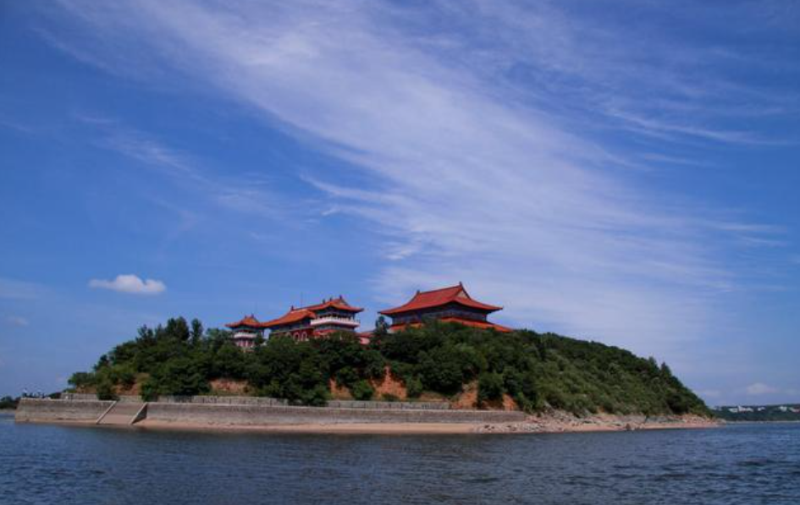
Penglai Immortal Island
Penglai Immortal Island is one of the core landscapes of the Sanxianshan Scenic Area, covering an area of about 35,000 square meters, and is built to simulate the scene of the legendary Penglai immortal mountain. On the island are antique-style buildings such as Penglai Pavilion and Sanqing Hall. Among them, Penglai Pavilion is 18 meters high and is a three-story xieshan-style building with carved beams and painted rafters, magnificent and imposing. Taoist immortal statues are enshrined inside the pavilion. The island is surrounded by clear lake water, dotted with pavilions and waterside structures. Tourists can take boats around the island and experience the wonderful feeling of "being in fairyland." A large number of rare flowers and plants are also planted on the island, with different scenery in each season, fully displaying the spiritual beauty of the immortal mountain.
Fangzhang Immortal Mountain
Fangzhang Immortal Mountain covers an area of about 28,000 square meters and takes "Fanghu Shengjing" as its theme, displaying the magnificent scene of the legendary Fangzhang immortal mountain. The main building on the island, Fanghu Hall, is a palace-style building with a construction area of about 1,200 square meters. The interior of the hall is gorgeously decorated and displays numerous wood carvings and stone carvings. Among them, the large redwood carving "Group of Immortals Offering Birthday Congratulations" is 12 meters long and 3 meters high, with fine carving and vividly different figures, and can be called an art treasure. A zigzag bridge on the island connects to the lake shore. Willows droop beside the bridge, and the lake water is clear to the bottom, reflecting the ancient buildings and creating a quiet and distant atmosphere.
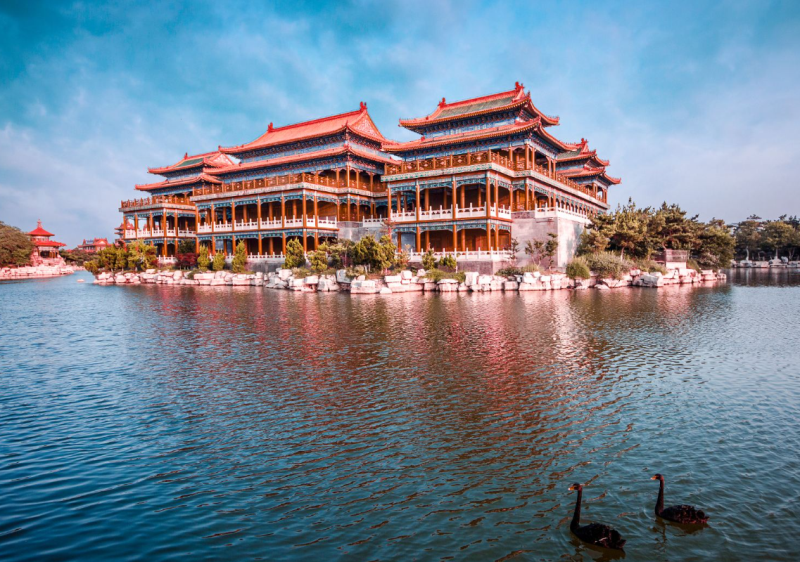
Yingzhou Fairyland
Yingzhou Fairyland covers an area of about 22,000 square meters and focuses on embodying the ethereal artistic conception of the legendary Yingzhou immortal mountain. The buildings on the island are mostly pavilions and terraces with a light and lively style, blending with the surrounding mountains, water, and vegetation. The core building, Yingzhou Pavilion, is a hexagonal pyramidal-roofed pavilion 12 meters high. Inside the pavilion hang colored paintings depicting legends of the immortal mountains. Climbing the pavilion and looking into the distance allows one to take in the entire scenic area. There are also many cliff inscriptions on the island, carved with poems and famous lines describing immortal mountains by literati of successive dynasties, adding a strong cultural atmosphere. Strolling among them feels like being within the artistic conception of poetry and prose.
Treasure Hall
The Treasure Hall is located within the Sanxianshan Scenic Area, with a construction area of about 5,000 square meters. It is a comprehensive exhibition hall integrating cultural relic collection and display. The hall houses a large number of precious cultural relics, covering various artifacts from the Shang and Zhou periods to the Ming and Qing dynasties. The most eye-catching is a 9.9-meter-high jade Buddha made of a complete piece of jadeite. The craftsmanship is exquisite, and the Buddha's expression is serene. It is currently one of the larger jadeite jade Buddhas in China. In addition, the hall also contains a large number of ancient furniture, calligraphy and painting works, and more. Each collection has high historical and artistic value, presenting visitors with a rich cultural feast.
Jade Buddha Temple
The Jade Buddha Temple is adjacent to the Treasure Hall, with a construction area of about 3,000 square meters. It is an important religious cultural landscape within the scenic area. The temple mainly enshrines a 12.86-meter-high reclining jade Buddha of Shakyamuni, carved from a piece of Burmese white jade weighing 108 tons. The Buddha's posture is serene, the details are exquisitely depicted, and the drapery lines are smooth and natural. It is one of the larger jade reclining Buddhas in the world. The architectural style of the Jade Buddha Temple integrates the characteristics of Han Buddhist temples and is solemn and dignified. The temple also has venues for Buddhist activities, where visitors can feel the tranquility and peace of Buddhist culture.
Food
Sanxianshan Vegetarian Cuisine
Sanxianshan Vegetarian Cuisine is a specialty food within the scenic area, characterized by being light, healthy, and exquisite. The ingredients mainly include soy products, vegetables, fungi, nuts, and more, and are prepared using traditional cooking techniques. The dishes are rich and varied, and many are named after mythological allusions, such as "Immortal Mountain Lingzhi Mushroom" and "Jade Pool Vegetarian Abalone." Among them, the "Eight Immortals Crossing the Sea Vegetarian Platter" is beautifully shaped, cleverly combining eight kinds of vegetarian dishes and symbolizing the legend of the Eight Immortals crossing the sea. It tastes refreshing and is nutritionally balanced. The vegetarian restaurant has a simple and elegant environment that complements the "fairyland" atmosphere of the scenic area, making it a good place to experience vegetarian culture.
Surrounding Food
Penglai Braised Donkey Meat
Penglai Braised Donkey Meat is a local specialty food with a long history, dating back more than 300 years. It is made by selecting local high-quality donkey meat and braising it for a long time with more than ten kinds of spices such as star anise, cinnamon, and nutmeg. The meat is tender and fragrant, with moderate saltiness. It can be eaten directly or with baked wheat cakes. Authentic flavors can be tasted at time-honored shops around the scenic area such as "Guocheng Braised Donkey Meat," and vacuum-packed products are also convenient for tourists to carry as souvenirs.
Salted Fish with Corn Cakes
Salted Fish with Corn Cakes is a traditional fisherman's food in the Yantai area and is also quite common in Penglai. Fresh sea fish (mostly Spanish mackerel and hairtail) are selected, salted, and dried to make salted fish, then pan-fried until golden and crisp, and eaten together with cornmeal cakes. The freshness and fragrance of the salted fish and the coarse grain aroma of the cakes complement each other, creating a rich taste. Many fisherman's restaurants near the scenic area offer it, and it is one of the representative dishes for experiencing fisherman's food culture.
Tickets:
Tickets are 120 yuan per person.
You can search for the official public account "Eight Immortals Crossing the Sea" on WeChat to obtain the latest updates or purchase tickets online.
Opening Hours:
Opening hours are: April 1 - October 31, 7:30 - 18:00; November 1 - March 31 of the following year, 8:00 - 17:00. The scenic area will appropriately adjust opening hours according to seasonal changes and holidays. For example, during the Spring Festival, opening hours may be extended. Visitors are advised to check and confirm through official channels before traveling.
Tour Route:
After entering the scenic area, visitors can first go to the visitor center at the entrance to get a tour map, then enter through the main gate and first visit Fangzhang Immortal Mountain to admire the architecture and collected treasures of Fanghu Hall, which takes about 1 hour; then go to Penglai Immortal Island, climb Penglai Pavilion to look into the distance at the panoramic view, and take a boat tour of the lake to feel the artistic conception of the immortal island. This section takes about 1.5 hours; afterward, go to Yingzhou Fairyland, stroll among the pavilions and terraces, and enjoy the cliff inscriptions and natural landscapes, which takes about 1 hour; at noon, you can dine at the Sanxianshan Vegetarian Restaurant in the scenic area and experience specialty vegetarian food. In the afternoon, visit the Treasure Hall and Jade Buddha Temple to admire the jadeite jade Buddha and various cultural relics, which takes about 1.5 hours. The entire tour is recommended to be arranged for 5 - 6 hours so as to fully experience the cultural and landscape charm of the scenic area.
Transportation:
Bus: Within Penglai District, you can take bus routes 6 and 8 to the "Sanxianshan Scenic Area" station and walk about 3 minutes to reach the entrance of the scenic area; departing from Yantai city area, you can take the intercity bus from Yantai to Penglai (fare 25 yuan), get off at Penglai Bus Station, and transfer to bus route 6 to go there.
Self-driving: Departing from Yantai city area, drive along the Rongwu Expressway (G18) toward Penglai, get off the expressway at the Penglai exit, and drive straight along Haishi Road for about 5 kilometers to reach the scenic area. The scenic area parking lot charges 5 yuan per hour for small vehicles and 10 yuan per hour for large vehicles.
Taxi/ride-hailing: Taking a taxi from Penglai city area to the Sanxianshan Scenic Area takes about 10 minutes and costs about 15 yuan; taking a taxi from the Penglai Pavilion Scenic Area takes about 5 minutes and costs about 10 yuan.
Must-Visit Attractions:
Penglai Immortal Island: The core landscape of the scenic area, covering an area of 35,000 square meters. The 18-meter-high Penglai Pavilion is a landmark building. You can climb the pavilion to enjoy the view and take a boat tour of the lake to fully experience the "immortal mountain" artistic conception. The rich vegetation and buildings on the island create a strong mythological atmosphere.
Treasure Hall: With a construction area of 5,000 square meters, the 9.9-meter-high jadeite jade Buddha in the hall can be called the treasure of the museum. There are also a large number of cultural relics and artworks from successive dynasties. It is an important place for understanding ancient Chinese culture and art.
Jade Buddha Temple: It enshrines a 12.86-meter-high Burmese white jade reclining Buddha of Shakyamuni, a rare large jade Buddha in the world. The Buddha carving is exquisite, and the atmosphere in the temple is solemn and dignified, with extremely high religious and artistic value.
Travel Suggestions:
It is recommended to visit in spring and autumn, when the climate is pleasant and the scenery is beautiful, avoiding the high temperatures of summer and the severe cold of winter, and when there are relatively fewer tourists, making the touring experience better.
The scenic area is mostly toured on foot and is large in area. It is recommended to wear comfortable sports shoes and bring a sun hat, drinking water, and other items. Pay attention to sun protection in summer and keep warm in winter.
When visiting the Treasure Hall and Jade Buddha Temple, you can rent an audio guide (rental 20 yuan per device) to gain a deeper understanding of the background stories of the cultural relics and Buddha statues and enhance the cultural experience of the tour.
If time permits, the Sanxianshan Scenic Area can be connected with the nearby Penglai Pavilion Scenic Area and Eight Immortals Crossing the Sea Scenic Area for touring, forming a "fairyland culture" themed tourism route and fully experiencing the mythological cultural charm of Penglai.
Notes:
Smoking and littering are prohibited in the scenic area. During the tour, please take care of flowers, trees, ancient buildings, and cultural relics, and do not touch or scribble on exhibits at will.
Boat tours on the lake must comply with safety regulations. Wear life jackets properly and follow the instructions of staff. Minors must tour by boat accompanied by adults.
When visiting the temple, please keep quiet, respect religious beliefs, follow temple etiquette, do not make noise or take photos at will (if there are signs prohibiting photography, they must be strictly observed).
Prices in restaurants and shops within the scenic area are relatively high. Visitors can bring some snacks and drinking water according to their needs.
During holidays, there are many tourists. It is recommended to purchase tickets in advance through official channels, arrange tour time reasonably, and visit popular attractions during off-peak times.