Laoshan Scenic Area is located in Qingdao, Shandong Province. It is the highest peak along China's coastline, a National 5A Tourist Attraction, and a National Scenic Area, known as the "Number One Famous Mountain on the Sea." The total area of the scenic area is about 446 square kilometers, with a core scenic area of 161 square kilometers. It consists of 7 tour areas: Jufeng, Liuqing, Taiqing, Qipanshi, Yangkou, Beijiushui, and Hualou. Its characteristics lie in the connection between mountains and sea and its profound Taoist culture. It has both mountain landscapes such as the main peak Jufeng at 1,132.7 meters above sea level, and coastal scenery including an 87-kilometer coastline, bays, and beaches. It is also a holy land of the Quanzhen Taoist school and is known as the "Second Jungle of Quanzhen Taoism Under Heaven." There are more than 20 preserved Taoist buildings in the scenic area, including Taiqing Palace, Mingxia Cave, and Shangqing Palace. The total area of the ancient building complex is about 12,000 square meters. There are also Buddhist sites, inscriptions, and other cultural relics, forming a unique "mountain-sea-Taoism" cultural landscape.
History and Culture
The history and culture of Laoshan can be traced back to the Neolithic Age. As early as more than 6,000 years ago, humans lived and multiplied here, leaving sites such as the Yueshi Culture. Its Taoist culture originated in the Western Han Dynasty, flourished in the Tang and Song Dynasties, and continued to develop during the Ming and Qing Dynasties. Zhang Daoling of the Eastern Han Dynasty once preached here. Writers such as Li Bai and Li Shangyin of the Tang Dynasty visited Laoshan and left poems. In the Song Dynasty, the Laoshan Taoist Liu Ruozhuo was conferred the title "Huagai Zhenren," which increasingly elevated the status of Laoshan Taoism.
During the Jin and Yuan Dynasties, Qiu Chuji, one of the Seven Disciples of Quanzhen, preached here. Later, his disciples Liu Zhijian, Zhang Sanfeng, and others successively practiced here. Taiqing Palace became the ancestral court of the Huashan branch of Quanzhen Taoism and was known together with Beijing Baiyun Temple as the "North and South Jungles." Laoshan's Buddhist culture also has a long history. Buddhist temples were built here as early as the Eastern Jin Dynasty. In the Tang Dynasty, Fahai Temple and others became important Buddhist sites, forming a cultural pattern of coexistence of Taoism and Buddhism. In modern times, Laoshan became a place longed for by literati and Chinese and foreign tourists. Kang Youwei, Yu Dafu, and others all visited. In 1982, it was listed in the first batch of National Scenic Areas. In 2011, it was rated as a National 5A Tourist Attraction. Its cultural heritage provides important physical materials for the study of Chinese Taoist history and maritime cultural history.
Main Attractions
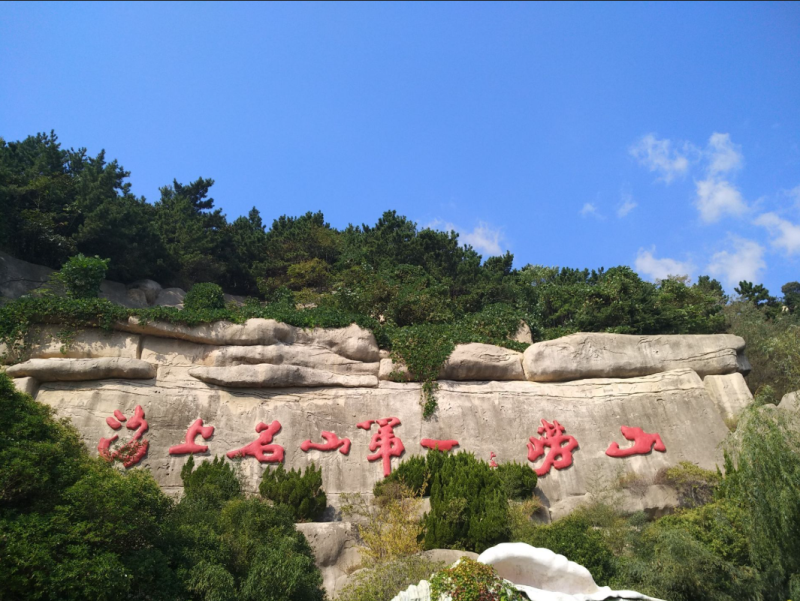
Jufeng
Jufeng is the main peak of Laoshan, with an altitude of 1,132.7 meters. It is the highest peak along China's coastline and is known as the "Summit of Mountains and Sea." The scenic area is dominated by granite peak forest landforms and has strange rock landscapes such as "Yixiantian," "Lingqi Peak," and "Ziranbei." From the summit, visitors can enjoy 360-degree views of mountains and sea, looking east to the blue waves of the Yellow Sea, west to the urban area of Qingdao, south to Jiaozhou Bay, and north to Jimo Plain. The Jufeng tour area covers about 7.4 square kilometers and has a circular sightseeing trail about 8 kilometers long. Along the way are viewing platforms such as Guanri Terrace and Zhaixing Pavilion. It is an excellent place to watch the sunrise and sea of clouds. Among them, "Jufeng Sunrise" is listed as the first of the Twelve Scenes of Laoshan.
Taiqing Palace
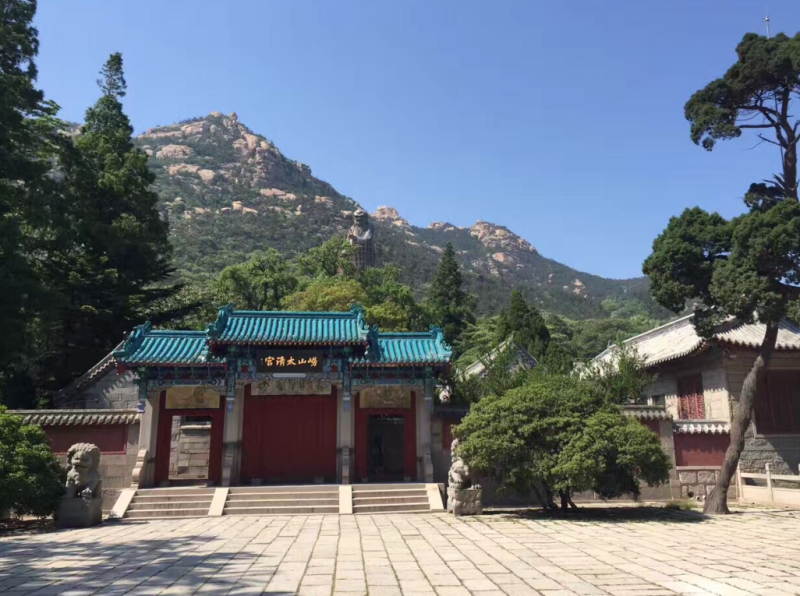
Taiqing Palace is located on the southern slope of Laoshan. It was first built in the first year of Jianyuan of the Western Han Dynasty (140 BC). It is the oldest and largest Taoist palace in Laoshan and is known as the "Ancestral Court of Taoism." It covers an area of about 30,000 square meters, with a building area of about 2,500 square meters. It consists of 14 buildings including Sanguan Hall, Sanqing Hall, and Sanhuang Hall, distributed in staggered order along the mountain terrain. Taiqing Palace preserves ancient and famous trees such as thousand-year-old ginkgo and Han cypress. Among them, the ginkgo in front of Sanguan Hall is more than 2,100 years old, 25 meters tall, and 3.2 meters in diameter at breast height. The palace also contains a large number of inscriptions, such as the stele of the Daodejing handwritten by Zhao Mengfu of the Yuan Dynasty and stone carvings related to Pu Songling's story "The Taoist of Laoshan" in the Qing Dynasty. Together with the "Taiqing Water Moon" landscape, they constitute the core carrier of Laoshan's Taoist culture.
Beijiushui
Beijiushui is located in the northern part of Laoshan. It is named for the water flow twisting and forming nine water bays. It is one of the areas with the most beautiful natural scenery in Laoshan, with a total area of about 11.2 square kilometers. The scenic area is characterized by gorges, streams, and waterfalls. It has attractions such as "Shibatan," "Chaoyin Waterfall," and "Weizhu Nunnery." Among them, Chaoyin Waterfall has a drop of 24 meters and a width of about 6 meters. When water is abundant in the rainy season, it is magnificent and is the largest waterfall in Laoshan. The vegetation coverage rate of the Beijiushui tour area is over 90%. There are more than 300 kinds of trees such as sweetgum and metasequoia. In autumn, the forest is dyed in layers; in winter, the ice waterfalls are crystal clear. The scenery differs in each season. The sightseeing trail is about 5 kilometers long, suitable for leisurely walking and summer escape.
Yangkou
Yangkou Tour Area is located in the northeastern part of Laoshan. It combines coastal scenery and mountain landscapes, with an area of about 10.8 square kilometers. The coastal part has Yangkou Beach, about 2.2 kilometers long, with fine sand and clear seawater. It is a natural seaside bathing beach. The mountain part has attractions such as Taiping Palace and Mitian Cave. Taiping Palace was first built in the Song Dynasty, with a building area of about 500 square meters. Natural and cultural landscapes such as "Sheep Stone" and "Lion Peak" in the palace blend together. Mitian Cave is a passage combining a natural stone cave and artificial excavation, with a total length of more than 100 meters. The cave is winding and deep, requiring climbing with hands and feet. After reaching the top, visitors can overlook Yangkou Bay and the Yellow Sea. "Shifeng Bingri" is a famous sunrise landscape of Laoshan.
Mingxia Cave
Mingxia Cave is located halfway up Kunlun Mountain in the southern part of Laoshan, at an altitude of 650 meters. It is one of the important Taoist sites in Laoshan. It was first built in the Jin Dynasty, originally a natural stone cave, and was expanded into a Taoist temple in the Ming Dynasty. The existing buildings were rebuilt in the Qing Dynasty, with a building area of about 100 square meters, consisting of a main hall and side halls. On the top of the cave are the three characters "Mingxia Cave," written by the Qing Dynasty calligrapher Wang Xu. The cave was once a place of practice for Taoists such as Zhang Sanfeng. The surroundings of Mingxia Cave are shrouded in clouds and mist, with dense vegetation. There is the scene "Mingxia Sanqi." The tour area covers about 2.3 square kilometers. Visitors can overlook the Yellow Sea and Taiqing Palace. It is a quiet place to experience Laoshan's "Taoist charm and Zen spirit."
Food
Laoshan Mushroom Stewed Chicken
Laoshan Mushroom Stewed Chicken is a characteristic dish of Qingdao. It is mainly made with Laoshan's specialty quántoucài (a type of wild fungus) and locally free-range native chicken, stewed with ginger slices, scallion sections, and other ingredients. Laoshan mushrooms are thick and fleshy with a delicious taste. They blend with the mellow aroma of chicken. The soup is rich and nutritious. This dish is available in farmhouse banquets within the Laoshan scenic area and in restaurants in downtown Qingdao. The price is about 80-120 yuan per portion. It is a representative dish for tasting Laoshan's mountain delicacies.
Surrounding Food
Seaweed Buns
Seaweed buns are a traditional snack in the coastal areas of Qingdao. They use seaweed abundantly produced in the Laoshan sea area, such as nori and wakame, as filling, mixed with pork, dried shrimp, and other ingredients, and are steamed with wheat flour dough. The bun skin is soft and chewy, and the filling is fresh and tender, with a fresh marine flavor. They can be tasted in restaurants in coastal villages and towns such as Yangkou and Shazikou in Laoshan. The unit price is about 3-5 yuan each. They are suitable as breakfast or snacks.
Laoshan Mineral Water
Laoshan Mineral Water is known as "China's Number One Mineral Water." It originates from deep granite fissures in Laoshan and is rich in minerals such as metasilicic acid and strontium. It has a history of more than 120 years of exploitation. Its water quality is clear and sweet and can be drunk directly. It is also often used to make drinks such as Tsingtao Beer. It can be purchased in shops inside and outside the Laoshan scenic area. The price of bottled water is about 2-5 yuan per bottle. It is a healthy choice for replenishing water during the tour.
Tickets:
Through ticket: 210 yuan per person (including all open tour areas, excluding Taiqing Palace and Erlong Mountain Scenic Area).
You can search for the official public account "Laoshan Scenic Area" on WeChat to get the latest updates or buy tickets online.
Opening Hours:
The opening hours of each tour area are adjusted according to the season: from April 1 to October 31, it is peak season, with opening hours from 7:00 to 18:00 (last entry at 17:00); from November 1 to March 31 of the following year, it is off-season, with opening hours from 7:30 to 17:00 (last entry at 16:00). Among them, the opening hours of attractions such as Taiqing Palace and Taiping Palace are consistent with the tour area where they are located. The last sightseeing bus in the scenic area is 1 hour before closing. Tourists are advised to check real-time opening information in advance and arrange their itineraries reasonably.
Tour Routes:
Laoshan tours can be divided into two classic routes: the mountain-sea sightseeing route and the mountain-water leisure route.
Mountain-Sea Sightseeing Route (2 days): On the first day, visit the Taiqing-Yangkou Tour Area. In the morning, visit Taiqing Palace and experience Taoist culture. In the afternoon, go to Yangkou Beach and climb Lion Peak to watch the sunset. Stay overnight at a Yangkou farmhouse banquet. The next morning, climb Jufeng to watch the sunrise and panoramic views of mountains and sea. Return in the afternoon. The whole journey takes about 12 hours.
Mountain-Water Leisure Route (1 day): In the morning, visit Beijiushui, stroll through Shibatan, and admire Chaoyin Waterfall to experience gorge scenery. In the afternoon, go to Mingxia Cave, visit Taoist sites, and overlook mountain and sea scenery. The whole journey takes about 8 hours. It is suitable for families and leisure tourists.
If time is tight, you can choose a one-day highlight tour: Taiqing Palace in the morning (2 hours) Yangkou Beach (1.5 hours), Jufeng in the afternoon (3 hours), connected by sightseeing bus. The whole journey takes about 7 hours.
Transportation:
Bus: Within Qingdao, you can take Metro Line 11 to Puli Station or Beijiushui Station and transfer to the scenic area sightseeing bus to enter each tour area. City buses 304 and 104 can reach Taiqing Palace Scenic Area directly, with a journey of about 1.5 hours and a fare of 2 yuan. From Qingdao Railway Station, you can take tourist line L3 to the Laoshan Visitor Center, with a fare of 10 yuan.
Self-driving: From downtown Qingdao, drive east along Laoshan Road for about 30 kilometers to the Laoshan Visitor Center. There are parking lots in both Taiqing and Yangkou tour areas. The charging standard is 5 yuan per hour for small vehicles and 10 yuan per hour for large vehicles. The parking lot charging in Beijiushui Tour Area is the same as the main scenic area.
Taxi/ride-hailing: Taking a taxi from Qingdao Railway Station to Taiqing Palace costs about 80-100 yuan, with a journey of 40 minutes. Taking a taxi from the center of Laoshan District to Taiqing Palace costs about 30-50 yuan, with a journey of 20 minutes.
Must-Visit Attractions:
Jufeng: The main peak of Laoshan, 1,132.7 meters above sea level, the highest peak along China's coast. From the summit, visitors can overlook panoramic views of mountains and sea and watch the sunrise and sea of clouds. It is the core attraction for experiencing Laoshan's "majesty."
Taiqing Palace: The oldest Taoist palace in Laoshan, first built in the Western Han Dynasty. It preserves thousand-year-old ancient trees and precious inscriptions. The "Taiqing Water Moon" landscape is famous. It is a must-visit place for understanding Laoshan's Taoist culture.
Beijiushui Chaoyin Waterfall: The largest waterfall in Laoshan, with a drop of 24 meters. It is surrounded by gorges and streams, with different scenery in each season. It is a representative natural landscape and suitable for leisure tours.
Yangkou Beach: A 2.2-kilometer-long natural seaside bathing beach with fine sand. Visitors can swim and play in the sand. Together with nearby Taiping Palace and Lion Peak, it forms a leisure area combining mountains and sea.
Travel Suggestions:
The best seasons for visiting are April-May (spring flowers in bloom) and September-October (clear autumn air). At this time, the climate is mild and there is less precipitation, suitable for outdoor activities. In summer, visitors can escape the heat, but there are more tourists. In winter, some scenic areas may be closed due to snow.
The Laoshan scenic area is large, and the tour areas are far apart. It is recommended to buy sightseeing bus tickets (the Taiqing-Yangkou joint ticket includes the sightseeing bus) to save transportation time. The Jufeng scenic area has many steps. Those with average physical strength can take the cableway (40 yuan per person one way).
To taste seafood and farmhouse dishes, you can choose farmhouse banquets in Yangkou and Shazikou. It is recommended to try fresh sea shrimp, oysters, etc. The per capita consumption is about 60-100 yuan. Pay attention to choosing restaurants with clearly marked prices.
If you plan to watch the sunrise at Jufeng, check the sunrise time in advance (about 5:00-5:30 in summer and about 6:30-7:00 in winter). You can stay at a hotel near Jufeng or climb the mountain 1 hour in advance.
Prepare comfortable hiking shoes, sunscreen, and drinking water. Mountain weather is changeable, so it is recommended to carry rain gear. In coastal areas, pay attention to sun protection in summer and wind protection in winter.
Notes:
Smoking and littering are prohibited in the scenic area. Picking plants and catching wild animals are strictly prohibited. Protect the natural ecological environment.
When climbing, follow the tour route and do not enter unopened areas without authorization. In particular, some sections of Jufeng are steep, so pay attention to safety. Avoid climbing in thunderstorm weather.
When playing on the seaside, pay attention to tide times, follow the instructions of lifeguards, do not swim in areas without safety guarantees, and children must be accompanied by adults.
Commodity prices in the scenic area are relatively high. You can purchase drinking water, snacks, etc. at the Laoshan Visitor Center or in the city to reduce the burden of climbing.
Keep quiet in Taoist palaces and observe etiquette. Do not touch statues or cultural relics. Turn off the flash when taking photos. Buddhist sites also require respect for religious customs.