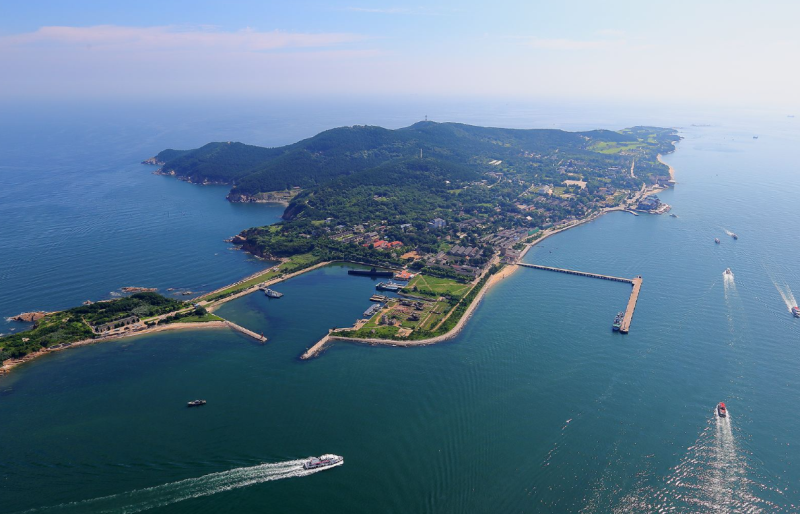
Liugong Island Scenic Area is located in Huancui District, Weihai City, Shandong Province. It is an island scenic area of great commemorative significance in modern Chinese history, a national 5A-level tourist attraction, a nationally protected key cultural relic site, and a national marine park. The scenic area covers a total area of 11.5 square kilometers, including 3.15 square kilometers of land area and 8.35 square kilometers of sea area, with a coastline of 14.95 kilometers. The terrain of Liugong Island is higher in the north and lower in the south, with the highest point, Qiding Mountain, at an elevation of 153.5 meters. The scenic area combines natural scenery and human history, featuring both the island beauty of blue seas, blue skies, beaches, and reefs, as well as a large number of historical relics related to the Sino-Japanese War of 1894-1895. It is known as the "Fairy Mountain on the Sea" and the "Unsinkable Warship," and is an important window for understanding the history of the development of China's modern navy and the history of the Sino-Japanese War of 1894-1895.
Historical Culture
Liugong Island has a profound historical and cultural heritage, especially closely connected with the Sino-Japanese War of 1894-1895 in modern Chinese history. In 1888, the Qing government established the Beiyang Navy Admiralty Office on Liugong Island, making it the command center of the Beiyang Navy and the largest and most advanced naval base in China at that time. In 1894, the Sino-Japanese War of 1894-1895 broke out. As the last line of defense of the Beiyang Navy, Liugong Island experienced the fierce Battle of Weihaiwei, and eventually the Beiyang Navy was completely annihilated and Liugong Island was occupied by Japanese forces. This period of history became an important turning point in modern Chinese history and also made Liugong Island a patriotic education base for remembering history and warning future generations.
In addition, there is also a legend about the origin of the name Liugong Island. It is said that at the end of the Eastern Han Dynasty, a branch of the Liu imperial clan moved to this island to escape the chaos of war. Because they were charitable and helpful, later generations called them "Lord Liu" and "Lady Liu," and the island name originated from this. Relics related to this legend, such as the Liu Gong Temple, are still preserved on the island today, adding a touch of mystery to the scenic area.
Main Attractions
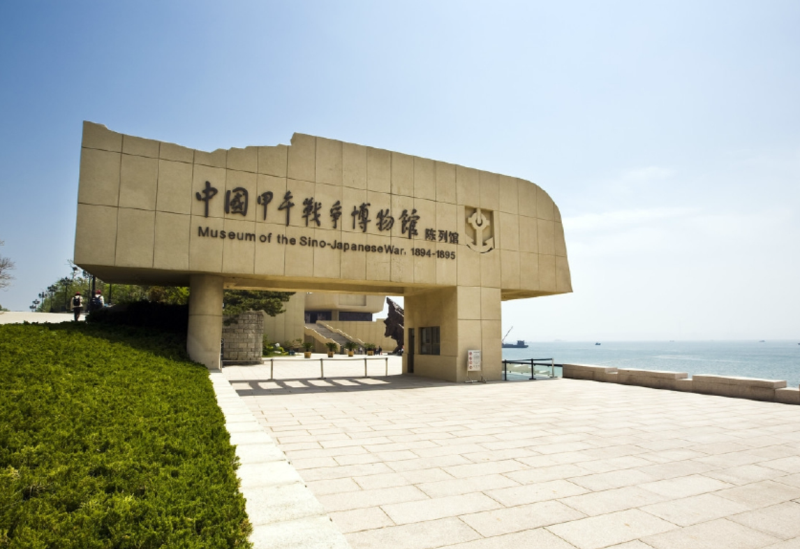
Museum of the Sino-Japanese War of 1894-1895
The Museum of the Sino-Japanese War of 1894-1895 is one of the core attractions of Liugong Island. It consists of the Beiyang Navy Admiralty Office, the Ding Ruchang Memorial Hall, the Sino-Japanese War Exhibition Hall, and others, covering an area of more than 100,000 square meters. The Beiyang Navy Admiralty Office is the largest and best-preserved former site of a Qing Dynasty naval command institution in China, with a building area of more than 4,000 square meters. It is a brick-and-wood structure courtyard complex with a council hall, study, garden, and other facilities, vividly reproducing the office scene of the Beiyang Navy at that time. The Sino-Japanese War Exhibition Hall displays the entire process of the Sino-Japanese War in detail through a large number of historical artifacts, pictures, video materials, and scene restorations, including precious cultural relics such as part of the wreckage of the "Zhiyuan" ship, shells, and personal belongings of officers and soldiers, allowing visitors to deeply feel that humiliating and tragic period of history.
Liugong Island National Forest Park
Liugong Island National Forest Park covers an area of 267 hectares, accounting for more than 80% of the island's land area, and is China's first national forest park on the sea. The park has a vegetation coverage rate of 87%, with dozens of tree species such as black pine, black locust, and silk tree, as well as wild animals such as sika deer and peacocks. The park contains attractions such as the Qiding Mountain Fortress Ruins and the Loyal Souls Monument. Visitors can climb along the mountain road to the top of Qiding Mountain, overlook the panoramic view of Liugong Island and Weihai Bay, and at the same time visit the well-preserved Qing Dynasty fortress ruins to learn about the military defense system of that time.
Liugong Island Expo Park
Liugong Island Expo Park is a comprehensive scenic area integrating history, culture, and folk customs. It covers an area of 50,000 square meters and consists of the "Liugong Culture Area," "Sino-Japanese War Culture Area," "Marine Culture Area," and other parts. Through sculptures, murals, wax figures, multimedia, and other forms, the park displays the historical legends of Liugong Island, the history of the Sino-Japanese War of 1894-1895, and island folk culture. Among them, the "Naval Battle of the Sino-Japanese War" scene restoration area uses modern technologies such as sound, light, and electricity to vividly reproduce the intense scenes of the naval battle, bringing visitors a strong visual impact and spiritual shock.
Weihai Bay Scenic Area
Weihai Bay Scenic Area is located along the southern coast of Liugong Island and has long stretches of beach and clear seawater, making it a great place to enjoy the island's natural scenery. The scenic area is equipped with facilities such as seaside boardwalks and viewing platforms. Visitors can stroll on the beach, gaze at the sea view, or take a cruise to tour Weihai Bay and view Liugong Island and Weihai city from the sea. In addition, there are commemorative structures such as the Beiyang Navy Officers and Soldiers Monument in the scenic area, honoring the naval officers and soldiers who sacrificed their lives in the Sino-Japanese War of 1894-1895.
Food
Specialty Food Within the Scenic Area
Restaurants in the Liugong Island scenic area mainly serve seafood. Among them, steamed abalone is one of the must-try dishes. Fresh abalone from the local sea area is selected and steamed, preserving the tender texture of the abalone to the greatest extent. Paired with simple seasonings, it is full of freshness. The price is about 88 yuan per serving. In addition, fried sea crab is also very popular. Sea crabs with plump meat are selected, coated with starch, and then fried, making them crispy on the outside and tender on the inside. The price is about 68 yuan per serving, suitable for visitors who like a crispy texture.
Surrounding Food
There are many specialty seafood restaurants in Weihai city around Liugong Island. About 3 kilometers from the scenic area pier, "Weihai Old Restaurant" is one of the local restaurants with a relatively good reputation. The restaurant's braised sea cucumber with scallions uses Weihai's specialty sea cucumber, braised with scallions. The sea cucumber is soft and flavorful, with a rich scallion aroma. The price is about 168 yuan per serving. In addition, stir-fried sea hare in sauce is also a signature dish of the restaurant. The sea hare meat is tender, with a rich sauce flavor. The price is about 58 yuan per serving, and it is a classic seafood dish in Weihai.
Tickets:
Ticket 122 yuan/person (including round-trip boat ticket).
You can search for the official public account "Liugong Island Scenic Area" on WeChat to get the latest updates or buy tickets online.
Opening Hours:
Opening hours are adjusted according to the season. In peak season (April 1-October 31), opening hours are 7:30-18:00, the last boat into the island is at 16:30, and the last boat out of the island is at 18:00; in off-season (November 1-March 31 of the following year), opening hours are 8:00-17:00, the last boat into the island is at 15:30, and the last boat out of the island is at 17:00. Indoor attractions such as the Museum of the Sino-Japanese War of 1894-1895 have the same opening hours as the scenic area. Some areas of Liugong Island National Forest Park may be closed in winter, subject to the scenic area's announcements.
Tour Route:
A recommended one-day tour route: at 8:00 a.m., take a cruise from Weihai Bay Tourist Pier to Liugong Island, arriving in about 20 minutes; at 8:30, begin visiting the Museum of the Sino-Japanese War of 1894-1895, visit the Beiyang Navy Admiralty Office, the Sino-Japanese War Exhibition Hall, and others to learn about the history of the Sino-Japanese War, taking about 2 hours; at 10:30, go to Liugong Island National Forest Park, climb along the mountain road to Qiding Mountain, visit the fortress ruins, and overlook the island scenery, taking about 1.5 hours; at 12:00, dine at a restaurant in the scenic area; at 13:30, visit Liugong Island Expo Park to experience history, culture, and folk customs, taking about 1.5 hours; at 15:00, go to Weihai Bay Scenic Area, stroll on the beach or take a cruise to tour Weihai Bay, taking about 1 hour; at 16:00, take the last boat back to Weihai city and end the trip.
Transportation:
Public transportation: From Weihai city, you can take bus routes 1, 2, 3, 4, 13, 20, and others, get off at the "Liugong Island Tourist Pier" station, walk about 500 meters to reach the Liugong Island cruise pier, and then take a cruise to Liugong Island. Cruises depart every 30 minutes, and the journey takes about 20 minutes.
Self-driving: Starting from Weihai city, drive east along Shichang Avenue, turn onto Haibin North Road, and follow the navigation instructions to Liugong Island Tourist Pier. There is a parking lot at the pier, and the parking fee is 5 yuan/hour.
Taxi/ride-hailing: Take a taxi from Weihai Station to Liugong Island Tourist Pier. The total distance is about 10 kilometers, the drive takes about 20 minutes, and the cost is about 20-30 yuan.
Must-Visit Attractions:
Museum of the Sino-Japanese War of 1894-1895: Includes the Beiyang Navy Admiralty Office, the Sino-Japanese War Exhibition Hall, and others. It has a large number of cultural relics and historical materials related to the Sino-Japanese War and is the core attraction for learning about the history of the Sino-Japanese War. It covers an area of more than 100,000 square meters, and the Beiyang Navy Admiralty Office has a building area of more than 4,000 square meters.
Liugong Island National Forest Park: China's first national forest park on the sea, covering an area of 267 hectares, with a vegetation coverage rate of 87%. Visitors can climb to the top of Qiding Mountain (elevation 153.5 meters) to overlook the island scenery and visit the Qing Dynasty fortress ruins.
Weihai Bay Scenic Area: Has beautiful island and seaside scenery. Visitors can stroll on the beach, take a cruise, enjoy the panoramic view of Liugong Island and Weihai Bay, and experience the natural beauty of the island.
Travel Tips:
The recommended duration of visit is 1 day. Since there are many historical attractions in the scenic area, it is recommended to learn about the historical background of the Sino-Japanese War in advance so as to better understand the meaning of the attractions.
When visiting in summer, take sun protection measures, carry sunscreen, a sun hat, and other items, and also prepare comfortable walking shoes, because a lot of walking is required in the scenic area.
The cruise schedules in the scenic area are fixed. It is recommended to plan the times for entering and leaving the island in advance to avoid missing the last boat.
When visiting historical attractions such as the Museum of the Sino-Japanese War of 1894-1895, maintain a solemn attitude, comply with the scenic area's regulations, and do not touch cultural relics at will.
When tasting seafood, choose formal restaurants to ensure the ingredients are fresh, and at the same time pay attention to dietary restrictions related to seafood.
Notes:
When taking a cruise, comply with boarding regulations, wear a life jacket properly, do not chase or play on the deck, and keep personal belongings safe.
Some mountain roads in Liugong Island National Forest Park are steep. Pay attention to safety when visiting, and do not leave the designated route without authorization.
Smoking is prohibited in the scenic area, and littering is prohibited. Please protect the environment and cultural relics and historic sites.
In peak season (especially holidays), there are many visitors. It is recommended to buy tickets in advance and travel during off-peak hours to avoid crowding.
Mobile phone signal is weak in some areas of the island. It is recommended to keep in contact with companions to avoid getting separated.