The Qingzhou Ancient City Scenic Area is located within Qingzhou City, Weifang City, Shandong Province. It is a national 5A-level tourist attraction with a total area of 1.4 square kilometers. As one of the ancient Nine Provinces, Qingzhou has a profound historical heritage. The scenic area is mainly composed of Ming and Qing dynasty architecture and preserves a complete ancient city layout, including ancient streets and alleys, ancient residences, and ancient buildings. It currently has more than 20 ancient streets and alleys, with a total building area of about 300,000 square meters from the Ming and Qing periods. The scenic area is characterized by combining historical culture, folk customs, and modern tourism experiences. It has major streets such as Beimen Street, Ouyuan Street, and Dongmen Street, along which temples, mansions, and shops are distributed. Among them are 12 cultural relic protection units at or above the provincial level. It is the core area for displaying Qingzhou's historical culture and regional characteristics, attracting a large number of tourists every year to experience the ancient city's style.
Historical Culture
The history of Qingzhou Ancient City can be traced back to the period of Great Yu. As one of the ancient Nine Provinces, it successively served as the seat of commanderies, prefectures, and fu from the Western Han dynasty onward. It has continued for more than two thousand years without interruption and was one of the political, economic, and cultural centers of the Shandong region, known as the "Eastern Ancient Province."
The historical buildings in the ancient city bear witness to the changes of different dynasties. The Ming dynasty Prince Heng Mansion is an important historical relic. It was originally the residence of Zhu Zhi, the 11th son of Zhu Yuanzhang. Two stone archways remain, 7.5 meters high and 11.5 meters wide, with exquisite carvings. They are among the few surviving stone archways of Ming dynasty princely mansions in China. The Qing dynasty Ouyuan Garden was the private garden of Feng Pu, a Grand Secretary of the Wenhua Hall during the Kangxi period. It blends the styles of Jiangnan gardens and northern architecture. The rockeries, ponds, and pavilions in the garden are ingeniously laid out, making it one of the representatives of classical northern gardens.
Religious culture has left a deep imprint on the ancient city. Longxing Temple, first built in the Northern Wei dynasty, was once the Buddhist center of the Shandong region. A large hoard of Buddhist statues unearthed in the temple, including painted stone Buddha statues and Bodhisattva statues, was hailed as one of China's Top Ten Archaeological Discoveries of 1996. The existing site and some restored buildings display the splendor of ancient Buddhist art.
Folk culture is rich and diverse. Qingzhou folk paper-cutting, cuoqin, and shuttlecock are listed as national-level intangible cultural heritage. Intangible cultural heritage experience halls in the ancient city display these traditional crafts year-round. Events such as the Lantern Festival lantern fair held on the 15th day of the first lunar month and the temple fair on the 8th day of the fourth lunar month continue folk traditions spanning hundreds of years, attracting many citizens and tourists.
Main Attractions
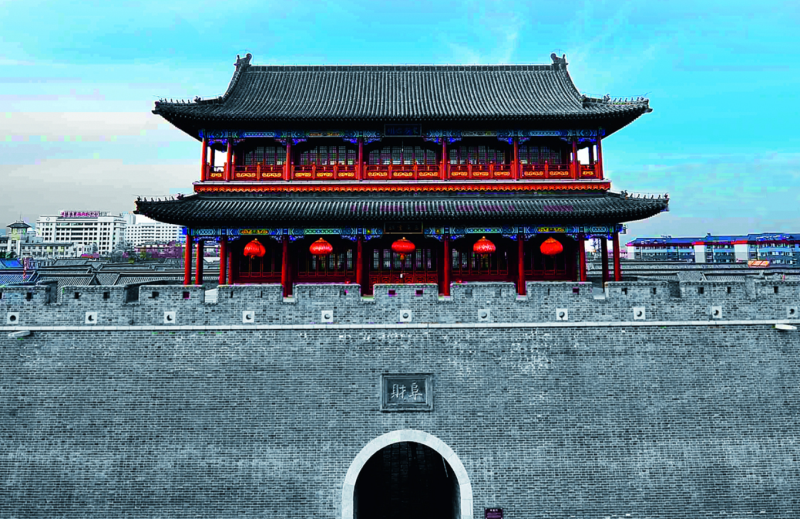
Fucai Gate (South Gate)
Fucai Gate is the main gate of Qingzhou Ancient City. It was first built in the Northern Wei dynasty, and the existing building was reconstructed in 2013. It is 20 meters high and 35 meters wide, adopting the Ming and Qing style. There is a gate tower on top, from which visitors can overlook the entire ancient city. Inside the gate is the Qingzhou Ancient City Museum, displaying the ancient city's historical evolution and cultural relics, including Ming dynasty city wall bricks and ancient weapons, helping tourists understand the city's development. Fucai Gate Square is the entrance landmark of the ancient city. The archway on the square is inscribed with the words "Qingzhou Ancient City" and is a popular spot for tourists to take photos.
Ouyuan Garden
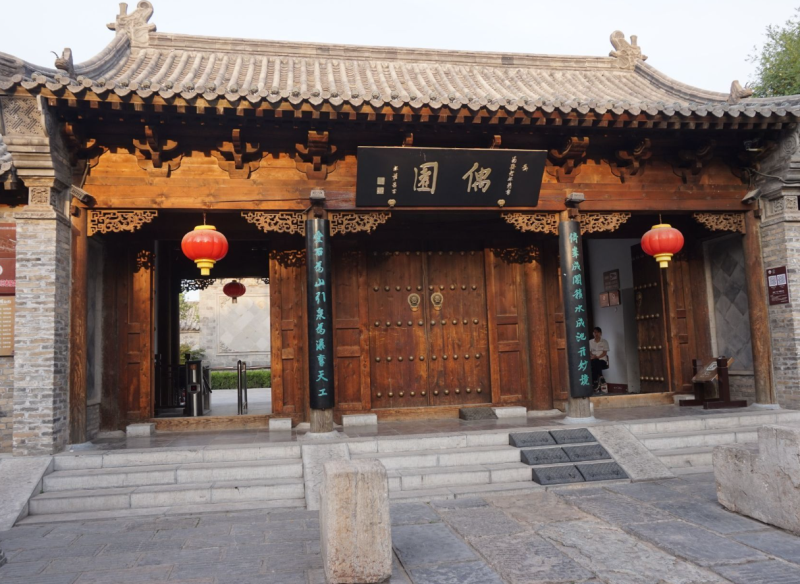
Ouyuan Garden is located in the southern part of the ancient city, covering an area of about 33,000 square meters. It was the private garden of Feng Pu, a Grand Secretary of the Wenhua Hall during the Kangxi period of the Qing dynasty. Because it is near the former site of Prince Heng Mansion, it is also called "Feng Family Garden." In the garden are the four great rockeries named "Fu, Shou, Kang, Ning," all piled with Taihu stones left from the Ming dynasty Prince Heng Mansion, with the highest reaching 8 meters. The garden also has pavilions and buildings such as Jiashan Hall, Lüge Pavilion, and Songfeng Pavilion. The pond covers about 1,500 square meters and is planted with aquatic plants such as lotus and water lilies, making the scenery pleasant in summer. Ouyuan Garden is a rare well-preserved classical garden in the north and embodies the artistic achievements of garden architecture during the Ming and Qing periods.
Prince Heng Mansion Stone Archways
The Prince Heng Mansion Stone Archways are located at the northern end of Ouyuan Street. They are landmark structures of the Ming dynasty Prince Heng Mansion, built in the 23rd year of Chenghua in the Ming dynasty (1487). They consist of two four-pillar, three-bay stone archways, 43 meters apart from east to west. Each archway is 7.5 meters high and 11.5 meters wide. The tops are in the xieshan style and are carved with auspicious animal patterns such as dragons, phoenixes, and qilin, as well as floral and figural story decorations. The carving is superb and highly three-dimensional. They are among the best-preserved and most exquisitely carved surviving examples of Ming dynasty princely mansion stone archways in China, with extremely high historical and artistic value.
Zhaode Ancient Street
Zhaode Ancient Street is one of the best-preserved ancient streets in Qingzhou Ancient City, with a total length of 1.5 kilometers. It is named after Zhaode Pavilion within the street. It is mainly composed of Ming and Qing dynasty buildings, mostly brick-and-wood siheyuan courtyards. This ancient street was once a Hui ethnic residential area and retains many Hui cultural elements. Along the street are a mosque (first built in the Yuan dynasty; the existing building was rebuilt in the Qing dynasty, covering about 2,000 square meters), Hui specialty shops, and others. Old shops on both sides of the street, such as "Dongguan Sauce Garden" and "Old Silversmith Shop," still retain traditional ways of doing business, showing the ancient city's diverse ethnic culture.
Longxing Temple Site
The Longxing Temple Site is located in the northwest part of the ancient city. It was first built during the Northern Wei dynasty and went through the Sui, Tang, and Song dynasties, gradually declining by the Ming dynasty. In the 1990s, a large number of Buddhist statues were excavated here, more than 400 in total, including stone Buddhas, Bodhisattvas, and arhats, spanning from the Northern Wei to the Northern Song. Among them, painted Buddha statues are well preserved with bright colors, making this an important discovery in Chinese Buddhist art. The existing heritage park covers about 15,000 square meters and includes exhibition halls and statue sculpture groups. It restores part of the temple's architectural layout, allowing visitors to feel the scale and grandeur of an ancient Buddhist monastery.
Food
Qingzhou Jianbing
Qingzhou jianbing is a traditional local snack made from millet and corn. It is made by grinding into batter and spreading it thin. It is as thin as paper and crisp in texture. It can be rolled with scallions, pickles, or fried dough sticks. The "Old Qingzhou Jianbing Shop" in the ancient city has inherited the craft for three generations and uses a traditional griddle to make it. One portion of jianbing, including fillings, costs about 8 yuan and is a must-try food for tourists experiencing local flavors.
Longsheng Pastries
Longsheng Pastries was founded during the Daoguang period of the Qing dynasty and is a famous time-honored brand in Qingzhou, known for carefully selected ingredients and traditional craftsmanship. Its main varieties include honey san dao, cakes, and peach pastries. Among them, honey san dao is made from flour, honey, sesame, and other ingredients, then fried and coated with syrup. The outer layer is crisp, and the inside is soft, sweet but not cloying. A box of about 500 grams costs about 35 yuan. It can be purchased at the Longsheng Pastry Shop on Ouyuan Street in the ancient city and is a fine gift for relatives and friends.
Dongguan Braised Beef
Dongguan braised beef originated in the Qing dynasty and is named because it was produced in the eastern part of the ancient city, around Zhaode Street. It uses local yellow cattle hind leg meat and is made through more than 10 processes, including curing and braising. The meat is firm and has a rich soy sauce aroma. After slicing, it can be eaten directly or paired with jianbing. The "Ma Family Braised Beef" shop in the ancient city has a history of a hundred years. Five hundred grams of braised beef costs about 80 yuan and is deeply loved by tourists.
Nearby Food
About 2 kilometers from the ancient city, Qingzhou Songcheng Food Street gathers specialty foods from Weifang and surrounding areas. "Weifang meat huoshao" is a common local snack. It uses flour as the wrapper and is filled with pork filling, then pan-fried. The outer skin is crisp, and the filling is tender. One costs about 5 yuan. "Linqu whole goat soup" uses local goats. After stewing, the soup is milky white and served with chopped scallions and cilantro. A bowl costs about 25 yuan. It is especially warming in winter and is a good place for tourists to experience local food culture.
Tickets:
Admission is free, but some attractions within the scenic area charge separately.
You can search for the official public account "Qingzhou Ancient City Tourist Scenic Area" on WeChat to get the latest updates or buy tickets online.
Opening Hours:
Open all day (shops on the streets generally operate from 8:00 to 21:00); Ouyuan Garden is open from 8:00 to 17:30 (last entry at 17:00); Qingzhou Museum is open from 9:00 to 17:00 (last entry at 16:00, closed on Mondays except statutory holidays); Longxing Temple Site Park is open from 8:30 to 17:00 (last entry at 16:30).
Tour Route:
Recommended one-day route: At 8:30 a.m., enter the ancient city from Fucai Gate and climb the tower to visit the Ancient City Museum (about 1 hour); at 9:30, walk north along Ouyuan Street to see the Prince Heng Mansion Stone Archways (about 30 minutes); at 10:00, enter Ouyuan Garden and visit the garden landscape and ancient buildings (about 1.5 hours); at 11:30, taste snacks such as Longsheng Pastries and Qingzhou jianbing on Ouyuan Street; at 13:00 p.m., go to Zhaode Ancient Street to visit the mosque and Hui residences and experience ethnic customs (about 1.5 hours); at 14:30, go to Longxing Temple Site Park to learn about Buddhist culture and archaeological discoveries (about 1 hour); at 15:30, walk to Qingzhou Museum to visit cultural relic exhibitions (about 2 hours); at 17:30, return to the ancient city and taste specialty foods such as braised beef in Dongguan; at 19:00, enjoy the ancient city's night view (lights on the main streets stay on until 22:00), and end the trip at 20:00.
Transportation:
Public transportation: In Qingzhou city, take buses No. 1, 2, 8, or 11 to the "Qingzhou Ancient City" stop and walk about 50 meters to Fucai Gate; from Qingzhou Railway Station (regular train station), take bus No. 2 directly to the ancient city, about 30 minutes, fare 2 yuan; from Qingzhou North Station (high-speed rail station), take bus No. 11 to the ancient city, about 40 minutes, fare 3 yuan.
Self-driving: From Jinan, take the Qingyin Expressway east and exit at Qingzhou East, then navigate to the Qingzhou Ancient City parking lot. The total distance is about 150 kilometers, about 2 hours by car; from Qingdao, take the Qingyin Expressway west and exit at Qingzhou, then go to the ancient city. The total distance is about 200 kilometers, about 2.5 hours by car; parking lots around the ancient city charge 5 yuan/hour, and spaces are tight on holidays.
Taxi/ride-hailing: From Qingzhou North Station to the ancient city is about 15 kilometers, about 20 minutes by car, costing about 30 yuan; from Qingzhou Nanyuan Airport to the ancient city is about 8 kilometers, about 15 minutes by car, costing about 15 yuan.
Must-Visit Attractions:
Fucai Gate (South Gate): The main gate of the ancient city. You can climb the tower to overlook the ancient city and learn about its history. Free admission (the tower museum is included in the ticket).
Ouyuan Garden: A classical Qing dynasty garden covering 33,000 square meters, with four great rockeries and Ming and Qing buildings. Tickets are 20 yuan/person. It is the core attraction for experiencing northern garden culture.
Prince Heng Mansion Stone Archways: Relics of a Ming dynasty princely mansion, 7.5 meters high and exquisitely carved. Free admission. They display the superb level of Ming dynasty stone carving art.
Zhaode Ancient Street: A 1.5-kilometer-long ancient street that retains Hui cultural characteristics and traditional shops. Free admission. Suitable for experiencing local street life.
Qingzhou Museum: Rich in collections, including Longxing Temple Buddha statues and a Ming dynasty top-scorer examination paper and other precious items. Free admission. It is an important window for understanding Qingzhou's history.
Travel Suggestions:
Suggested visiting time is 1 day, allowing a comprehensive experience of the ancient city's historical buildings, folk culture, and specialty foods.
Most streets and alleys in the ancient city are stone-paved. It is recommended to wear comfortable flat shoes, pay attention to sun protection in summer, and keep warm in winter.
For food tasting, choose time-honored shops on Ouyuan Street and Zhaode Street, such as Longsheng Pastries and Ma Family Braised Beef, and avoid high-priced restaurants at the main street entrance.
When buying specialties such as Longsheng Pastries, choose regular shops, check the production date and shelf life, and note that some shops support express delivery.
The best places to photograph the ancient city's night view are the Fucai Gate tower and the northern section of Ouyuan Street. The lights stay on until 22:00. It is recommended to shoot from 19:30 to 21:00 to avoid peak crowds.
Notes:
Motor vehicles are prohibited in the ancient city (except special vehicles). Tourists need to walk and should watch out for bicycles and electric sightseeing vehicles.
Protect ancient buildings and cultural relics. Climbing stone archways or city walls is prohibited, touching exhibits is prohibited, and scenic area signage regulations must be followed.
During holidays (May Day, National Day, Spring Festival), there are many tourists. It is recommended to travel off-peak (before 8:00 a.m. or after 17:00 p.m.), keep personal belongings safe, and be alert to pickpocketing.
Some sections of Zhaode Ancient Street are narrow, and the stone-paved road is slippery on rainy days. Pay attention to walking safety and take care of the elderly and children.
Respect the customs of local Hui residents. When entering the mosque, follow relevant regulations, such as dressing neatly and removing hats.