The Yellow River Estuary Ecological Tourism Area is located in Kenli District, Dongying City, Shandong Province. It is a national 5A-level tourist attraction, situated at the estuary where the Yellow River flows into the sea, and is also the core area of the Yellow River Delta. It is notable for its unique wetland ecosystem, spectacular wonder of the Yellow River flowing into the sea, and rich biodiversity, and can be regarded as one of China's most complete, vastest, and youngest wetland ecosystems. The scenic area covers a total area of 1,530 square kilometers, of which the wetland area is 1,200 square kilometers, encompassing various landscape resources such as the river-sea convergence, wetland ecology, and petroleum industrial relics. The area is equipped with facilities including a wetland museum, birdwatching huts, and an observation tower. Among them, the Yellow River Estuary Wetland Museum has a building area of about 8,000 square meters and is an important window for displaying the wetland ecosystem and Yellow River culture.
History and Culture
The history of the Yellow River Estuary region is closely linked to the changes of the Yellow River. As the "Mother River" of the Chinese nation, the Yellow River's estuary has changed course many times in history. Today's Yellow River Delta was gradually formed after the Yellow River burst its banks at Tongwaxiang in 1855 and changed course. It has a history of only about 160 years and is China's youngest land.
This newly formed land contains a rich Yellow River culture. The folk customs of the Yellow River Estuary integrate Qilu culture and wetland characteristics. Intangible cultural heritages such as fishermen's work songs and salt workers' living customs demonstrate the unique lifestyle formed by local people in their coexistence with the Yellow River and the sea. In addition, this area was also an important revolutionary base during the War of Resistance Against Japan and the War of Liberation, leaving behind the footsteps of many revolutionary martyrs. Red culture and Yellow River culture blend with each other, forming the unique historical and cultural heritage of the Yellow River Estuary.
Main Attractions
River-Sea Convergence Scenic Area
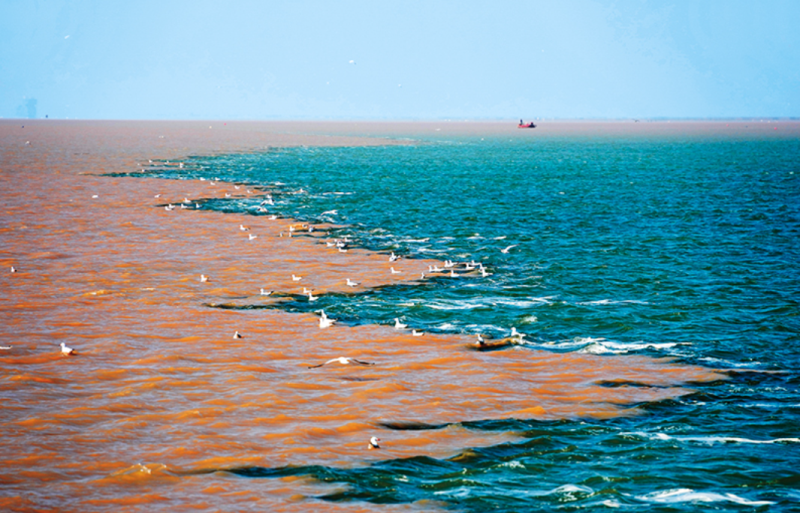
The River-Sea Convergence Scenic Area is the core attraction of the Yellow River Estuary Ecological Tourism Area and a rare natural wonder in the world. The Yellow River water carries a large amount of sediment as it rushes into the sea, converging with the blue seawater to form a clear yellow-blue dividing line, creating an extremely spectacular scene. Tourists can take a cruise to view it. The cruise route is about 10 kilometers long, and the sailing time is about 1.5 hours. Under different seasons and tidal conditions, the yellow-blue convergence landscape presents different forms.
Wetland Ecological Area
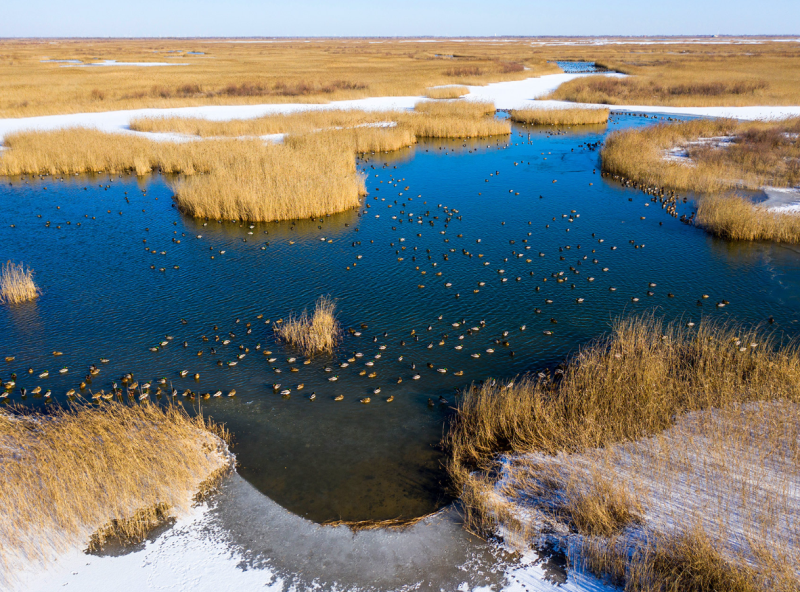
The Wetland Ecological Area is an important part of the Yellow River Estuary Ecological Tourism Area, with an area of 1,200 square kilometers. It is the habitat of many birds and wetland organisms. There are various wetland types such as reed marshes, shallow beaches, and swamps. Every year, it attracts a large number of migratory birds to inhabit and breed, and it is an important bird migration corridor and wintering ground along the eastern coast of China. The area is equipped with birdwatching huts and birdwatching boardwalks. The birdwatching huts are about 500 meters from the main bird habitats. Visitors can observe rare birds such as red-crowned cranes, oriental white storks, and whooper swans here. The best time for birdwatching is from October each year to March of the following year.
Yellow River Estuary Wetland Museum
The Yellow River Estuary Wetland Museum has a building area of about 8,000 square meters and is a comprehensive museum integrating wetland ecological display, science popularization education, and cultural dissemination. Through multimedia, specimens, models, and other forms, the museum displays in detail the formation process of the Yellow River Estuary wetland, the structure of the ecosystem, biodiversity, and the development history of Yellow River culture. The museum also has an interactive experience area, where visitors can experience changes in the natural environment of the Yellow River Estuary through simulation equipment, enhancing their understanding of wetland protection.
Ten-Thousand-Mu Sunflower Garden
The Ten-Thousand-Mu Sunflower Garden is located around the Wetland Ecological Area, covering an area of about 10,000 mu, and is one of the characteristic landscapes of the Yellow River Estuary Ecological Tourism Area. From July to August each year, tens of thousands of sunflowers bloom competitively, forming a golden sea of flowers that contrasts beautifully with the surrounding wetland landscape. The garden has a sightseeing boardwalk about 5 kilometers long, where visitors can stroll and enjoy the sunflower sea and pastoral scenery.
Bird Museum
The Bird Museum has a building area of about 4,000 square meters and is one of China's relatively large bird-themed museums. It houses a large number of bird specimens, including rare birds such as red-crowned cranes and oriental white storks. Through specimen displays and ecological simulations, it introduces knowledge about bird classification, habits, and migration. The museum also has a live bird observation broadcast room, where visitors can observe the activities of birds in the wetland in real time. It is an ideal place for bird lovers and science education.
Food
Yellow River Estuary Hairy Crab
The Yellow River Estuary hairy crab is a specialty aquatic product of the Yellow River Estuary. Because it grows in the area where freshwater and seawater meet at the Yellow River estuary, its meat is tender, its roe is full, and its yellow is rich, making it highly nutritious. The breeding of Yellow River Estuary hairy crabs has a long history, with a breeding area of more than 100,000 mu. September to October each year is the peak fishing season, when the hairy crabs are at their fattest and most delicious. The local cooking method is mostly steaming to preserve their original flavor, making them one of the must-try foods for tourists.
Lijin Pan-Fried Buns
Lijin pan-fried buns are a traditional famous snack of Lijin County, Dongying City, and are also very popular in the surrounding areas of the Yellow River Estuary. They are made from flour, pork, chives, and other ingredients through processes such as fermentation, wrapping, and pan-frying. The bottom of the buns is golden and crispy, the upper part is soft and tasty, and the filling is savory and juicy. They are a breakfast and snack loved by local people. This dish can be tasted in restaurants and snack shops around the Yellow River Estuary Ecological Tourism Area.
Yellow River Knife Fish
The Yellow River knife fish is a rare fish of the Yellow River Estuary, named for its slender body like a knife. It grows in the lower reaches of the Yellow River and near the estuary. Its meat is tender and delicious, rich in protein and various vitamins. The fishing period for Yellow River knife fish is relatively short, and spring is the best season for catching it each year. Local cooking methods include steaming and pan-frying, making it a rare delicacy.
Guangrao Braised Donkey Meat
Guangrao braised donkey meat is a traditional specialty food of Guangrao County, Dongying City, and is also widely welcomed in the surrounding areas of the Yellow River Estuary. It uses high-quality donkey meat as raw material, paired with various spices and seasonings, and is made through multiple processes such as braising and soaking. The braised donkey meat is red and glossy, tender in texture, mellow in taste, and rich in nutrients. It is one of the local famous foods and also a fine gift for tourists to give to relatives and friends.
Tickets:
Tickets are 85 yuan per person (including sightseeing bus).
You can search for the official public account "Yellow River Estuary Ecological Tourism Area" on WeChat to get the latest updates or buy tickets online.
Opening Hours:
Opening hours are 8:30-17:30 every day (April 1-November 30); from December 1 to March 31 of the following year, opening hours are 9:00-17:00. The scenic area stops admitting visitors 1 hour before closing, so tourists need to arrange their visiting time reasonably. Affected by natural factors such as weather and tides, the opening hours of some attractions (such as the River-Sea Convergence Scenic Area) may be adjusted. Tourists are advised to consult the scenic area in advance.
Tour Route:
Visitors can enter from the main gate of the scenic area, first visit the Yellow River Estuary Wetland Museum to learn about the ecological environment and history and culture of the Yellow River Estuary, then take the sightseeing bus to the Wetland Ecological Area, observe birds at the birdwatching huts, stroll along the boardwalk in the reed marshes, and experience the wetland scenery. Then go to the Ten-Thousand-Mu Sunflower Garden (open seasonally) to enjoy the flower sea landscape. Next, take a cruise to the River-Sea Convergence Scenic Area to admire the wonder of the yellow-blue convergence. After returning, you can visit the Bird Museum to gain an in-depth understanding of bird knowledge. This route is about 20 kilometers in total, and the tour time is about 6-7 hours, allowing a comprehensive experience of the characteristics of the Yellow River Estuary Ecological Tourism Area.
Transportation:
Self-driving: Starting from downtown Dongying, drive along the Donglv Expressway and Rongwu Expressway to the Kenli exit, then drive north along Provincial Road 315 for about 40 kilometers to reach the Yellow River Estuary Ecological Tourism Area. The total distance is about 60 kilometers, and the drive takes about 1 hour.
Bus: At the Dongying City Bus Terminal, take the dedicated bus to the Yellow River Estuary Ecological Tourism Area. There are 3 departures each day, at 8:00, 10:00, and 13:00. The journey takes about 1.5 hours, and the fare is about 20 yuan per person.
Tourist line: Some travel agencies in downtown Dongying have opened tourist lines to the Yellow River Estuary Ecological Tourism Area, including tickets and transportation costs. Tourists can sign up at travel agencies. Specific schedules and prices can be consulted with local travel agencies.
Must-Visit Attractions:
River-Sea Convergence Scenic Area: Visitors can observe the yellow-blue dividing line formed by the convergence of Yellow River water and seawater. The route is about 10 kilometers long and is a rare natural wonder in the world.
Wetland Ecological Area: It covers an area of 1,200 square kilometers and has birdwatching huts and birdwatching boardwalks. Visitors can observe various rare birds. It is an excellent place for wetland ecological sightseeing.
Yellow River Estuary Wetland Museum: It has a building area of 8,000 square meters and displays wetland ecology and Yellow River culture in various forms, combining science popularization and ornamental value.
Ten-Thousand-Mu Sunflower Garden: It covers an area of 10,000 mu. Sunflowers bloom from July to August, forming a golden flower sea. It is a great place for photos.
Travel Suggestions:
The scenic area is large, and the attractions are far apart. It is recommended to take the scenic area sightseeing bus. The ticket price is 25 yuan per person, and it can be ridden unlimited times, saving energy.
The river-sea convergence landscape is greatly affected by weather and tides. It is recommended to check the weather forecast and tide times in advance and choose a suitable time to visit.
The best time for birdwatching is from October each year to March of the following year, when the number of birds is relatively large. It is recommended to bring binoculars for better bird observation.
When visiting in summer, there are many mosquitoes in the wetland area, so mosquito prevention measures should be taken, such as applying floral water and wearing long-sleeved clothing; in winter, the weather is cold, so attention should be paid to keeping warm.
There are relatively few dining options in the scenic area. It is recommended to bring an appropriate amount of food and water, and local specialty foods can also be tasted at restaurants around the scenic area.
Notes:
The wetland terrain in the scenic area is complex, and some areas are muddy and slippery. Pay attention to safety when walking and do not leave designated routes without authorization.
Protect the wetland ecological environment, do not pick plants at will or disturb birds and other wild animals, and comply with the scenic area's ecological protection regulations.
When taking a cruise to view the river-sea convergence landscape, comply with the cruise safety regulations, wear a life jacket, and do not chase or play on the cruise deck.
Keep personal belongings safe and stay alert in crowded places to prevent loss of belongings.
Smoking and open flames are prohibited in the scenic area to prevent fires and protect wetland ecological safety.