Ziquejie Terraced Fields are located in Shuiche Town, Xinhua County, Loudi City, Hunan Province. They are a national 4A-level tourist attraction, a World Heritage Irrigation Structure, and a national-level scenic area. The scenic area features its unique terraced farming culture and has a self-flowing irrigation system with a history of more than 2,000 years that still operates normally today. The total area of the terraced fields is about 80,000 mu, with the core scenic area covering about 28,000 mu. The altitude ranges from 500 meters to 1,200 meters, with more than 500 levels. It is a living fossil of the integration of southern rice-growing culture and hunting culture, and is also one of the world's ten most beautiful terraced fields.
History and Culture
Ziquejie Terraced Fields were first built in the pre-Qin period and flourished in the Song and Ming dynasties. With a history of more than 2,000 years, they are an agricultural miracle jointly created by the Miao, Yao, Han, and other ethnic groups. According to research, the terraced fields were initially reclaimed by the ancestors of the Miao and Yao peoples. Later, with the southward migration of Han Chinese from the Central Plains, they were gradually improved, forming today's large-scale terraced field system.
The self-flowing irrigation system in the scenic area is called "a miracle in the history of world water conservancy." It relies on fissure water from granite bedrock for gravity-fed supply without the need for artificial pumping. The irrigated area reaches 40,500 mu, and it has been listed by the Food and Agriculture Organization of the United Nations as a "Globally Important Agricultural Heritage System." This irrigation method cleverly utilizes the local geological structure and natural drop, reflecting the wisdom of ancient farming civilization.
Ziquejie Terraced Fields are not only an agricultural production site but also a carrier of ethnic culture. The local area still preserves traditional farming festivals such as the "Opening Plowing Festival" and the "Tasting New Rice Festival," as well as folk activities such as antiphonal mountain songs and Nuo mask dances, showcasing the unique production and lifestyle of the southern mountainous region.
Main Attractions
Bagua Chong Viewing Platform
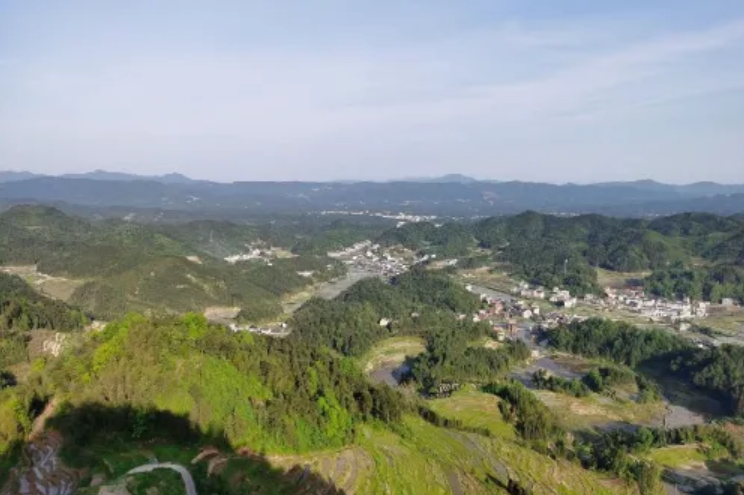
This is the most beautiful and most representative attraction in the scenic area. The biggest features of Bagua Chong Terraced Fields are their compactness, exquisiteness, liveliness, elegance, and beauty. Because their shape resembles a bagua diagram, they are named Bagua Chong.
Yueya Mountain Viewing Platform
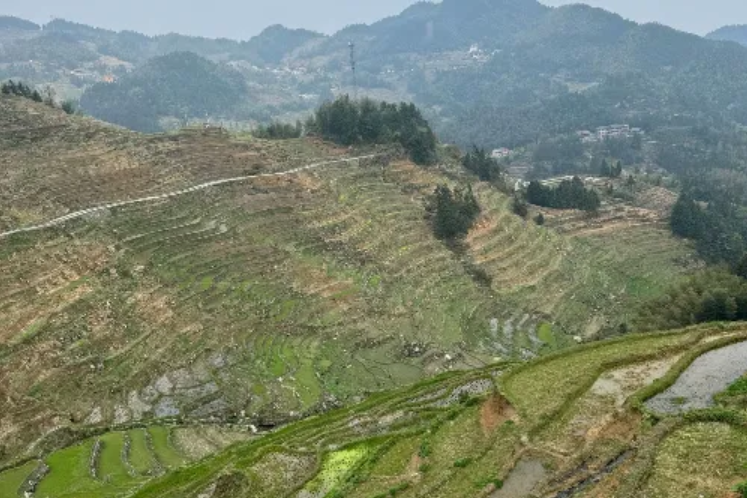
The lines of the terraced fields at Yueya Mountain Viewing Platform are smooth and elegant, shaped like a small crescent moon in the sky, hence the name Yueya Mountain.
Yaoren Chong Viewing Platform
According to investigations by cultural relic experts, historical sites left by the Yao people, such as Yaoren Dang, Yaoren Dong, and Yaoren Wuchang, were once found on the mountain here, so it was named Yaoren Chong.
Jiulong Po Viewing Platform
Standing at Jiulong Po to view the terraced fields gives one the aesthetic pleasure of "from the side, a range; from the front, a peak; from afar and near, from high and low, it looks different." Looking into the distance, nine mountain ridges appear indistinctly, resembling nine divine dragons competing to leap straight to the mountaintop.
Yaji Zhai Viewing Platform
Yaji Zhai is divided into two parts: the Yaji Zhai Viewing Platform and Zique Pavilion. Zique Pavilion is located at the top of the mountain at an altitude of 1,200 meters, while the Yaji Zhai Viewing Platform is at an altitude of 1,080 meters. Standing here, visitors can take in the full beauty of Ziquejie Terraced Fields.
Zhenglong Ancient Village
A traditional Chinese village, a famous tourism village in Hunan Province, and a national-level beautiful and livable village. It currently has more than 200 Ming and Qing dynasty stilt-style wooden houses, which are distributed according to the mountain terrain and form original courtyards. The village is a settlement inhabited by multiple ethnic groups including the Miao, Yao, and Han. Meishan culture has a long history here, and folk activities such as dragon and lion dances, Nuo opera, and mountain songs are preserved.
Tour Routes:
Recommended Routes in the Scenic Area
Route 1: Bagua Chong Viewing Platform → Yaoren Chong Viewing Platform → Yueya Mountain Viewing Platform → Zhenglong Ancient Village. Estimated 5 hours.
Route 2: Yueya Mountain Viewing Platform → Yaoren Chong Viewing Platform → Jiulong Po Viewing Platform → Yaji Zhai Viewing Platform → Zhenglong Ancient Village. Estimated 5.5 hours.
Travel Suggestions:
The irrigation period from April to May and the harvest period from September to October are the best times to visit. At these times, the terraced fields are either shimmering with water or golden, creating the most spectacular scenery.
Bring a camera and tripod. Bagua Chong and Jiulong Po are excellent photography spots, with the best light in the early morning and evening.
Most homestays in the scenic area are farmhouse inns. Staying near Jiulong Po is recommended for convenience in watching the sunrise the next day. Room rates are about 150-250 yuan per night, including breakfast.
To experience farming activities, you need to contact the scenic area or homestay in advance, such as rice planting in May, harvesting in October, and catching rice flower fish in August.
There is a large temperature difference between day and night in the mountainous area. In summer, a light jacket is needed; in winter, a down jacket is recommended. Non-slip shoes are advised, as some terraced field ridges are steep.
Notes:
Random climbing on the terraced fields is prohibited in the scenic area to avoid damaging the field ridges and crops. Violators may face a fine of 50-200 yuan.
The last sightseeing bus is at 17:30. It is recommended to arrange your time reasonably and avoid hiking down the mountain, as some sections have no streetlights.
Respect local customs. For example, when entering Yaoren Chong Ancient Village, keep quiet and do not casually photograph villagers' daily lives.
Mountain weather is changeable. It is recommended to carry an umbrella or raincoat. April to May is often foggy, so pay attention to traffic safety.
When buying agricultural products, it is recommended to go to designated shops in the scenic area and avoid random purchases from roadside stalls. Bargaining is possible, such as for tribute rice and cured meat.
There are many mosquitoes in summer, so take mosquito prevention measures. In winter, some high-altitude sections may freeze, and self-driving vehicles need anti-skid chains.
Transportation:
High-speed rail: Take the high-speed rail from Changsha South Station to Xinhua South Station (about 50 minutes, ticket price 86 yuan). After leaving the station, take the Ziquejie tourist shuttle bus at the station square (daily from 8:00 to 17:00, one bus per hour, ticket price 25 yuan, travel time about 1.5 hours) directly to the scenic area.
Bus: Changsha West Passenger Station and Loudi Bus Station both have direct tourist buses to Ziquejie Terraced Fields. From Changsha, the travel time is about 3.5 hours, and the ticket price is 80 yuan; from Loudi, the travel time is about 2 hours, and the ticket price is 50 yuan. Xinhua County Bus West Station has minibuses to the scenic area every day from 6:30 to 16:30, with a ticket price of 20 yuan and a travel time of 1 hour.
Self-driving: Changsha → Changsha-Shaoshan-Loudi Expressway → Xinhua Exit → Ziquejie Terraced Fields (about 2.5 hours in total, toll about 120 yuan); Loudi → Loudi-Huaihua Expressway → Xinhua Exit → Ziquejie Terraced Fields (about 1.5 hours in total, toll about 50 yuan). There are 4 large parking lots in the scenic area, charging 10 yuan per vehicle per day.
Transportation within the scenic area: Sightseeing buses run in a loop within the scenic area, stopping at major attractions such as Bagua Chong, Jiulong Po, and Yaji Zhai. The first and last bus times are 07:30-17:30. For 20 yuan per person, visitors can ride all day.
Opening Hours:
Open all year round, daily opening hours are 07:00-18:00. The best visiting seasons are April to May (irrigation period) and September to October (harvest period). Among them, April 20 to May 10 is the "Opening Plowing Festival," and September 20 to October 10 is the "Harvest Festival." During these periods, activities such as farming experiences and folk performances are held. In winter (December to February of the following year), some high-altitude areas may be closed due to ice and snow.
Tickets:
The ticket price is 68 yuan per person.