Kongtong Mountain Scenic Area is located in Kongtong District, Pingliang City, Gansu Province. It is one of China's first batch of national 5A-level tourist attractions, a national geopark, a national nature reserve, a key national scenic spot, and one of the birthplaces of Chinese Taoism. The overall planned area of the scenic area is 84 square kilometers, with an altitude ranging from 1,456 to 2,123.5 meters, a vertical drop of 667.5 meters, and the main peak reaching 2,123 meters above sea level. The area features typical Danxia landforms, with a forest coverage rate of over 95%. Towering peaks, precipitous cliffs, vast seas of trees, misty veils, and clear mountain streams create an ethereal fairyland—combining the majesty of northern mountains with the elegance of southern scenery. The scenic area also boasts numerous ancient architectural structures, having largely restored the 42 building complexes that historically formed the famed "Nine Palaces, Eight Terraces, and Twelve Courtyards."
History and Culture
Kongtong Mountain is traditionally regarded as the hermitage of the Taoist immortal Guangchengzi and is honored as the "No. 1 Taoist Mountain under Heaven." After the Yellow Emperor, the legendary ancestor of the Chinese nation, defeated Chiyou, he came here to consult Guangchengzi on statecraft and the art of health preservation. From the Yellow Emperor's inquiry, through the Qin and Han emperors, to Emperor Taizong of the Tang and Emperor Chengzu of the Ming, numerous emperors personally visited Kongtong Mountain—either to seek Taoist wisdom or to perform imperial sacrificial ceremonies. During the Qin and Han dynasties, Kongtong Mountain was a vital stop on the Jitou Road, a key passage connecting central China with the west. After the reunification under the Sui Dynasty, both Buddhist monks and Taoist priests successively established temples and monasteries. In the Tang Dynasty, the Zen master Renzhi built the Xuanyuan Palace, Shuhua Temple, and many other Buddhist and Taoist structures and pagodas on the mountain. The Yongle Emperor of the Ming Dynasty erected a stele at Kongtong Mountain, explicitly ordering the protection of its monasteries and Taoist temples, thereby making Kongtong Mountain a northern imperial Taoist center for the Ming royal house. The site also preserves a historical culture of "three teachings in one" (Confucianism, Buddhism, and Taoism), and numerous literati and poets have left behind many verses in its honor.
Major Attractions
Huangcheng (Imperial City / Taihe Palace)
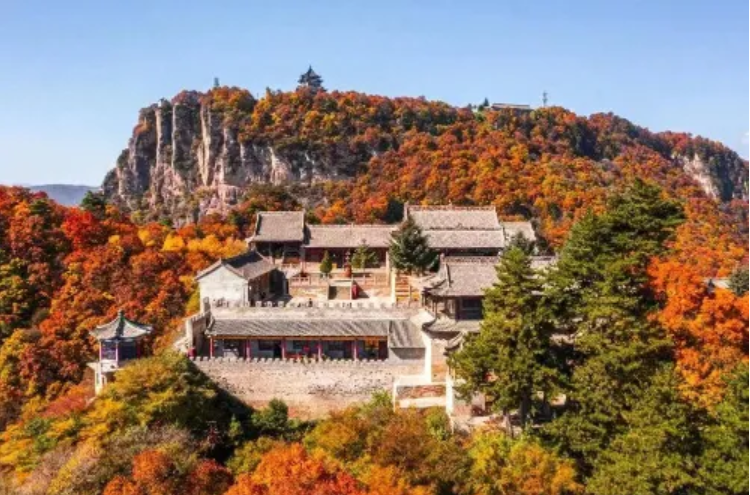
Located on Mazong Mountain, the main peak of Kongtong, this is the primary Taoist architectural complex on the mountain and the best-preserved group of Ming-dynasty buildings. It includes eight main halls, such as the Lingguan Hall and Taibai Hall, covering an area of about 200 square meters. The architectural style features halls built atop halls, halls within halls, and halls hidden behind halls.
Yuhuang Tower (Jade Emperor Pavilion / Lingxiao Hall)
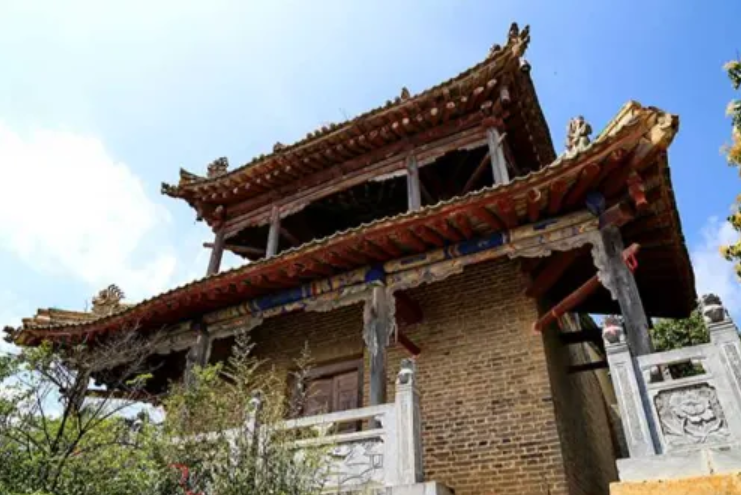
Situated behind the Zhenwu Grand Hall, this hall is dedicated to the Jade Emperor, the supreme deity of Taoism. Flanked by golden boys and jade maidens, and guarded by four standing deity statues, the gable walls feature murals depicting the Northern Dipper (seven stars) and the Southern Dipper (six stars), which govern life and death.
Qipan Ridge (Chessboard Ridge / Tieqi Ping)
Located at the lowest part of the Leisheng Peak building complex, overlooking the Danzheng Gorge, this site is named after the legendary game of chess played here by Guangchengzi and Chisongzi. Overhanging on three sides, it covers about 360 square meters. At the center of the platform stand several millennia-old giant pines, along with the Sansheng Hall and the Pusa Hall.
Mozhen Guan (Grinding Needle Taoist Temple)
Situated above the Lanyun Pavilion, this hexagonal, double-eaved brick-and-stone structure was built during the Jiajing reign of the Ming Dynasty and is one of the best-preserved Ming buildings on the mountain. It commemorates the place where the Old Mother of Mount Li enlightened the Unborn Patriarch to attain enlightenment. It also offers one of the best vantage points for viewing the eastern and central parts of the Kongtong Mountain Scenic Area.
Shangtian Ti (Heavenly Stairway)
Built during the Zhenguan reign of the Tang Dynasty and hewn under the direction of Zen master Renzhi, this is the main passage to the summit. Carved stone steps rise between sheer cliffs, stretching over 80 meters in length and about 2.5 meters in width, with a total of more than 369 steps. The slopes are divided into three sections at 45°, 65°, and 75°. Iron posts and chains provide protection along dangerous sections. On the cliff face at the middle section is carved the inscription "Site Where the Yellow Emperor Asked the Way."
Tongtian Bridge (Sky-Reaching Bridge)
Facing the Lion Ridge to the south, this is a suspension cable-stayed iron bridge leading to Tiantai Mountain. The bridge is 74 meters long, with a sheer drop of over 100 meters below. It connects Tiantai Mountain with Lion Ridge. Tiantai Mountain is surrounded by precipitous cliffs and rarely visited; ancient people called this scene "Lion Watching Tiantai."
Danzheng Lake
Named for the frequent sounds of zither music heard in its gorge, Danzheng Lake lies below the Kongtong Mountain Scenic Area, surrounded by mountains on three sides and a reservoir dam on the fourth, offering beautiful scenery. The cable car to Kongtong Mountain passes over the lake.
Leisheng Peak (Thunder Sound Peak)
Renowned for its perilous terrain, the building complex along its ridge is shaped like a winding dragon, earning it the title of "a unique wonder of Kongtong." It is an exemplary integration of Taoist architecture and natural landscape.
Zhongtai (Central Terrace)
Located at the center of Kongtong Mountain, with its highest point at 1,927 meters above sea level, this area once housed a grand and expansive architectural complex. Planted with lush trees and flowers, it remains the most bustling part of the mountain.
Suggested Tour Route:
Start from Kongtong Ancient Town, take the scenic shuttle or cable car to Zhongtai, then visit Shangtian Ti, Huangcheng, Yuhuang Tower, and proceed to Leisheng Peak and Mozhen Guan. Finally, head to Qipan Ridge. After enjoying the views, you may return along the same route or choose another downhill path. If time permits, you can also explore Danzheng Gorge and Yanzhi Gorge.
Travel Tips:
Check the opening hours and ticket policies in advance to plan your schedule accordingly.
Wear comfortable sports shoes for easier hiking.
Bring appropriate clothing based on the weather; temperatures on the mountain may be lower than at the foot.
If time allows, consider staying longer within the scenic area to immerse yourself in its cultural atmosphere and natural beauty.
Important Reminders:
Follow all scenic area regulations; do not damage the environment or cultural relics.
Pay attention to safety while hiking; follow signs and staff instructions.
Some areas may have weak mobile signals—inform family or friends of your itinerary in advance.
During peak tourist seasons, the area may be crowded; keep your belongings secure and stay aware of your personal safety.
Transportation:
Self-driving: From Xi'an, take the Fuyin Expressway for about 3 hours to the Pingliang West exit, then drive 2 km west along Kongtong Avenue. From Lanzhou, take the Qinglan Expressway for about 3 hours to the same exit, then 2 km west along Kongtong Avenue. From Yinchuan, take the Jingzang Expressway and transfer to the Fuyin Expressway for about 3.5 hours to the Pingliang West exit, then 2 km west along Kongtong Avenue.
Bus: Buses from various cities run daily to Pingliang. Upon arrival at Pingliang Bus Station, transfer to the tourist shuttle or bus routes 13, 21, or 9 to reach Kongtong Mountain Scenic Area directly.
Opening Hours:
Low season (November–March): Ticket sales 08:00–16:00; park closes at 18:00.
High season (April–October): Ticket sales 07:30–16:30; park closes at 19:00.
Specific hours are subject to the official announcement of the scenic area for that year.
Ticket Price:
107 RMB per person.