Yangliuqing Manor is located beside the Jin-Tong Road north of Yangliuqing Town, Xiqing District, Tianjin. It is a national 4A-level tourist attraction and a comprehensive scenic area integrating leisure vacations, folk custom experiences, science education, and entertainment interaction. With its profound folk cultural heritage and rich entertainment projects, it has become a popular tourist destination in Tianjin and the surrounding areas. The manor covers a total area of about 1,000 mu, including a water area of about 150 mu, with a green coverage rate of over 60%. The overall environment combines pastoral scenery with folk customs. The buildings in the area integrate traditional northern dwellings with local Yangliuqing characteristics, with a total building area of about 30,000 square meters, including antique-style quadrangles, folk exhibition halls, and leisure wooden cabins, preserving historical charm while meeting the leisure needs of modern tourists. With Yangliuqing woodblock New Year painting culture as its core and combined with elements such as farming experiences and parent-child amusement, the manor has formed a unique scenic feature of "folk experience natural leisure."
Historical Culture
Yangliuqing Town, where Yangliuqing Manor is located, is a famous historical and cultural town in China with a history of over a thousand years. It is especially famous for Yangliuqing woodblock New Year paintings and is known as the "Hometown of Chinese Woodblock New Year Paintings." Yangliuqing woodblock New Year paintings began in the Chongzhen period of the Ming Dynasty and flourished in the Qing Dynasty. Together with Suzhou Taohuawu New Year paintings, they are known as "South Taohuawu and North Yangliuqing." In 2006, they were included in the first batch of national-level intangible cultural heritage lists.
During its construction, the manor deeply integrated the local history and culture of Yangliuqing, especially New Year painting culture. The folk exhibition area in the area systematically presents the development history, production techniques (such as the five processes of "outlining, carving, printing, painting, and mounting"), and classic works (such as "Surplus Year After Year" and "Five Sons Competing for Lotus") of Yangliuqing woodblock New Year paintings. In addition, as an important ancient town along the Beijing-Hangzhou Grand Canal, Yangliuqing Town was once an important grain transport town. Some landscapes in the manor also draw on canal cultural elements, allowing tourists to feel the integration of local grain transport history and folk culture through scene restoration, physical displays, and other methods.
Main Attractions
Folk Culture Area
The Folk Culture Area is one of the core areas of Yangliuqing Manor, covering an area of about 80 mu, and concentrates on displaying the traditional folk culture of the Yangliuqing area. It includes the Yangliuqing Woodblock New Year Painting Experience Hall, where tourists can watch intangible cultural heritage inheritors demonstrate the New Year painting production process on site and personally participate in processes such as rubbing and coloring to experience the fun of creating New Year paintings. In addition, the folk exhibition hall displays a large number of ancient New Year painting blocks, old workshop tools, traditional clothing, folk handicrafts, and more, systematically introducing the folk history and cultural inheritance of Yangliuqing. Every year during the Spring Festival, temple fairs, New Year painting markets, and other activities are also held here, recreating traditional New Year custom scenes.
Ecological Leisure Area
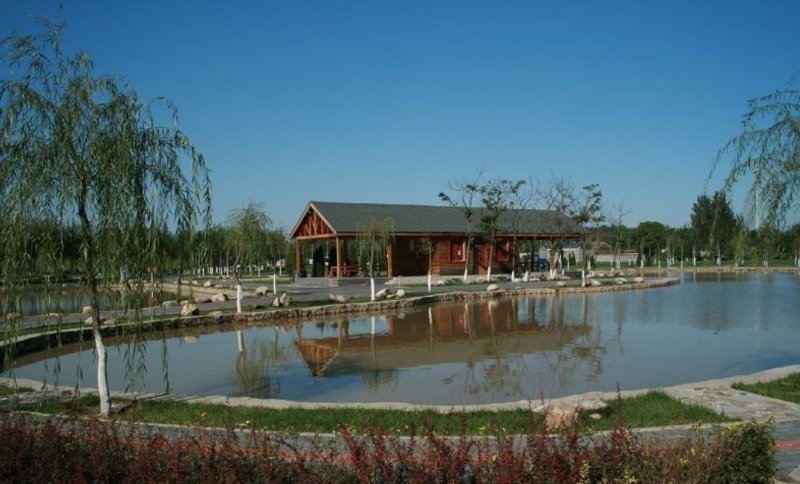
The Ecological Leisure Area covers an area of about 500 mu and focuses on natural landscapes and leisure activities. It has large lawns, woods, and lakes, and is equipped with fishing areas, picnic areas, cycling paths, and more. The fishing area has a water area of about 80 mu and is stocked with various fish such as carp, crucian carp, and grass carp, making it a good place for fishing enthusiasts. The cycling path is about 3 kilometers long in total, and tourists can rent bicycles to tour along it and enjoy the pastoral scenery. The lawn area can accommodate thousands of people and is suitable for outdoor expansion, parent-child games, camping, and other activities. There are also rest pavilions and viewing platforms around it for tourists to rest and enjoy the scenery.
Parent-Child Amusement Area
The Parent-Child Amusement Area covers an area of about 60 mu and is specially designed for family tourists, containing a variety of facilities and projects suitable for children. It includes traditional amusement facilities such as children's castles, bumper cars, carousels, and mini trains, as well as a farming experience area where children can participate in simple agricultural activities such as sowing, watering, and picking under professional guidance to learn about the crop growth process. In addition, the amusement area also has a parent-child handicraft workshop, offering interactive projects such as pottery making and kite painting, promoting emotional communication between parents and children. The amusement area is equipped with professional safety protection facilities and staff to ensure children's safety while playing.
Antique Village Area
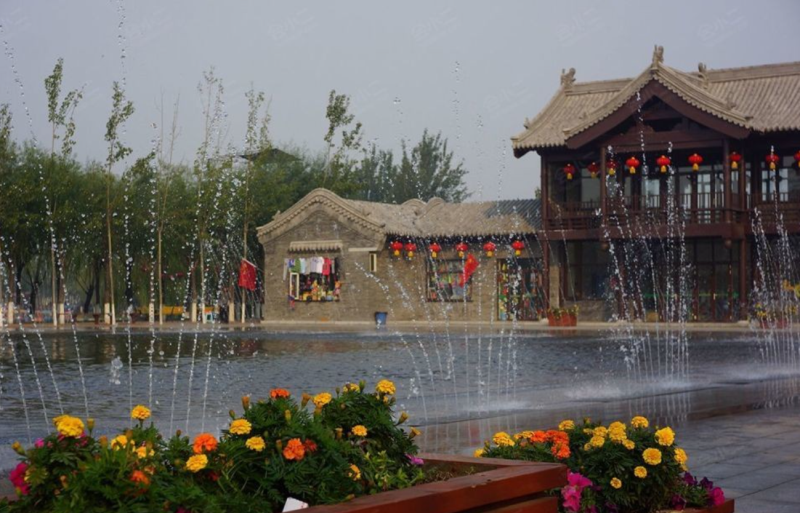
The Antique Village Area covers an area of about 100 mu. Based on traditional Yangliuqing dwellings, it restores the village appearance from the Qing Dynasty to the Republic of China period. Most of the buildings in the area are quadrangles and row courtyards with gray bricks and tiles. The streets are paved with bluestone slabs, and antique shops are set up on both sides, such as teahouses, wine workshops, and grocery stores, recreating the market life scenes of old Yangliuqing Town. Some courtyards are open to the public, and tourists can enter to visit the layout and interior furnishings of traditional dwellings and experience the residential culture of northern ancient towns. Folk opera, acrobatics, and other performances are also regularly staged in the village, enhancing tourists' sense of immersion.
Food
Yangliuqing Crispy Candy
Yangliuqing Crispy Candy is a traditional local famous snack. It can be tasted in the folk commercial street and scenic area restaurants within the manor. This crispy candy uses ingredients such as sesame, peanuts, white sugar, and malt sugar, and is made through multiple processes such as boiling sugar, mixing ingredients, pressing, and slicing. It is characterized by a golden color, crispy texture, sweet but not greasy taste, and melts in the mouth. Traditional Yangliuqing Crispy Candy has various flavors such as sesame, peanut, and walnut. It is packaged in oil paper, carrying a strong rustic flavor. It is both a delicious snack and a good souvenir.
Tie Bobo Ao Xiao Yu
Tie Bobo Ao Xiao Yu is a traditional farm dish in the Tianjin area, and the ecological restaurant in the manor presents it as a specialty dish. This dish uses fresh small river fish (such as crucian carp and topmouth culter) and cornmeal bobo as the main ingredients. The small fish are first marinated with seasonings and fried until golden, then braised with water. At the same time, cornmeal dough is stuck to the side of the pot and steamed using steam. After being taken out of the pot, the small fish is tender and flavorful, and the bottom of the bobo is crispy, absorbing the freshness of the fish soup. The combination has a unique flavor and reflects the dietary wisdom of northern farmers.
Manor Farm Banquet
The farm restaurant in the manor provides authentic farm banquets. The ingredients mostly come from surrounding farmers and vegetables grown in the manor itself, ensuring freshness and naturalness. The farm banquet has a rich variety of dishes, including braised chicken with mushrooms, big pot stew, fried river shrimp, and cold wild vegetables. The cooking methods are simple and retain the original flavor of the ingredients. Among them, braised chicken with mushrooms uses free-range chicken and wild mushrooms, slowly stewed in a clay pot for several hours, resulting in a rich soup and tender meat. Big pot stew combines various ingredients such as cabbage, vermicelli, tofu, and pork belly, stewed in one pot with a mellow aroma, and is deeply loved by tourists.
Surrounding Specialty Food: Yangliuqing Braised Pork
There are many time-honored braised pork shops in Yangliuqing Town around the manor, among which "Century-old Braised Pork Shop" is the most famous. Yangliuqing Braised Pork uses pork belly,肘子, and other parts, and uses soy sauce, rock sugar, star anise, cinnamon, and other seasonings to make a braising soup. The meat is marinated and then braised and sauced. The finished braised pork is bright red in color, soft and tender in texture, moderately salty and sweet, fatty but not greasy. It can be sliced directly for eating or enjoyed with staple food. It is a traditional food loved by local residents, and tourists can buy it to take home after visiting.
Tickets:
Tickets are 40 yuan per person.
You can search for the official public account "Tianjin Yangliuqing Manor" on WeChat to get the latest updates. As of July 30, 2025, the official WeChat public account does not provide online ticket purchasing.
Opening Hours:
Opening hours are 9:00-17:30 every day. Among them, the Folk Culture Area and Antique Village Area have the same opening hours as the scenic area; the Ecological Leisure Area is open until 18:00 in summer (May-October) and until 17:00 in winter (November-April); the Parent-Child Amusement Area is open from 9:30 to 17:00. The scenic area may extend its opening hours on statutory holidays. For example, during the Spring Festival temple fair, it is open until 20:00, subject to the scenic area announcement. From late December to early January each year, due to maintenance of some facilities, opening hours may be shortened to 9:00-16:30. Tourists can consult in advance to confirm.
Tour Routes:
Recommended one-day tour route: Arrive at the scenic area at 9:00 a.m., first go to the Folk Culture Area, visit the New Year painting exhibition hall, and experience New Year painting making, about 1.5 hours; at 10:30 go to the Antique Village Area, visit traditional dwellings, and watch folk performances, about 1 hour; at 11:30 enjoy lunch at the manor farm restaurant and rest for 1 hour; at 13:30 go to the Parent-Child Amusement Area (for families with children) or the Ecological Leisure Area (for tourists who prefer natural leisure), and play for 2 hours; at 15:30 return to the Folk Culture Area to buy souvenirs such as New Year paintings, or engage in free activities on the lawn of the Ecological Leisure Area; end the itinerary at around 17:00.
If time is sufficient, a half-day itinerary can be added. In the morning, deeply experience the fishing and cycling projects in the Ecological Leisure Area. In the afternoon, go to the Shi Family Mansion in Yangliuqing Town (about 3 kilometers from the manor) to learn more about Yangliuqing history and culture, and return to the manor in the evening to participate in nighttime activities (such as outdoor movies in summer).
Transportation:
Self-driving: Starting from the center of Tianjin, drive west along Xiqing Road, turn onto Jin-Tong Road, and go straight for about 5 kilometers to reach Yangliuqing Manor. The total distance is about 20 kilometers, and the drive takes about 30 minutes. There is a large parking lot in the scenic area, which can accommodate more than 500 motor vehicles. The parking fee is 5 yuan per hour, with a daily cap of 20 yuan.
Bus: In Tianjin, you can take buses 175, 672, and 824 and get off at Yangliuqing Manor Station, then walk about 5 minutes to the scenic area entrance. Bus 175 runs at intervals of about 15 minutes, with the first bus at 6:00 and the last bus at 21:00; bus 672 runs at intervals of about 20 minutes, with the first bus at 5:30 and the last bus at 19:00; bus 824 runs at intervals of about 30 minutes, with the first bus at 6:30 and the last bus at 18:30.
Subway bus: Take Tianjin Metro Line 2 to Caozhuang Station, exit from Exit A, and transfer to bus 763 to Yangliuqing Manor Station. The whole journey takes about 1 hour. The subway fare is 3 yuan, and the bus fare is 2 yuan.
Must-Visit Attractions:
Folk Culture Area: Covers an area of 80 mu. Its core experience is Yangliuqing woodblock New Year painting culture. Visitors can watch intangible cultural heritage inheritance demonstrations and personally make New Year paintings. It is a must-visit place to understand Yangliuqing culture, especially suitable for tourists interested in traditional culture.
Ecological Leisure Area: Covers an area of 500 mu and has an 80-mu fishing area and a 3-kilometer cycling path. The natural scenery is beautiful, suitable for relaxing and carrying out outdoor leisure activities. It is an ideal choice for family picnics and gatherings of friends.
Antique Village Area: Covers an area of 100 mu and restores the appearance of a traditional village. It allows tourists to intuitively feel the historical style and market culture of Yangliuqing ancient town. With folk performances, the experience is strong.
Travel Suggestions:
The recommended visiting time is 1 day. If you want to deeply experience folk culture and participate in more amusement projects, you can arrange 1.5 days and stay in or around the scenic area.
Around the Spring Festival each year (late January to mid-February) is the best time to visit. You can participate in the manor temple fair and New Year painting-themed activities and feel a strong traditional New Year atmosphere.
Parent-child tourists can give priority to going to the Parent-Child Amusement Area in the morning, when there are fewer people and the children's play experience is better; fishing enthusiasts are advised to go to the fishing area in the early morning or evening, when fish activity is higher.
Dining prices in the scenic area are slightly higher than outside. You can bring a small amount of snacks and drinking water. The picnic area allows portable tableware, but attention should be paid to maintaining environmental hygiene.
Participating in experience projects such as New Year painting making requires advance reservation, especially during holidays. You can reserve through the scenic area's official WeChat public account or the on-site service desk to avoid waiting in line.
Precautions:
Ancient New Year painting blocks, exhibits, and other items in the Folk Culture Area are precious cultural relics. Touching, climbing, and using flash when taking photos are prohibited. Please observe the exhibition hall regulations.
The fishing area in the Ecological Leisure Area requires the use of environmentally friendly bait according to regulations. Toxic and harmful bait is prohibited. If the caught fish need to be taken away, payment is required by weight (about 15 yuan per jin).
Facilities in the Parent-Child Amusement Area have height and age restrictions. Tourists must comply with the instructions. Children must be accompanied by adults when playing to avoid being alone.
Flammable and explosive items and pets (except guide dogs) are prohibited from being brought into the scenic area. Smoking is prohibited in non-smoking areas, and littering is prohibited.
In summer, sun protection measures should be taken and mosquito repellent should be carried; in winter, temperatures are low, and the Antique Village Area and Ecological Leisure Area are windy, so attention should be paid to keeping warm.
Roads around the scenic area may be congested during holidays. It is recommended to travel during off-peak hours. Self-driving tourists can check real-time traffic conditions in advance through navigation software.