Wawu Mountain Scenic Area is located in Hongya County, Meishan City, Sichuan Province. It is a World Natural Heritage site and a national 4A-level tourist attraction. The scenic area covers about 1.04 million mu, with the core scenic area covering about 105 square kilometers. The main peak, Wawu Mountain, has an elevation of 2,830 meters. It gets its name because its summit is flat like a tabletop. It is the largest table mountain in China and was praised by the British botanist Wilson as "a huge Noah's Ark above the clouds." The scenic area is characterized by primeval forests, rare animals and plants, waterfalls and streams, and unique geological landscapes. The forest coverage rate is over 98%, and the negative oxygen ion concentration is as high as 30,000 per cubic centimeter, making it a natural oxygen bar.
History and Culture
Wawu Mountain is one of the birthplaces of Chinese Taoism. According to research, the spread of Taoism here can be traced back to the Eastern Han Dynasty. Legend has it that Tai Shang Lao Jun once refined pills here, leaving relics such as the "Lao Jun Pill Refining Platform." During the Tang and Song Dynasties, Taoism on Wawu Mountain reached its peak, and 108 temples of various sizes were once built on the mountain. Existing sites include Guangxiang Temple and Xiang'er Temple.
Wawu Mountain is also an important Buddhist activity site and is known together with Mount Emei as the "Two Wonders of Shu." Buddhist culture blends with Taoist culture here. In addition, Wawu Mountain is a treasure house of rare animals and plants, with more than 3,600 species of plants, including 13 national first-class protected plants such as the dove tree and Chinese yew, and 19 national first-class protected animals such as the giant panda and golden monkey. It is one of the world's 25 biodiversity hotspots.
Main Attractions
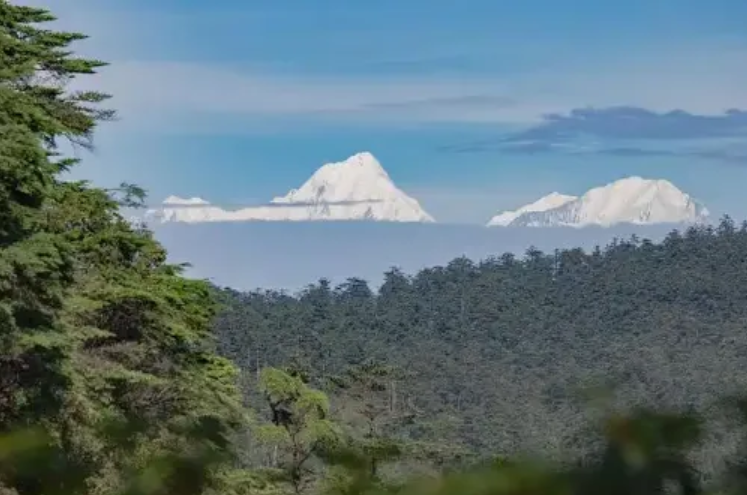
West View of Gongga
A viewing platform at an elevation of about 2,678 meters, from which Gongga Snow Mountain can be seen in the distance.
Xiang'er Villa
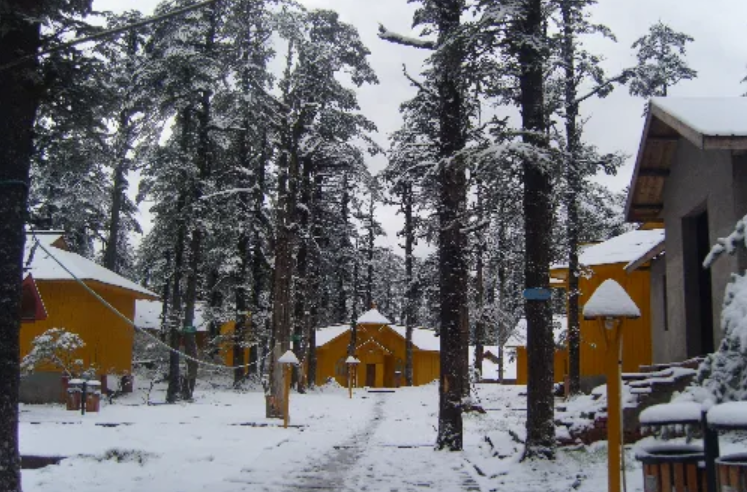
Xiang'er Villa is located in the core scenic area of Wawu Mountain at an elevation of about 2,500 meters. It is an excellent place to view the sea of clouds, sunrise, and Buddha's light. The primitive forest around the villa is dense. It is cool and pleasant in summer and covered in silver in winter. It is an important tourist gathering and rest point in the scenic area, with facilities such as a restaurant and accommodation.
Xiang'er Rock
At an elevation of about 2,686 meters. Standing at Xiang'er Rock, when sunlight shines and there is mist, a colorful halo will form. The shadow is projected inside the halo, and when the person moves, the shadow moves too. This is the meaning of "resembling you." It is an excellent place to view the sunrise, sea of clouds, Buddha's light, holy lamp, divine lamp, and the full view of Ya Nü Lake.
Lanxi Waterfall
Lanxi Waterfall is about 1,040 meters high and is one of the highest waterfalls in Asia. It consists of three tiers. The water pours down from the mountaintop with great momentum. The vegetation around the waterfall is rich, and the negative oxygen ion concentration is extremely high. Strolling there feels like being in a natural oxygen bar.
Lanxi Mouth
At an elevation of about 2,662 meters. Lanxi originates from "Mihun Dang" and has a total length of about 2,500 meters. It flows continuously all year round, forming the three-tier Lanxi Waterfall with a drop of about 1,040 meters. Lanxi Mouth is one of the attractions for viewing the "three suns" wonder and is also the best location for viewing ice curtains, ice waterfalls, and the full view of Yangxi Flying Waterfall.
Mandarin Duck Lake
Mandarin Duck Lake is at an elevation of about 2,522 meters. It is a natural lake on the top of Wawu Mountain, covering about 100 mu. The lake water is clear to the bottom and surrounded by fir forests. In summer, water birds such as mandarin ducks often inhabit the lake surface, while in winter it becomes a world of ice and snow, with charming scenery.
Rhododendron Sea of Flowers
Wawu Mountain is one of China's largest rhododendron seas of flowers, with more than 60 species of rhododendrons. From April to June each year, rhododendrons of various colors bloom successively from the foot of the mountain to the top, forming a rhododendron flowering period that lasts for several months. Among them, the "Rhododendron King" at the summit is the most famous, with a tree age of more than a thousand years and a trunk circumference of 3.5 meters.
Gufo Ping
Gufo Ping is at an elevation of about 1,900 meters. It is an important transportation hub in the Wawu Mountain Scenic Area, with a cable car station and sightseeing bus transfer point. Ancient trees tower here, and the scenery is beautiful. It is one of the starting points for hiking up the mountain and also the best place to view dove tree flowers. From April to May each year, dove tree flowers appear like white doves spreading their wings, dotting the forest.
Sanxing Waterfall
At an elevation of about 1,631 meters, with a drop of about 300 meters. It originates from an underground river in Wawu Mountain and flows continuously all year round, being especially spectacular in summer.
Waterfall Viewing Pavilion
At an elevation of about 1,700 meters. It is an excellent place to view Sanxing Waterfall and Dafa Waterfall. Dafa Waterfall and Sanxing Waterfall originate from Dafa Cave and Sanxing Cave, respectively, nearly 300 meters apart, with a drop of about 100 meters.
Tour Routes:
Recommended one-day tour route: Visitor Center → take the sightseeing bus to Gufo Ping → take the cable car to Xiang'er Villa → tour the attractions around Xiang'er Villa (sea of clouds, sunrise, Buddha's light viewing platform) → hike to Lanxi Waterfall → return to Xiang'er Villa → take the cable car to Gufo Ping → take the sightseeing bus back to the Visitor Center. This route covers the main natural landscapes of the scenic area and takes about 5-6 hours in total.
Recommended two-day tour route: Day 1: Visitor Center → sightseeing bus to Gufo Ping → cable car to Xiang'er Villa → tour Xiang'er Villa and Mandarin Duck Lake → hike to Lanxi Waterfall → return to Xiang'er Villa for accommodation. Day 2: Xiang'er Villa → hike to Rhododendron Sea of Flowers → take the cable car to Gufo Ping → sightseeing bus to Ya Nü Lake → tour Ya Nü Lake → return to the Visitor Center. This route provides an in-depth experience of the scenic area's natural and cultural landscapes and takes about 2 days in total.
Travel Suggestions:
Wear slip-resistant hiking shoes. The scenic area mostly consists of stone-paved paths and boardwalks, and some sections are steep.
Bring clothing according to the season. In summer, sun protection is needed; in winter, cold protection is needed. The temperature at the summit is 8-10°C lower than at the foot of the mountain.
Bring enough water and snacks. There are few dining spots in the scenic area, and prices are relatively high.
Check the weather forecast in advance to avoid climbing in severe weather such as heavy rain or strong winds.
Those with poor physical strength are advised to take the cable car to save energy so they can visit more attractions.
Summer is the best season for viewing waterfalls and rhododendrons, while winter is the best season for skiing and viewing ice and snow landscapes.
Precautions:
Smoking and open flames are prohibited in the scenic area. Pay attention to forest fire prevention.
Protect the environment. Do not litter or pick flowers and plants at will.
Follow the regulations of the scenic area. Do not enter unopened areas without authorization to avoid danger.
There are wild monkeys in the scenic area. Do not feed them at will to avoid being scratched.
When taking sightseeing buses and cable cars, follow order and pay attention to safety.
This is a high-altitude area. Tourists with high blood pressure, heart disease, and other diseases should climb with caution.
In winter, some sections have ice and snow. Ice claws need to be rented, and attention should be paid to slip prevention.
Transportation:
Self-driving: Depart from Chengdu, take the Chengya Expressway and Yaye Expressway to Hongya County, then drive about 50 kilometers along the Wawu Mountain Tourist Road to reach the scenic area. The whole journey takes about 3 hours.
Passenger transport: Chengdu Xinnanmen Bus Station and Chadianzi Bus Station have direct buses to Wawu Mountain Scenic Area, 1-2 buses per day, with a journey of about 3.5 hours.
High-speed rail: Take the high-speed rail from Chengdu to Meishan East Station, then transfer to a bus to Hongya County, and then transfer to a bus to Wawu Mountain. The whole journey takes about 4 hours.
Internal transportation in the scenic area: Traffic control is implemented in the scenic area. Tourists need to take sightseeing buses and cable cars at the Visitor Center to enter the core scenic area.
Opening Hours:
Open all year round. Opening hours are 08:00-17:00 (peak season: March 1-November 30) and 08:30-16:30 (off season: December 1-February 28 of the following year). Ticket sales in the scenic area end 1 hour before closing. Opening hours may be adjusted under special weather or holiday conditions. It is recommended to check through official channels before traveling.
Tickets:
Free admission.
Jinhuaqiao Cable Car round trip: 88 yuan/person.
Sightseeing bus round trip Gufo Ping Cable Car round trip: 166 yuan/person.
Sightseeing bus round trip: 68 yuan/person.
Jinhuaqiao Cable Car round trip Gufo Ping Cable Car round trip: 186 yuan/person.