The Qianling Scenic Area is located on Liangshan Mountain, about 6 kilometers north of Qian County, Xianyang City, Shaanxi Province, China. It is a National 5A Tourist Attraction, a National Archaeological Site Park, and a Shaanxi Provincial Civilized Tourism Demonstration Unit. The scenic area is distinctive because it is the joint burial mausoleum of Emperor Gaozong Li Zhi, the third emperor of the Tang Dynasty, and Wu Zetian, the only female emperor in Chinese history. It is the only mausoleum in Chinese history where two emperors are buried together and is praised as "the crown of all imperial mausoleums through the ages." Qianling originally had two layers of walls, an inner wall and an outer wall, with four gates: Qinglong, Baihu, Zhuque, and Xuanwu, covering an area of 80 li. The inner city had a total area of 2.4 million square meters, and the outer city "had a circumference of 80 li." The Qianling mausoleum park covers an area of 6.47 square kilometers.
Historical Culture
The site of Qianling was determined by Wu Zetian. In 683 AD, after Emperor Gaozong died of illness, construction began on the underground palace and other main buildings. In 684 AD, Emperor Gaozong was buried at Qianling. In 706 AD, Wu Zetian was buried together with her husband Li Zhi in the Xuan Palace of Qianling. The name Qianling comes from Liangshan being located in the "Qian position" in the Eight Trigrams, meaning "Heavenly Mausoleum." During the Tang Dynasty, Qianling underwent multiple repairs. Later, due to the "An Lushan Rebellion" and other events, the above-ground buildings were severely damaged. Emperor Taizong of Jin once ordered repairs to Qianling and had the "Record of the Great Jin Imperial Younger Brother and Commander-in-Chief Lord's Journey" inscribed in the center of the front side of the Wordless Stele. During the Song, Yuan, Ming, and Qing dynasties, Qianling had management institutions. During the Republic of China period, the Qianling area was unmanaged. In 1960, the Qianling Scenic Area was established. From 1960 to 1972, archaeologists excavated and cleared 5 companion tombs at Qianling. In 2006, Qianling was included in the Shaanxi section of China's list for the joint World Heritage application of the "Silk Road" by the five Central Asian countries. In 2022, it was rated as a National Archaeological Site Park. In 2024, it officially became a National 5A Tourist Attraction.
Main Attractions
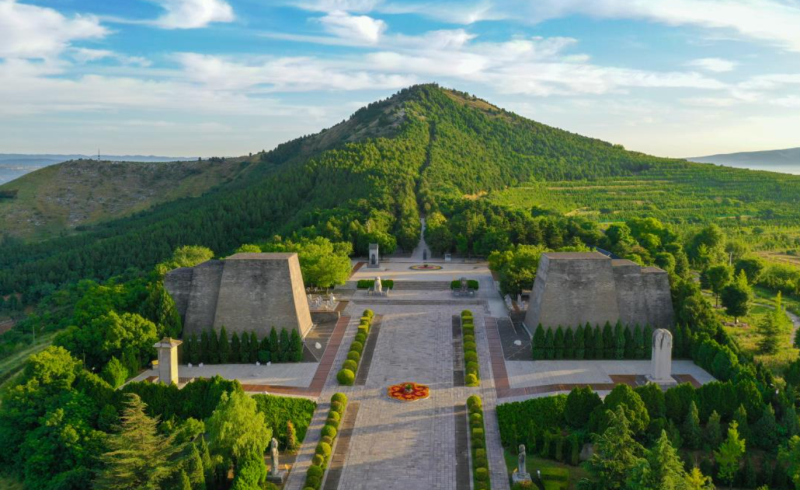
Qianling Main Mausoleum
It is the joint burial mausoleum of Emperor Gaozong Li Zhi and Wu Zetian. It adopts the burial system of "building the mausoleum according to the mountain." The main peak of Liangshan, where the underground palace is located, has an elevation of 1,047.9 meters and symbolizes that imperial power is above all else. The tomb passage is entirely filled with stone blocks. The stone blocks are fixed with iron bolts and lead plates, and the seams are filled with molten lead-tin. There are 39 layers in total. There are no robbers' holes around the mausoleum. It is currently the only Tang Dynasty imperial mausoleum that has not been robbed.
Wordless Stele
Located on the east side of the spirit road outside the Zhuque Gate of the inner city, it is one of the most famous stone carvings at Qianling. The stele body is carved from a single complete huge stone. It is 7.53 meters high, 2.1 meters wide, and 1.49 meters thick. The top of the stele is carved with 8 intertwined chi dragons, and each side of the stele is carved with a soaring giant dragon. No characters are inscribed on the stele. There are various explanations for why it is wordless, adding to its mysterious color.
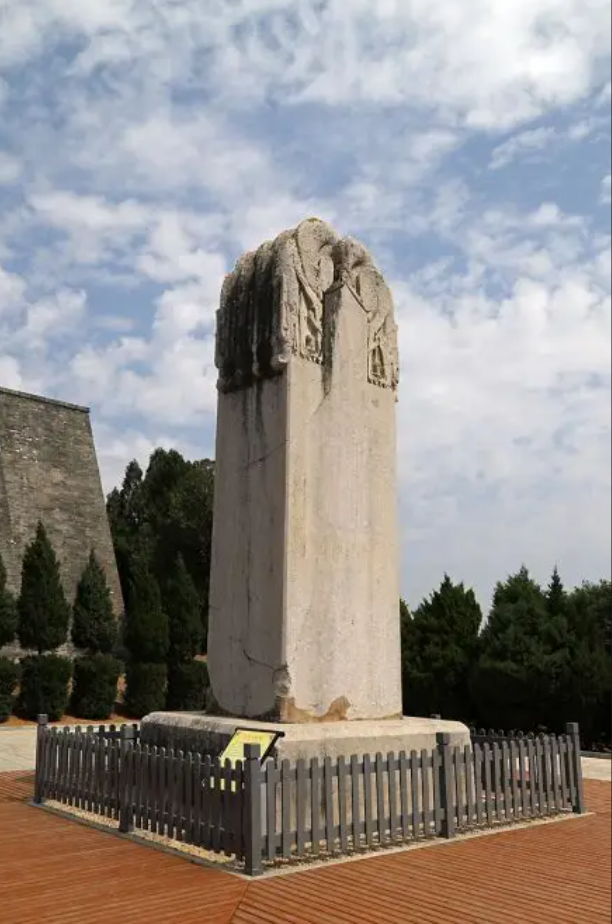
Stele of the Sage's Record
Located on the west side of the spirit road outside the Zhuque Gate of the inner city, it is the stele erected by Wu Zetian for Emperor Gaozong Li Zhi. The stele body is composed of 7 huge stones, so it is also called the "Seven-Section Stele." It is 7.53 meters high, 1.86 meters wide, and 1.59 meters thick. The inscription was personally written by Wu Zetian, and its content mainly praises Emperor Gaozong's civil achievements and military exploits.
Sixty-One Foreign Envoy Statues
Located on both sides of the spirit road outside the Zhuque Gate of the inner city, there are currently 61 stone human figures. They are stone statues of leaders of Chinese ethnic minorities and envoys from friendly countries who attended Emperor Gaozong's funeral. Most of these stone figures wear tight-sleeved robes, belts around their waists, leather boots, and have their hands clasped in front, with respectful expressions.
Tomb of Princess Yongtai
It is one of the companion tombs of Qianling, located about 2.5 kilometers southeast of Qianling. The tomb passage is 87.5 meters long, and the tomb chamber area is about 190 square meters. A large number of cultural relics were unearthed from the tomb, including Tang Sancai and murals. Among them, the tomb chamber mural "Palace Maids" is particularly exquisite, showing scenes of Tang Dynasty court life.
Tomb of Prince Zhanghuai
Located about 3 kilometers southeast of Qianling, it is the tomb of Li Xian, the second son of Emperor Gaozong Li Zhi and Wu Zetian. The tomb passage is 71 meters long, and the tomb chamber area is about 200 square meters. The murals in the tomb are rich in subject matter, including "Polo Game" and "Envoys," and have high artistic and historical value.
Tomb of Prince Yide
Located about 2 kilometers southeast of Qianling, it is the tomb of Li Chongrun, the eldest son of Emperor Zhongzong Li Xian. The tomb passage is 100.8 meters long, and the tomb chamber area is about 280 square meters. It is the largest among excavated Tang Dynasty tombs. The murals in the tomb are bright in color and relatively well preserved, such as "Ceremonial Guard," vividly reflecting Tang Dynasty court etiquette and life.
Food
Qianzhou Doufunao
It is one of the "Four Treasures of Qianzhou." It is made by grinding high-quality soybeans into soybean milk and adding cooked gypsum water to coagulate it. It is white and clean, fresh, tender, and soft. In the bowl, it is smooth, delicate, tender, and refreshing. With chili oil and other seasonings added, it is spicy and delicious. At the Qianling Visitor Center, visitors can taste it for free with a scenic area ticket.
Qianzhou Guokui
It is a traditional pasta food in Qian County. It is made of wheat flour in the shape of a guokui. Its surface is mottled yellow, and the cut surface is sandy white. It is crisp and palatable, can be stored for a long time, and is convenient to carry.
Jianglazi
Made from high-quality chili peppers through multiple processes such as pickling and fermentation, it is spicy but not dry, with a rich aroma. It can be eaten with steamed buns or mixed with noodles and is a common side dish on local dining tables.
Sour Soup Noodles
The noodles are thin and long, the diced toppings are fresh and fragrant, and the soup is sour and spicy, chewy and refreshing. The diced toppings and soup base are key to sour soup noodles. The diced toppings are generally made by stir-frying diced pork and other ingredients, while the soup base is prepared with vinegar, soy sauce, chili oil, and other seasonings, giving it a rich flavor.
Tickets:
Ticket price: 100 yuan per person.
You can search for the official public account "Shaanxi Qianling Scenic Area" on WeChat to get the latest updates or buy tickets online.
Opening Hours:
Peak season (March-November): 8:00-18:00; off-season (December-February): 8:30-17:30.
Tour Route:
Visitors can start from the first gate of Qianling and step onto the stone stairway of 537 steps. After finishing the steps, they can continue along the Spirit Road and successively visit stone carvings such as the huabiao, winged horses, ostriches, stone horses, Wengzhong, the Wordless Stele, the Stele of the Sage's Record, and the Sixty-One Foreign Envoy Statues. Then they can go to the Qianling Main Mausoleum. After that, they may choose to visit companion tombs such as the Tomb of Princess Yongtai, the Tomb of Prince Zhanghuai, and the Tomb of Prince Yide.
Transportation:
Self-driving: Starting from Xi'an, take the Fuyin Expressway and exit at Qian County. Follow the signs to the Qianling Scenic Area.
Public bus: In Xianyang city, you can take a bus to Qian County. After arriving in Qian County, transfer to a local tourist line or take a taxi to the Qianling Scenic Area.
Must-Visit Attractions:
Qianling Main Mausoleum: As the joint burial mausoleum of Emperor Gaozong Li Zhi and Wu Zetian, it is the core attraction of the scenic area. Its magnificent mountain terrain, unique "building the mausoleum according to the mountain" burial system, and mysterious status as an unrobbed tomb attract many tourists.
Wordless Stele: Tall and majestic in shape and exquisitely carved, its wordless mystery inspires endless imagination. It is one of the landmark attractions of Qianling.
Tomb of Princess Yongtai: The murals and cultural relics in the tomb are exquisite, especially "Palace Maids," which vividly shows the life of Tang Dynasty court women and has high artistic value.
Travel Suggestions:
It is recommended to spend half a day to a full day touring in order to fully appreciate the scenic spots and cultural relics in the scenic area.
You may hire a scenic area guide to better understand the history and culture of Qianling and the stories behind the attractions.
Wear comfortable shoes when visiting, because there is a certain amount of walking in the scenic area.
Notes:
Observe the opening hours of the scenic area and do not remain in the scenic area after closing.
Protect the scenic area environment. Do not litter or spit.
Do not touch or climb on cultural relics and historic sites to avoid damage.
When taking photos in the scenic area, follow the relevant regulations. Some places may not allow flash.