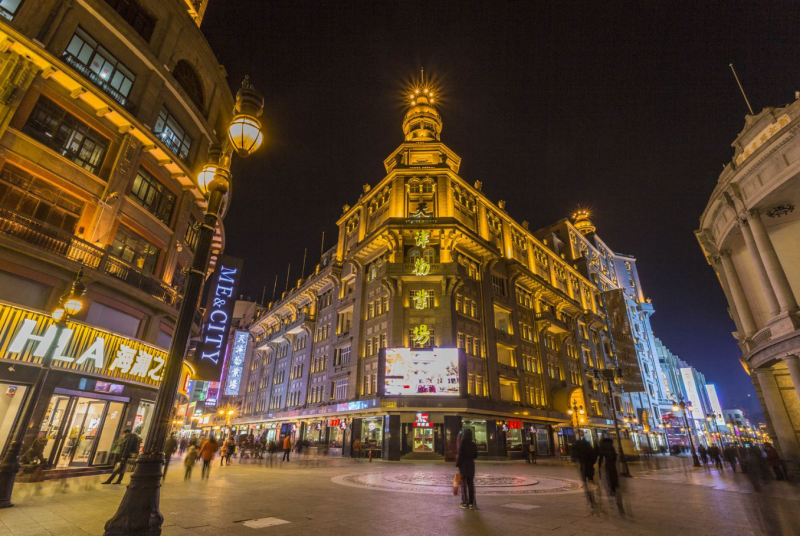
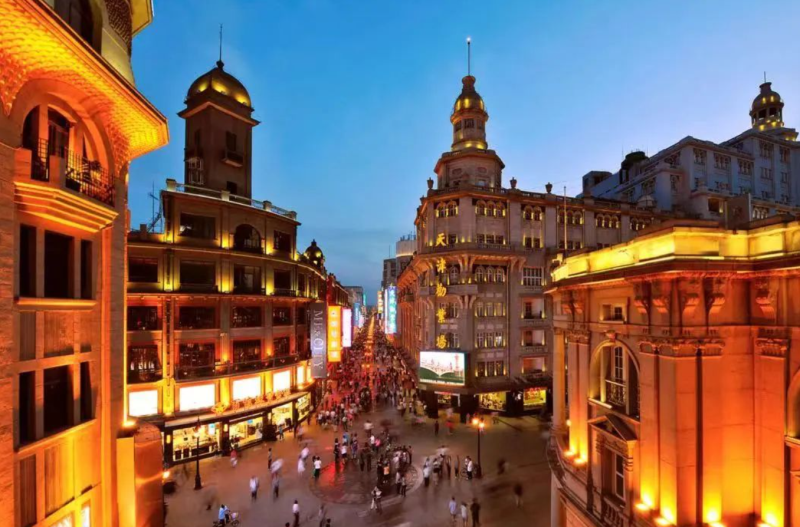
Jin Street is located in Heping District, Tianjin. It is one of the most representative commercial pedestrian streets in Tianjin, a National 4A-Level Tourist Attraction, and a Tianjin Municipal Commercial Demonstration Block, enjoying the reputation of "Tianjin's First Street." The scenic area is characterized by its integration of century-old European-style architecture with a modern commercial atmosphere. It not only preserves the market culture and heritage of old Tianjin, but also showcases the bustling commercial vitality of a modern city. The block contains numerous historic buildings, many of which were built in the early 20th century. Architectural styles include Gothic and Baroque, such as the Quanyechang Building, which covers an area of about 2,100 square meters and has a floor area of 17,300 square meters. Heping Road Jin Street is about 1,200 meters long and covers a total area of about 180,000 square meters. Its average daily foot traffic can reach more than 100,000 people, making it one of the core areas for shopping, tourism, and leisure in Tianjin.
History and Culture
The history of Heping Road Jin Street can be traced back to the early 20th century. During the Guangxu period of the Qing Dynasty, a commercial street market gradually formed here. Because of its proximity to the Haihe River wharf, it became one of the earliest commercial gathering places in Tianjin. In 1905, the eastern section of Heping Road (then called "Consul General Du Road") began to be built, and the western section (called "Xu Street") also gradually developed afterward. By the 1920s and 1930s, this area had become one of the most prosperous commercial districts in North China, gathering numerous domestic and foreign merchants.
Through historical changes, Jin Street witnessed Tianjin's modern development. Many time-honored shops were born here and continue to this day, such as the Zhongyuan Company (now Tianjin Department Store), founded in 1928, and Quanyechang, which opened in 1931. These commercial landmarks are not only witnesses to the history of Jin Street, but also carry the collective memory of Tianjin people. In 2000, Heping Road underwent renovation and upgrading and was officially named "Jin Street," becoming a comprehensive commercial district integrating shopping, dining, culture, and tourism.
Main Attractions
Tianjin Quanyechang
Tianjin Quanyechang is the landmark building of Jin Street. It was built in 1928 and invested in by national capitalist Gao Xingqiao. The building has a reinforced concrete structure, with a main body of 7 floors and 8 floors in some parts, and a total height of about 40 meters. Its floor area is 17,300 square meters. The architectural style combines Gothic and Baroque elements, and a clock tower is set on the roof, with an exquisite design. Quanyechang was once one of the most high-end shopping malls in Tianjin. Its interior layout is ingenious and includes multiple business formats such as department stores, dining, and entertainment. It is still in operation today and is a must-visit place for tourists to experience Tianjin's commercial history.
Tianjin Department Store
Tianjin Department Store was formerly Zhongyuan Company. It was founded in 1928 and is located at the intersection of Heping Road and Binjiang Road. The building covers an area of about 3,000 square meters and has a floor area of about 20,000 square meters. It is a modern eclectic-style building. The building was once the largest department store in Tianjin. It was rebuilt in the 1980s and retained the historical features of the original building. Today, it is still an important shopping place in Jin Street, selling various department store goods, and is also one of the landmark buildings of Tianjin's commercial development.
Jin Street Sculpture Group
In the middle and eastern sections of Jin Street, there are several groups of sculptures reflecting Tianjin's history, culture, and market life, such as "The Cobbler," "The Tanghulu Vendor," and "The Rickshaw Puller." These sculptures are all made of bronze and range in height from 1.5 to 2 meters. They vividly recreate scenes of old Tianjin life, add a strong cultural atmosphere to the block, and have also become popular spots for tourists to take photos.
Food
Goubuli Baozi (Jin Street Branch)
Goubuli Baozi is one of the most representative snacks in Tianjin. Its Jin Street branch is located in the middle section of Heping Road and was founded in 1858. Its baozi is famous for its thin wrapper, generous filling, neat pleats (each baozi has no fewer than 18 pleats), and delicious taste. It is made with high-quality pork and flour as raw materials, combined with unique seasonings. In addition to traditional pork-filled baozi, the store also offers multiple flavors such as three-fresh filling and vegetarian filling. The price per steamer ranges from 30 to 60 yuan. It is one of the top choices for tourists to taste Tianjin's specialty food.
Shibajie Mahua (Jin Street Flagship Store)
Shibajie Mahua began in 1927. Its Jin Street flagship store is one of its important stores. This mahua is famous for being fragrant, crisp, flaky, and sweet. It is made from refined flour, sesame, rock sugar, walnut kernels, and other ingredients. Each mahua is about 30-40 centimeters long and weighs about 100-200 grams. It is golden in color and crisp in texture. In addition to the traditional sweet flavor, there are also flavors such as salt and pepper and chocolate. The price varies from 20 to 100 yuan per jin depending on weight and flavor. It is both a specialty food and a good gift.
Recommended Nearby Food
There are also many specialty food stores within a 10-minute walk around Jin Street, such as the Ear-Hole Fried Cake Store on Binjiang Road, whose fried cakes have a crisp outer layer and soft, glutinous filling, priced at about 5 yuan each; and Hongqi Restaurant (Heping Road Branch), which focuses on Tianjin cuisine. Dishes such as Zengbeng Carp and Tiebobo Stewed Small Fish are deeply loved, with an average consumption of about 80-120 yuan per person, providing tourists with rich dining choices.
Tickets:
Free and open to the public.
Opening Hours:
Open 24 hours a day, but the business hours of shops and dining places in the block vary. Generally speaking, shops are mostly open from 10:00 to 22:00, and dining places are mostly open from 9:00 to 23:00. Some time-honored shops may open half an hour or one hour earlier. The actual business hours of each merchant shall prevail.
Suggested Tour Route:
Recommended tour route: Start from the eastern end of Jin Street (near Jinwan Plaza). First visit Tianjin Quanyechang to experience the charm of the historic building, which takes about 1 hour; then walk west along Heping Road, passing the Jin Street Sculpture Group, enjoying and taking photos, which takes about 30 minutes; next arrive at Tianjin Department Store to experience the integration of modern commerce and historic architecture, which takes about 1 hour; at noon, you can dine at Goubuli Baozi or nearby restaurants and rest for about 1.5 hours; in the afternoon, continue touring westward, browse the specialty shops and time-honored brands along the way, such as the Shibajie Mahua store, and buy specialty souvenirs, which takes about 2 hours; in the evening, you can go to the intersection of Binjiang Road at the western end of Jin Street to experience the atmosphere of the block under night lights. The entire tour takes about 6-8 hours, and the duration of each part can be adjusted according to personal interests.
Transportation:
Metro: You can take Tianjin Metro Line 3 to Heping Road Station and walk about 300 meters from Exit A to reach the eastern section of Jin Street; or take Metro Line 1 to Yingkoudao Station and walk about 800 meters to reach the western section of Jin Street.
Bus: Multiple bus lines can reach the area, such as 1, 20, 37, 45, 609, 610, 611, 619, etc. Get off at Heping Road Station or Quanyechang Station and walk 50-200 meters to enter Jin Street.
Taxi: Taking a taxi within Tianjin to Jin Street takes about 5 kilometers from Tianjin Station, with a travel time of 15-20 minutes and a fare of about 15-20 yuan; from Tianjin South Station it is about 15 kilometers, with a travel time of 30-40 minutes and a fare of about 30-40 yuan.
Self-driving: There are multiple parking lots around Jin Street, such as the Quanyechang Underground Parking Lot and the Department Store Parking Lot. The parking fee is about 8-10 yuan per hour. Due to the large flow of people in the block, self-driving is not recommended unless necessary.
Must-Visit Attractions:
Tianjin Quanyechang: The landmark building of Jin Street, integrating history and commerce. Its total building area is 17,300 square meters, with a 7-floor main structure and an exquisite clock tower. Visitors can freely enter and experience the commercial prosperity of Tianjin in the early 20th century.
Jin Street Sculpture Group: Multiple groups of bronze sculptures show old Tianjin market life. They are 1.5-2 meters tall, vivid, and an excellent place to learn about Tianjin folk culture. They are suitable for taking photos.
Tianjin Department Store: A long-established department store with a building area of about 20,000 square meters and a modern eclectic architectural style. Visitors can both shop and appreciate historic architecture, experiencing the commercial changes from ancient times to the present.
Travel Suggestions:
Suggested visit duration: Half a day to one day. You can arrange the proportion of time for shopping, food, and sightseeing according to personal interests.
Best season to visit: Spring and autumn (April-May, September-October). The climate is suitable, and the temperature is moderate, making it suitable for long walks.
Shopping suggestions: There are many time-honored shops in the block. When buying specialty foods such as mahua and baozi, it is recommended to choose regular stores and check the production date and shelf life.
Dining suggestions: Try to avoid peak dining hours (12:00-13:30, 18:00-19:30). You can check the queue situation of popular restaurants on your phone in advance to save time.
Photography suggestions: The Quanyechang clock tower, the sculpture group, and the exterior of the Department Store are popular photo spots. It is recommended to shoot before 10 a.m. or in the evening, when the light is more suitable.
Notes:
The block has a large flow of people, especially on holidays. Please take care of personal belongings and avoid exposing valuables in crowded places.
The floors inside some historic buildings may be slippery. Pay attention to walking safety during visits. Comfortable flat shoes are more suitable for long walks.
Observe the regulations of merchants in the block. Do not smoke in no-smoking areas, and take care of public facilities and sculptures and other landscapes.
When tasting food, pay attention to choosing restaurants with good hygiene conditions. Avoid overeating to prevent gastrointestinal discomfort.
If you need directions or help, you can go to the tourist service center in the block (located 50 meters west of Quanyechang), where staff provide consultation services.