The Mangdang Mountain Han Culture Tourism Scenic Area is located in Mangshan Town, Yongcheng City, Shangqiu City, Henan Province, and is a national 5A-level tourist attraction. The scenic area features Han culture as its theme, covering an area of about 14 square kilometers. It is home to numerous historical and cultural relics, including the Western Han Liang Kingdom royal tomb complex and the site where Emperor Gaozu of Han slew the white snake. Among them, the tomb chamber of King Xiao of Liang covers an area of more than 700 square meters and is currently the largest stone-chamber tomb discovered in China. The scenic area features rolling hills and dense vegetation, integrating historical culture and natural scenery.
Historical Culture
Mangdang Mountain has a long history and profound cultural heritage. This is the place where Liu Bang, Emperor Gaozu of Han, slew the white snake and launched an uprising, opening the prelude to the Western Han Dynasty. During the Western Han period, Mangdang Mountain became the tomb area for the feudal lords of the Liang Kingdom, burying eight generations and nine kings of Liang, including King Xiao of Liang Liu Wu, as well as their queens and ministers, forming a grand underground palace complex.
The Tomb of King Xiao of Liang is the most representative historical relic in the scenic area. Its grand scale and complex structure have earned it the title of "The First Stone-Chamber Tomb Under Heaven." Built against the mountain, the tomb consists of a tomb passage, corridor, main chamber, surrounding gallery, and numerous side chambers, demonstrating the superb architectural skills and elaborate burial customs of the Western Han period.
In addition, the scenic area also contains historical relics such as the Tomb of Chen Sheng and the place where Confucius sheltered from the rain, recording important historical events from the Spring and Autumn and Warring States periods to the Qin and Han dynasties. These are precious physical materials for studying ancient Chinese history and culture.
Main Attractions
Tomb of King Xiao of Liang
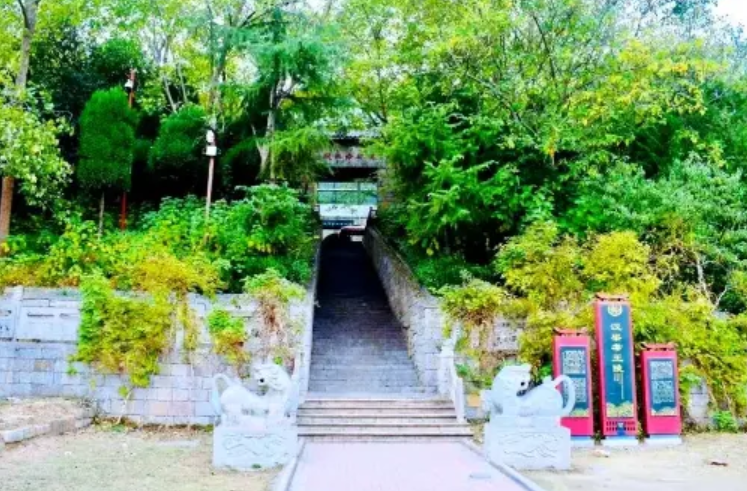
The Tomb of King Xiao of Liang is the tomb of Liu Wu, the second-generation king of the Liang Kingdom of the Western Han Dynasty, built in 144 BC. The tomb is 96 meters long, 32 meters wide at its widest point, and has a total area of more than 700 square meters. It consists of a tomb passage, chariot and horse chambers, a corridor, a main chamber, a surrounding gallery, and 34 side chambers. The tomb was constructed using the method of "carving into the mountain for burial," entirely excavated within the mountain body, and is the largest stone-chamber tomb discovered in China to date.
Site of Emperor Gaozu of Han Slaying the Snake
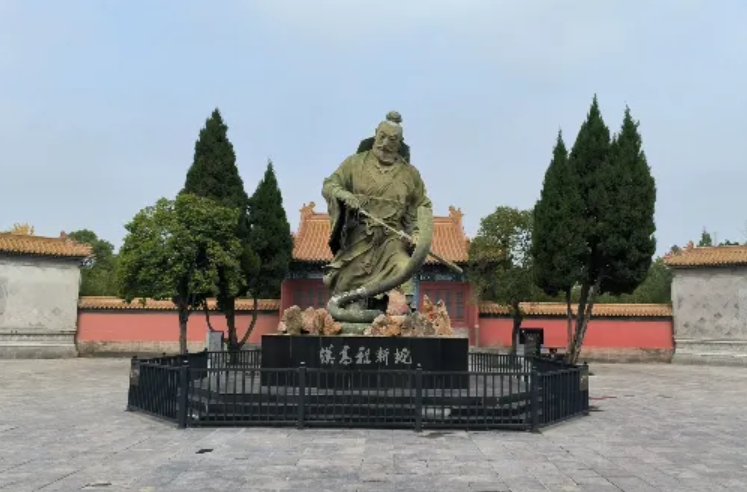
According to the Records of the Grand Historian, Liu Bang, Emperor Gaozu of Han, once slew a white snake here and launched an uprising while serving as a pavilion chief. The scenic area has a snake-slaying stele and a sculpture group reproducing this historical scene. The snake-slaying stele was erected during the Ming Dynasty, standing 2.39 meters tall and 1.1 meters wide, with inscriptions recording the story of Liu Bang's snake-slaying uprising.
Tomb of King Gong of Liang
The Tomb of King Gong of Liang is the tomb of Liu Mai, the third-generation king of the Liang Kingdom of the Western Han Dynasty, second only to the Tomb of King Xiao of Liang in scale. The precious "Four Deities and Cloud Qi" mural was unearthed from the tomb. It is one of the earliest tomb murals discovered in China and possesses extremely high artistic and historical value.
Fuzi Cliff Scenic Area
It is said that Confucius once sheltered from the rain here while traveling through the states, hence the name Fuzi Cliff. The scenic area contains a statue of Confucius, a book-drying terrace, and other attractions, as well as inscriptions by literati of successive dynasties on the cliff face. The environment here is quiet and serene, making it a great place to experience Confucian culture.
Chen Sheng Garden
Built to commemorate Chen Sheng, the leader of the peasant uprising at the end of the Qin Dynasty. The garden contains a statue of Chen Sheng, reliefs depicting the uprising scene, and other exhibits, showcasing the history of the first large-scale peasant uprising in Chinese history.
Dahan Heroic Scenic Area
The highest point of the scenic area, featuring a 39.9-meter-tall bronze statue of Liu Bang, from which visitors can overlook the entire Mangdang Mountain scenic area. The interior of the statue houses an exhibition hall displaying Han Dynasty history and culture.
Recommended Tour Route:
Recommended one-day tour route: In the morning, visit the Tomb of King Xiao of Liang and the Tomb of King Gong of Liang to learn about Han Dynasty tomb culture; have lunch within the scenic area at noon; in the afternoon, visit the Site of Emperor Gaozu of Han Slaying the Snake, Fuzi Cliff, and Chen Sheng Garden to experience historical stories; finally, ascend to the Dahan Heroic Scenic Area to overlook the panoramic view. Visitors with sufficient time can arrange a two-day in-depth tour, with the second day spent visiting museums and surrounding attractions.
Tour Suggestions:
It is recommended to wear comfortable athletic shoes, as there is a lot of walking within the scenic area.
Spring and autumn are the best seasons for visiting, with pleasant weather.
Hiring a tour guide is recommended for a deeper understanding of the historical and cultural background.
The scenic area has rest areas and dining spots, allowing for reasonable itinerary planning.
Allow at least 4-5 hours for visiting; for an in-depth tour, 1-2 days are recommended.
Precautions:
Please do not make loud noises in the tomb area and maintain a solemn atmosphere.
Do not touch cultural relics or murals; protect historical heritage.
Mountain roads are slippery; pay attention to safety when visiting on rainy days.
Pay attention to sun protection in summer and keep warm in winter.
Smoking is prohibited in the scenic area; please observe fire prevention regulations.
Keep personal belongings safe, especially in crowded places.
Transportation:
By car: Depart from the urban area of Shangqiu, drive east along the Lianhuo Expressway for about 60 kilometers, exit at Mangshan Exit, and follow the signs for about 10 minutes to arrive.
By bus: Take the Shangqiu-to-Yongcheng bus at the Shangqiu Central Bus Station, get off at Mangshan Town, and transfer to the scenic area shuttle bus.
By high-speed rail: Take the high-speed rail to Yongcheng North Station, then transfer to a bus or taxi to the scenic area (about 20 kilometers).
Opening Hours:
The scenic area is open year-round, with daily opening hours of 8:00-17:30 (peak season) and 8:30-17:00 (off-season). Ticket sales and entry stop 30 minutes before closing time at each attraction.
Tickets:
Tickets are 90 yuan per person.