The Jinshanling Great Wall Scenic Area is located in Bakeshiying Town, Luanping County, Chengde City, Hebei Province. It is a national 5A-level tourist attraction, a World Cultural Heritage site, and one of the best-preserved sections of the Ming Great Wall in China. The scenic area borders the Simatai Great Wall to the east and the Gubeikou Great Wall to the west. It lies in the eastern section of the Yanshan Mountains, at an altitude of 400 to 900 meters, with a total area of about 30 square kilometers. The main line of the Great Wall is about 10.5 kilometers long. Along it are 158 watchtowers, 67 battle platforms, and 2 beacon towers, giving it the highest building density of any section of the Ming Great Wall.
Jinshanling Great Wall is known for being “steep, dense, unusual, ingenious, and complete.” Its watchtowers come in various forms, including brick-and-wood and stone-and-wood structures. Some watchtowers still preserve Ming Dynasty murals and inscribed stone tablets. The scenic area has distinct scenery in each season: apricot blossoms cover the hills in spring, dense shade blocks the sun in summer, forests are dyed in layered colors in autumn, and everything is covered in silver in winter. It is a paradise for photographers and important physical material for studying the Ming Dynasty military defense system.
History and Culture
The Jinshanling Great Wall was first built in the first year of the Hongwu reign of the Ming Dynasty (1368), under the supervision of the general Xu Da. It was later expanded by Qi Jiguang and Tan Lun, successive commanders-in-chief of the Jizhen Garrison, and was basically completed in the fifth year of the Longqing reign (1571). Relying on the natural barrier of the Yanshan Mountains, the Great Wall formed a defense system that “adapted to the terrain and used natural hazards to create fortifications.” It is one of the most representative military projects of the Ming Great Wall.
Historically, the Jinshanling Great Wall was an important barrier protecting the capital region and repeatedly resisted invasions by northern nomadic peoples. After the Qing Dynasty, the Great Wall gradually lost its military function, but because of its exquisite architecture and good preservation, it became an important vehicle for studying Ming Dynasty military affairs, architecture, and culture. In 1987, the Jinshanling Great Wall was inscribed on the World Cultural Heritage List as an important part of the Great Wall of China, and in 2007 it was rated a national 5A-level tourist attraction.
Main Attractions
Barrier Walls
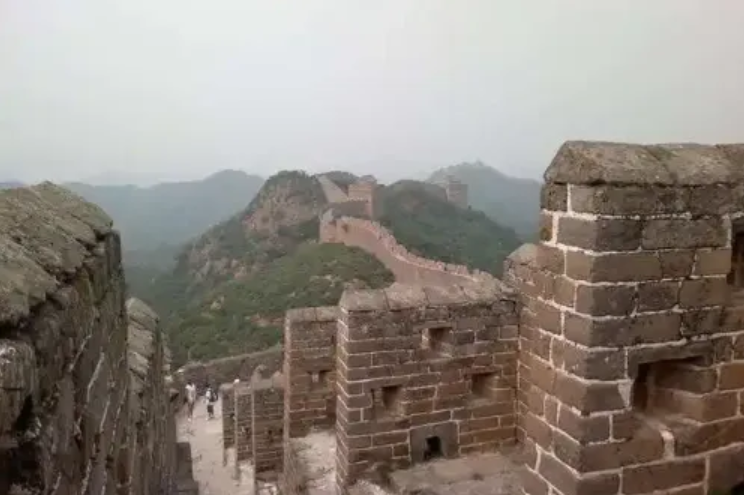
Barrier walls are a unique structure of the Jinshanling Great Wall. More than 10 of them are distributed along a roughly 500-meter section of the wall. They are 2 to 3 meters high and 1.5 to 2 meters wide, with observation holes and shooting holes in the walls. The purpose of the barrier walls was that if the enemy broke through the outer wall, the defenders could rely on them to resist step by step. They are an innovative design in the Ming Dynasty Great Wall defense system.
Inscribed-Brick Watchtowers
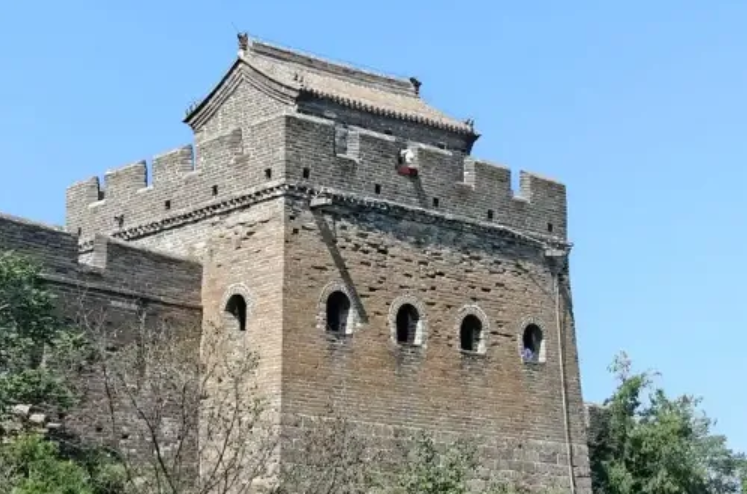
Inscribed-brick watchtowers are named for the bricks inscribed with characters used in their walls. They are mainly distributed in the eastern section of the scenic area, with the “General’s Tower” as a typical example. These inscribed bricks bear words such as “Made by the Shandong Left Battalion in the fifth year of Wanli” and “Made by the Right Section of the Zhenwu Battalion in the fifth year of Wanli,” recording information about the construction troops of that time. They are valuable physical materials for studying the construction history of the Ming Great Wall.
Simatai Reservoir
Simatai Reservoir is located at the foot of the eastern section of the Jinshanling Great Wall. It is a small reservoir with a capacity of about 150,000 cubic meters. The water is clear, and the surrounding green mountains and the Great Wall form a charming contrast, creating the unique scene of “the Great Wall winding around emerald water.” Visitors can enjoy the reflection of the Great Wall by the reservoir or take a boat tour (30 yuan per person).
Dajinshan Tower and Xiaojinshan Tower
The Dajinshan Tower and Xiaojinshan Tower are landmark structures of the Jinshanling Great Wall. Located in the central part of the scenic area, they consist of two adjacent watchtowers. The Dajinshan Tower was built in the fourth year of the Longqing reign (1570). It is about 10 meters high and has two stories: the upper story is an observation room, and the lower story is where soldiers were stationed. The Xiaojinshan Tower is similar in form to the Dajinshan Tower and is famous for the legend that Qi Jiguang once commanded operations here.
West Five-Eye Tower and East Five-Eye Tower
The West Five-Eye Tower and East Five-Eye Tower are relatively large watchtowers on the Jinshanling Great Wall, named for having five observation holes on each level. The West Five-Eye Tower is located in the western section of the scenic area. About 12 meters high, it is a hollow watchtower that could accommodate hundreds of people inside. The East Five-Eye Tower is located in the eastern section. Its architectural style is more exquisite, and remains of roof-top quarters are preserved on top, making it a typical case for studying the internal structure of Ming Dynasty watchtowers.
Tour Routes:
Classic One-Day Tour Route
In the morning, enter through the East Gate of the scenic area and take the cable car (or hike) to the Xiaojinshan Tower. Visit the Dajinshan Tower, Xiaojinshan Tower, and barrier walls, about 1.5 hours; then follow the main line of the Great Wall westward to visit the “General’s Tower” and admire the inscribed-brick watchtowers, about 1 hour. At noon, dine at a farmhouse at the foot of the Great Wall and taste Luanping tofu and free-range chicken stewed with mushrooms. In the afternoon, continue west to visit the West Five-Eye Tower and climb it to look out over the Yanshan Mountains, about 1 hour; then return to the East Gate, visiting the East Five-Eye Tower on the way, about 1 hour, and end the trip. This route covers the core attractions of the scenic area and combines hiking with the cable car, suitable for most tourists.
In-Depth Two-Day Photography Route
On the first day, enter through the West Gate at dawn, hike to the West Five-Eye Tower to photograph the sunrise, then travel east to the Dajinshan Tower and Xiaojinshan Tower to capture the beauty of the Great Wall in the morning light. Rest near the “General’s Tower” at noon. In the afternoon, continue east to the East Five-Eye Tower to photograph the Great Wall at sunset, and stay overnight in a homestay near the scenic area in the evening. On the second day, set out from the East Gate at dawn, hike to the Simatai Reservoir to photograph the reflection of the Great Wall, then return to the homestay for a meal. In the afternoon, visit the Great Wall Museum (free admission) to learn about the history and culture of the Jinshanling Great Wall, and end the in-depth photography trip.
Travel Tips:
Suggested visiting time: 1–2 days. If you want an in-depth experience of the Great Wall scenery and photography, 2 days are recommended.
Spring (April–May) and autumn (September–October) are the best seasons to visit the Jinshanling Great Wall, when the weather is clear and the scenery is beautiful. Summer (June–August) is hot, so sun protection and hydration are necessary. In winter (November–March), the Great Wall is covered with snow, creating a unique scene, but keep warm and be careful of slippery surfaces.
Some sections of the Great Wall are steep. It is recommended to wear non-slip shoes and comfortable clothing. Elderly people and children can choose to take the cable car.
Photography enthusiasts can bring telephoto lenses to shoot panoramic views of the Great Wall at locations such as the Dajinshan Tower and Xiaojinshan Tower and the West Five-Eye Tower. Early morning and late afternoon are the golden hours for photography, so arrive at the shooting spots in advance.
There are no large restaurants inside the scenic area. It is recommended to dine at nearby farmhouses and taste local specialties such as Luanping tofu and free-range chicken stewed with mushrooms.
Precautions:
The Great Wall in the scenic area is a cultural relic protection unit. It is prohibited to carve or graffiti on the walls, and it is prohibited to climb unopened areas.
Some watchtower steps are high and steep. Be careful when going up and down, especially visitors carrying children.
There are many mosquitoes in the scenic area in summer, so bring mosquito repellent. In winter, some sections are icy, so walk carefully.
Accommodation conditions at farmhouses around the scenic area are limited. If you need accommodation, it is recommended to book in advance and choose a legitimate homestay.
Self-driving visitors must comply with the scenic area’s parking regulations. Do not park vehicles in non-parking areas, so as not to affect traffic.
Transportation:
Self-driving: From Beijing, take the Jingcheng Expressway → Daguang Expressway → Jingmi Expressway, exit at Simatai, and drive about 15 kilometers along Mabei Road to arrive. The drive takes about 2.5 hours. From Chengde, take the Daguang Expressway → Jingmi Expressway. The drive takes about 2 hours. The scenic area parking lot charges 10 yuan per day.
Long-distance bus: There is a direct tourist shuttle from Beijing Dongzhimen Long-Distance Bus Station to the Jinshanling Great Wall. It departs at 8:00 and returns at 16:00. The fare is 40 yuan per person, and the ride takes about 2 hours. From Luanping County Bus Station, there are buses to the Jinshanling Great Wall from 6:30 to 17:30, about one every 30 minutes, at 15 yuan per person.
Train: Take a train from Beijing East Railway Station to Chengde, get off at Luanping Station, and transfer to a local bus to the Jinshanling Great Wall. The whole journey takes about 3 hours. You can also take a high-speed train to Miyun Station and then take a taxi to the scenic area, costing about 150 yuan.
Scenic area transportation: There are sightseeing buses and cable cars in the scenic area. The sightseeing bus connects the East Gate and the West Gate, at 10 yuan per person. The cable car runs from the East Gate to the Xiaojinshan Tower, at 40 yuan per person one way and 60 yuan round trip.
Opening Hours:
The scenic area is open all year round. Opening hours are: April 1–October 31, 6:00–19:00 (last entry at 18:30); November 1–March 31 of the following year, 7:00–17:00 (last entry at 16:30). In case of extreme weather or special events, opening hours may be adjusted. Please refer to the scenic area’s announcements.
Tickets:
Tickets are 65 yuan per person.