Kuanzhai Alley is located in Qingyang District, Chengdu, Sichuan Province. It is a national 2A-level tourist attraction. It consists of Kuan Alley, Zhai Alley, and Jing Alley arranged in parallel, with a planned control area of 479 mu, of which the core protection area is 108 mu. The scenic area has distinctive features and is a relatively large-scale Qing Dynasty ancient street remaining in Chengdu. It has both the characteristics of southern Sichuan folk houses and the connotations of northern Manchu and Mongolian culture. It is the last remaining evidence of the old Chengdu "Millennium Lesser City" urban layout and the century-old authentic architectural pattern, and is also the "only copy" of northern hutong culture in Chengdu and in southern China. The buildings here are mostly courtyard-style from the Ming and Qing dynasties, with blue brick walls, tall gate towers, and decorated wall bases. The structure is of the column-and-tie type, and the ratio of patio area to house area is about 1:3.
Historical Culture
In the fifty-seventh year of the Kangxi reign (1718), the Junggar tribe invaded Tibet. After the Qing court sent three thousand officers and soldiers to pacify the rebellion, Nian Gengyao, the provincial military commander of Sichuan, built a new city inside the western wall of the main city according to the Qing system, specifically stationed with Manchu and Mongolian Eight Banners officers and soldiers, named Mancheng, also called Shaocheng. After the Revolution of 1911 broke out, the city walls of Shaocheng were demolished, and the military barracks were gradually replaced by private residences. In 1981, the Chengdu Municipal Government designated the Kuanzhai Alley, a site of the Shaocheng ruins, as a historical and cultural protection area. In 2003, the Kuanzhai Alley construction and renovation project was launched, and in 2008 it opened as a symbolic scene for the recovery of Chengdu tourism after the earthquake.
During the Republic of China period, the city administrators at the time issued a document changing "hutong" to "alley." In 1948, during an urban survey, staff marked the wider alley as "Kuan Alley," the narrower one as "Zhai Alley," and the one with a well as "Jing Alley."
Main Attractions
Kuan Alley
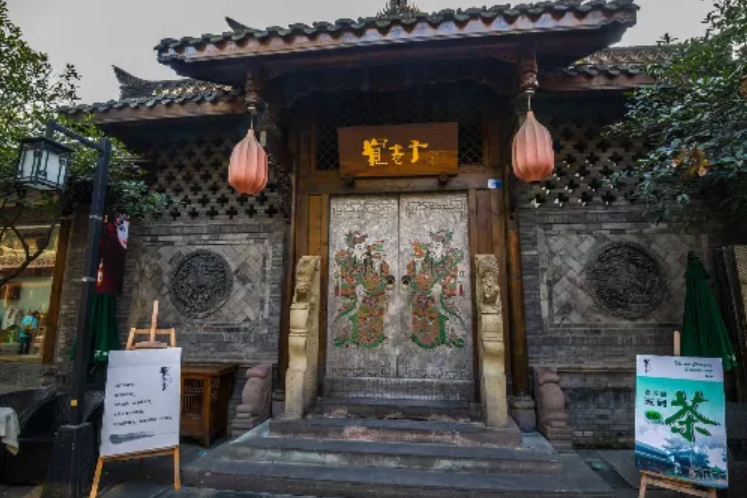
Kuan Alley was named Xingren Hutong during the Qing Dynasty and was originally a barracks for Qing troops on garrison duty. It contains a concentration of complete old buildings, with more than 20 distinctive courtyards, most of which retain well-preserved old shopfronts, making the appearance more nostalgic. Among them, Kailu is located at No. 11 Kuan Alley. Its courtyard gate is built of specially made blue bricks into an arched residence gate with a curved protrusion. Above the gate opening is embedded a traditional Chinese stone plaque, on which "Kailu" is carved in large seal script in relief. Demen Renli is located at No. 8 Kuan Alley. It used to be a courtyard for experiencing old Chengdu life, and is now a boutique hotel, showing a perfect combination of the classical and the modern.
Zhai Alley
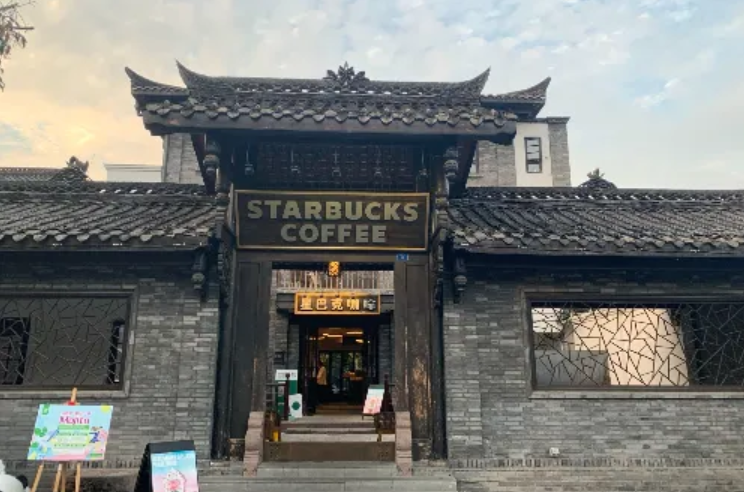
Zhai Alley was named "Taiping Hutong" in the Qing Dynasty. The buildings in the alley are mostly from the late Qing Dynasty and early Republic of China, and overall absorbed Western styles, forming an inclusive culture combining Chinese and Western elements. The commercial formats in Zhai Alley are mainly Western food, coffee, clubs, and themed cultural commerce, and it is the place that best embodies the aesthetics of wide and narrow. The hitching post stone is located on the old wall of the gate at No. 32 Zhai Alley, about 1.2 meters above the ground. It is one of only three remaining hitching post stones in Kuanzhai Alley and is a symbolic expression of northern culture in western Sichuan.
Jing Alley
Jing Alley is located on the east side of Xiatongren Road and south of Zhai Alley. In the early Qing Dynasty it was named Ruyi Hutong. Later, because Mingde Fang was built in the northern part of the hutong, it was also called Mingde Hutong. In the early Republic of China, it was named Jing Alley because there was a well in the alley. Here is the only museum wall in the country that uses bricks as its carrier. It is about 380 meters long and is a two-dimensional patch wall building that interprets a century of history and shows the vicissitudes and changes of Chengdu. Jing Alley is a typical microcosm of folk Chengdu, gathering Chengdu specialty snacks and folk toys, showing the unique flavor of authentic old Chengdu life.
Tour Route:
You can enter from Kuan Alley to feel the atmosphere of old Chengdu life and admire traditional western Sichuan architecture; then stroll to Zhai Alley to experience its refined and elegant atmosphere and the architectural style combining Chinese and Western elements; finally come to Jing Alley to see the brick culture wall and taste various Chengdu specialty snacks. If time permits, you can sit in a teahouse in the alley, drink a cup of covered-bowl tea, and enjoy a leisurely time.
Travel Suggestions:
If you want to avoid the crowds, it is recommended to visit on a weekday morning.
When tasting food, you can first understand the prices and varieties. Some small shops in the alleys may offer surprising delicious food.
Tourists who like handicrafts and souvenirs should remember to shop around when buying.
Precautions:
The scenic area has many tourists, so pay attention to safeguarding valuables such as mobile phones and wallets.
Choose shops with better sanitary conditions to taste food, and avoid eating unclean food that may cause physical discomfort.
Respect local customs and cultural traditions, do not touch ancient buildings and cultural relics at will, and keep the ancient street clean and quiet.
Transportation:
Subway: Take Subway Line 4 and get off at Kuanzhai Alley Station.
Bus: You can take buses such as No. 5, 13, 25, 43, 47, 58, 64, 78, 81, and 93, and get off at stops near Kuanzhai Alley.
Self-driving or taxi: There are parking lots around the area for self-driving, but parking spaces may be tight and traffic jams are likely during holidays; taxis may also encounter traffic congestion, so public transportation is recommended.
Opening Hours:
Open all day throughout the year.
Tickets:
Free and open to the public. However, some attractions and experience projects require additional charges.