The Mianyang Qiang City Tourist Area, also known as the Beichuan Qiang City Tourist Area, is located in Beichuan Qiang Autonomous County in the northwest of the Sichuan Basin. The tourist area is composed of attractions such as the Beichuan Earthquake Ruins Area, Beichuan New County Town, the Beichuan Earthquake Memorial Museum, the Beichuan Qiang Folk Museum, Jina Qiang Village, and the Wester Visitor Center, with a total area of 6.01 square kilometers. It is the sixth national 5A-level tourist attraction in Sichuan Province and the first in Mianyang City. It consists of three major parts: the earthquake memorial site, the Great Love Culture Appreciation Area, and the Yu-Qiang Culture Experience Area, with a complete variety of resources and rich individual attractions.
Historical Culture
Beichuan is the only Qiang Autonomous County in China. For thousands of years, the ancient Qiang ethnic group and 17 other ethnic groups, including the Han, Tibetan, and Hui, have lived and multiplied here, forming a simple and profound folk culture. Beichuan has a long history. During the Xia and Shang dynasties, the county area belonged to the territory of Liangzhou. In the Zhou Dynasty, it belonged to the territory of the Ranmang tribe and was under the State of Shu. After changes through various dynasties, in the fourth year of Baoding during the reign of Emperor Wu of the Northern Zhou Dynasty (564), Shengzhou was renamed Wenzhou. In the first year of Tianhe (566), Beichuan County was newly established in the northern commandery, which marked the beginning of Beichuan as a county.
At 14:28 on May 12, 2008, an 8.0-magnitude earthquake occurred in Wenchuan County, Sichuan Province. Beichuan County, adjacent to Wenchuan, suffered severe damage, with houses collapsing seriously. As an extremely severely affected area of the "5·12" Wenchuan mega-earthquake, the entire county of Beichuan had 15,645 deaths and 1,023 missing. Among the victims of the Wenchuan earthquake, one in every four was from Beichuan. The county's direct economic loss reached 58.57 billion yuan. After the earthquake, with the care of people across the country and compatriots at home and abroad, Beichuan embarked on the path of earthquake relief and recovery and reconstruction.
Main Attractions
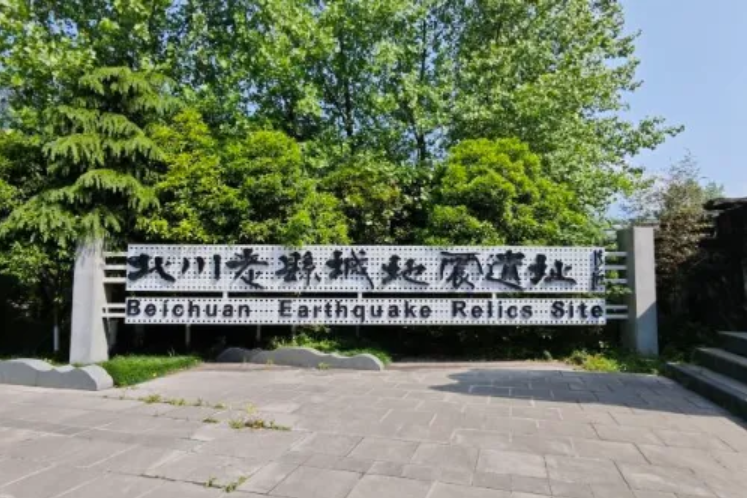
Beichuan Earthquake Ruins Area
The old county town earthquake ruins are the most completely preserved and largest earthquake ruins in the world today. They are a precious legacy left to the world by the disaster of the "5·12" earthquake. They truly preserve the scenes after the earthquake occurred, allowing people to intuitively feel the enormous destructive power of the earthquake.
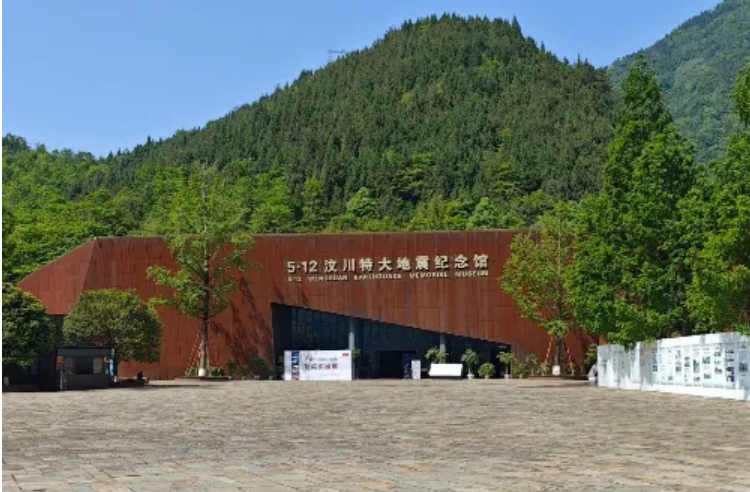
"5.12" Wenchuan Mega-Earthquake Memorial Museum
This memorial museum is a national patriotism education base, a classic national red tourism scenic spot, a national science popularization education base, and a national social science popularization base. Through rich exhibits, scene restoration, multimedia displays, and other methods, it comprehensively presents the disaster process of the "5·12" Wenchuan mega-earthquake, the heroic deeds of earthquake relief, and the great achievements of post-disaster reconstruction.
Beichuan Qiang Folk Museum
The museum collects and displays a large number of cultural relics and materials related to Qiang history, culture, and folk customs, covering many aspects such as the Qiang people's production and daily life, religious beliefs, and arts and crafts. It is an important place for understanding and studying Qiang culture.
Jina Qiang Village
Located in Leigu Town, Beichuan County, Mianyang City, Sichuan Province, it is the necessary route between the old and new Beichuan county towns and is known as "the first village of Beichuan." Tall blockhouses rise from the ground, and the Qiang village stands against the mountains and beside the water. The houses are built of stacked stones, forming a beautiful and eye-catching scenery among the green mountains and waters.
Banacha Commercial Street
Located on the central axis of Beichuan New County Town, it borders Yongchang Avenue to the west, Jieda Road to the east, Hongyan Street to the north, and Baiyang Street to the south. It is full of Qiang characteristics and has many shops selling specialty foods, handicrafts, and more. Tourists can experience Qiang customs here and buy souvenirs.
Tour Routes:
One-day tour: Visitor Center → Old County Town Earthquake Ruins → "5.12" Wenchuan Mega-Earthquake Memorial Museum → Science Popularization Experience Hall → Banacha Commercial Street. This route allows tourists to quickly learn about earthquake-related history and experience Qiang customs.
Two-day tour: On the first day, Visitor Center → Old County Town Earthquake Ruins → "5.12" Wenchuan Mega-Earthquake Memorial Museum → Tangjiashan Barrier Lake; on the second day, Qiang Folk Museum → Happiness Hall → Earthquake Resistance Memorial Park → Banacha Commercial Street → Yu Wang Bridge → New County Town Central Axis Landscape Belt. Two days allow for a deeper experience of the memorial significance and cultural connotation of the scenic area.
Travel Suggestions:
Book tickets for the "5.12" Wenchuan Mega-Earthquake Memorial Museum in advance through official channels to avoid delaying your itinerary.
When visiting the earthquake ruins and memorial museum, keep quiet and respect history and the victims.
When visiting Qiang villages, you may participate in Qiang folk activities, such as dancing Guozhuang, to better experience Qiang culture.
When tasting food, you can choose the level of spiciness according to personal taste and try different specialty dishes.
Notes:
Some areas in the scenic spot are protected ruins; please do not touch or climb them at will.
Take good care of personal belongings, especially in crowded places such as the commercial street.
Follow the scenic area's signs and staff guidance and travel safely.
Respect local customs and religious beliefs, especially in areas such as Qiang villages.
In case of severe weather, pay attention to your safety and adjust your itinerary in advance.
Transportation:
By Plane:
Chengdu Shuangliu Airport: Take a bus to Chengdu Zhaojuesi Bus Station, then take a passenger vehicle from Chengdu Zhaojuesi Bus Station to Mianyang Bus Terminal, departing every 15 minutes; then transfer to a passenger vehicle from Mianyang Bus Terminal to Beichuan, departing every 10 minutes.
Mianyang Nanjiao Airport: Take a bus to Mianyang Bus Terminal, then transfer to a passenger vehicle from Mianyang Bus Terminal to Beichuan, departing every 10 minutes.
By Train: After getting off at Mianyang Railway Station, cross the street to reach Mianyang Bus Terminal, then take a passenger vehicle from Mianyang Bus Terminal to Beichuan, departing every 10 minutes.
By Bus: Take a passenger vehicle from Mianyang Bus Terminal to Beichuan, departing every 10 minutes.
By Self-driving:
From Chengdu and Deyang: Chengdu-Mianyang Expressway or Chengdu-Mianyang Expressway Second Line — Mianyang South (Mojia) Toll Station — Liaoning Avenue — Visitor Center.
From Chongqing and Nanchong: Mianyang-Suining Expressway — Mianyang Xinqiao Toll Station — Jiuzhou Avenue — Mian'anbei Rapid Passage — Liaoning Avenue — Visitor Center.
From Xi'an and Guangyuan: Mianyang-Guangyuan Expressway — Mianyang Toll Station — Mian'anbei Rapid Passage — Liaoning Avenue — Visitor Center.
Opening Hours:
Beichuan Qiang City Tourist Area is an open scenic area and has no specific overall closing time. However, the opening hours of the "5.12" Wenchuan Mega-Earthquake Memorial Museum are every Tuesday to Sunday from 09:00 to 17:00 (last entry at 16:30), and it is closed every Monday for maintenance (it does not close on Mondays that fall on statutory holidays or May 12); the Beichuan Qiang Folk Museum generally opens from 09:00 to 17:00, subject to the actual arrangements of the scenic area.
Tickets:
All attractions within the Beichuan Qiang City Tourist Area are public welfare and open to tourists free of charge. However, the "5·12" Wenchuan Mega-Earthquake Memorial Museum implements a "free but not ticketless" system. Tourists who have successfully made reservations can enter through the ID card verification channel by swiping their ID cards.