The Wenchuan Special Tourism Area is located in Wenchuan County, Aba Tibetan and Qiang Autonomous Prefecture, Sichuan Province. It is a commemorative and cultural theme scenic area specially developed after the reconstruction following the 2008 Wenchuan earthquake. It is a national 5A-level tourist attraction. The scenic area consists of Dreamy Sanjiang, Tian Di Yingxiu, and Shuimo Ancient Town, covering Sanjiang Township, Yingxiu Town, and Shuimo Town in southern Wenchuan. Here, the mountains and waters are beautiful, biodiversity is rich, historical and cultural heritage is profound, and ethnic cultures are colorful. Ecological and geological culture are extensive and profound, and natural scenery is complemented by local customs, ethnic culture, cultural landscapes, and pastoral charm, creating a unique charm. The scenic area covers 100 hectares.
History and Culture
Wenchuan is one of the four major Qiang ethnic minority inhabited counties in China, and is known as "the hometown of Dayu, the homeland of pandas, and the hometown of Qiang embroidery." At 14:28:04 on May 12, 2008, an earthquake measuring 8.0 on the Richter scale occurred about 11 kilometers south of Yingxiu Town, Wenchuan County, with a focal depth of 14 kilometers. The once beautiful and prosperous Yingxiu was almost razed to the ground. After the disaster, it was rebuilt and specially developed as a commemorative and cultural theme scenic area to remember that period of history and to showcase the miracle and resilient spirit of post-disaster reconstruction. As early as the Shang Dynasty, Shuimo Ancient Town enjoyed the reputation of "Hometown of Longevity" and was then called Laoren Village, later renamed Shuimo. It is an area where Han Chinese and ethnic minorities blend, where inland customs and Tibetan-Qiang culture complement each other, and where Western Shu human culture and Zen Buddhist culture bloom together.
In 2013, it was rated as a national 5A-level tourist attraction.
Main Attractions
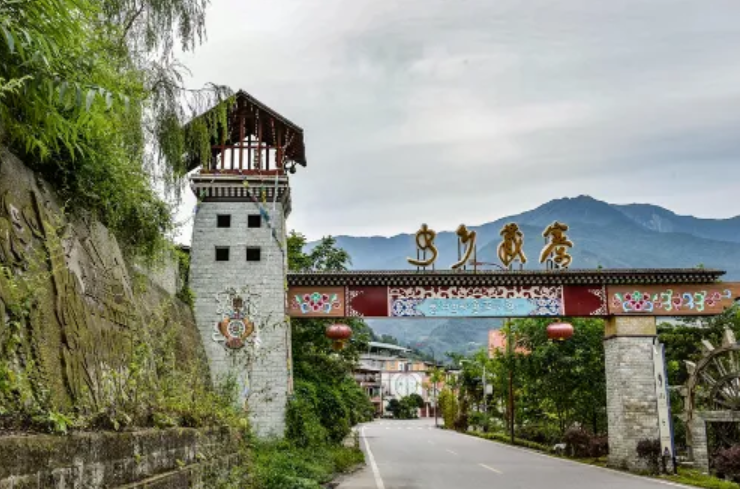
Water Village Tibetan Stockade
After the "5.12" Wenchuan earthquake, Sanjiang Township built a Water Village Tibetan Stockade with ethnic characteristics centered on its unique natural water system, including archways, waterwheel landscapes, Mingyue Pavilion, Tibetan Family Customs Garden, shopping corridor, visitor center, and more.
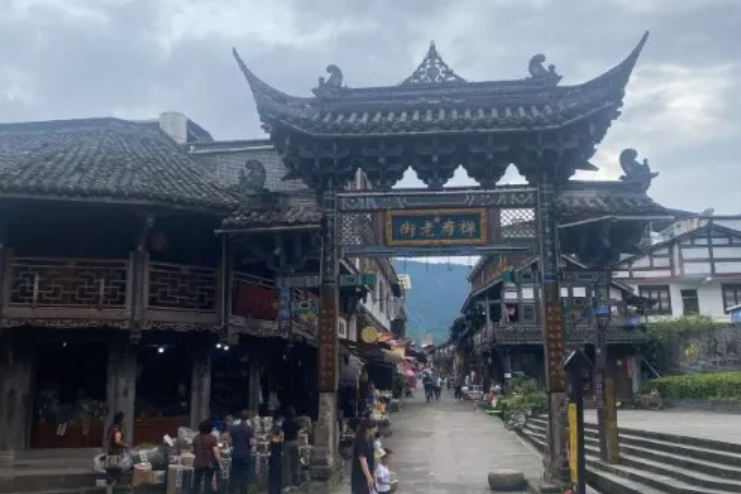
Chanshou Old Street
Chanshou Old Street is 1,300 meters long and arranged in a "U" shape. The buildings on both sides, such as Chunfeng Pavilion, Dafu Di, Wannian Stage, Ziku, and White Pagoda, represent the culmination of traditional Chinese architectural systems. They are typical Ming and Qing dynasty-style buildings combining Qiang, Tibetan, and Han styles, with features such as clear outlines, profound layout, and multiple distinct axes, reflecting the ancient architectural thought and design concept of "harmony between heaven and humanity."
Xuankou Middle School Ruins
During the "5.12" Wenchuan earthquake in 2008, all school buildings of Xuankou Middle School sank and collapsed. Before the earthquake, the building had 5 floors; after the earthquake, only 3 floors remained of the 5-story building. The 3rd floor became the 1st floor, and the original 1st and 2nd floors were reduced to debris. It is the only large-scale site from the "5.12" Wenchuan earthquake that has been relatively completely preserved, and it was also the venue for the memorial ceremony on the anniversary of the "5.12" Wenchuan earthquake in 2008.
Baihua Bridge Ruins
Baihua Bridge is located at the border between Xuankou Town and Yingxiu Town in Wenchuan County. It is the only route on National Highway 213 leading to Aba Prefecture and 13 counties under its jurisdiction, and an important node connecting the transportation hub of Aba Prefecture. During the "5.12" Wenchuan earthquake, Baihua Bridge was completely destroyed and could no longer be restored for use.
Yingxiuwan Park
Yingxiuwan Park was once the site of Yingxiu Primary School, which collapsed during the 5.12 Wenchuan earthquake. A total of 260 compatriots died here. Because it is located on a fault zone and is not suitable for permanent buildings, it was later developed into Yingxiuwan Park, integrating ecological sightseeing and tourist distribution.
Chunfeng Pavilion
Chunfeng Pavilion is a landscape building built according to the historical culture of Shuimo Ancient Town and combined with Tibetan, Qiang, and Han ethnic architectural features. The main building follows traditional Chinese architectural construction methods, and the detailed decorations have strong religious and Tibetan-Qiang cultural colors. It is an organic integration of multi-ethnic cultures, reflecting the resilience and cohesion demonstrated by people of all ethnic groups in the face of disaster. It is a powerful witness to great ethnic unity and also an excellent place for climbing and enjoying the view.
Western Qiang Hub
Western Qiang Hub is located at the foot of Chunfeng Pavilion in Shuimo Town, bordering Shouxi Lake to the east. It is one of the landmark landscapes of Shuimo. Its architectural plan evolved from a square, and its facade combines Qiang watchtower characteristics, integrating modern architectural and decorative art with traditional Western Qiang culture and incorporating Foshan ceramic art elements. It has multiple service functions such as exhibitions, performances, conferences, and reception, demonstrating the spiritual outlook of the people of Wenchuan rebuilding their homeland with unremitting self-improvement after the earthquake. It symbolizes the continuation of life and the inheritance of culture, and embodies the deep connection between Foshan and Shuimo.
Shuimo Qiang City
Shuimo Qiang City covers a total area of 61,117 square meters. It is a popular project of post-disaster reconstruction. The building structure is designed for seismic intensity 9, comprehensively applying Qiang village architectural methods such as stone structure, mud structure, stone-wood structure, and wood structure. It inherits and promotes Qiang architectural culture and reflects the new Qiang city concept of moving from ancient, extensive traditional architectural communities toward a modern town.
Suggested Tour Route:
It is recommended to spend at least 3 days. Day 1: Depart from Chengdu and drive about 2 hours to the Yingxiu epicenter ruins, visiting the earthquake memorial wall, earthquake museum, Xuankou Middle School ruins, and more. Day 2: Go to Shuimo Ancient Town, walk by the river, visit historical sites such as the Confucian Temple and Shouxing Bridge, taste local specialties, and in the afternoon go to nearby tea gardens to experience tea picking or take a bamboo raft downstream. Day 3: Go to the Sanjiang Ecological Scenic Area, hike through the primitive forest, climb to the peak to overlook the panorama, visit the waterfall group, or fish by the lake.
Travel Suggestions:
Learn in advance about the opening hours and performance schedules of each attraction in the scenic area, and plan the itinerary reasonably.
Some sections of the scenic area may be rugged, so it is recommended to wear comfortable sports shoes.
Mountain weather changes greatly, and the temperature difference between morning and evening is large. Even in summer, it is recommended to bring a jacket.
If you want to experience activities such as tea picking, you can prepare the corresponding tools or clothing in advance.
Respect local customs and religious beliefs.
Precautions:
Pay attention to weather changes and bring rain gear and warm clothing to prevent colds.
Although Wenchuan has undergone post-disaster reconstruction, it is still necessary to remain vigilant against geological disasters such as aftershocks and landslides, especially during the rainy season. Be extra careful and avoid staying in dangerous areas.
During outdoor activities, pay attention to sun protection, insect bites, and carry necessary first-aid medicines.
Protect the environment. Do not litter, and minimize damage to the natural environment.
Observe scenic area regulations. Do not touch cultural relics at will or damage public facilities.
Transportation:
Plane: You can fly to Chengdu Shuangliu International Airport, then take an airport bus to downtown Chengdu and transfer to a long-distance bus to Wenchuan; or directly take a taxi or use ride-hailing services to go to Wenchuan.
Train: Take a train to Chengdu Railway Station, then transfer to a long-distance bus to Wenchuan.
Long-distance bus: Major bus stations in Chengdu have long-distance buses to Wenchuan. At Chengdu Chadianzi Passenger Station, you can take a long-distance bus to Wenchuan. There are multiple departures every day, and the fare is about 100 yuan.
Self-driving: Depart from Chengdu and go directly to Wenchuan along the Chengdu-Wenchuan Expressway (Chengwen Expressway), passing through Dujiangyan, Yingxiu, and other places along the way. The journey takes about 3-4 hours.
Bus: In Wenchuan County, take Bus No. 1 to reach the earthquake ruins; take Bus No. 2 to reach the Wenchuan Special Tourism Area.
Taxi: In Wenchuan County, taking a taxi to the earthquake ruins costs about 20-30 yuan; to the Special Tourism Area, about 30-40 yuan.
Opening Hours:
Sanjiang Scenic Area is open from 08:00 to 18:00. The Epicenter Memorial Hall is open from 08:30 to 16:30 (closed every Monday). Shuimo Ancient Town is open all day. The actual opening hours of the scenic area shall prevail.
Tickets:
The ancient town and memorial hall are free. The ticket for Sanjiang Scenic Area is 50 yuan per person. The actual prices of the scenic area shall prevail.