Wenshu Fang is located on Wenshuyuan Street, Qingyang District, Chengdu, Sichuan Province, in the central area of Chengdu. It integrates historical culture, religious experience, folk customs, and leisure shopping. With the thousand-year-old Wenshu Monastery as its core, the scenic area is built around three major themes—"Zen culture, folk culture, and Western Sichuan residential culture"—creating a cultural experience destination that combines traditional charm with modern vitality. The scenic area covers a total area of approximately 333,300 square meters, of which the core sightseeing area is about 100,000 square meters, and the building area is about 150,000 square meters. It includes a complex of Ming- and Qing-style Western Sichuan residential buildings, antique commercial streets, cultural exhibition venues, and other diverse forms of business. The architectural style is mainly characterized by Western Sichuan residential features, incorporating traditional elements such as gray tiles and white walls, wooden frame structures, and carved window lattice, forming a well-arranged and antique spatial layout. As one of the relatively well-preserved historical and cultural districts in downtown Chengdu, Wenshu Fang not only retains the bustling everyday life of old Chengdu, but also gathers various intangible cultural heritage creative products, specialty foods, and folk performances. It receives more than 5 million visitors annually and is an important window for showcasing Chengdu's historical context and folk customs.
Historical Culture
The historical roots of Wenshu Fang can be traced back to the Sui Dynasty. Its core landmark, Wenshu Monastery, was first built during the Kaihuang period of the Sui Dynasty (581-600 AD). It was originally named "Xinxiang Temple" and has a history of more than 1,400 years. During the Tang Dynasty, Xinxiang Temple was already a famous Buddhist temple in Chengdu, with flourishing incense offerings; during the Song Dynasty, it was expanded and gradually grew in scale; in the late Ming Dynasty, the temple was severely damaged in war.
In the 36th year of the Kangxi reign of the Qing Dynasty (1697 AD), Master Cidu Haiyue presided over the reconstruction of the temple. Because it was said that the bronze statue of Manjushri Bodhisattva enshrined in the temple was extraordinarily efficacious and believers gathered in large numbers, it was renamed "Wenshu Monastery." Over the following centuries, Wenshu Monastery underwent multiple renovations and gradually formed its current architectural layout, becoming an important holy site of the Buddhist Zen school in the Sichuan region. Together with Baoguang Monastery and Zhaojue Monastery, it is known as one of the "Three Great Monasteries of Chengdu."
The surrounding streets that developed around Wenshu Monastery have been a prosperous commercial area and a gathering place for folk culture in northern Chengdu since the Qing Dynasty. They brought together various handicraft workshops, teahouses and taverns, and temple fairs and markets, carrying the living memories of old Chengdu.
Main Attractions
Wenshu Monastery
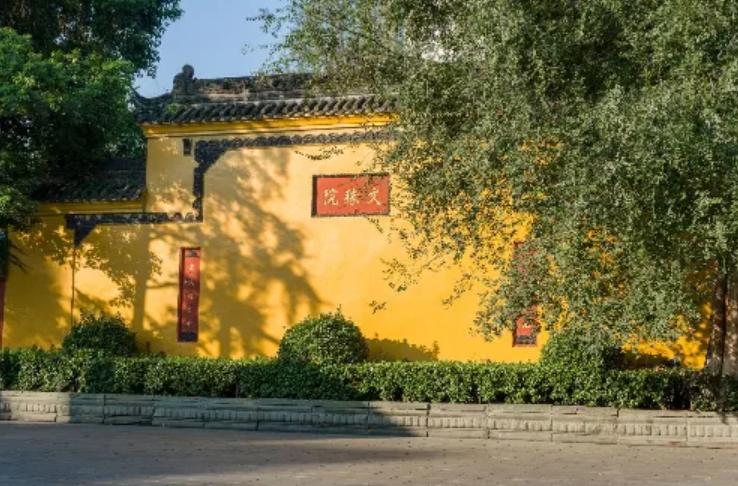
Wenshu Monastery is one of the national key Buddhist monasteries designated by the State Council, covering an area of more than 20 mu. The monastery faces south and has a building area of about 11,600 square meters. Its main buildings include the Hall of Heavenly Kings, the Hall of the Three Great Beings, the Mahavira Hall, the Dharma Preaching Hall, and the Sutra Library. The five halls are connected and arranged in sequence along the central axis facing the mountain gate. The halls and pavilions are ancient, spacious, and grand, with flying eaves and upturned corners, representing the typical ancient architectural style of the Chengdu Plain. The monastery also houses more than 9,000 cultural relics of various kinds, including more than 500 ancient and modern calligraphy and painting works from the Tang and Song dynasties onward.
Wenshu Fang Block
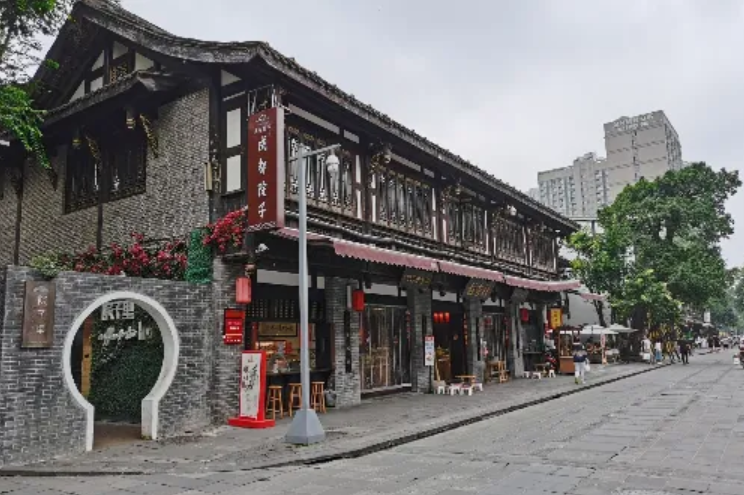
The block is built in the antique style of Western Sichuan residences, with bluestone-paved roads and shops lining both sides. It gathers display and experience shops for more than 30 national- and provincial-level intangible cultural heritage projects, including Shu embroidery, Shu brocade, bamboo weaving, sugar painting, paper-cutting, silver filigree, and lacquerware. The block also includes an Intangible Cultural Heritage Cultural Exhibition Center, which systematically introduces the historical origins and current inheritance status of Sichuan's intangible cultural heritage through physical displays, multimedia presentations, and other methods.
Miaoju Theater
Miaoju Theater is located in the eastern district of Wenshu Fang, with a building area of 8,000 square meters and a capacity of 800 spectators at the same time. Its exterior design cleverly integrates Chengdu elements such as the Shu Roads, bamboo seas, and heavenly ladders and stone stacks, presenting an architectural appearance full of "national trend" charm. The theater is only a street away from the Zen forest, as if placing visitors in a dreamlike realm where ancient and modern blend.
Suggested Tour Route:
Visit Wenshu Monastery to experience Buddhist culture, then stroll through the Wenshu Fang block to experience intangible cultural heritage culture and eat some local snacks. If time permits, you can go to Miaoju Theater to watch a theatrical performance; tickets must be purchased.
Travel Suggestions:
The best seasons to visit are spring and autumn. In spring (March-April), flowers bloom throughout the block and the climate is pleasant; in autumn (October-November), the ancient ginkgo trees in Wenshu Monastery turn golden and are excellent for photography.
Suggested duration: about 6-8 hours for a day trip, and about 3-4 hours for a half-day trip.
Wear comfortable flat shoes. There are many stone-paved roads in the scenic area and the walking distance is relatively long, which makes touring easier.
Carry a small amount of cash. Some intangible cultural heritage shops and old teahouses may only support cash payment.
Families with children may give priority to the Intangible Cultural Heritage Cultural Block and the cultural and creative market, and participate in handicraft experience projects to increase interactive fun.
Photography enthusiasts are advised to bring a camera. In the early morning or evening, the light is soft and suitable for photographing ancient buildings and cultural landscapes.
Notes:
Wenshu Monastery is a Buddhist monastery. Keep quiet inside the halls and prohibit loud noises, chasing, and playing; dress appropriately and avoid entering the halls in tank tops, shorts, slippers, and similar attire.
Smoking and littering are prohibited in the monastery. Please protect cultural relics and historic sites. Do not touch Buddha statues, stone inscriptions, colored paintings, and other items. Violators will be handled according to regulations.
Intangible cultural heritage experience projects must be carried out under the guidance of staff, and operating rules must be followed to avoid damaging tools or materials; some projects have age restrictions, so please inquire in advance.
The scenic area has a large flow of people, especially during holidays. Please take care of the elderly and children, keep personal belongings safe, and guard against loss.
Respect local folk customs. When participating in temple fairs, sacrificial activities, and similar events, follow on-site guidance and do not disrupt the order of activities at will.
Photography is prohibited in some areas of the scenic area. Please follow on-site signage.
In summer, take sun protection measures and bring a parasol and sunscreen; in winter, temperatures are relatively low, so keep warm.
Pets, flammable and explosive items, controlled knives, and similar items are prohibited from entering the core area of the scenic area.
Transportation:
Subway: Take Subway Line 1 to "Wenshuyuan Station" and exit from Exit D. Walk about 300 meters to reach the entrance of the scenic area. The total journey takes about 15-30 minutes depending on the starting point.
Bus: You can take bus routes such as 16, 55, 64, 75, 98, 101, 106, 127, 129, 154, and 341 to "Wenshuyuan Station" or "Renmin Middle Road Section 3 Station" and get off, then walk 50-200 meters to arrive.
Self-driving: Navigate to "Wenshu Fang." There are 3 public parking lots around the scenic area. During holidays, parking spaces are tight, so it is recommended to give priority to public transportation.
Taxi/ride-hailing: Directly set the destination to "Wenshu Fang Scenic Area South Gate." After getting off, you can enter the core sightseeing area.
Opening Hours:
Open all day throughout the year.
Tickets:
Admission is free. Miaoju Theater requires paid viewing. You can search for the service account "Chengdu Wenshu Fang" in WeChat to get the latest updates.