The Museum of the Terracotta Army of Qin Shi Huang is located in Lintong District, Xi'an, Shaanxi Province. It is a site museum built on the site of the accompanying pits of the Terracotta Army of Qin Shi Huang. It is a national 5A-level tourist attraction and a World Cultural Heritage site, known as the "Eighth Wonder of the World." The scenic area is built around the Terracotta Army pits of the Mausoleum of the First Qin Emperor and currently has three pits: Pit No. 1, Pit No. 2, and Pit No. 3. Among them, Pit No. 1 is an east-west rectangular pit, 230 meters long and 62 meters wide, with a total area of 14,260 square meters. It is currently the largest excavated military formation site; Pit No. 2 covers an area of 6,000 square meters and is composed of a mixed formation of multiple arms, including chariots, cavalry, and crossbowmen, demonstrating a complex tactical system; Pit No. 3 covers an area of 524 square meters and is concave-shaped, presumed to be the military command center (command post). The entire museum covers an area of about 46.1 hectares, with a total collection of more than 50,000 items (sets).
Historical Culture
The Terracotta Army of Qin Shi Huang is an accompanying pit of the Mausoleum of the First Qin Emperor. Construction began in 246 BC and took 39 years to complete. It is the first emperor's mausoleum in Chinese history, and its layout symbolizes the structure of the capital of the Qin Dynasty. In 1974, local farmers accidentally discovered fragments of pottery figurines while digging a well, and archaeological excavation shocked the world. In 1987, the Mausoleum of the First Qin Emperor (including the Terracotta Army pits) was inscribed on the UNESCO World Heritage List, becoming a golden name card of ancient China's glorious civilization.
The discovery of the Terracotta Army has provided extremely valuable physical materials for the study of Qin Dynasty military, politics, economy, culture, science and technology, and more. Thousands of pottery figurines and pottery horses are arranged in battle formations. The warrior figurines average 1.8 meters in height, are sturdy in build, fully equipped, and highly realistic, demonstrating the powerful lineup of the Qin army that "swept across the six states" and the superb sculptural art level of the Qin Dynasty.
Main Attractions
Pit No. 1 of the Terracotta Army
Pit No. 1 is the earliest discovered pit. It is rectangular, 230 meters long from east to west and 62 meters wide from north to south, about 5 meters deep, with a total area of 14,260 square meters. Buried in the pit are about 6,000 pottery figurines and pottery horses. The currently excavated part displays the main force formation consisting mainly of chariots and infantry. The pottery figurines in the pit are divided into soldier figurines, military officer figurines, and others. They are neatly arranged and magnificent, reproducing the combat scene of the main forces of the Qin army.
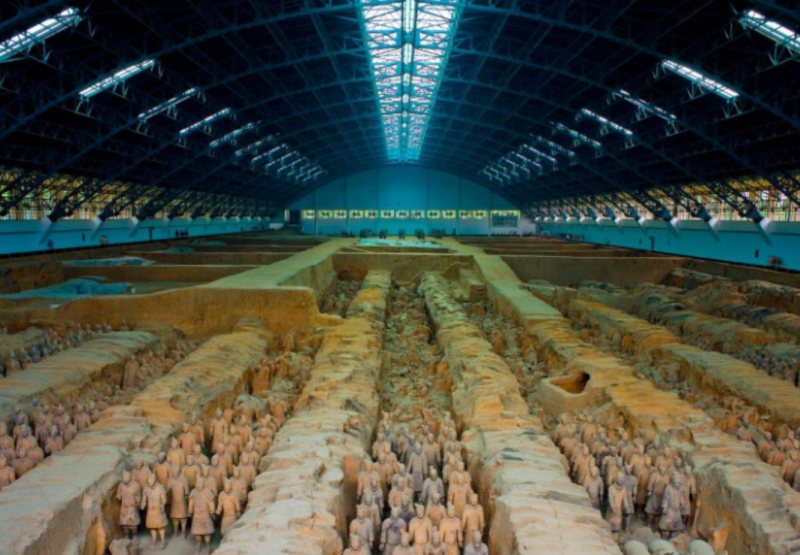
Pit No. 2 of the Terracotta Army
Pit No. 2 is the essence of the Qin terracotta pits, with an area of 6,000 square meters. It consists of four units, including a crossbowmen formation, a chariot formation, a cavalry formation, and a mixed chariot-infantry-cavalry formation. It is a military formation of multi-arm coordinated operations. The types of pottery figurines in the pit are more diverse, including cavalry figurines, crossbowman figurines, chariot driver figurines, and others, vividly demonstrating the complex tactical system and strong combat effectiveness of the Qin army.
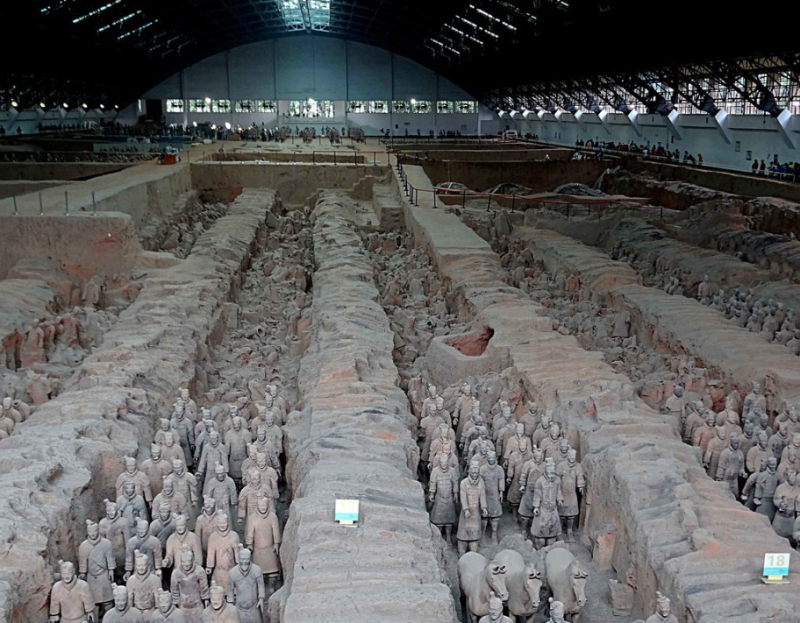
Pit No. 3 of the Terracotta Army
Pit No. 3 covers an area of 524 square meters and is concave-shaped. It consists of north and south side rooms and a chariot and horse room, and is presumed to be the command center (command post) of the army. Sixty-eight pottery figurines were unearthed in the pit, most of them officer figurines, as well as a four-horse chariot, demonstrating the structure of the military command system of the Qin Dynasty.
Cultural Relics Exhibition Hall
The hall displays precious cultural relics unearthed from the Terracotta Army pits, such as senior military officer figurines (general figurines), saddled cavalry figurines, bronze swords, crossbow triggers, and more. Among them, the bronze swords are still as sharp as new after thousands of years, reflecting the advanced metallurgical technology of the Qin Dynasty; the painted bronze chariots and horses of the Qin tomb are known as the "crown of bronze" and are currently the largest, most structurally complex, and most complete ancient chariots and horses in terms of harnessing relationships discovered in China, possessing extremely high historical and artistic value.
Food
Roujiamo
A classic Shaanxi snack, commonly found in restaurants around the Museum of the Terracotta Army. It uses baiji bread to hold braised pork. The bread is crispy and the meat is tender, fatty but not greasy, lean but not dry. Paired with green peppers and cilantro, it has a rich texture and is the first choice for tourists to replenish their energy.
Liangpi
A local specialty cold food, made from wheat or rice as raw materials, paired with bean sprouts and shredded cucumber, and topped with chili oil, vinegar, garlic paste, and other seasonings. It is sour, spicy, and refreshing, especially suitable for summer consumption.
Yangrou Paomo
A traditional Shaanxi delicacy, made by cooking torn pieces of bread (unleavened flatbread) with mutton soup and mutton. The soup is rich, the bread is chewy, and the meat is tender. It can be paired with sweet garlic to cut the greasiness. It is a must-try for experiencing Shaanxi food culture.
Youpo Mian
After wide noodles are cooked, chopped scallions and chili powder are sprinkled on top, and hot oil is poured over them to release the aroma. Then soy sauce, vinegar, and other seasonings are added. The noodles are chewy and the flavor is spicy and satisfying. It is one of the representatives of Shaanxi noodle dishes.
Tickets:
Tickets are 120 yuan per person.
You can search for the official public account "Emperor Qinshihuang's Mausoleum Site Museum" on WeChat to get the latest updates or buy tickets online.
Opening Hours:
Peak season (March 16—November 15): 8:30—18:00 (last entry at 16:30); off-season (November 16—March 15 of the following year): 8:30—17:30 (last entry at 16:00). Closed on New Year's Eve. Open as normal on other statutory holidays, subject to scenic area announcements.
Tour Route:
Recommended route: Scenic area entrance → Bronze Chariot and Horse Museum (Cultural Relics Exhibition Hall) → Pit No. 1 of the Terracotta Army → Pit No. 3 of the Terracotta Army → Pit No. 2 of the Terracotta Army → Dome Theater (optional) → Exit. This route allows visits in order from the main to the secondary. First, learn the background knowledge through the Cultural Relics Exhibition Hall, then visit each pit in turn, and finally experience the historical scenes of the Qin Dynasty immersively through the dome theater (separate ticket required).
Transportation:
Bus: Take Xi'an public buses 914, 915, or Tour 5 (306), and get off at the "Terracotta Army" stop. Subway: You can first take Metro Line 9 to "Huaqingchi" Station, then transfer to a bus or taxi after leaving the station. The drive takes about 15 minutes. Self-driving: Starting from downtown Xi'an, drive east along the Lianhuo Expressway (G30), exit at the "Terracotta Army" exit, and follow the road signs. The scenic area has a parking lot.
Must-Visit Attractions:
Pit No. 1 of the Terracotta Army: The largest military formation site, where you can intuitively feel the momentum of the Qin army's "thousands of soldiers and horses."
Pit No. 2 of the Terracotta Army: A mixed multi-arm military formation, reflecting the complexity and advancement of Qin Dynasty military tactics.
Cultural Relics Exhibition Hall: View precious cultural relics such as bronze swords and bronze chariots and horses up close, and learn about the scientific and artistic achievements of the Qin Dynasty.
Travel Suggestions:
It is recommended to book tickets in advance through the scenic area's official website or official platform to avoid queuing during peak season.
When visiting, hire a professional guide (or rent an audio guide) to gain an in-depth understanding of the historical background and cultural connotations of the Terracotta Army. The guide fee is about 100 yuan per group (reference price).
In summer, pay attention to sun protection and heat prevention; in winter, keep warm. There is a lot of walking in the scenic area, so it is recommended to wear comfortable sports shoes.
Reserve 3—4 hours for the visit to fully tour the attractions and exhibition hall.
Precautions:
Smoking, touching cultural relics, and crossing warning lines are prohibited in the scenic area. Please consciously protect cultural heritage.
Do not use flash when taking photos to avoid damaging the painted surfaces of the pottery figurines.
Follow the guidance of staff, avoid gathering in narrow areas, and pay attention to safety.
There may be unofficial "guides" around the scenic area. It is recommended to obtain guide services through official channels.
Keep personal belongings safe, especially in areas with large crowds.