The Yellow Emperor Mausoleum Scenic Area is located on the top of Qiaoshan in Huangling County, Yan'an City, Shaanxi Province. It is the mausoleum of Xuanyuan Huangdi, the founding ancestor of the Chinese nation. It is a national 5A-level tourist attraction, a major historical and cultural site protected at the national level, and a national scenic area. It is known as "the finest mausoleum under heaven." The scenic area consists of two parts, the Yellow Emperor Mausoleum and the Xuanyuan Temple, with a total area of about 4 square kilometers, of which the Yellow Emperor Mausoleum Park covers 3 square kilometers and the Xuanyuan Temple covers 1 square kilometer. The scenic area is characterized by its profound historical and cultural heritage and unique cultural landscape. The tomb mound is 3.6 meters high and 48 meters in circumference. The body of Qiaoshan is thick and the trees are lush. There are more than 80,000 ancient cypresses over a thousand years old, making it the most completely preserved ancient cypress forest in China.
Historical Culture
The history of the Yellow Emperor Mausoleum can be traced back to ancient times. According to the Records of the Grand Historian, when the Yellow Emperor died, he was buried at Qiaoshan. During the Western Han period, the Xuanyuan Temple was first built at Qiaoshan. In the fifth year of the Dali reign of Emperor Daizong of Tang (770), temple sacrifices to the mausoleum were formally established. In the fifth year of the Kaibao reign of Emperor Taizu of Song (972), the Xuanyuan Temple was relocated to its current site. Thereafter, emperors of successive dynasties all carried out repairs and sacrificial activities. During the Jiajing period of the Ming Dynasty, a fixed sacrificial system was formed. In the eighth year of the Shunzhi reign of Emperor Shizu of Qing (1651), a grand public sacrifice was held, laying the foundation for modern sacrifices at the Yellow Emperor Mausoleum.
The Yellow Emperor is the cultural founding ancestor of the Chinese nation. Legend has it that he invented writing, music, medicine, boats and carts, and so on, laying the foundation of Chinese civilization. As a site where emperors and common people of successive dynasties sacrificed to the Yellow Emperor, the Yellow Emperor Mausoleum carries the collective memory and cultural identity of the Chinese nation. In 1961, it was listed by the State Council as one of the first batch of major historical and cultural sites protected at the national level. In 2006, the Qingming Public Sacrifice Ceremony to Xuanyuan Huangdi was included in the first batch of national intangible cultural heritage lists.
Main Attractions
Xuanyuan Temple
Xuanyuan Temple is the main site for sacrifices to the Yellow Emperor. It covers an area of about 10,000 square meters and consists of buildings such as the temple gate, Chengxin Pavilion, Stele Pavilion, and the main hall. The earliest existing stele in the temple is the "Stele of the Newly Renovated Xuanyuan Temple of the Great Song," erected in the sixth year of the Jiayou reign of the Northern Song Dynasty (1061). In the main hall is enshrined a painted statue of the Yellow Emperor 3.9 meters high, with 47 steles inscribed with sacrificial texts by emperors of successive dynasties displayed on both sides. The "Cypress Planted by the Yellow Emperor Himself" in the temple is more than 5,000 years old, over 20 meters high, and 7.6 meters in circumference at chest height. It is the oldest existing cypress in China.
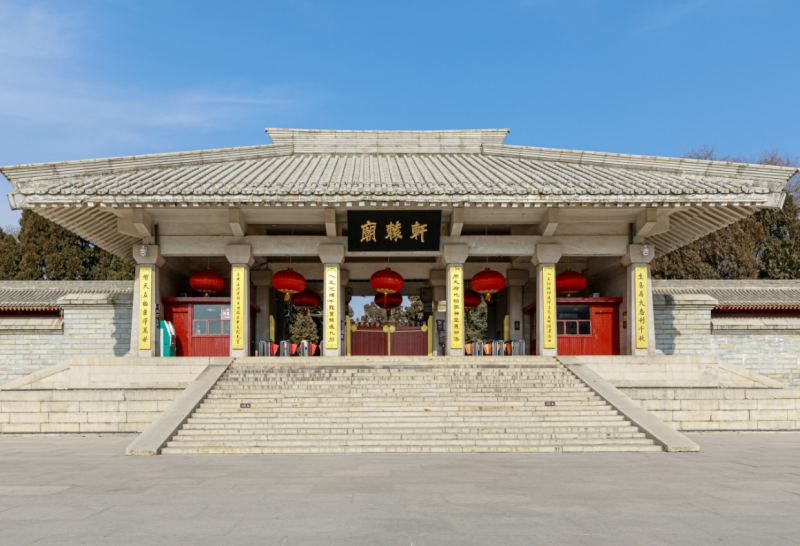
Yellow Emperor Tomb Mound
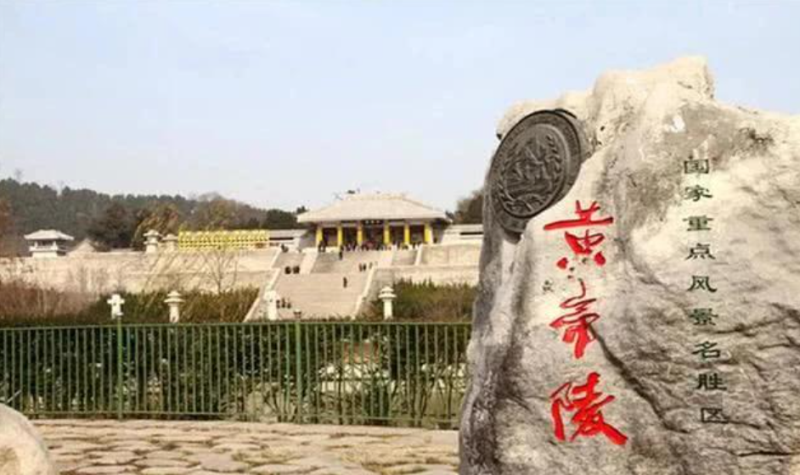
The Yellow Emperor Tomb Mound is located on the top of Qiaoshan. It is 3.6 meters high and 48 meters in circumference, built as a circular tomb of blue bricks. In front of the mausoleum stands the "Yellow Emperor Mausoleum" stele, inscribed by Guo Moruo in 1958. Behind the mound is the "Hanwu Immortal Platform," more than 20 meters high. It is said to have been built by Emperor Wu of Han, Liu Che, during his northern inspection tour to sacrifice to the Yellow Emperor. The existing structure is a relic rebuilt in the Ming Dynasty. In the mausoleum area, ancient cypresses tower to the sky. There are more than 30,000 ancient cypresses over a thousand years old, among which the "Guajia Cypress" has marks on its trunk, traditionally said to have been caused by Emperor Wu of Han hanging his armor on it.
Yellow Emperor Mausoleum Exhibition Hall
The exhibition hall is themed "Yellow Emperor Culture." Its exhibition area is about 3,000 square meters and displays the life and deeds of the Yellow Emperor, his inventions and creations, and the historical changes of the Yellow Emperor Mausoleum through cultural relics, models, multimedia, and other forms. The hall houses more than 2,000 cultural relics from the Neolithic period to the Ming and Qing dynasties. The most precious among them are ritual objects such as jade zhang and jade bi from the Longshan culture period unearthed in Huangling County.
Food
Huangling Yougao
A traditional snack of Huangling County, made from soft yellow millet and red dates through soaking, grinding into slurry, and frying. The outer skin is crisp, and the filling is soft, glutinous, and sweet. Each piece costs about 5 yuan. It is a specialty food during sacrificial activities and festivals and is sold in restaurants around the scenic area and on county streets.
Buckwheat Heluo
A specialty noodle dish of northern Shaanxi, made by pressing buckwheat dough into noodles and served with mutton sauce, sour soup, or tomato sauce. The noodles are chewy, low in fat, and healthy. The average cost is about 15 yuan per person. The recommended "Old Northern Shaanxi Heluo Restaurant" is located on the eastern section of Xuanyuan Avenue in Huangling County.
Huangling Steamed Bowls
A traditional banquet dish, including steamed crispy pork, steamed spare ribs, steamed meatballs, and so on. It is made by stewing in old broth and then steaming. The texture is tender and the aroma is rich. It is usually sold as a set meal. Four dishes and one soup cost about 80 yuan and are suitable for family gatherings. "Qiaoshan Restaurant" in the county town is a local time-honored brand.
Northern Shaanxi Millet Porridge
Made from high-quality millet from northern Shaanxi, it is thick, sticky, and sweet, rich in vitamins and minerals. It is available at farmhouses around the scenic area for 5 yuan per bowl and is a healthy choice for breakfast or a late-night snack.
Tickets:
Tickets are 75 yuan per person.
Search for the official public account "Huangdi Mausoleum Official" on WeChat to get the latest updates or buy tickets online.
Opening Hours:
Peak season (March 1 - November 30): 7:30 - 18:00 (last entry at 17:00);
Off season (December 1 - February 28 of the following year): 8:00 - 17:30 (last entry at 16:30).
Large public sacrifice activities are held every year on Qingming Festival and Double Ninth Festival, and opening hours may be adjusted. Please follow the scenic area announcements in advance.
Tour Route:
Recommended route: Scenic area entrance -> Xuanyuan Temple (1.5 hours, visit the Cypress Planted by the Yellow Emperor Himself, Stele Pavilion, and main hall) -> take the sightseeing bus (10 yuan per person) -> Yellow Emperor Tomb Mound (1 hour, climb the Hanwu Immortal Platform and pay respects at the tomb mound) -> Yellow Emperor Mausoleum Exhibition Hall (1 hour) -> exit. The whole trip takes about 3.5 hours. If walking round trip between the tomb mound and Xuanyuan Temple, add 40 minutes.
Transportation:
High-speed rail: Take the Xi'an-Yan'an high-speed rail to Huangling South Station. After leaving the station, transfer to a bus or take a taxi to the scenic area. The ride is about 20 minutes, and the bus fare is 3 yuan.
Long-distance bus: There are direct buses to Huangling County from Xi'an Chengdong Passenger Station and Yan'an South Bus Station. After arriving, take county bus No. 1 to the "Yellow Emperor Mausoleum" stop. The whole journey takes about 2 hours, and the fares are 90 yuan (from Xi'an) and 35 yuan (from Yan'an) respectively.
Self-driving: From Xi'an, drive north along the Baotou-Maoming Expressway (G65), exit at "Huangling," and go directly to the scenic area via Xuanyuan Avenue. The drive takes about 2.5 hours, and parking costs 10 yuan per day. From Yan'an, drive south along the Baotou-Maoming Expressway. The drive takes about 1.5 hours.
Must-Visit Attractions:
Xuanyuan Temple: Experience thousand-year sacrificial culture and see the 5,000-year-old Cypress Planted by the Yellow Emperor Himself and sacrificial text steles from successive dynasties.
Yellow Emperor Tomb Mound: Pay respects at the mausoleum of the founding ancestor of the Chinese nation and climb the Hanwu Immortal Platform to overlook the panorama of Qiaoshan.
Yellow Emperor Mausoleum Exhibition Hall: Learn about Yellow Emperor culture and the historical changes of the mausoleum through cultural relics and multimedia.
Travel Suggestions:
It is recommended to visit in spring (April) or autumn (October), when the climate is suitable, and you can participate in the Qingming public sacrifice or Double Ninth folk sacrifice activities.
Hire a professional guide (about 100 yuan per session) or rent an electronic audio guide (30 yuan per device) to gain an in-depth understanding of Yellow Emperor culture and sacrificial etiquette.
The tomb mound area requires walking and climbing, so it is recommended to wear comfortable sports shoes. Open flames are prohibited in the scenic area, so do not bring incense, candles, or other sacrificial items.
To taste local food, go to Huangling County Central Street or Liyuan New District. It is recommended to try yougao and buckwheat heluo.
Notes:
The scenic area is a cultural holy site. Please maintain solemnity and do not make loud noises or litter.
During sacrificial activities, there is a large flow of people. Tickets must be reserved in advance, and visitors should follow the guidance of staff.
There are many ancient cypresses in the Qiaoshan scenic area. Smoking, climbing trees, or damaging vegetation is strictly prohibited.
In winter, some sections of the scenic area may freeze, so pay attention to slip prevention. In summer, take sun protection and heatstroke prevention measures.
Be alert to non-regular tourism services around the scenic area. For souvenirs, it is recommended to choose official shops.