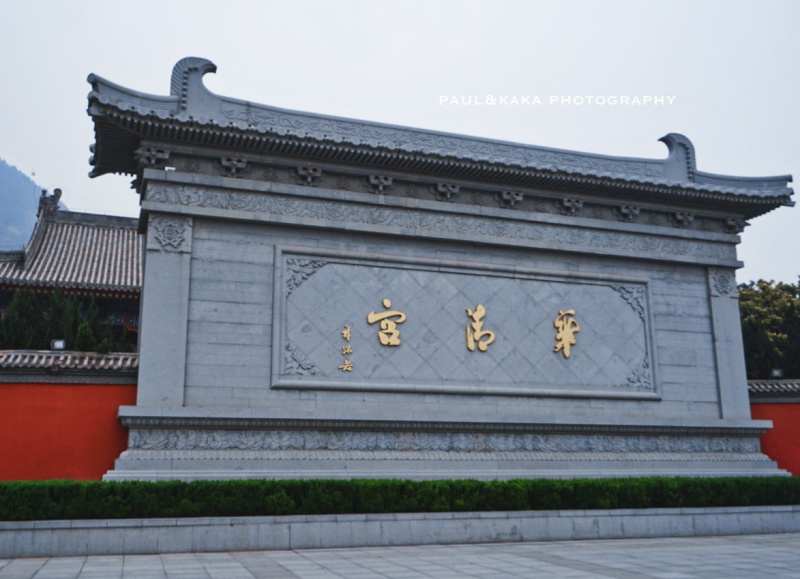
The Huaqing Palace Scenic Area is located at No. 038 Huaqing Road, Lintong District, Xi'an City, Shaanxi Province. It is a National 5A-level tourist attraction and a Major Historical and Cultural Site Protected at the National Level, integrating natural landscapes with cultural history. The scenic area consists of Huaqing Pool and Mount Li, with a total area of approximately 23,675,600 square meters (of which Huaqing Pool covers 85,600 square meters and Mount Li covers 23,590,000 square meters). With hot spring resources as its core feature, it has served as an imperial detached palace since the Qin Dynasty and reached its peak in the Tang Dynasty. It preserves remains such as the Tang Imperial Hot Spring Ruins and the Xi'an Incident Site, combining historical heritage with mountain and water scenery.
Historical Culture
The history of Huaqing Palace can be traced back to the pre-Qin period, when Emperor Qin Shi Huang built the "Lishan Tang" here, initiating the tradition of imperial hot spring palaces. Emperor Wu of Han expanded it into a detached palace. During the Tang Dynasty, Emperor Taizong and Emperor Xuanzong carried out two large-scale constructions, forming a layout integrating palace and city. Emperor Xuanzong of Tang resided here for more than half a year annually, making Huaqing Palace a political center outside Chang'an. It was destroyed during the An Lushan Rebellion in the Tianbao era. Subsequent dynasties all carried out repairs. In the Qing Dynasty, the Huan Garden (today's Five-Room Hall) was built. In modern times, it became an important historical witness site due to the "Xi'an Incident."
The Tang Imperial Hot Spring Ruins Museum within the scenic area displays Tang Dynasty imperial bathing pools (such as Yang Guifei's "Haitang Pool" and Emperor Xuanzong's "Lotus Pool"), confirming the luxurious life of the High Tang period; the Beacon Tower on Mount Li carries the allusion of King You of Zhou "fooling the feudal lords with beacon fires," becoming a symbol of the rise and fall of dynasties.
Main Attractions
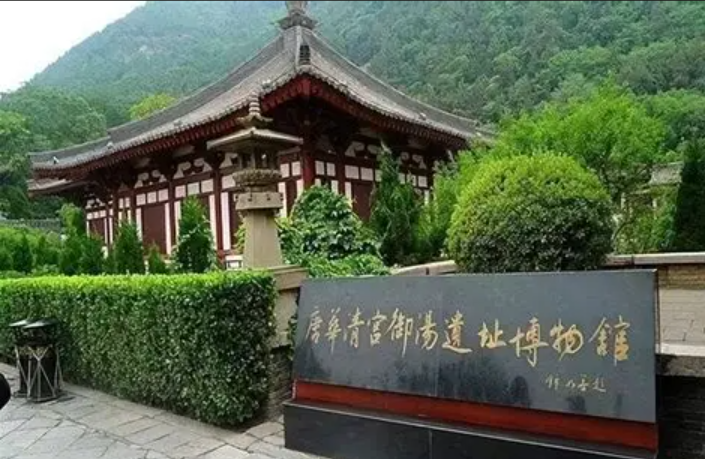
Tang Imperial Hot Spring Ruins Museum
The museum displays the ruins of five major Tang Dynasty imperial bathing pools, including Emperor Xuanzong's "Lotus Pool" (400 square meters, shaped like a stone lotus), Yang Guifei's "Haitang Pool" (25 square meters, shaped like a crabapple flower), and Emperor Taizong's "Xingchen Pool" (183 square meters, embodying the concept of "unity of heaven and man"). More than 3,000 artifacts have been unearthed at the site. It is the only venue in China that comprehensively displays Tang Dynasty imperial bathing culture.
Xi'an Incident Site · Five-Room Hall
Named after its five connected rooms, it was built in the late Qing Dynasty. In 1936, when Chiang Kai-shek resided here, the "Xi'an Incident" occurred. Bullet marks from the mutiny are still preserved on the walls and glass windows. The interior is furnished according to its original appearance, displaying the historical scenes before and after the incident. It is a Major Historical and Cultural Site Protected at the National Level.
Nine Dragon Lake
An artificial lake built in 1959, with a total area of 530 square meters, divided into upper and lower lakes by the Nine Dragon Bridge. Tang-style buildings along the shore (such as Chenxiang Hall and Feishuang Hall) are built around the lake. At night, the large-scale live-action dance drama "The Song of Everlasting Sorrow" is performed, using the lake and mountains as a backdrop to recreate the love story of Emperor Xuanzong of Tang and Yang Guifei.
Mount Li Beacon Tower
Located at the highest peak of the Western Xiuling Ridge of Mount Li (approximately 1,200 meters above sea level), it is the site of the allusion of King You of Zhou "fooling the feudal lords with beacon fires." The existing beacon tower is a Ming Dynasty structure. Climbing it offers a panoramic view of the scenic area and the Wei River scenery. It is a landmark attraction combining historical culture and natural landscape.
Tang Liyuan Site Museum
The Tang Dynasty Liyuan site excavated in 1994, covering approximately 1,500 square meters, displays the remains of the Tang Dynasty imperial music and dance institution. The museum exhibits unearthed pottery figurines, fragments of musical instruments, and other artifacts. It is important physical material for studying Tang Dynasty art and culture.
Food
Chengcheng Shuipen Mutton
A specialty dish from Chengcheng, Shaanxi, known for its clear mutton soup and tender meat. Near the scenic area, "Chengxian Laoge Shuipen Mutton" (Huaqing Yueronghui Branch) is a popular choice. The broth is made by simmering mutton bones for more than 8 hours and is served with crescent moon cakes. The average cost is about 35 yuan per person.
Biangbiang Noodles
A traditional Shaanxi wide noodle, about 50 centimeters long and 3 centimeters wide, paired with toppings such as tomato and egg or minced meat. Restaurants around the scenic area, such as "Lao Mijia Biangbiang Noodles," offer it at an average price of 20 yuan per bowl.
Youpo Noodles
Handmade noodles are boiled and topped with chili powder and chopped scallions, then splashed with hot oil to release the aroma. The texture is chewy and spicy. "Qin Yu Roujiamo" outside the scenic area is recommended for its youpo noodles, priced at 18 yuan per bowl. Paired with Bingfeng soda, it has a more local flavor.
Lintong Pomegranate Juice
Lintong is the "home of pomegranates." Freshly squeezed pomegranate juice in the scenic area is made from local Huojing pomegranates, bright red in color with a sweet and tart taste. It costs about 15 yuan per cup and is an excellent summer refreshment.
Tickets:
Admission is 120 yuan per person.
Search for the official WeChat public account "Huaqing Palace Scenic Area" for the latest updates or to purchase tickets online.
Opening Hours:
Peak season (March 1 – November 30): 7:00–19:00 (last entry at 18:00);
Off season (December 1 – February 28 of the following year): 7:30–18:00 (last entry at 17:00).
"The Song of Everlasting Sorrow" performance time: peak season 20:10–21:20 (one show daily); during the off season, check the scenic area's announcements in advance.
Tour Route:
Classic route: Wangjing Gate entrance → Furong Lake → Tang Imperial Hot Spring Ruins Museum (1 hour) → Xi'an Incident Exhibition Hall (30 minutes) → Five-Room Hall (20 minutes) → Nine Dragon Lake (30 minutes) → Changsheng Hall (40 minutes, watch the 6D film) → Zhaoyang Gate exit → Mount Li Cableway (optional, take the cableway to the Beacon Tower, 1.5 hours of sightseeing). The entire trip takes about 4–5 hours. If Mount Li is included, add 2 hours.
Transportation:
Metro: Take Metro Line 9 to Huaqing Pool Station (Exit C) and walk 5 minutes to the east gate of the scenic area.
Bus: From the city, take Tour Line 5 (Route 306), Route 914, or Route 915 to the "Huaqing Pool" stop and walk 3 minutes to the scenic area.
Self-driving: From downtown Xi'an, take the Lianhuo Expressway (G30) east, exit at the "Lintong Exit," and drive along Huaqing Road directly to the scenic area. Parking costs about 10 yuan per day.
Must-Visit Attractions:
Tang Imperial Hot Spring Ruins Museum: The only Tang Dynasty imperial bathing pool ruins in China, offering a sense of the historical scene of "in spring's cold, granted a bath at Huaqing Pool."
Xi'an Incident Site · Five-Room Hall: An important witness site of modern history, with bullet-mark remains and cultural relics recreating the scene of the incident.
Nine Dragon Lake "The Song of Everlasting Sorrow" performance: Watch an immersive historical dance drama with real scenery and mountains as the stage (tickets from 298 yuan, advance booking required).
Mount Li Beacon Tower: Climb high to view the Guanzhong Plain and hear the story of King You of Zhou fooling the feudal lords with beacon fires.
Travel Tips:
It is recommended to visit Huaqing Pool in the morning and climb Mount Li in the afternoon to avoid the midday heat. If watching "The Song of Everlasting Sorrow," consider entering in the evening, first touring the night scenery and then watching the performance.
Rent an electronic audio guide (30 yuan per device) or hire a guide (100 yuan per session) to gain a deeper understanding of the historical background.
For Mount Li, you can choose the cableway (60 yuan one way, 120 yuan round trip). Walking up takes about 1.5 hours. Be sure to wear non-slip shoes.
Food inside the scenic area is relatively expensive. It is recommended to eat local specialties in Lintong's urban area after leaving the park, such as zenggao and cold noodles with roujiamo at the Beishizi Night Market.
Notes:
There are many cultural relic sites in the scenic area. Touching and climbing are prohibited, and flash photography is not allowed.
The performance venue for "The Song of Everlasting Sorrow" is an open-air theater. Bring mosquito repellent in summer and a jacket in winter.
Some sections of Mount Li are steep. Be cautious about climbing in rain or snow and ice, and it is advisable to go with companions.
Be wary of unofficial guides around the scenic area. Guide services should be booked through official channels.
Keep your ticket safe. Some attractions (such as the Five-Room Hall and Tang Imperial Hot Spring Ruins) require ticket verification for entry.