The Penglai Pavilion Scenic Area is located in Penglai District, Yantai City, Shandong Province. It is a national 5A-level tourist attraction, famous at home and abroad for the legend of the "Eight Immortals Crossing the Sea" and the natural wonder of the "mirage," and is known as a "fairyland on earth." The scenic area integrates mountain and sea scenery with cultural relics and historic sites. It features both the magnificent sea view where the Yellow Sea and the Bohai Sea meet and well-arranged ancient architectural complexes, displaying unique natural and cultural charm. The Penglai Pavilion Scenic Area covers an area of about 5.8 square kilometers, with the core scenic area covering about 1.8 square kilometers. It is mainly composed of the Penglai Pavilion ancient architectural complex, Tianheng Mountain, Penglai Water City, and the seaside sightseeing belt. Among them, the Penglai Pavilion ancient architectural complex is built against the mountain and beside the sea, with a total building area of about 19,000 square meters. The pavilions, terraces, and towers are arranged in an orderly manner, showcasing the exquisite craftsmanship and simple elegance of Ming and Qing dynasty architecture.
Historical Culture
The history of Penglai Pavilion can be traced back to the sixth year of the Jiayou reign of the Northern Song Dynasty (1061), when defensive structures were built here to resist foreign enemies and later gradually developed into a place serving both military and sightseeing functions. In the seventeenth year of the Wanli reign of the Ming Dynasty (1589), the main building of Penglai Pavilion was expanded, forming its current basic layout. After repairs and improvements during the Ming and Qing dynasties, it became an important coastal defense fortress in northern China in ancient times and a gathering place for literati and poets.
As one of the four great famous towers of ancient China, Penglai Pavilion carries rich historical and cultural connotations. Historically, many famous figures such as Su Shi, Qi Jiguang, and Feng Yuxiang left their footprints and inscriptions here. There are more than 200 extant stone inscriptions, covering poetry, colophons, and other forms, with extremely high calligraphic and documentary value. The legend of the "Eight Immortals Crossing the Sea" has added a strong mythological color to Penglai Pavilion. It is said that the eight immortals, including Iron Crutch Li and Han Zhongli, each displayed their magical powers here and crossed the sea. This legend has not only been recorded in classics but also widely spread through folk stories, opera, and other forms, making Penglai Pavilion an important carrier of mythological culture.
Main Attractions
Penglai Pavilion
Penglai Pavilion is the core building of the scenic area, located on the top of Danya Mountain. It was first built in the Northern Song Dynasty, and the existing building was rebuilt during the Ming and Qing dynasties. It is 15 meters high and has a building area of about 328 square meters. The pavilion is a two-story xieshan-style building with upturned eaves and carved beams and painted rafters. On the first floor, statues of the Eight Immortals such as Lu Dongbin and Iron Crutch Li are enshrined. On the second floor, there is an observation deck from which visitors can look far out at the magnificent scenery of the Yellow Sea and the Bohai Sea, and when the weather is suitable, they can also observe the "mirage" wonder. The plaque inscribed "Penglai Pavilion" hanging inside the pavilion was written by the Qing dynasty calligrapher Tiebao. Its strokes are vigorous and it is an important cultural relic in the pavilion.
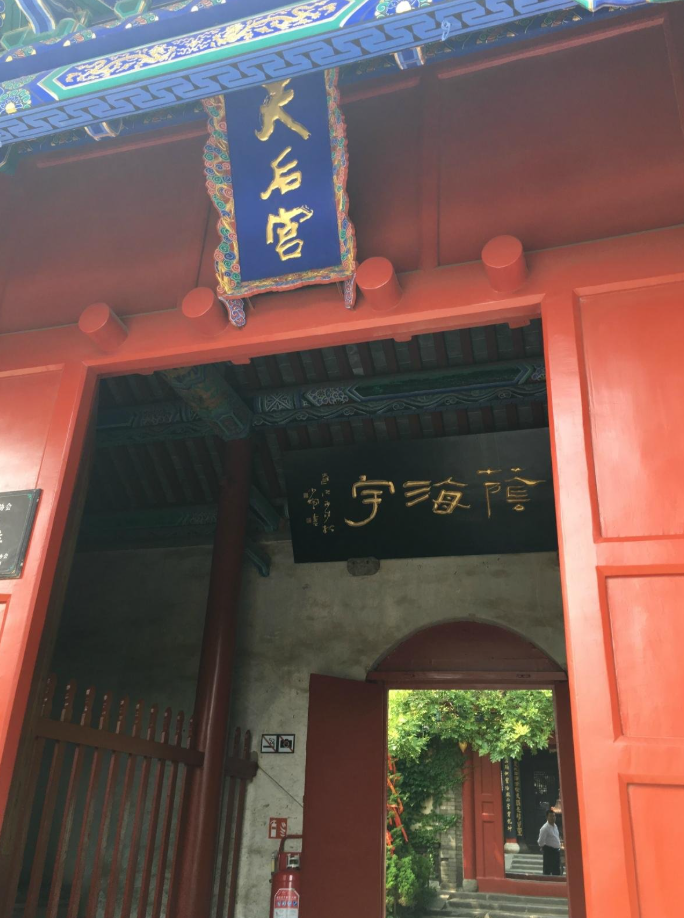
Tianhou Palace
Tianhou Palace is located on the west side of the Penglai Pavilion ancient architectural complex. It was first built in the Song Dynasty and is one of the larger Mazu temples in northern China, with a building area of about 1,500 square meters. Along the central axis, the temple successively includes the opera tower, mountain gate, main hall, and other buildings. The main hall enshrines a statue of Mazu, while the side halls enshrine statues of the Four Dragon Kings of the Seas and other deities. Tianhou Palace is not only a place where fishermen pray for blessings, but its architectural decorations, especially the wood carvings and brick carvings, are extremely exquisite. In particular, the "Dragon and Phoenix Bringing Auspiciousness" wood carving on the opera tower is vivid in shape and can be called a masterpiece of Ming and Qing carving art.
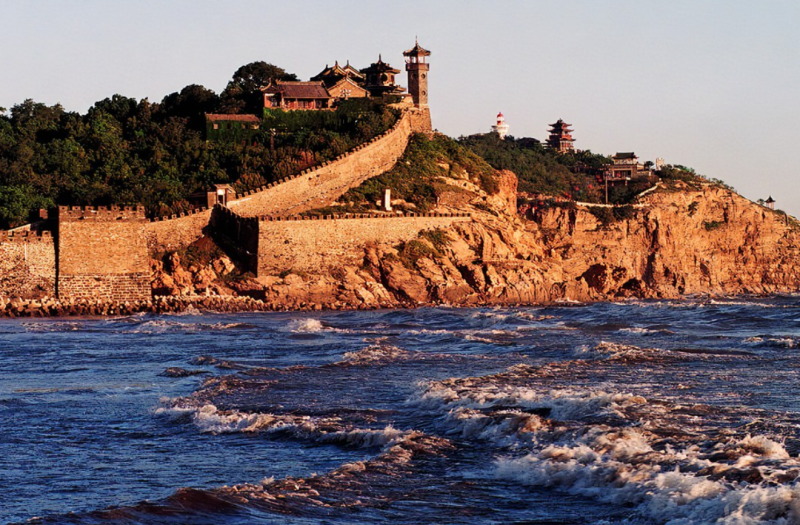
Penglai Water City
Penglai Water City, also known as Beiwo City, was first built during the Qingli reign of the Northern Song Dynasty. It is one of the most completely preserved ancient naval bases in China, with a total area of about 270,000 square meters. It consists of the water city wall, water gate, wharf, forts, and other parts. The water city was built according to the terrain. Its wall has a perimeter of about 2,000 meters and a height of 7 meters, with defensive facilities such as crenellations and bastions. It was once an important military fortress where the Ming dynasty anti-Japanese pirate general Qi Jiguang trained his naval forces and resisted Japanese pirates. Today, the remaining ancient forts, naval command office, and other relics in the water city still allow people to feel the stern momentum of coastal defense in those years.
Tianheng Mountain
Tianheng Mountain is located on the northwest side of Penglai Pavilion, facing Danya Mountain across the sea. It covers an area of about 0.4 square kilometers and is named after Tian Heng of the Han Dynasty, who stationed troops here. The mountain is densely covered with vegetation and has landscapes such as a coastal plank road and sea-viewing pavilion. From the summit, visitors can overlook the unique scene of the confluence of the Yellow Sea and the Bohai Sea—the waters of the two seas are clearly different in color, forming a natural "sea division line." In addition, Tianheng Mountain also preserves historical relics such as the Tianheng Stockade Site and the Yellow Sea-Bohai Sea Boundary Monument. It is a tourist destination that combines natural landscapes with cultural heritage.
Food
Penglai Small Noodles
Penglai small noodles are a traditional noodle dish with strong local characteristics, with a history of more than a hundred years. The noodles are made from high-quality flour and are fine and soft in texture. They are paired with broth made from seafood such as red sea bream and mullet, giving a rich fresh flavor. Penglai small noodles emphasize "thin noodles, fresh broth, and delicious taste." Common broths include "da lu" and "clear soup" and other types. Paired with chopped green onion, cilantro, and other ingredients, the taste is rich. They are the first choice for breakfast for Penglai people. Authentic flavors can be tasted at time-honored noodle shops around the scenic area such as "Jianxing Noodle Shop."
Eight Immortals Banquet
The Eight Immortals Banquet is a special banquet created in the Penglai area inspired by the legend of the "Eight Immortals Crossing the Sea." It cleverly combines seafood with local ingredients. Each dish corresponds to one immortal and combines visual appeal with deliciousness. For example, "Iron Crutch Li Sea Cucumber" uses local sea cucumber braised in superior broth, and "He Xiangu Bailing Mushroom" uses mushrooms to simulate the elegance of the immortal lady. The entire banquet is exquisitely shaped and implies good fortune. It is an excellent choice for experiencing Penglai's food culture. Restaurants such as the Penglai Pavilion Hotel within the scenic area can provide this banquet.
Nearby Foods
Changdao Scallops
Changdao scallops are a specialty of the sea area around Penglai. Because they grow in the clear waters of the Bohai Bay, their meat is tender and juicy. Common methods include steamed scallops with garlic and vermicelli, and stir-fried scallop adductor with seasonal vegetables. At seafood stalls near Penglai Pavilion, tourists can taste fresh scallops just caught from the sea. Paired with ginger and vinegar sauce, they better highlight the original flavor of the seafood.
Braised Donkey Meat
Penglai braised donkey meat has a long history. It is made from local high-quality donkey meat and braised with more than ten spices such as star anise and cinnamon. The meat is soft and tender with a mellow aroma. It can be eaten directly or with baked wheat cakes. The products of the local time-honored brand "Guocheng Braised Donkey Meat" are especially well known. Vacuum-packed braised donkey meat can be purchased as a souvenir at specialty stores around the scenic area.
Tickets:
Tickets are 100 yuan per person.
You can search for the official public account "Penglai Pavilion Scenic Area" on WeChat to get the latest updates or buy tickets online.
Opening Hours:
Opening hours are slightly adjusted according to the seasons: from April 1 to October 31, the peak season, opening hours are 7:00 to 18:00; from November 1 to March 31 of the following year, the off-season, opening hours are 8:00 to 17:00. Some attractions within the scenic area, such as the Penglai Water City forts and the Tianheng Mountain plank road, may be temporarily closed in severe weather such as typhoons and rainstorms. Visitors are advised to check real-time information on the official website before traveling.
Tour Route:
After entering the scenic area, visitors can first begin touring the Penglai Pavilion ancient architectural complex, visiting the Penglai Pavilion main building, Tianhou Palace, Dragon King Palace, and other buildings in sequence to experience the charm of ancient architecture and mythological culture. This process takes about 1.5 hours. Then go to Penglai Water City to visit the naval command office, ancient forts, and other relics to learn about ancient coastal defense history, which takes about 1 hour. At noon, you can taste special foods such as Penglai small noodles at a restaurant in the scenic area. In the afternoon, take the scenic area sightseeing bus (10 yuan per person one way) to Tianheng Mountain, stroll along the coastal plank road, and enjoy the landscape of the Yellow Sea-Bohai Sea boundary. The tour time is about 1.5 hours. Finally, go to the seaside sightseeing belt to enjoy the sea view and take photos as souvenirs. The entire tour is recommended to be arranged for 5 to 6 hours.
Transportation:
Bus: Within Penglai District, you can take buses such as No. 1, No. 2, No. 3, No. 4, and No. 5 to get off at the "Penglai Pavilion Scenic Area" station, then walk about 5 minutes to reach the scenic area entrance. Departing from Yantai city area, you can take the intercity bus from Yantai to Penglai (fare 25 yuan), get off at Penglai Bus Station, and transfer to the above bus lines to go to the scenic area.
Self-driving: Departing from Yantai city area, drive along the Rongwu Expressway (G18) toward Penglai. After exiting the expressway at the Penglai exit, drive straight along Zhonglou South Road for about 3 kilometers to reach the scenic area. The scenic area parking lot charges 5 yuan per hour for small vehicles and 10 yuan per hour for large vehicles.
High-speed rail: After taking the high-speed rail to Penglai City Station, you can transfer to Penglai Bus No. 6 to the "Penglai Pavilion Scenic Area" station, or take a taxi (about 20 minutes, about 30 yuan).
Must-Visit Attractions:
Penglai Pavilion Main Building: As the landmark building of the scenic area, it not only allows visitors to appreciate exquisite Ming and Qing architecture, but also to feel the "fairyland" sea view from the top. It is the best place to view the "mirage." The building is 15 meters high and contains statues of the Eight Immortals and inscriptions by famous people from various dynasties.
Penglai Water City: The most completely preserved ancient naval base existing in China, retaining historical relics of Ming dynasty anti-Japanese pirate defense. The city wall has a perimeter of about 2,000 meters. Facilities such as ancient forts demonstrate the wisdom of ancient coastal defense and have extremely high historical value.
Tianheng Mountain: A wonderful place for viewing the Yellow Sea-Bohai Sea boundary. The coastal plank road is about 800 meters long. Along the way, visitors can enjoy the natural wonder of the confluence of the two seas. The Tianheng Stockade Site at the summit adds a sense of historical weight.
Travel Suggestions:
It is recommended to visit from April to October, when the climate is suitable. Not only can visitors enjoy the mountain and sea scenery, but there is also a relatively high probability of seeing the "mirage" (mostly appearing in the early morning or evening from May to August).
There are many steps in the scenic area. It is recommended to wear comfortable sports shoes, bring sun protection items and drinking water, and in summer prepare a light jacket to cope with the sea breeze.
If you want to understand the history of the scenic area in depth, you can rent an electronic guide device (rental 30 yuan per unit), or follow the official tour guide group at the entrance (free, one group every 30 minutes).
Avoid peak periods such as May Day and National Day, when there are many tourists. You can choose to visit on weekdays for a better touring experience.
Precautions:
Smoking and littering are prohibited in the scenic area. Please observe public order while touring, protect cultural relics and historic sites, and do not touch or carve on ancient buildings or stone inscriptions.
Some sections of the Tianheng Mountain coastal plank road are narrow. Please pay attention to safety while touring, take good care of the elderly and children, and avoid getting close to the edge of the railings.
When viewing the "mirage," follow the guidance of staff and stay in designated areas. Do not crowd or climb dangerous areas.
There are many seafood stalls around the scenic area. When purchasing or dining, please confirm prices and freshness to avoid consumption disputes.
In winter, some sections in the scenic area may freeze. Please pay attention to slip prevention while touring, follow weather forecasts, and arrange your itinerary reasonably.