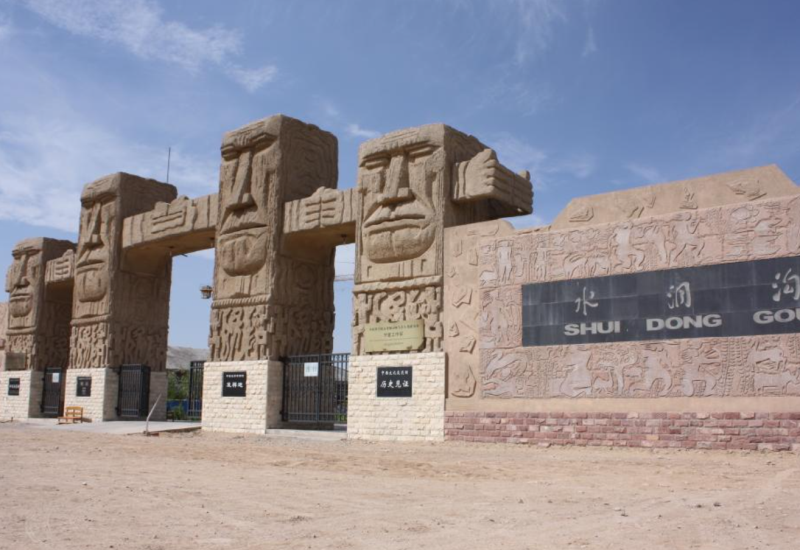
Shuidonggou Tourist Area is located in Linhe Town, Lingwu City, Yinchuan City, Ningxia Hui Autonomous Region. It is 19 kilometers west of Yinchuan City, 30 kilometers south of Lingwu City, and 11 kilometers from Hedong Airport. It lies in the core area of the Yinchuan Hedong tourism belt and borders Ordos City, Inner Mongolia to the north. It is a national 5A-level tourist attraction and covers an area of 7.8 square kilometers.
The scenic area has remarkable features, integrating archaeological sites, canyon earth forests, flat-lake wetlands, grassland pastoral songs, desert customs, and Great Wall fortresses. It possesses rich yardang landform landscapes, forming more than 20 unique sights such as Devil City, Whirlwind Cave, Wotuo Ridge, Motian Cliff, Duanyun Valley, and Guailiu Gully. It is also a grand garden of military defense structures from China's Ming Dynasty, including the Great Wall, beacon towers, castles, trenches, hidden troop caves, grand canyons, and watchtowers. It is one of China's relatively well-preserved three-dimensional military defense systems of the Great Wall.
Historical Culture
Shuidonggou has a long history. As early as 30,000 to 40,000 years ago, humans settled and lived here. In 1923, French paleontologists Teilhard de Chardin and Emile Licent discovered the Shuidonggou site in the Biangou River basin of Lingwu, Ningxia. This was one of the earliest Paleolithic sites discovered in China.
Since then, after six scientific archaeological excavations, a large number of stone artifacts, animal fossils, and other precious cultural relics have been unearthed, providing important physical evidence for the study of human origins, evolution, and the production and lifestyle of early humans. The stone tool assemblage of the Shuidonggou site is unique in China's Paleolithic cultural system, and it also shows certain connections with the Middle and Late Paleolithic stone tool cultures of Europe, Mongolia, and Siberia.
By the Ming Dynasty, in order to resist foreign invasions, a series of military defense structures such as the Great Wall, beacon towers, castles, and hidden troop caves were built in the Shuidonggou area, forming a complete three-dimensional military defense system. This witnessed the historical changes and ethnic integration of that time.
Main Attractions
Site No. 1
Site No. 1 is an important part of the Shuidonggou site and one of the earliest areas where archaeological excavations were carried out. Here, visitors can directly see the original archaeological excavation site, gain an in-depth understanding of the procedures and methods of archaeological work, and personally experience the unique charm of a Paleolithic cultural site.
Site No. 2
Site No. 2 is also a key excavation point of the Shuidonggou site, where a large number of stone artifacts and animal fossils of research value have been unearthed. These cultural relics played an important role in further exploring the connotation and extension of Shuidonggou culture, allowing visitors to have the opportunity to closely contact the traces of life of ancient humans.
Site No. 3
Site No. 3 further enriches the cultural connotation of the Shuidonggou site, displaying the traces and characteristics of human activities in different periods. It provides more physical materials for a comprehensive understanding of the historical evolution of the Shuidonggou area and is important evidence for studying the course of human development.
Shuidonggou Grand Canyon
The two banks of the Shuidonggou Grand Canyon feature steep and strange walls, with crisscrossing ravines. Through long-term rainwater erosion, the deep loess has formed a unique "earth forest" landscape. Earth pillars stand abruptly and have peculiar shapes. A stream murmurs at the bottom of the valley, contrasting with the surrounding yardang landforms and forming a magnificent and mysterious natural picture.
Ming Great Wall
The Ming Great Wall in the Shuidonggou scenic area is the most completely preserved section of Ming Great Wall remains in Ningxia. It starts from Hengcheng on the east bank of the Yellow River, passes through Lingwu and Yanchi in Ningxia, and extends to Dingbian County in Shaanxi. The Great Wall is mostly rammed with loess. Under the morning and evening sunlight, it contrasts with the copper-colored Yellow River water and presents a unique purple color, hence it is also called the "Purple Frontier." It winds among layered ridges and mountain gullies, like a giant dragon, majestic and spectacular.
Hongshan Lake
Hongshan Lake is a lake wetland landscape formed by the accumulation of the Qingshui River flowing into the Yellow River. The lake water is clear to the bottom, surrounded by green trees. It complements the blue sky, white clouds, Great Wall, and yardang landforms, forming a picturesque scene. It is like a bright pearl inlaid in the desert, creating a quiet and beautiful atmosphere.
Shazao Bay
In Shazao Bay, the sand jujube forest is lush and green. Every autumn, sand jujubes hang all over the branches, and the air is filled with a rich sweet fragrance of sand jujubes. Visitors can stroll here leisurely, feel the gifts of nature, enjoy the quiet and beautiful pastoral scenery, and experience a different kind of rural charm.
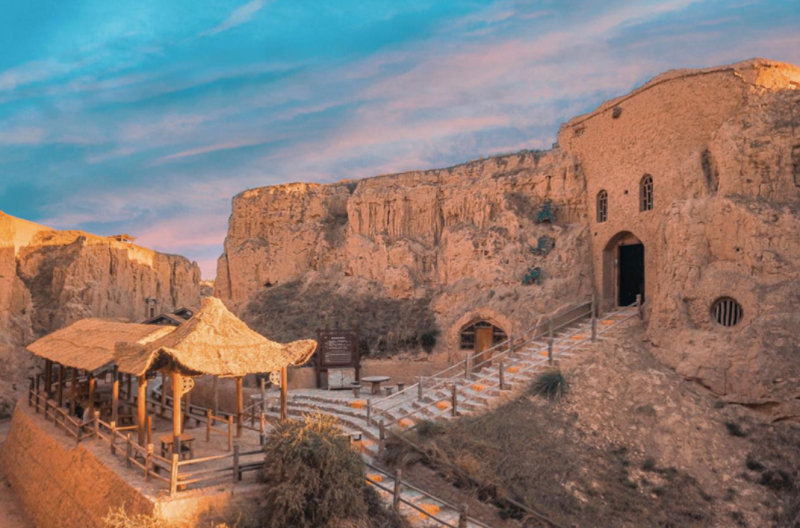
Hidden Troop Cave
The Hidden Troop Cave is an important part of the Ming Dynasty Great Wall defense system. The cave has a complex structure, with numerous traps and hidden weapons. It winds and twists like a mysterious underground maze. Visitors here can personally experience the wisdom and ingenuity of ancient military defense, feel the tense and mysterious atmosphere of wartime, and appreciate the intelligence and military strategy of the ancients.
Hongshan Fort
Hongshan Fort is a military castle from the Ming Dynasty. Its walls are tall and thick, and the buildings inside the fort are arranged in an orderly manner. It was once an important stronghold for stationed troops and witnessed countless historical vicissitudes. Standing on Hongshan Fort, one can almost hear the sounds of golden spears and iron horses from those years and feel the weight and changes of history, which inevitably evokes deep emotion.
Food
Hand-grabbed Mutton
Hand-grabbed mutton is a highly representative traditional delicacy in Ningxia. It is made from high-quality local mutton through a simple yet unique boiling process. The meat is tender and juicy, fatty but not greasy. When eating, one only needs to dip it in a little specially made seasoning to taste the most authentic fresh flavor of the mutton. It is unforgettable and one of the must-try foods when visiting the Shuidonggou Tourist Area.
Lamb Offal Soup
Lamb offal soup uses sheep heart, liver, lungs, stomach, intestines, and other internal organs as the main ingredients, paired with vermicelli, tofu, and other ingredients. After careful cooking, it becomes a fragrant and richly flavored soup. The soup is mellow and delicious, and the lamb offal is cleaned thoroughly without any unpleasant smell. The texture is rich and varied. It is one of the traditional breakfasts loved by local residents and a good choice for tourists to experience local food culture.
Cold Skin Noodles
The cold skin noodles around the Shuidonggou Tourist Area are unique. The cold skin is chewy and smooth, paired with chili oil, vinegar, garlic juice, and other seasonings, plus fresh side ingredients such as shredded cucumber and bean sprouts. It is colorful and rich in taste. It tastes sour, spicy, and refreshing, especially in hot summer. It is a popular summer food.
Sanzi
Sanzi is a traditional fried pasta, thin as a hair, golden in color, and crisp and delicious in taste. It is usually a special food for festivals or entertaining guests. It can be eaten directly to enjoy its crispy texture, or soaked in milk tea for a different flavor. It is one of the common traditional foods in the Ningxia region.
Fried Latiao
Fried Latiao is a dish made by stir-frying cooked hand-pulled noodles with various vegetables and meat. The noodles are chewy and textured, and the side ingredients are rich and varied. After stir-frying, the flavor is rich and mellow, with an appealing aroma. This dish is not only filling but also delicious. It is deeply loved by local people and tourists and is a must-choice for experiencing Ningxia's specialty food.
Tickets:
Full price 60 yuan, half price 30 yuan
You can search for the scenic area's official public account on WeChat, Ningxia Shuidonggou Tourism, to obtain the latest updates or buy tickets online.
Opening Hours:
Peak season: 08:00 - 19:30
Off season: 09:00 - 17:30
You can obtain the latest updates on the scenic area's official WeChat public account.
Tour Route:
The following is a relatively classic tour route suitable for most tourists: After entering from the scenic area gate, first visit the Shuidonggou Site Museum. Through the rich exhibits and modern display methods in the museum, gain an in-depth understanding of Shuidonggou's history, culture, and archaeological excavation results. Then go to Zhangsan Shop to experience the scene where archaeologists worked and lived. Afterwards, take the sightseeing bus to visit Site No. 1, Site No. 2, and Site No. 3 in sequence, and observe the traces of ancient human activities up close. Then go to the Shuidonggou Grand Canyon and stroll along the canyon trail to enjoy the unique earth forest and yardang landform landscapes. Next, take a boat tour on Hongshan Lake to enjoy the lake and mountain scenery. After landing, go to the Ming Great Wall to experience its majesty. Then go to the Hidden Troop Cave to explore the mysterious underground military defense project. Finally, arrive at Hongshan Fort and feel the historical charm of the Ming Dynasty military castle.
Transportation:
Self-driving: From downtown Yinchuan, you can go to the Shuidonggou Tourist Area via Yinggu Expressway, Qingyin Expressway, etc. The scenic area has a large parking lot, making parking convenient.
Bus: You can take the tourist shuttle to Shuidonggou at Xinyue Square in Xingqing District, Yinchuan City. It departs regularly every day, with affordable fares and convenient travel.
Chartered car: If there are many people traveling together or you want a freer and more flexible way to travel, you can book a chartered car to the Shuidonggou Tourist Area at a travel agency or car rental company in downtown Yinchuan.
Must-Visit Attractions:
Shuidonggou Site Museum: The museum uses rich exhibits and advanced display technology to systematically introduce the discovery, excavation process, and research results of the Shuidonggou site. Through forms such as 5D cinemas, it vividly reproduces the living scenes of the Shuidonggou ancestors. It is an important window for understanding Shuidonggou culture.
Shuidonggou Grand Canyon: With unique landform landscapes, strange rocks and crisscrossing gullies in the canyon, walking through it feels like being in an ancient world. You can deeply feel the uncanny workmanship of nature. It is a must-visit place for photography and outdoor enthusiasts.
Hidden Troop Cave: An outstanding representative of Ming Dynasty military defense engineering. The ingenious mechanisms inside the cave demonstrate the ancients' remarkable military wisdom. Visitors can personally explore this underground maze and feel the weight and mystery of history.
Ming Great Wall: A well-preserved Ming Great Wall site. Standing on the wall, you can overlook the desert scenery and imagine the golden spears and iron horses of those years. It has extremely high historical, cultural, and ornamental value.
Travel Suggestions:
It is recommended to visit on a sunny day so that you can better enjoy the scenic area's natural scenery and take beautiful photos.
Because the scenic area is large and some attractions are far apart, it is recommended to buy a package ticket that includes the sightseeing bus to save energy and time.
The scenic area is located at the edge of the desert, and the ultraviolet rays are strong. Be sure to take sun protection measures, such as carrying sunscreen, sunglasses, and a sun hat.
When visiting underground attractions such as the Hidden Troop Cave, the light inside is dim and the ground may be slippery. Please pay attention to safety and follow the scenic area's instructions and staff guidance.
Understanding some historical and cultural knowledge about Shuidonggou in advance can make the tour more interesting and rewarding.
Precautions:
Smoking is strictly prohibited in the scenic area to prevent fires and ensure the safety and cleanliness of the scenic area.
Protect the scenic area environment, do not spit everywhere, do not litter, and jointly maintain the scenic area's natural ecology.
When taking transportation such as boats and sightseeing buses, obey order, follow staff arrangements, fasten seat belts, and ensure personal safety.
When visiting sites and cultural relics, please do not touch or climb them to avoid damaging the cultural relics, and jointly protect precious historical and cultural heritage.
Summer temperatures are relatively high, and water replenishment points in the scenic area are relatively limited. It is recommended to bring an appropriate amount of drinking water and heatstroke prevention medicines to prevent heatstroke.