The Genghis Khan Mausoleum Tourist Area is located in Ejin Horo Banner, Ordos City, Inner Mongolia Autonomous Region. It is a national 5A-level tourist attraction and a large-scale cultural tourism area integrating sacrificial culture, historical commemoration, and sightseeing. The scenic area covers a total area of approximately 5.5 square kilometers, with a core protection area of 1.92 square kilometers. Centered on the Genghis Khan Mausoleum, it blends Mongolian architectural style with modern design concepts. This is the site of Genghis Khan's cenotaph, a spiritual sanctuary in the hearts of the Mongolian people, and a nationally protected key cultural relic site. The buildings within the scenic area are magnificent, with white and blue as the main color tones, symbolizing the blue sky and white clouds and reflecting the Mongolian people's reverence for nature. The area features multiple functional zones, including a sacrificial area, exhibition halls, and a folk culture area, comprehensively showcasing Genghis Khan's historical achievements and Mongolian traditional culture.
History and Culture
The sacrificial activities at the Genghis Khan Mausoleum began in 1227 after Genghis Khan's death and have continued for nearly 800 years, forming a complete and unique sacrificial system that has been included in the national intangible cultural heritage list. Every year on the 21st day of the third lunar month, the 15th day of the fifth lunar month, the 12th day of the eighth lunar month, and the 3rd day of the tenth lunar month, the scenic area holds grand sacrificial ceremonies, attracting numerous Mongolian people and domestic and overseas tourists to come and pay their respects.
As the founder of the Mongol Empire, Genghis Khan's historical achievements had a profound impact on world history. The Genghis Khan Historical and Cultural Exhibition Hall within the scenic area systematically displays Genghis Khan's life story, the rise and fall of the Mongol Empire, and the achievements of the Mongolian people in military, cultural, scientific, and technological fields through artifacts, photographs, and video materials.
In addition, the scenic area preserves a large number of traditional Mongolian folk cultural elements, such as the Naadam Festival, Mongolian song and dance, and traditional handicraft production, allowing visitors to experience the living cultural heritage of the Mongolian people while learning about history. These cultural elements, combined with the sacrificial culture of the Genghis Khan Mausoleum, constitute the rich historical and cultural connotations of the scenic area.
Main Attractions
Genghis Khan Mausoleum Palace
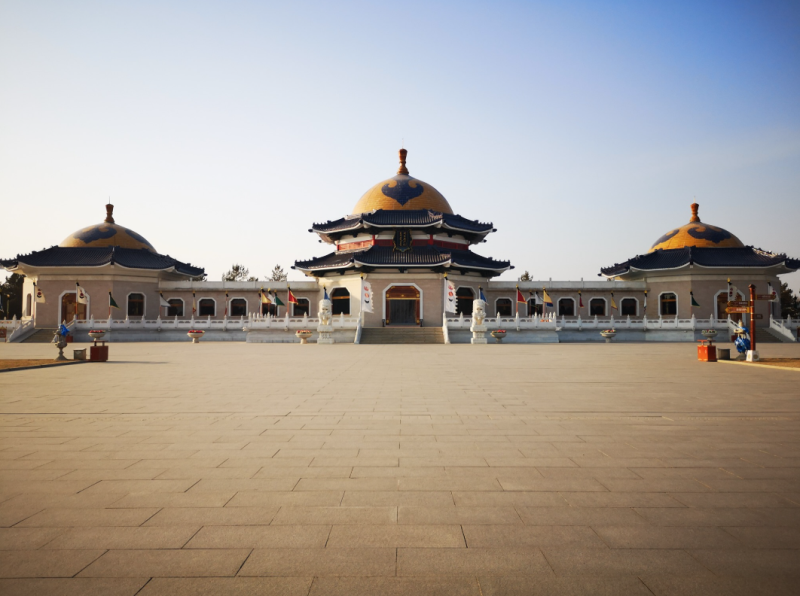
The Genghis Khan Mausoleum Palace is the core building of the scenic area, covering an area of approximately 1,500 square meters. It consists of the Main Hall, East Hall, West Hall, and Rear Hall, arranged in a "mountain" shape. The Main Hall is 26 meters high, topped with a Mongolian yurt-style dome inlaid with blue glazed tiles, and a plaque reading "Genghis Khan Mausoleum" hangs in the center. Inside the hall, Genghis Khan's spirit receptacle is enshrined, with various sacrificial items placed in front of it, creating a solemn and reverent atmosphere. The East and West Halls respectively enshrine Genghis Khan's relics and the spirit tablets of family members, while the Rear Hall displays murals depicting Genghis Khan's life story.
Sulde Altar
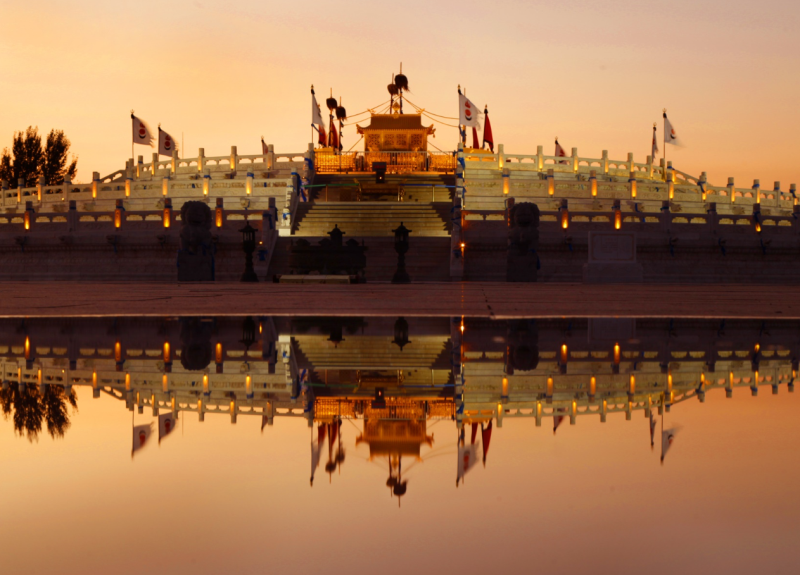
The Sulde is a symbol of the war god worshipped by the Mongolian people. The Sulde Altar is located in front of the Mausoleum Palace and consists of a main Sulde and four subsidiary Suldes. The main Sulde is 13.5 meters high, with a flagpole made of sandalwood and a three-pronged iron spearhead at the top, symbolizing power and victory. The altar is surrounded by stone railings, and the ground is paved with bluestone slabs. It is the site for holding sacrificial ceremonies and major events. Every year, a Sulde sacrificial ceremony is held here to pray for favorable weather and national peace and prosperity.
Genghis Khan Historical and Cultural Exhibition Hall
The exhibition hall has a building area of approximately 3,000 square meters and is divided into multiple exhibition rooms. Through physical objects, models, multimedia, and other means, it provides a detailed introduction to Genghis Khan's life and the history of the Mongol Empire. The hall houses a large collection of precious cultural relics, including ancient weapons, clothing, daily necessities, and documentary materials, among which are many national first-class cultural relics. The exhibition follows a chronological order, clearly presenting the historical process of the Mongolian people from tribal alliances to the establishment of a vast empire, as well as Genghis Khan's impact on world history.
Mongolian Historical and Cultural Museum
The Mongolian Historical and Cultural Museum focuses on the folk culture and historical development of the Mongolian people, with a building area of approximately 2,500 square meters. The museum displays traditional Mongolian dwellings, food culture, festival customs, and traditional arts, such as Mongolian yurts, saddles, horsehead fiddles, and embroidery. Through these exhibits, visitors can gain an in-depth understanding of the Mongolian people's way of life and cultural characteristics, and feel the wisdom and creativity of this nomadic ethnic group.
Qizhuang Shanhe Gate Landscape
The Qizhuang Shanhe Gate Landscape is the entrance landmark of the scenic area. It consists of two 21-meter-high Mongolian-style sculptures depicting Genghis Khan riding into battle, symbolizing his heroic spirit of galloping across the battlefield and dominating the land. The span between the gates is approximately 40 meters, with a banner reading "Genghis Khan Mausoleum Tourist Area" hung above. It is magnificent and visually striking, making it a popular spot for tourists to take photos.
Cuisine
Roast Lamb Leg
Roast lamb leg is a traditional Mongolian signature dish and a specialty food within the scenic area. Local free-range sheep legs are selected, marinated, and slowly roasted over charcoal until the outer skin is golden and crispy and the meat is tender and juicy. The roasted lamb leg is sliced thinly with a knife and eaten with special seasonings, offering a rich texture and fragrant aroma. In the yurt restaurants within the scenic area, visitors can enjoy roast lamb leg while watching Mongolian song and dance performances, experiencing authentic prairie customs.
Milk Tea
Milk tea is an indispensable beverage in the daily life of the Mongolian people and can be found everywhere in the dining areas of the scenic area. It is made primarily from brick tea and milk, with salt, butter, and roasted millet added during the brewing process. It has a savory and rich taste and is effective for dispelling cold and keeping warm. Milk tea is usually enjoyed with tofu, milk skin, and boiled mutton, and is a must-try beverage for experiencing Mongolian food culture.
Boiled Mutton
Boiled mutton is a traditional Mongolian meat dish. Fresh mutton (usually ribs or leg) is selected, boiled in clear water, and eaten with salt, preserving the original freshness of the lamb. In the specialty restaurants within the scenic area, boiled mutton is served on large plates, and visitors eat it with their hands, fully displaying the bold prairie style. This dish is not only delicious but also reflects the hospitable food culture of the Mongolian people.
Milk Tofu
Milk tofu is a traditional Mongolian dairy product that can be tasted in the folk culture area of the scenic area. It is made from milk through fermentation, coagulation, and pressing processes. It has a firm texture, a slightly sour taste, and is rich in nutrients. Milk tofu can be eaten directly, grilled and dipped in sugar, or soaked in milk tea. It is a highly distinctive food in Mongolian cuisine.
Tickets:
Tickets are 90 yuan per person.
You can search for the official WeChat public account "成陵文旅" (Chengling Culture and Tourism) to get the latest updates or purchase tickets online.
Opening Hours:
The scenic area is open year-round, with opening hours slightly adjusted according to the seasons. From April 1 to October 31, opening hours are 8:00-18:00; from November 1 to March 31 of the following year, opening hours are 9:00-17:00. During sacrificial activities, opening hours will be appropriately advanced. Specific times can be found in official notices from the scenic area.
Tour Route:
After entering the scenic area, visitors first visit the Qizhuang Shanhe Gate Landscape to experience its magnificent momentum, which takes about 20 minutes; then proceed to the Genghis Khan Mausoleum Palace to pay respects to the spirit receptacle and learn about the architectural features and sacrificial culture of the mausoleum palace, which takes about 1 hour; next, visit the Genghis Khan Historical and Cultural Exhibition Hall to systematically learn about Genghis Khan's life and the history of the Mongol Empire, which takes about 1.5 hours; have lunch in the dining area of the scenic area and taste Mongolian specialty foods, which takes about 1 hour; in the afternoon, go to the Sulde Altar to watch sacrificial ceremonies (if during a sacrificial activity) or learn about the altar culture, which takes about 40 minutes; then visit the Mongolian Historical and Cultural Museum to experience Mongolian folk culture, which takes about 1 hour; finally, experience traditional Mongolian handicraft production and other activities in the folk culture area, which takes about 1 hour. The total tour duration is approximately 6-7 hours, allowing for a comprehensive appreciation of the scenic area's history, culture, and folk customs.
Transportation:
Self-driving: From Dongsheng District, Ordos City, drive southwest along the Baotou-Maoming Expressway (G65), exit at Ejin Horo Banner, then drive along Acheng East Line to the scenic area. The total distance is about 50 kilometers, and the drive takes about 1 hour. From Hohhot, take the Beijing-Tibet Expressway (G6), transfer to the Baotou-Maoming Expressway (G65), exit at Ejin Horo Banner. The total distance is about 300 kilometers, and the drive takes about 3.5 hours. The scenic area parking lot charges 5 yuan per day for small vehicles and 10 yuan per day for large vehicles.
Public transportation: There is a direct tourist bus from the Dongsheng District Bus Station in Ordos City to the Genghis Khan Mausoleum Tourist Area. Departure times are 8:30, 10:30, and 14:00. The ride takes about 1 hour, and the fare is 20 yuan per person. There are also buses from Altan Xire Town, where the Ejin Horo Banner government is located, to the scenic area, departing every 30 minutes. The ride takes about 20 minutes, and the fare is 5 yuan per person.
Taxi: Taking a taxi from Altan Xire Town in Ejin Horo Banner to the scenic area takes about 20 minutes and costs about 30 yuan. Taking a taxi from Ordos Ejin Horo International Airport to the scenic area takes about 15 minutes and costs about 25 yuan.
Must-Visit Attractions:
Genghis Khan Mausoleum Palace: The core building of the scenic area, enshrining Genghis Khan's spirit receptacle. It has a unique architectural style and is solemn and majestic, covering an area of approximately 1,500 square meters. It is the core attraction for understanding Genghis Khan's sacrificial culture.
Sulde Altar: A symbol of the Mongolian war god. The main Sulde on the altar is 13.5 meters high. It is the site for holding important sacrificial ceremonies, where visitors can experience the religious beliefs and cultural inheritance of the Mongolian people.
Genghis Khan Historical and Cultural Exhibition Hall: Rich in collections, it systematically introduces Genghis Khan's life and the history of the Mongol Empire through more than 300 cultural relics and multimedia displays. The exhibition area is approximately 3,000 square meters, and the visit takes about 1.5 hours.
Travel Tips:
The recommended duration of visit is 1 day. If you wish to deeply experience the sacrificial culture, you may choose to visit on important sacrificial days such as the 21st day of the third lunar month (Spring Sacrifice) to experience the grand sacrificial atmosphere.
The best season to visit is from May to October, when the climate is pleasant, the vegetation in the scenic area is lush, and the scenery is beautiful. In summer, take precautions against sunburn; in winter, it is relatively cold, so pay attention to keeping warm.
There are professional guides in the scenic area. It is recommended to hire a guide (approximately 100 yuan per time) to gain a deeper understanding of Genghis Khan's history and Mongolian culture.
You can participate in traditional Mongolian activities in the folk culture area of the scenic area, such as learning to sing Mongolian folk songs, experiencing archery, and making milk tofu, to enhance the interactivity of your visit.
Notes:
When entering the sacrificial area of the Genghis Khan Mausoleum Palace, maintain a solemn and respectful demeanor. Loud noise, photography, and video recording are prohibited. Follow the management of staff.
Respect Mongolian customs and religious beliefs. Do not touch sacrificial items or cultural relics at will. Do not smoke or litter in prohibited areas.
When participating in sacrificial activities, follow on-site guidance, participate according to prescribed procedures, and do not interfere with the normal conduct of sacrificial ceremonies.
The scenic area is relatively large. It is recommended to wear comfortable shoes. In summer, bring sun hats, sunscreen, and other sun protection items; in winter, bring warm clothing.
Dining and souvenirs within the scenic area are relatively expensive. You can purchase needed items in Altan Xire Town in Ejin Horo Banner outside the scenic area for better value.