The Qingtongxia Yellow River Grand Canyon Tourist Area is located in Qingtongxia Town, Qingtongxia City, Wuzhong City, Ningxia Hui Autonomous Region. It is a national 5A-level tourist attraction with an area of 126 square kilometers. Taking the Yellow River as its axis and relying on high-quality resources such as the river, gorge, pagodas, temples, mountains, wetlands, ancient roads, and ancient towns, the scenic area is themed around Yellow River culture and integrates local folk customs, presenting diverse cultural expressions. It is the core area of a World Heritage Irrigation Structure, a Major Historical and Cultural Site Protected at the National Level, and a National Science Popularization Education Base. Located at the foot of the Helan Mountains and on the banks of the Yellow River, it is the core area of the Ningxia Yellow River Golden Bank Tourism Belt.
Historical Culture
The Qingtongxia Yellow River Grand Canyon has a long history and profound cultural heritage. Here lies the ancient canal head of the Qin and Han dynasties' Yellow River irrigation system with more than 2,000 years of history, the first of Ningxia's nine major irrigation canals. Since the Qin and Han dynasties, Qingtongxia has had a dense network of canals. The heads of nine major main canals, including the Qin Canal, Han Canal, and Tanglai Canal, converge here. The main canals have a total length of more than 1,200 kilometers, moistening both banks of the Yellow River, irrigating vast fields, and nourishing millions of people. In 2017, the Qingtongxia Yellow River Irrigation Project was recognized as a "World Heritage Irrigation Structure" by the International Commission on Irrigation and Drainage, achieving Ningxia's breakthrough of "zero" world heritage sites.
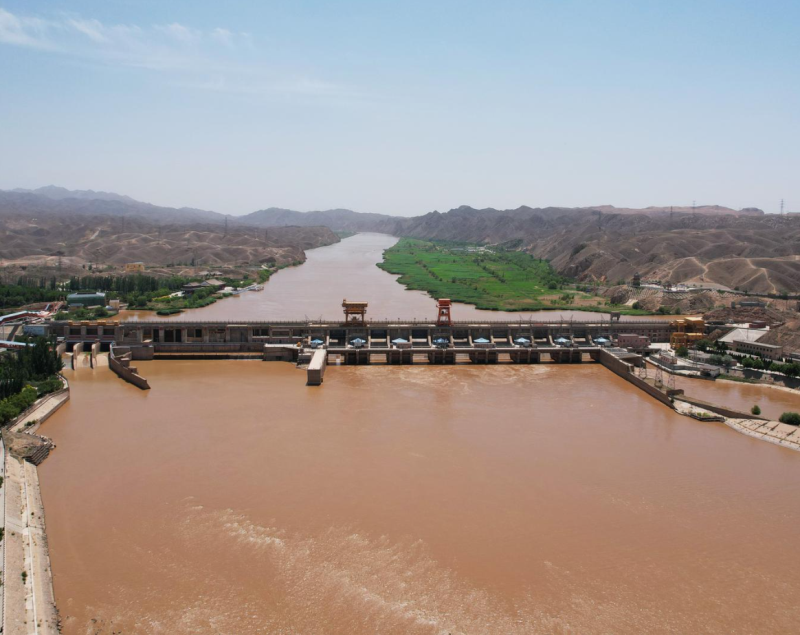
The Qingtongxia Water Conservancy Hub Project is one of the earliest projects established on the upper reaches of the Yellow River in the early days of New China. Construction began on August 26, 1958, and the first unit generated electricity in 1967. It is China's first and only pier-type hydropower station, with a total length of 693.75 meters and a maximum dam height of 42.7 meters. Its completion ended Ningxia's history of water diversion without dams for more than 2,000 years, greatly promoted the comprehensive development of Ningxia's industry, agriculture, and economy and society, and earned the reputation of "The world's Yellow River enriches Ningxia, and Ningxia is a land of rivers and canals beyond the Great Wall."
The 108 Pagodas were first built during the Western Xia period. They are a Major Historical and Cultural Site Protected at the National Level and the largest existing group of Tibetan Buddhist pagodas in China. The pagoda group underwent several renovations during the Yuan, Ming, and Qing dynasties, evolving from adobe pagodas to brick pagodas, yet its overall layout and basic form still preserve the architectural style of the original Western Xia construction. Cultural relics unearthed from the pagodas, such as Western Xia silk color paintings, clay pagoda models, painted statues, and Western Xia script fragments, bear witness to the exchange and integration of diverse cultures along the Silk Road in Ningxia and are of great value for studying Western Xia history and culture, Yellow River culture, and water conservancy irrigation.
Main Attractions
Ningxia Water Conservancy Museum
Through various forms such as scene restoration, cultural relic display, graphic and textual presentation, video demonstrations, and multimedia special effects, it vividly presents the development history of Yellow River irrigation in Ningxia over more than 2,000 years and the great water management practices of the working people of past dynasties in building water conservancy and eliminating water disasters.
Qingtongxia Water Conservancy Hub Project
The first large-scale comprehensive water conservancy hub project on the Yellow River integrating irrigation, power generation, flood control, and ice-flood prevention, and also one of the largest pier-type hydropower stations in China. Standing on the observation bridge and looking down, the surging Yellow River water is tamed beneath the dam, presenting a magnificent sight.
Ten-Mile Long Gorge
Formed by the remaining ranges of the Helan Mountains and Niushou Mountain flanking it, it is 10 kilometers long, with a valley width of 800 to 1,000 meters and cliffs on both sides more than 80 meters high. It has the typical rugged and vigorous characteristics of the northern Yellow River and is known as the "First Gorge on the Middle and Upper Reaches of the Yellow River." The cliffs on both sides of the gorge present a variety of wonders, with sights such as Sleeping Buddha Mountain, Bird Island, Tianshu Pavilion, and ancient stone carvings coming one after another.
One Hundred and Eight Pagodas
Located at the water diversion inlet of the ancient Tanglai Canal on the west bank of the Qingtongxia Yellow River Grand Canyon, they are an important ancient pagoda complex from the Western Xia period in the Ningxia Hetao region and a rare large-scale pagoda array in the world. Viewed from the air, they are arranged in a triangle, and there are many mysterious legends surrounding these pagodas.
Dayu Culture Park
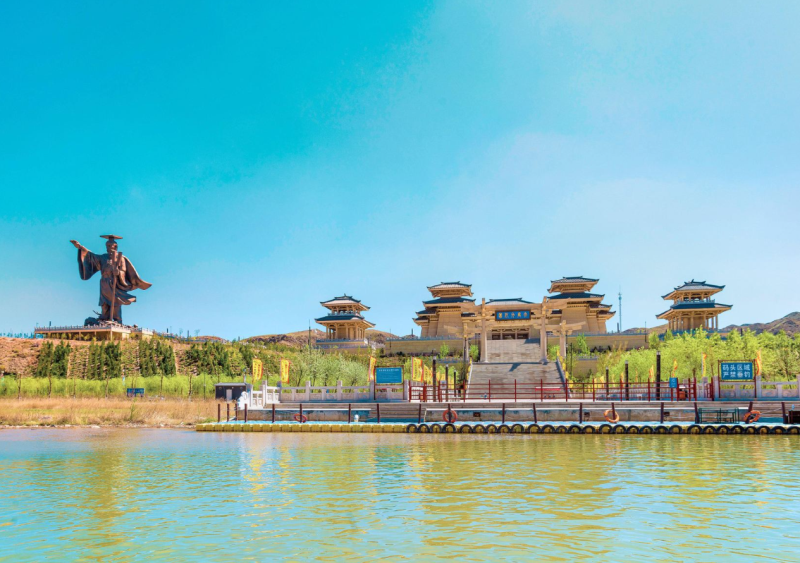
Located on the east bank of the Yellow River Grand Canyon, its architectural style is that of Han dynasty palaces. It consists of the statue of Dayu, the Yuwang Archway, Bell and Drum Towers, Hetu and Luoshu, the Mingtang, Jiuzhou Garden, and the main hall. It is China's first Yellow River culture architectural complex, using LED technology, physical objects, scenes, and other technological elements to comprehensively and three-dimensionally display the civilization and inner spirit embodied by Dayu.
Qingtongxia Yellow River Iron Bridge
Located at the entrance of the Qingtongxia Yellow River Grand Canyon Scenic Area, it is the first Yellow River bridge in Ningxia. It was officially completed and opened to traffic on July 1, 1959, mainly built for the Qingtongxia Water Conservancy Hub Project and the transportation of materials across both banks of the Yellow River. In December 2010, it was listed as an autonomous region-level cultural relic protection unit, and in December 2011, it was selected as one of the "Top 100 New Discoveries" in the Third National Cultural Relics Census.
Food
Yellow River Bighead Carp
Wild bighead carp growing in the waters of the Yellow River, with delicious meat and rich nutrition. Local people like to braise it, wrapping the fish in a special sauce and simmering it over low heat. It is flavorful yet retains its original taste. With one bite, the fish is tender and the sauce is rich.
Reservoir Large Shrimp
The river shrimp are plump and firm, suitable for braising in oil or stir-frying. Simply seasoned with yellow wine and ginger slices, they retain the original flavor of the shrimp. The shrimp meat is sweet and fragrant in the mouth.
Yellow River Fish Soup
A rich soup carefully simmered from various Yellow River fish, added with local specialties such as daylily and wood ear. It has both the freshness of fish and the fragrance of vegetables.
Reservoir Stewed Mutton
The Tan sheep around the Qingtongxia reservoir area have delicious meat because they drink Yellow River water and eat wild grass on the riverbank. The mutton is stewed together with nourishing ingredients such as goji berries and codonopsis, retaining the original flavor of the mutton with a rich aroma of Chinese medicinal herbs.
Yellow River Fish Cakes
Made by chopping Yellow River fish meat, adding scallion and ginger for seasoning, shaping into cakes, and pan-frying. The outer skin is golden and crispy, while the inside is tender and juicy. It is the first choice for local breakfast and late-night snacks.
Reservoir Minced Meat Noodles
The noodles are made with Yellow River water, paired with locally made minced meat sauce, and added with seasonal vegetables such as bean sprouts and chives. It has both the chewiness of noodles and the freshness of the minced meat sauce.
Tickets:
Package Ticket (Route A): 115 yuan
Package Ticket (Route B): 185 yuan
Rafting Package Ticket (Route A): 188 yuan
Rafting Package Ticket (Route B): 258 yuan
You can search the official WeChat public account of the scenic area, Qingtongxia Yellow River Grand Canyon Tourist Area, to obtain the latest updates or purchase tickets online.
Opening Hours:
Peak Season (March 16 - November 15): 08:30 - 18:30
Off Season (November 16 - March 15 of the following year): 09:00 - 17:30
You can obtain the latest updates from the official WeChat public account of the scenic area.
Tour Route:
Visitors can first visit the Ningxia Water Conservancy Museum to learn about the history of Yellow River irrigation in Ningxia; then go to the Qingtongxia Water Conservancy Hub Project to feel the grandeur of the dam; then take a cruise to tour the Ten-Mile Long Gorge and enjoy the gorge scenery, passing attractions such as Sleeping Buddha Mountain and Bird Island; finally go to the One Hundred and Eight Pagodas to feel the accumulation of history. If time permits, you can also visit the Dayu Culture Park and the Qingtongxia Yellow River Iron Bridge.
Transportation:
Self-driving: Directly navigate to the parking lot of the Qingtongxia Yellow River Grand Canyon Tourist Area. From Yinchuan, take the Beijing-Tibet Expressway and exit at Qingtongxia, then follow the Hexi Binhe Avenue to the Qingtongxia Town Visitor Center, 74 kilometers from Yinchuan; from Wuzhong City, follow the Hedong Binhe Avenue to the Qingtongxia Town Visitor Center, 15 kilometers from Wuzhong City; from Xiaoba, follow the Qingtongxia Hexi Binhe Avenue to the Qingtongxia Town Visitor Center, 17 kilometers from Xiaoba, and you can visit the Yellow River Tower along the way.
Public Transportation: Take Bus No. 29 at the Wuzhong Bus Station (bus stop) and get off at the Qingtong Ancient Town Station (bus stop), then walk to the scenic area; you can also take the Yinchuan-Qingtongxia Town long-distance bus at Yinchuan South Gate Bus Station and get off at the Qingtongxia Town Visitor Center; from Xiaoba Guxia Square, take Bus No. 5 directly to the scenic area and get off at the Qingtongxia Town Visitor Center.
Must-Visit Attractions:
Ten-Mile Long Gorge: The gorge scenery is magnificent, with cliffs on both sides and peculiar natural landscapes. Taking a cruise allows you to immersively experience the gorge scenery.
One Hundred and Eight Pagodas: A mysterious Western Xia ancient pagoda complex with a unique architectural layout and profound cultural connotations, possessing extremely high historical and artistic value.
Qingtongxia Water Conservancy Hub Project: An important water conservancy project in the early days of New China. It is majestic and spectacular, witnessing the history of Ningxia's water conservancy development, and has important educational significance.
Travel Suggestions:
Buy tickets or package tickets online in advance, and choose Route A or Route B according to your preferences to save time queuing for tickets.
When taking a cruise, remember to bring a camera or mobile phone and choose a window seat to better enjoy and photograph the gorge scenery.
If you are interested in history and culture, you can hire a guide at the Ningxia Water Conservancy Museum and the One Hundred and Eight Pagodas to gain an in-depth understanding of historical stories.
Ningxia's climate is dry, so pay attention to moisturizing and sun protection measures, and bring enough drinking water.
Notes:
Smoking is prohibited in the scenic area and nearby forests.
Religious sites restrict visitors from bringing incense longer than 60 centimeters into the temple. Please do not buy oversized incense.
When burning incense and praying, pay attention to the safety of other visitors nearby to prevent burns.
Most flowers and trees in the scenic area are protected species. Please do not pick or break them.
Respect the religious beliefs of others. Photography of Buddha statues inside halls is prohibited.
Do not enter unopened areas within the scenic area. If you encounter problems during the tour, inform the staff promptly.