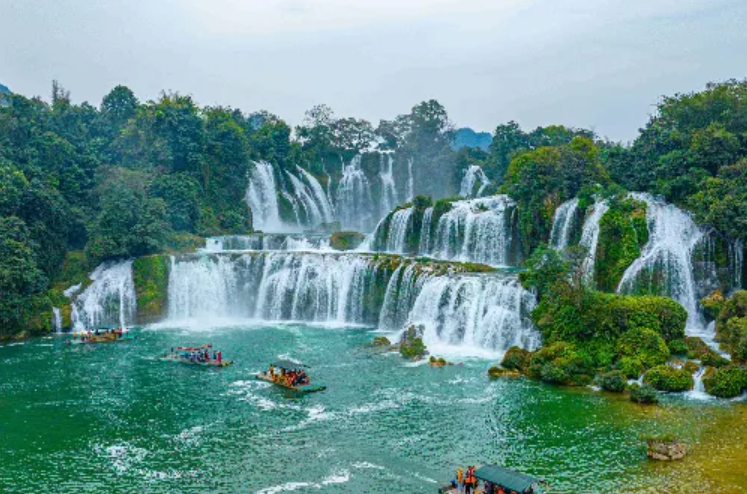
The Detian Transnational Waterfall Scenic Area is located in Daxing County, Chongzuo City, Guangxi Zhuang Autonomous Region. It is a national 5A-level tourist attraction. Straddling the border between China and Vietnam, it is the largest transnational waterfall in Asia and the fourth largest in the world. The waterfall is magnificent and imposing, with waters cascading down in multiple tiers, roaring and splashing, and its sound can be heard for miles.
The scenic area covers a total of about 60 square kilometres, with the core area occupying approximately 20 square kilometres. Besides the spectacular waterfall, the area also features lush primeval forests, mysterious karst caves, and the distinctive border trade culture along the Sino Vietnamese frontier. The Detian Waterfall has a maximum width of over 200 metres, a depth of 60 metres, and a drop of more than 70 metres. Its average annual water flow is about three times that of the Huangguoshu Waterfall in Guizhou. The torrents plunge down from lofty cliffs and verdant rocks, creating a magnificent natural picture.
History and Culture
The border area where the Detian Transnational Waterfall lies has a long history and rich cultural heritage. Since ancient times, it has been an important passage for exchanges, trade, and cultural interaction between the people of China and Vietnam.
In ancient times, border residents on both sides traded various goods along this route, giving rise to a unique border trade culture. At the same time, the area has witnessed the deep friendship between the Chinese and Vietnamese peoples.
Over time, the Detian Waterfall gradually became a prominent landmark on the Sino Vietnamese border. In modern times, it has attracted numerous visitors and has become a key window showcasing the natural scenery and cultural characteristics of the border region.
Major Attractions
Detian Transnational Waterfall:
As the core attraction, the waterfall drops in three cascades, plummeting from cliffs up to 60–70 metres high. The water crashes against layered rocks, sending spray and mist everywhere. The surrounding area is covered with dense, evergreen vegetation. On the left side of the waterfall is Vietnam’s Ban Gioc Waterfall, which connects with Detian, together forming a magnificent natural landscape. Visitors can take bamboo rafts to get a close up view of the waterfall, feel its tremendous power, and enjoy the unique scenery along the Sino Vietnamese border.
No. 53 Boundary Monument:
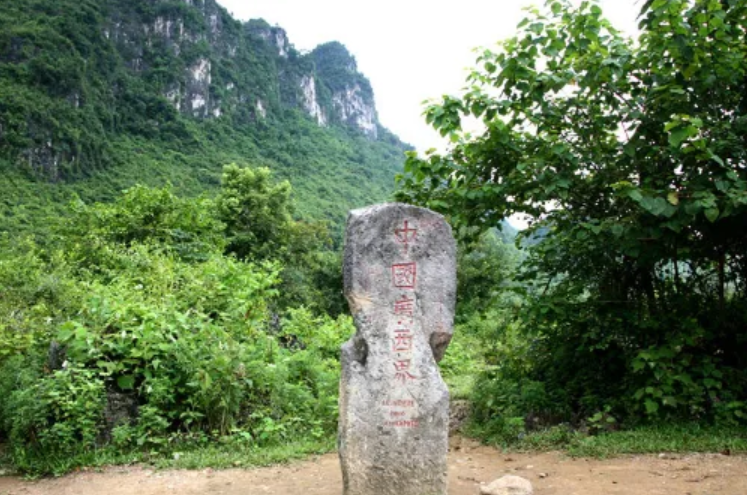
The No. 53 Boundary Monument is an ancient border marker dating back to the Qing Dynasty. It bears witness to the historical changes of the Sino Vietnamese frontier and holds significant historical importance. Around the monument, small shops run by local border residents sell souvenirs and snacks from both countries. Visitors can take photos here, experience the distinctive border atmosphere, and learn about the history and culture of the area.
Sino Vietnamese Cross border Street:
This street is full of exotic flair, lined with shops featuring Vietnamese products such as coffee, perfume, and handicrafts. Here, visitors can immerse themselves in Vietnamese culture, taste authentic Vietnamese cuisine, chat with local residents, and gain insight into their lifestyle and customs.
Guichun River:
The Guichun River is the source of the Detian Waterfall. It meanders along the border, with clear, emerald green waters and beautiful scenery on both banks—vast rice paddies and dense woodlands. Visitors can stroll along the riverbank, enjoy the pastoral views, and appreciate the tranquility of nature. There are also several viewing platforms along the river, offering different angles to admire the beauty of the Detian Waterfall.
Suggested Tour Route:
Upon entering the scenic area, visitors may first take the park’s sightseeing bus to the Detian Waterfall viewing platform to overlook the full panorama and take in its majestic grandeur. Then, they can choose to take a bamboo raft for a closer experience of the splashing water and the unique border landscape.
After leaving the waterfall, proceed to the No. 53 Boundary Monument to learn about the history and culture of the border, and browse the nearby shops. Next, head to the Sino?Vietnamese Cross?border Street to sample Vietnamese delicacies and buy souvenirs.
Finally, take a leisurely walk along the Guichun River to enjoy the rural scenery, pause at the viewing platforms for another glimpse of the waterfall, and conclude a pleasant visit.
Travel Tips:
Check the ticket prices, preferential policies, and opening hours in advance through the official website or online travel platforms to plan your itinerary accordingly.
For a closer view of the waterfall, it is recommended to take a bamboo raft, but be sure to wear a life jacket and follow safety instructions.
When shopping on the Sino Vietnamese Cross border Street, pay attention to product quality and prices, and spend wisely.
Wear comfortable shoes and clothing, as there is a fair amount of walking, especially to the viewing platforms and along the Guichun River.
In summer, remember to protect yourself from the sun and mosquitoes—bring sunscreen, a hat, insect repellent, etc.
When trying local food, choose reputable restaurants and stalls to ensure hygiene and quality.
Important Notices:
Observe all rules and regulations within the scenic area. Do not carve or scribble on any structures, spit, or litter. Keep the area clean and tidy.
When on bamboo rafts or near the waterfall, follow the staff’s instructions and avoid any dangerous behaviour. Stay safe.
Respect the border regulations of both China and Vietnam. Do not cross the borderline to avoid unnecessary trouble.
Keep your personal belongings secure, especially in crowded places such as the Cross?border Street and the entrance area, to prevent loss or theft.
In case of severe weather (e.g., heavy rain or strong winds), the scenic area may close some attractions or facilities for safety. Follow the staff’s arrangements and cooperate with management.
When taking photos, protect your equipment from water spray or moisture that could damage cameras or other devices.
Transportation:
By air: Fly to Nanning Wuxu International Airport, then take a shuttle bus to Daxing County, and from there transfer to a bus to the Detian Transnational Waterfall Scenic Area.
By train: Take a train to Nanning Railway Station or Nanning East Railway Station, then take a coach from Nanning’s bus stations to Daxing County, and finally change to a local bus to the scenic area.
By coach: Direct tourist buses to the scenic area are available from Nanning’s Xixiangtang Bus Station and Jiangnan Bus Station. Alternatively, take a bus from Chongzuo City to Daxing County and then transfer.
By car: If driving, start from Nanning and take the Nanyou Expressway, exit at the Daxing exit, and follow the signs to the scenic area. There is a parking lot on site.
Opening Hours:
The Detian Transnational Waterfall Scenic Area is open all year round, usually from 7:30 to 17:30 daily. During special holidays or peak tourist seasons, the opening hours may be adjusted (e.g., extended to accommodate more visitors). It is advisable to check the official website or relevant announcements for the latest opening information before your visit, so you can plan accordingly.
Tickets:
Admission: 115 RMB per person.