Jiangwan Scenic Area is located in the northeast of Wuyuan County, Shangrao City, Jiangxi Province. It is a national 5A-level tourist attraction and one of the core scenic areas of the Wuyuan Cultural and Ecological Tourism Zone. The scenic area is mainly characterized by Huizhou-style ancient architectural complexes, profound clan culture, and beautiful pastoral scenery. It covers an area of about 27.4 square kilometers, with a core tourist area of 3 square kilometers. It features Huizhou-style ancient buildings and natural ecological landscapes and is known as the epitome of "China's Most Beautiful Countryside." The core area of the scenic spot is Jiangwan Ancient Village. The village preserves more than 120 ancient buildings from the Ming and Qing dynasties, including ancestral halls, official residences, shops, and dwellings. The architectural style integrates Huizhou elements such as horse-head walls, carved window lattices, and courtyard patios, embodying the architectural concept of "harmony between man and nature." Jiangwan is one of the few thousand-year-old ancient towns in Wuyuan. It got its name because the Jiang clan lived together there. Historically, it produced many literati and officials, and it has a profound cultural heritage. Together with the surrounding fields, streams, and ancient bridges, it forms a typical Jiangnan water town scene.
Historical Culture
The history of Jiangwan can be traced back to the Tang Dynasty. It was originally a settlement of the Feng clan. Later, the Jiang clan moved in from Shexian County and gradually developed into a prominent local family, hence the name "Jiangwan." Since the Song Dynasty, Jiangwan's literary culture gradually flourished, and many talents emerged in the imperial examinations. According to historical records, during the Ming and Qing dynasties, Jiangwan produced 24 successful candidates in the highest imperial examinations and 36 provincial graduates. The most famous among them were Jiang Yilin, Minister of Revenue in the Ming Dynasty, and Jiang Yong, a Confucian scholar in the Qing Dynasty.
The Jiang clan attached great importance to the inheritance of clan culture. The village preserves a complete "Jiang Clan Genealogy," which records the family's migration, reproduction, and important figures' deeds. The layout of the ancient village follows the concept of "feng shui," backed by Houlong Mountain and facing Liyuan River. The streets and alleys are built along the stream, forming a pattern of "mountains surrounding and water winding around." In addition, traditional art forms such as Huizhou opera and Nuo dance in Jiangwan have been passed down to this day. Among them, Nuo dance has a history of more than 800 years and has been included in the national intangible cultural heritage list. It is important living material for studying ancient folk culture.
Main Attractions
Jiang Clan Ancestral Hall
The Jiang Clan Ancestral Hall is the most representative ancient building in Jiangwan. It was first built in the Ming Dynasty and rebuilt during the Guangxu period of the Qing Dynasty. It covers an area of about 1,200 square meters and consists of three parts: the gate tower, the memorial hall, and the sleeping hall. The gate tower is in the style of a five-phoenix tower, 10 meters high, carved with patterns such as "Eight Immortals Crossing the Sea" and "Dragon and Phoenix Bringing Auspiciousness," with exquisite craftsmanship. In the memorial hall hangs the plaque "Yuqing Hall." The beams and pillars are thick and strong, and it can accommodate hundreds of people for clan activities. The sleeping hall enshrines the memorial tablets of the Jiang clan ancestors and is solemn and dignified. The ancestral hall also preserves precious cultural relics of the Jiang clan, such as plaques and inscriptions from the Ming and Qing dynasties. It is the core place for understanding Jiang clan culture.
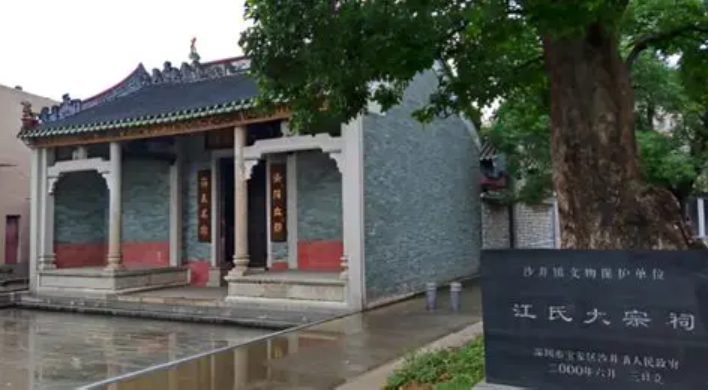
Xiaojiang Grand Ancestral Hall
The Xiaojiang Grand Ancestral Hall was first built during the Wanli period of the Ming Dynasty to commemorate the Jiang clan ancestor Xiaojiang. It covers an area of about 2,000 square meters and was once praised as the "First Ancestral Hall in Jiangnan." It was later destroyed in war, and the existing building was reconstructed according to its original appearance in 2003. The ancestral hall adopts a symmetrical layout along the central axis, including a screen wall, memorial archway, ceremonial gate, patio, and main hall. Among them, the memorial archway is 11.8 meters high and is in the style of four pillars, three bays, and five roofs, with exquisite carvings and a magnificent momentum. The hall displays the historical origin of the Jiang clan's change of surname from Xiao to Jiang, as well as the life stories of famous people through the ages, and has important historical research value.
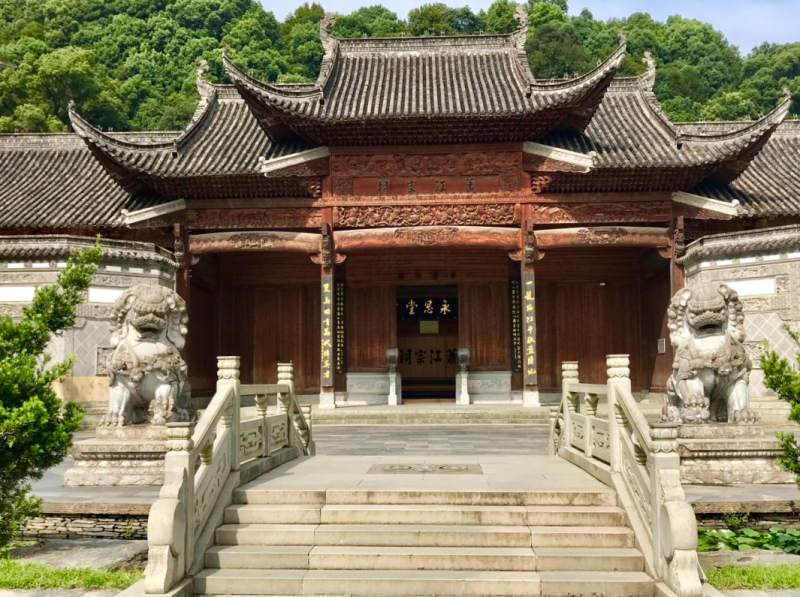
Sanxing Hall
Sanxing Hall is the former residence of Jiang Yilin, Minister of Revenue in the Ming Dynasty. It is named because Jiang Yilin practiced the family motto "I examine myself three times a day." It covers an area of about 500 square meters and is a typical Huizhou-style courtyard building. The former residence consists of a front hall, rear hall, study, and garden. The study preserves copies of Jiang Yilin's letters and works, showing his life of honest officialdom and rigorous scholarship. In the center of the courtyard patio is a "four waters return to the hall" drainage system, reflecting the wisdom of Huizhou architecture.
Teng Family Old House
The Teng Family Old House was built in the early Qing Dynasty and is one of the oldest existing dwellings in Jiangwan. It covers an area of about 300 square meters and is a two-story brick-and-wood structure. The biggest feature of the building is the "upstairs hall" structure, that is, the hall is located on the second floor, while the first floor is used for miscellaneous purposes. This layout is relatively rare in Huizhou architecture and reflects the living customs of the owner at that time. The wood carvings and brick carvings in the house are well preserved, especially the "fishing, woodcutting, farming, and reading" patterns on the doors and windows, vividly reproducing the life scenes of ancient agricultural society.
Jiangwan Ancient Street
Jiangwan Ancient Street is about 500 meters long. Along the street are dozens of shops from the Ming and Qing dynasties, preserving the traditional layout of "front shop and back workshop" and "upper residence and lower shop." The bluestone road of the ancient street has been trampled for hundreds of years and is smooth and rounded. The buildings on both sides are mostly two-story, with horse-head walls rising and falling in picturesque disorder. The shop signs are antique, and some shops still sell Wuyuan specialties such as fermented fish and Huimo pastry. Tourists can feel the marketplace atmosphere of the ancient town here.
Food
Jiangwan Specialty Dishes
Steamed Dishes with Rice Powder
Steamed dishes with rice powder are a traditional dish in Jiangwan. Local indica rice is ground into rice powder and paired with ingredients such as pork belly, ribs, pumpkin, and radish, then placed in layers in a steamer and cooked. Among them, steamed pork with rice powder is the most representative. The meat is fatty but not greasy, and the rice powder absorbs the meat's fragrance. It is soft, glutinous, and delicious, with a faint fragrance of lotus leaves (traditional methods wrap it in lotus leaves). It is an essential dish during festivals.
Fermented Fish
Fermented fish is made from freshwater fish specially produced in Wuyuan (mostly grass carp). After salting and drying, it is fermented in glutinous rice wine lees. It is ruddy in color and mellow in taste, combining wine fragrance and fish freshness. Time-honored shops on Jiangwan Ancient Street mostly use ancestral techniques to make it. It can be tasted on site or purchased as vacuum-packed finished products. It is a souvenir deeply loved by tourists.
Surrounding Food
Wuyuan Steamed Dishes
The Wuyuan steamed dishes around Jiangwan are very distinctive. In addition to steamed dishes with rice powder, there are also steamed cakes and steamed rice cakes. Steamed cake uses rice milk as the base, sprinkled with dried shrimp, shredded radish, chili, and other ingredients. After steaming, the surface bulges, and the texture is soft, salty, fragrant, and slightly spicy. It is a common choice for local breakfast.
Hobao Red Carp
Wuyuan Hobao Red Carp is a famous freshwater fish variety in China. It is named because the fish resembles a purse and is bright red. It is mostly farmed in rice fields near Jiangwan. It is mainly cooked by steaming. The meat is tender and delicious, and it is rich in protein. It is a famous dish at Wuyuan banquets and has the auspicious meaning of "red fish leaping over the dragon gate."
Tickets:
Tickets are 60 yuan per person.
You can search for the official WeChat public account "Jiangwan Scenic Area" to get the latest updates or buy tickets online.
Opening Hours:
Open all year round. Daily opening hours are 8:00-17:30 (last entry at 17:00). Affected by the seasons, in winter (November-February of the following year), the closing time is advanced to 17:00 (last entry at 16:30). Specific times are subject to the scenic area's announcements on the day.
Tour Routes:
Recommended Half-Day Tour Route
Arrive at the entrance of Jiangwan Scenic Area at 9:00 a.m. First visit Xiaojiang Grand Ancestral Hall (about 1 hour) to learn about the history of the Jiang clan. Then go to Jiang Clan Ancestral Hall (about 40 minutes) to experience clan culture. At 10:40, go to Sanxing Hall (about 30 minutes) to visit Jiang Yilin's former residence. At 11:10, stroll along Jiangwan Ancient Street (about 1 hour) and taste local snacks. At 12:10, visit Teng Family Old House (about 30 minutes) and appreciate the characteristics of Huizhou ancient dwellings. At 12:40, dine at a restaurant near the ancient street and end the trip. This route allows efficient visits to the core attractions of the scenic area and is suitable for tourists with limited time.
Transportation:
Public transportation: There are direct buses from Wuyuan County North Bus Station to Jiangwan Scenic Area. They run every 30 minutes from 7:00 to 17:00, with a journey time of about 30 minutes and a fare of 8 yuan per person. From Wuyuan High-Speed Railway Station, you can take a bus heading toward Jiangwan, with a journey time of about 40 minutes and a fare of 5 yuan per person.
Self-driving: From Wuyuan County, take the Hangrui Expressway to Jiangwan Exit, then turn onto Jiangwan Avenue. The total distance is about 28 kilometers and takes 40 minutes. From Jingdezhen, take the Hangrui Expressway to Jiangwan Exit. The total distance is about 80 kilometers and takes 1.5 hours. The scenic area parking lot charges 10 yuan per vehicle per day.
Transportation within the scenic area: The scenic area is relatively small, and the main attractions are within walking distance, so no transportation is needed. If energy is limited, bicycles can be rented on the ancient street for 20 yuan per hour.
Must-Visit Attractions:
Jiang Clan Ancestral Hall: Covers an area of 1,200 square meters. It is a Ming Dynasty building with exquisite carvings and preserves precious cultural relics of the Jiang clan. It is the core attraction for understanding clan culture.
Xiaojiang Grand Ancestral Hall: The reconstructed "First Ancestral Hall in Jiangnan." The 11.8-meter-high memorial archway is magnificent and displays the historical origin of the Jiang clan.
Sanxing Hall: The former residence of Jiang Yilin, Minister of Revenue in the Ming Dynasty. Its "upstairs hall" structure is unique and shows the living scenes of ancient officials.
Jiangwan Ancient Street: A 500-meter-long Ming and Qing ancient street that preserves the traditional shop layout. Visitors can experience the marketplace atmosphere of the ancient town and taste specialty snacks.
Travel Suggestions:
Jiangwan is mainly a cultural landscape. It is recommended to hire a scenic area guide (50 yuan per time) to gain an in-depth understanding of the historical stories and cultural connotations behind the ancient buildings.
The best seasons for visiting are spring (March-April) and autumn (October-November). In spring, you can enjoy the beautiful scene of surrounding rapeseed flower fields contrasting with the ancient village. In autumn, there are folk scenes of drying crops.
Time-honored shops on the ancient street (such as "Jiangwan Wine Workshop" and "Huizhou Pastry Shop") offer authentic Wuyuan specialties. Fermented fish, Huimo pastry, and others have a long shelf life and are suitable as souvenirs.
For dining, it is recommended to try farmhouse restaurants near the ancient street and taste specialty dishes such as steamed pork with rice powder and Hobao red carp. The average consumption is about 50 yuan per person.
If time permits, it can be combined with visits to surrounding ancient villages such as Xiaoqi and Likeng to experience the characteristics of different ancient villages in Wuyuan.
Notes:
Most ancient buildings in the scenic area are brick-and-wood structures. Smoking and open flames are strictly prohibited, and cultural relics must not be touched or defaced.
The bluestone roads of the ancient street are slippery on rainy days. It is recommended to wear non-slip shoes and pay attention to safety while walking.
Respect local customs and habits. When entering ancestral halls and dwellings, follow the guide's instructions and do not arbitrarily photograph elderly people or children.
When purchasing specialties, check the production date and shelf life, especially for foods such as fermented fish. It is recommended to buy from regular shops.
There are multiple restrooms and rest areas in the scenic area, distributed in the middle section of the ancient street and near the ancestral halls. Visitors can arrange rest time reasonably.