The National Maritime Museum of China is located at No. 377 Haixuan Road, Sino-Singapore Eco-City, Binhai New Area, Tianjin. It is China's first national-level, comprehensive, and public-interest maritime museum, as well as a national 4A-level tourist attraction, and enjoys the reputation of being the "Palace Museum on the Sea." With "Ocean and Humanity" as its core theme, the scenic area comprehensively showcases the natural history of the ocean, the ecological environment, and the close relationship between humans and the ocean through rich collections, immersive exhibitions, and interactive experience projects. Its total building area is about 150,000 square meters, and the exhibition hall area reaches 67,000 square meters. The overall architectural design is inspired by ocean waves, and its appearance is magnificent, integrating modern architectural aesthetics with maritime cultural elements, making it one of the landmark cultural buildings of Tianjin Binhai New Area.
Historical Culture
The construction of the National Maritime Museum of China carries the important mission of inheriting maritime civilization and popularizing maritime knowledge. In 2010, the National Maritime Museum of China was officially approved. After years of planning and construction, it opened to the public on a trial basis on May 1, 2019, and fully opened to the public on June 1, 2021. As a national-level maritime museum, it gathers marine cultural relics, specimens, and other collections from all over the country and even the world, with more than 40,000 items, including many treasures of important historical and scientific value, such as ancient ship artifacts and marine biological specimens. These collections not only witness the long process of human exploration of the ocean, but also reflect the development and evolution of maritime culture in different historical periods, providing valuable physical materials for the study of maritime history and biodiversity.
Main Attractions
Ancient Ocean Exhibition Hall
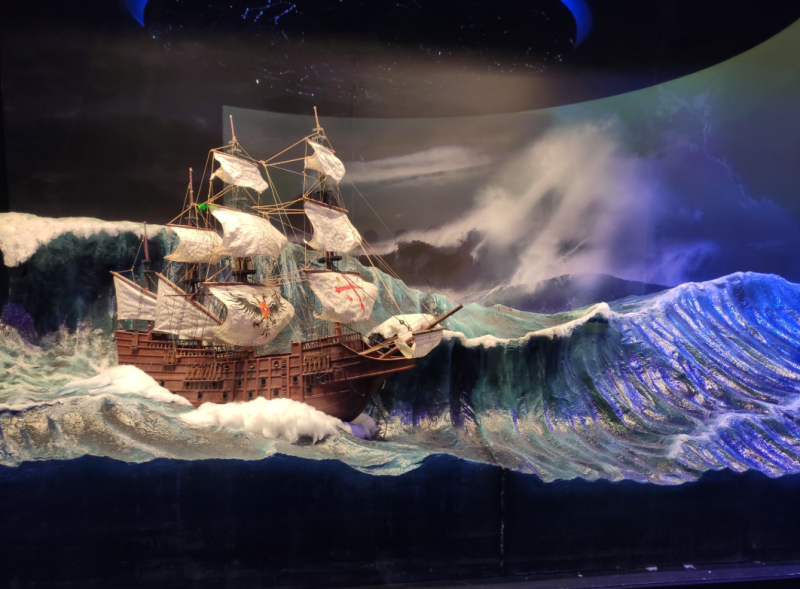
The Ancient Ocean Exhibition Hall is one of the core exhibition halls of the National Maritime Museum of China, with an area of about 2,000 square meters. Taking time as its thread, the exhibition hall presents the evolutionary history of marine life from 3.8 billion years ago to 10,000 years ago through a large number of paleontological fossils, models, and multimedia presentations. Among them, the most eye-catching is the 22-meter-long megalodon fossil model, as well as complete fossils of Mesozoic marine reptiles such as ichthyosaurs and mosasaurs, allowing visitors to travel through time and space and return to the ancient ocean world.
Today's Ocean Exhibition Hall
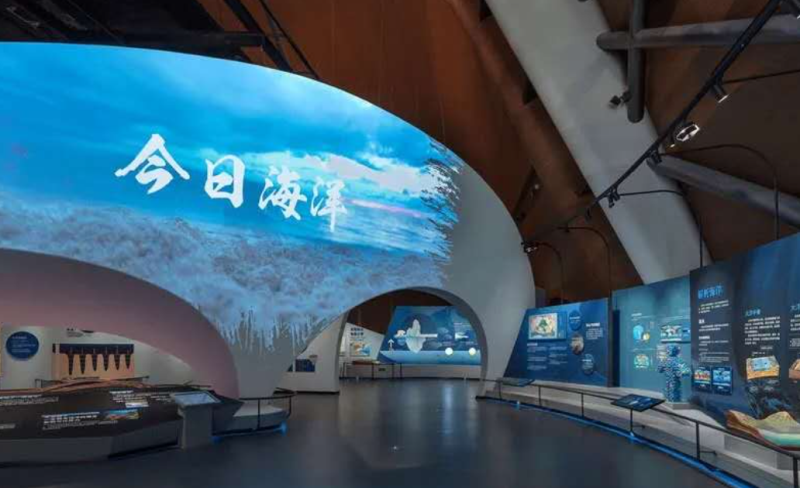
The Today's Ocean Exhibition Hall covers an area of about 3,000 square meters and focuses on modern marine ecosystems. The exhibition hall features a large live marine life display area, including coral reef ecological tanks and shark pools, showcasing the biodiversity of different sea areas such as tropical oceans and temperate oceans. In addition, through interactive installations and illustrated introductions, the exhibition hall popularizes knowledge about marine environmental protection among visitors, emphasizing the importance of harmonious coexistence between humans and nature.
Journey of Discovery Exhibition Hall
The Journey of Discovery Exhibition Hall covers an area of about 1,800 square meters and mainly tells the history of human exploration of the ocean. The exhibition hall displays a large number of navigation-related cultural relics, such as ancient navigation instruments, ship models, and explorers' diaries and manuscripts. Among them, the ship model of Zheng He's voyages to the Western Seas is restored at a 1:10 ratio, vividly reproducing the brilliance of navigation technology at that time. Through these exhibits, visitors can understand the arduous journey of humanity from coastal fishing to deep-sea exploration.
Marine Astronomy Exhibition Hall
The Marine Astronomy Exhibition Hall covers an area of about 1,500 square meters and explores the close connection between the ocean and astronomy. The exhibition hall is equipped with a planetarium, starry sky projection, and other equipment. Through simulated demonstrations, it shows visitors the movement patterns of the sun, moon, and stars, as well as their influence on ocean tides, climate, and other aspects. At the same time, the exhibition hall also introduces the history of humans using astronomical knowledge for navigation, allowing visitors to appreciate the wonderful connection between the ocean and the universe.
Marine Humanities Exhibition Hall
The Marine Humanities Exhibition Hall covers an area of about 2,000 square meters and showcases the maritime cultures of different regions and different ethnic groups. The exhibition hall displays folk cultural relics from coastal areas and ocean-themed artworks, such as fishermen's fishing gear and sculptures of maritime myths and legends. Through these exhibits, visitors can understand the profound imprint left by the ocean on human culture, art, and life, and feel the diversity of maritime culture.
Food
Museum Restaurant Food
The National Maritime Museum of China has multiple restaurants offering a variety of food. Among them, the seafood fried rice at the ocean-themed restaurant is very popular. It is made with fresh shrimp, scallops, and other seafood ingredients, paired with high-quality rice, and has a rich taste. The price is about 38 yuan per serving. In addition, the restaurant also offers children's set meals, including cartoon-shaped sandwiches, fruit salad, and drinks. They are both nutritious and visually appealing, suitable for families with children, and priced at about 45 yuan per serving.
Surrounding Food
There are many specialty restaurants in the Sino-Singapore Eco-City around the museum. "Binhai Yujia" restaurant, about 1.5 kilometers away from the museum, specializes in authentic Tianjin seafood dishes. Its steamed swimming crab uses fresh swimming crabs caught on the same day. The meat is tender, and one crab costs about 50-80 yuan, varying according to season and size. In addition, the restaurant's sauce-fried mantis shrimp is also very distinctive. It uses mantis shrimp from Bohai Bay and has a rich sauce flavor. The price is about 68 yuan per serving.
Tickets:
Free admission, advance reservation required. Some special exhibitions may charge separately.
You can search for the official WeChat public account "National Maritime Museum of China" to get the latest updates or make online reservations.
Opening Hours:
Opening hours are Tuesday to Sunday 9:00-17:00 (last admission at 16:00), closed on Mondays (except statutory holidays). During statutory holidays, opening hours may be adjusted. Please refer to official notices for details. Visitors are advised to check official information before traveling to avoid delays.
Suggested Tour Route:
A recommended one-day tour route: after entering the museum at 9:00 a.m., first go to the Ancient Ocean Exhibition Hall to learn about the evolutionary history of marine life, which takes about 1.5 hours; then go to the Journey of Discovery Exhibition Hall to experience the history of human exploration of the ocean, with a visit time of about 1 hour; around 11:30, dine and rest at the museum restaurant. At 1:00 p.m., go to the Today's Ocean Exhibition Hall to observe live marine life and participate in interactive experiences, with a visit time of about 1.5 hours; then go to the Marine Astronomy Exhibition Hall to explore the relationship between the ocean and astronomy, with a visit time of about 1 hour; finally go to the Marine Humanities Exhibition Hall to experience the charm of maritime culture, with a visit time of about 1 hour, and end the itinerary around 16:00. If you are interested in watching a 4D movie, you can arrange appropriate time in the afternoon to go.
Transportation:
Public transportation: You can take Tianjin Bus Route 972, Eco-City Line 3, and other routes, get off at the "National Maritime Museum of China" station, and walk about 500 meters to arrive.
Self-driving: Starting from downtown Tianjin, drive along the Beijing-Tianjin Expressway, then transfer to the Shugang Expressway, exit at the Sino-Singapore Eco-City exit, and follow navigation instructions. It takes about 1 hour to arrive. The museum has a parking lot. The parking fee is 5 yuan/hour, with a daily cap of 30 yuan.
Rail transit: At present, the nearest subway station to the National Maritime Museum of China is "Donghai Road Station" on Jinbin Light Rail Line 9. Taking a taxi from this station to the museum is about 20 kilometers, about 30 minutes, and costs about 40 yuan.
Must-Visit Attractions:
Ancient Ocean Exhibition Hall: It has a 22-meter-long megalodon fossil model, as well as complete fossils of ancient organisms such as ichthyosaurs and mosasaurs. It systematically displays the evolution of marine life from 3.8 billion years ago to 10,000 years ago. It is a must-visit place to learn about the natural history of the ocean.
Today's Ocean Exhibition Hall: It has a large live marine life display area, including coral reef ecological tanks and shark pools. Visitors can observe a variety of marine organisms up close and also learn about marine protection knowledge through interactive installations. It is suitable for visitors of all ages.
4D Cinema: Through 4D special effects technology, the audience seems to be immersed in ocean scenes, with a strong sense of experience. The film content is mostly related to ocean adventure, marine life, and so on. The duration is about 20 minutes. It is an interactive experience project not to be missed.
Travel Tips:
The suggested visiting time is 4-6 hours. Because the exhibition halls are large and the exhibits are rich, only by arranging time reasonably can you fully experience them.
Families with children can prepare some snacks and water in advance. Although there are restaurants in the museum, there may be queues during peak periods.
Before visiting, you can learn about the guided tour times of each exhibition hall on the official website. Participating in free guided tours can help you gain a deeper understanding of the stories behind the exhibits.
It is recommended to wear comfortable shoes because a lot of walking is required in the museum.
You can bring a camera, but the use of flash is prohibited in some exhibition halls. Please follow the museum's regulations.
Notes:
Entry requires a reservation code and valid ID. Be sure to reserve in advance and bring relevant documents to avoid being unable to enter.
Flammable and explosive materials, controlled knives, and other dangerous items, as well as pets (except guide dogs), are prohibited in the museum.
During the visit, keep quiet, do not touch exhibits or facilities in the exhibition halls, and follow the guidance of staff.
The museum is equipped with a nursing room, accessible facilities, and more. Visitors in need can consult staff.
During peak periods (such as holidays), there are many visitors. It is recommended to travel during off-peak times or arrive at the venue in advance to avoid the peak entry period.